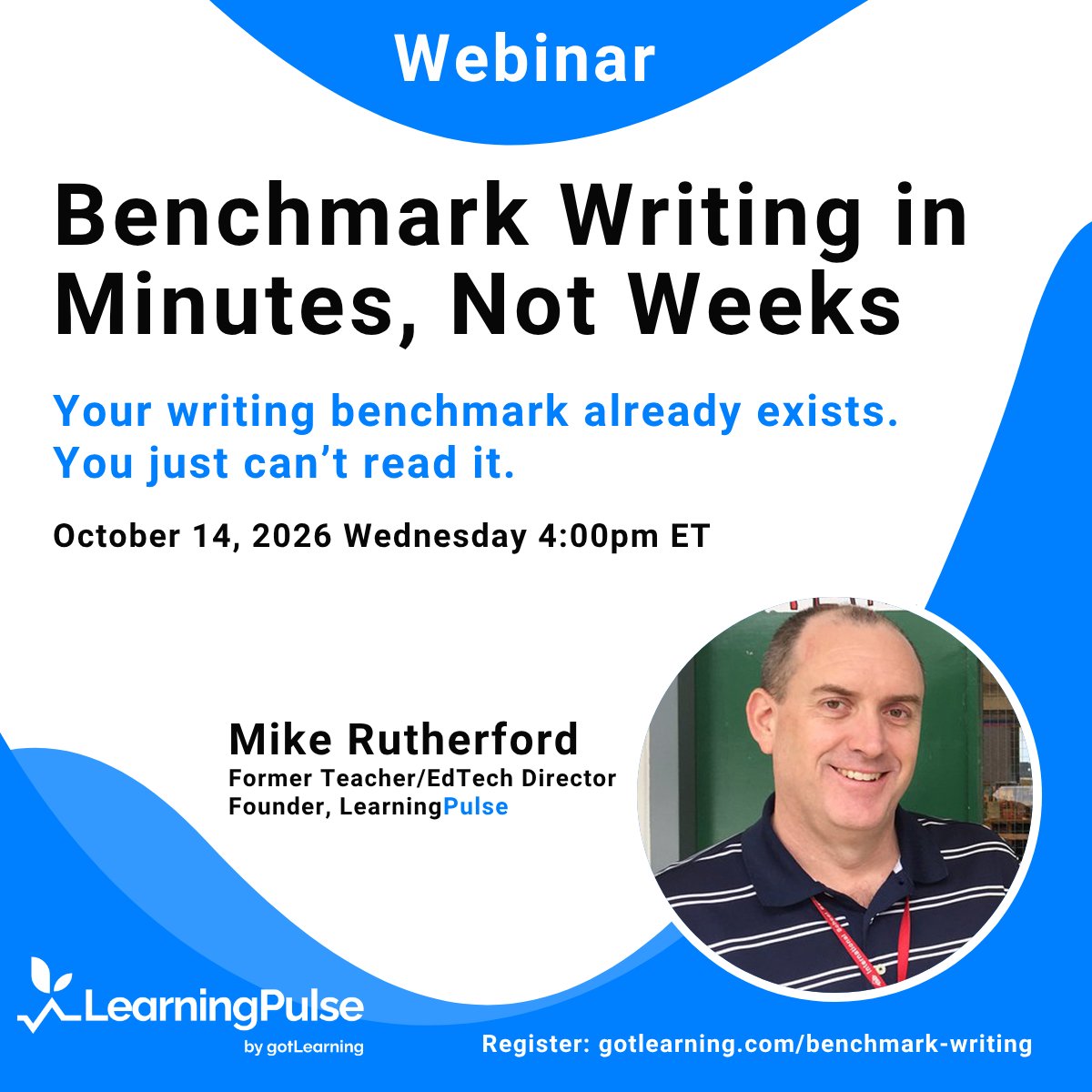
Reading and math get benchmarked three times a year. Writing doesn't.
The writing benchmark already exists. It's in Google Classroom or Canvas. LearningPulse reads it against your progression, in minutes. No new test.
Live Wed Oct 14, 4pm ET: https://t.co/RgLzf859Xv
#assessment
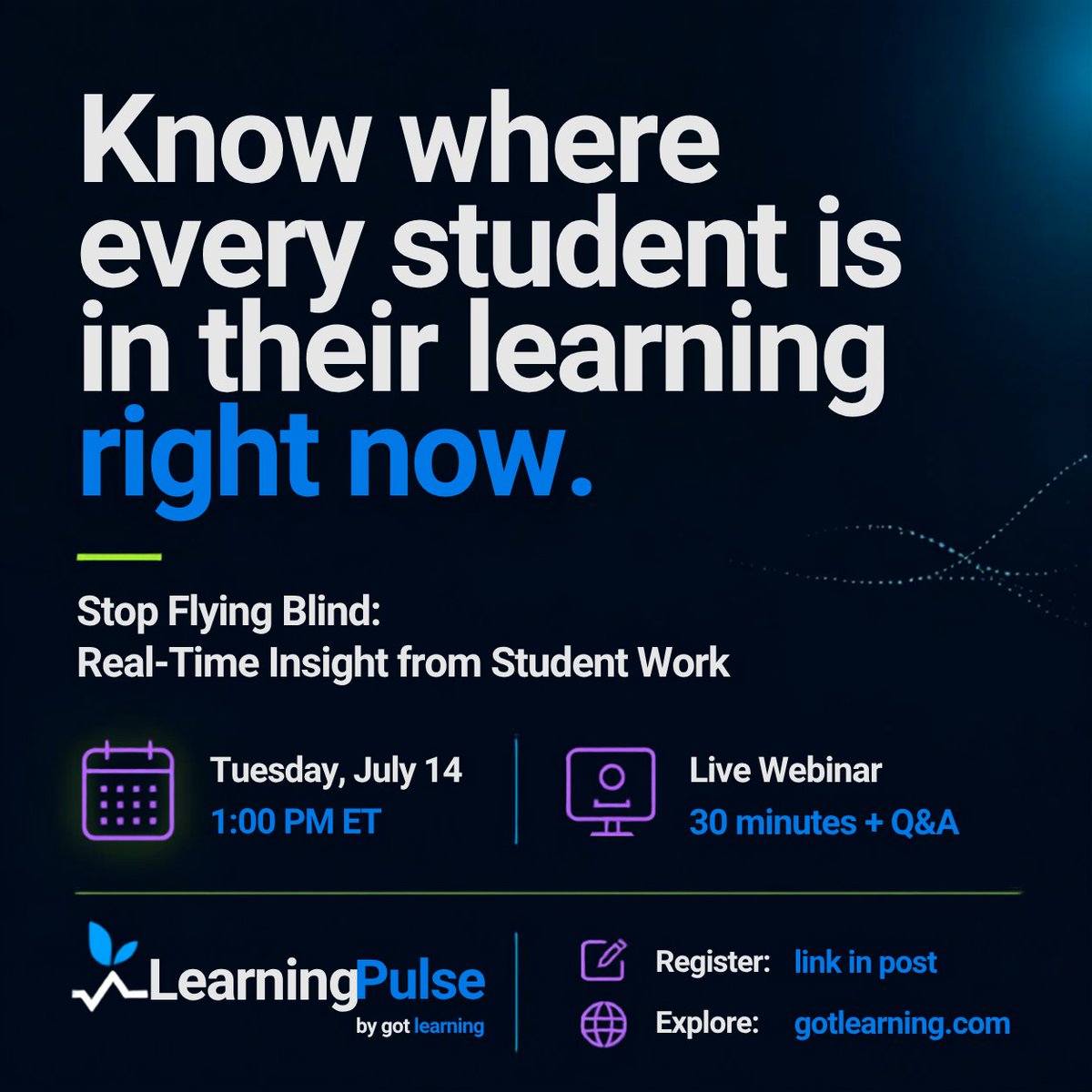
Tomorrow, 1pm ET: LearningPulse, live. The 45-second version is here. The full walkthrough is 30 minutes, live only, no recording.
Register: https://t.co/6ka222eagB
#StudentWorkAnalysis#EdTech#LookingAtStudentWork
A screener percentile isn't growth. It's a ranking.
Real growth is a student's June work next to their August work, in their own words.
LearningPulse shows it for every student. Tuesday 1pm ET, not recorded.
https://t.co/NOwldDksid
#K12#sped#StudentWorkAnalysis#edtech
125 students. One 3-page writing assignment.
375 pages. Seeing what each student needs takes 6 to 8 hours. No teacher has that time on a Tuesday night.
LearningPulse does it in minutes.
Live walkthrough Tuesday 7/14, 1pm ET
https://t.co/6ka222eagB
Curriculum directors: you don't need another assessment to know if your programs are working.
You need a way to read the evidence your students already produce.
That's exactly what LearningPulse does.
https://t.co/7GR6UsXKC2
Most edtech talks to students or creates for teachers.
LearningPulse listens to what students are already saying in their work.
Join a trial: https://t.co/fvqhXLt5ve
If you analyzed every essay your 8th graders wrote this year, what patterns would you find?
Most schools will never know. The work gets graded and filed away.
What if it didn't have to be that way?
#StudentWorkAnalysis#K12#EdTech
The most valuable data in your school isn't on a dashboard.
It's in the student work sitting unread in a Google Drive folder or in a handwritten notebook.
#edtech#StudentWorkAnalysis
Most edtech talks to students or creates for teachers.
LearningPulse listens to what students are already saying in their work.
Join a trial: https://t.co/KLgFVMjmfm
Most edtech talks to students or creates for teachers.
LearningPulse listens to what students are already saying in their work.
Join the pilot: https://t.co/fvqhXLt5ve
@MmeLockhartLDS@reading_league “Mirrors reflecting student learning” is exactly right.
When data support inquiry instead of compliance, instruction improves. This is the premise behind how LearningPulse works with the student work teachers already collect.