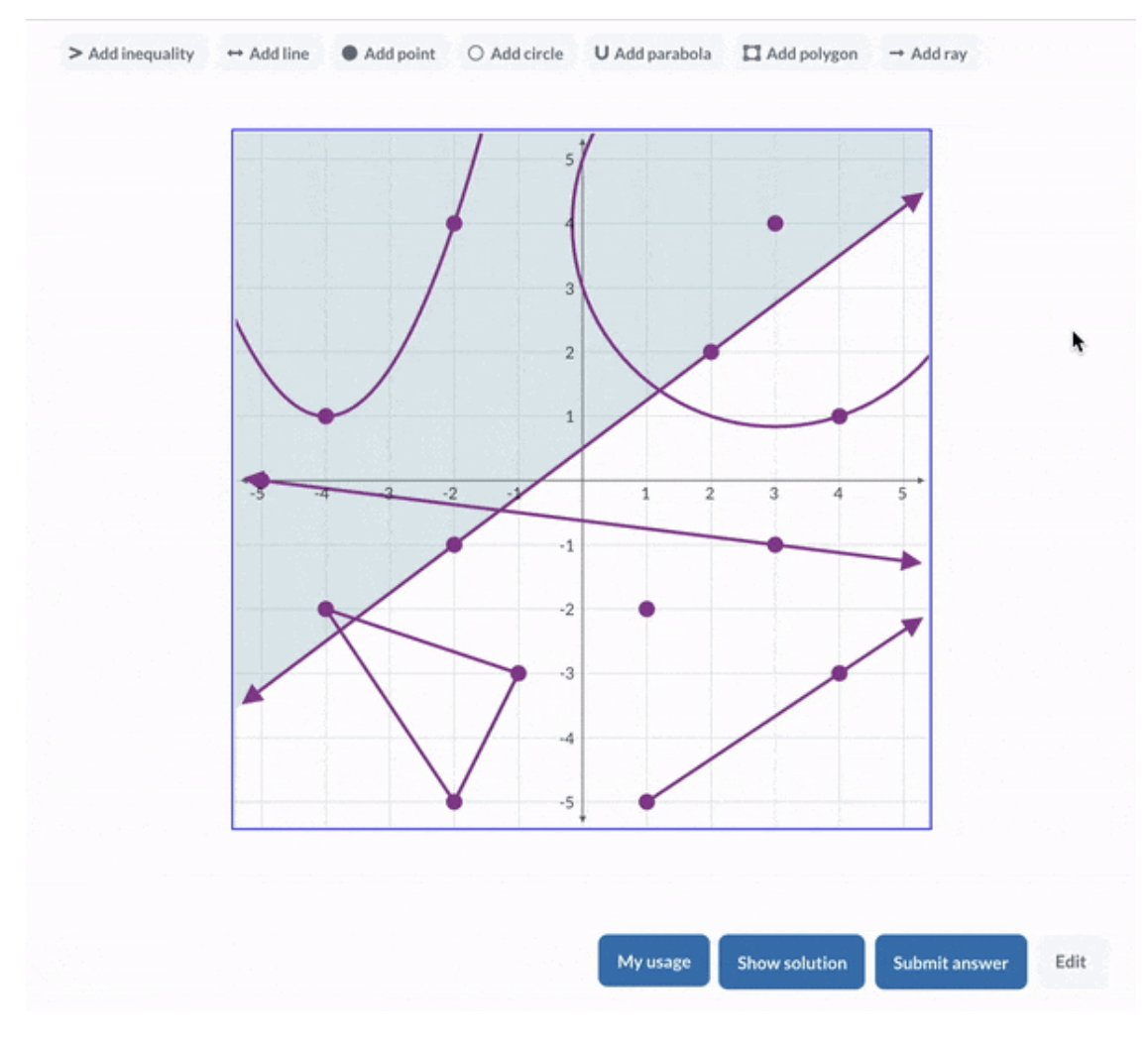
We are excited to announce that we just released a "Graphing" question type in our math subjects! Now, students can respond to questions by drawing various types of graphs: lines, parabolas, circles, inequalities, and segments! https://t.co/AMGDgFr6MS
💙 to this teacher from Basha High who shared three different ways he uses Albert in his classroom, along with 5 intermediate and advanced tips in the second half of his video! Thank you for sharing your Albert expertise. 🙏
Watch the video here: https://t.co/7bUy7z7ftD
Teachers will find this especially helpful when Dan details how he draws student observations from his classroom data.
Watch it here: https://t.co/ndzQpiB1Lc
In this video, Dan Rogers, an AP Psychology teacher, shares how he supports first-time AP Psychology students using Albert, and links it back to learning theories taught in...none other than psychology! 🧠
In this video, an AP Psychology teacher from Cherry Hill West shares how he promotes independent practice with his students using the Albert platform: https://t.co/6w0qc1p60R
🖥🧪 can be a tough subject to teach. As the lone Computer Science teacher at Lovejoy High, this teacher has found creative ways to use Albert in her classroom to help her students prepare for their exams: https://t.co/oWNroTUIB7
🏫 Neshaminy High has used Albert for several years with their students.
Learn what one of their teachers has found most helpful about Albert in this YouTube video: https://t.co/rhwjcW5ehf
👨🏫 Giving students choice in how they study is so important. In this video, an Albert teacher user at Pembroke Hill High shares how he offers choice boards with students as they review on Albert! https://t.co/1BAAqbO3MP
👩🏫 Want to learn how to differentiate instruction online with Google Classroom and Albert? Check out this video by Teacher Tanna on YouTube! https://t.co/S0GPxEpHCr
📺 Curious how Albert can help improve your students' AP scores? Check out this video review by an Albert teacher user, and past IL Outstanding Economics Educator of the Year, Nick Anello, on how he uses Albert in his classroom! https://t.co/fqBS2zVB4t
The link below has tips, a guide, an in-person and virtual breakdown of Battling the Boss and additional free resources.
In the comments below tell us, how often will you allow students to battle the boss?
https://t.co/GMQyTkVphY
If students pass the battle, give them a celebration! 🎉🎉🎉
If students do not pass the battle, give them a list of resources so they can go back and try again later. 📚
Before bringing this into your classroom consider how you will showcase students' successes in battles.🏆
This strategy works best with self-paced learning, where multiple skills or levels need to be reached.
TIP: Make goals super clear to students so they can decide when they are ready to battle the boss.
Teachers, give students agency over when they are ready to attempt a formative or summative assessment by challenging to Battle the Boss.
It can easily be modified for students learning virtually. Just put them into breakout groups when they are ready to prove their knowledge.
Hey teachers, consider introducing your students to an S-O-S summary.
The S-O-S summary is structured to include a statement, opinion, and support.
The teacher presents a Statement and students respond with their Opinion and Support their opinion with evidence. (1/4)
You can also have students craft an argument for an opposing view.
Make sure students have the resources and skill set to find credible evidence that supports their argument.
Curious about this teaching strategy? Want more information? (3/4)