«Nous savons aujourd’hui que l’homme, en essence, est un être de lumière» Fritz-Albert Popp
Les cellules vivantes émettent des photons, une lumière cohérente (comme un laser) continue, spontanée dans des schémas organisés qui suggèrent une communication https://t.co/ynUED0eQ1t
💥BREAKING: Landmark Gardasil trial ends in confidential settlement
The first Gardasil injury lawsuit to reach a U.S. jury has ended in a confidential settlement, leaving key scientific and regulatory questions unresolved.
LINK: https://t.co/UNsoN8NmlN
@WisnerBaum@ChildrensHD@liz_churchill10@newstart_2024@ValerieAnne1970@MaryBowdenMD
la « médecine » est une « discipline fondée sur la suspension structurelle de la pensée », ou plus précisément, une « écologie des êtres humains dont la capacité de pensée a été suspendue ».
As an academic discipline, put bluntly, "medicine" is a "discipline founded on structural thought suspension," or more precisely, an "ecology of human beings whose capacity for thought has been suspended."
The "suspension of thought" referred to here does not signify intellectual laziness as it is commonly understood.
Rather, it refers to the very structure of power through which the system called medicine strips human beings of their capacity for reflective thought and value judgment, incorporates them into the inner shell of scientific discourse, and renders ethical hesitation institutionally dysfunctional. What takes place here is not a "lack of thought" but a "structural loss of thought."
Medicine as a discipline does not in principle address the irreversible distance between the description of facts (is) and the ethical imperatives (ought), the so-called "is-ought gap" known since Hume.
More precisely, medicine does not "not address this gap," but "cannot deal with it," and therefore treats it as if it did not exist from the outset. The institutional technique that medicine has developed over many years is an operational system that instantaneously converts experiences into norms, linking explanation (is) and justification (ought) without epistemic or ethical mediation.
In other words, medicine transforms scientific descriptions (is), such as facts, statistics, and trends, directly into ethical imperatives that constrain human action (ought), and conceals this logical leap through the repeated invocation of the vocabulary of "scientific evidence."
Statements such as "there is scientific evidence" or "read the paper," frequently uttered by medical professionals, are emblematic of this operation.
Here, the fundamental question such as "Does science generate norms?"is bypassed, and "being scientific" is simply equated with "being that which must be obeyed.
Within this void, discussions concerning "human dignity" degenerate into formal rituals and are rendered thoroughly powerless at the level of practice.
What medicine performs is not the elimination of value judgments, but the disguising of value judgments in scientific language.
Within medicine, value judgments are made to appear as if they were extensions of factual statements, and a normative command, "one ought to obey because there is scientific evidence," is thereby constructed.
Yet behind this, there is neither any visibility of value judgments nor any ethical deliberation. This command demands an immediate leap from explanation to justification, and as a result, individual citizens are forcibly positioned within a binary of "obey / disobey." This is, quite clearly, a governing rationality that is ethically unjustifiable.
Medicine monopolizes the "authority to define health" and, under the name of science, transfers to the system those fundamental domains of judgment that should properly belong to citizens, such as "what is good," "what constitutes dignity," and "what it means to be human."
What is present here is a privatization of value judgments under the guise of science, and a systematic usurpation of ethical autonomy.
-1/5-
« Suivre la science » est un mot d’ordre politique qui présente deux sources possibles d’erreur : l’incertitude propre à la science et celle des jugements de valeur dictés par le pouvoir.
Science is fundamentally descriptive and never says “Obey.” The voice that says “Obey” is always “Power.” Power attaches its own value judgments to scientific knowledge and uses them as a basis for demanding obedience from citizens.
This command takes on an ideological or even religious character not because of science itself, but because it requires submission to the external authority of what is institutionally constructed as “scientific evidence.”
Scientific evidence comes to function almost like scripture, treated not as something to be questioned but as something to be obeyed. In that process, the individual’s own value judgments are pushed to the margins, and being “scientific” comes to function as a source of legitimacy in itself.
This phenomenon is not only a form of self-sanctification by power through the authority of science, but also one that exploits cognitive biases among citizens.
Many people seek clear answers in a complex world and take comfort in the belief that, “If science says so, I should follow it.” Power merely has to provide a simple narrative for obedience to follow.
However, science inherently contains the possibility of error, and the value judgments made by power also contain their own possibility of error.
Therefore, “Follow the science” is a political command that carries a double possibility of error: the uncertainty of science and the uncertainty of the value judgments imposed by power.
That is why being a sceptic is not a vice but a fundamental virtue of a free citizen.
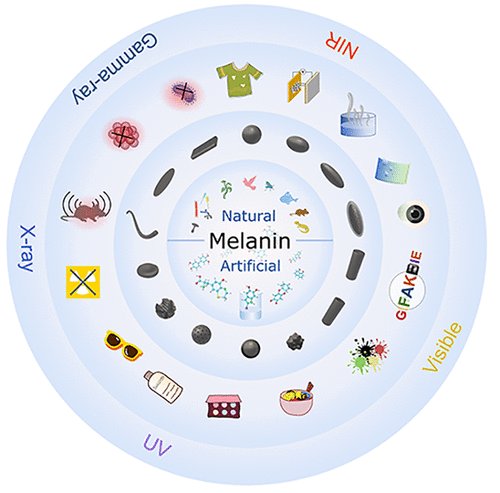
Melanin is the missing link explaining how humans interact with the energy around them.
It uses light to generate an electric field within the body.
Sunlight, grounding, organic food and healthy relationships strengthen this field.
Blue light, non-native EMFs weaken it.
@DaveRogers27 We are not being run by Nazi’s or Jews but by the Crown, the British Political & Financial establishment and the system they created and have lorded over for centuries.
La "désinformation" mettrait en péril la vision commune de ce qu’est la "démocratie", mais celle-ci n��est en réalité qu’un régime politique où le peuple est censé élire ses représentants, lesquels n’ont en fait jamais été choisis par aucun peuple mais imposés à celui-ci.
Disinformation has the power to seriously harm our democracy. The government has said it wants to combat disinformation, and is taking steps to do so. But the we think it should be going further and doing more 🧵
In 1942, C.S. Lewis predicted a future dystopia where:
-Education is leveled to a mediocre state to avoid hurt feelings
-The middle class is hollowed out, removing the primary champions of private excellence
-"Avoiding trauma" becomes the excuse to stop pushing students to their full potential
The obsession with perfect equality ends up destroying human greatness — and it’s fueled by state education, where schools become more like nurseries than academic institutions.
Seems like Lewis’s dystopia is already here.
When older folks seek out more and more sugary foods like candy, cookies and ice cream it often is a signal that the brain is becoming compromised and often precedes dementia
It’s the scale of the lying that’s so appalling. Sometimes you take a step back, and see the massive industry of people telling total lies - knowingly and for profit - and you just can’t process it.
The Dutch Royal Family became multi Billionaires with the International Cocaïne and Opium Trade in World War I and World they earned millions with the supply of drugs to the soldiers of Both sides of the ‘conflict’
https://t.co/2dp73KU3SG
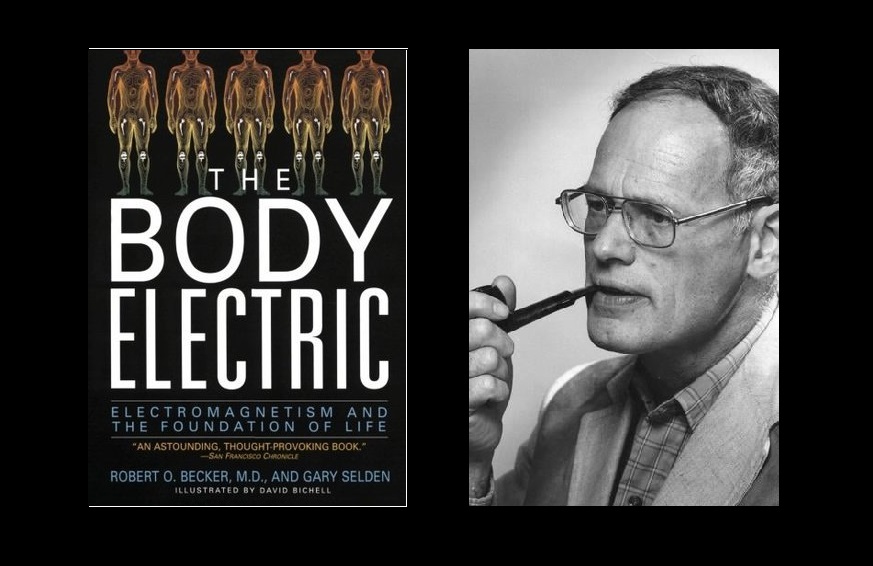
Robert O. Becker discovered a direct current (DC) electrical system in the body that regulates healing, regeneration, and growth.
He speculated that this current ran through semiconductors.
-We now know melanin is one of the most important ones.