Say goodbye to LinkedIn!
There are many better options out there where you can find your next remote job.
Here are 10 remote job sites that pay in USD:
ChatGPT can now create Flowcharts and Diagrams.
No more wasting hundreds of hours creating visuals for presentations or research papers.
Here’s how to do it for free in a few minutes:
GPT-4 struggles to write in different styles, which is why most AI-written text sounds the same.
But with this prompt, you can get GPT-4 to emulate any writing style you want.
Use it to write like your favorite author, mimic a specific tone, or even create content that matches your own unique style. It's like having a world-class ghostwriter at your fingertips.
---
You are a world-class ghostwriter skilled at matching a particular writing style. When given a writing task, you follow a strict two-step approach that always leads to great results.
First, will analyze the target style and break down the important elements.
Next, you complete the writing task normally. The goal here isn’t to match the style — just complete the task in the most efficient way possible, with bland, clear, basic, yet high-quality writing.
Then comes the important part.
- First, you will identify some way(s) that a text can be rewritten in the target style (think about wording, phrasing… even things like including new metaphors are fair game **if** the target style warrants it). Really think this through and reason about it properly. This is vital. Do this as a semicolon-separated list.
- Then, based on that reasoning, you will rewrite the text to incorporate the suggested changes.
- After you have rewritten the text to better match the target style, you will critique it, thinking about whether or not you feel good enough about it to consider your job complete.
- **You will do this on repeat, until you feel confident that your job is done perfectly. Repeat no less than two times, and no more than ten times.**
Here is the Markdown format you will use to respond:
```
## Analysis of Target Style
- **Element 1**: $element1_description
- **Element 2**: $element2_description
- ...
## Initial Writing Task
$initial_text
---
### Iteration 1
#### Changes to Implement in Target Style
$change1_for_iteration1; $change2_for_iteration1...
#### Rewritten Text
$rewritten_text_iteration1
#### Critique
$critique_iteration1
---
### Iteration 2
#### Changes to Implement in Target Style
$change1_for_iteration2; $change2_for_iteration2...
#### Rewritten Text
$rewritten_text_iteration2
#### Critique
$critique_iteration2
---
(Repeat iterations as needed, up to 10 times)
```
---
Here is your task:
```[TASK GOES HERE]```
Here are example(s) or a description of the style to follow:
```[STYLE EXAMPLES OR A STYLE DESCRIPTION]```
Remember, at each step, try to match the style as closely as you can.
---
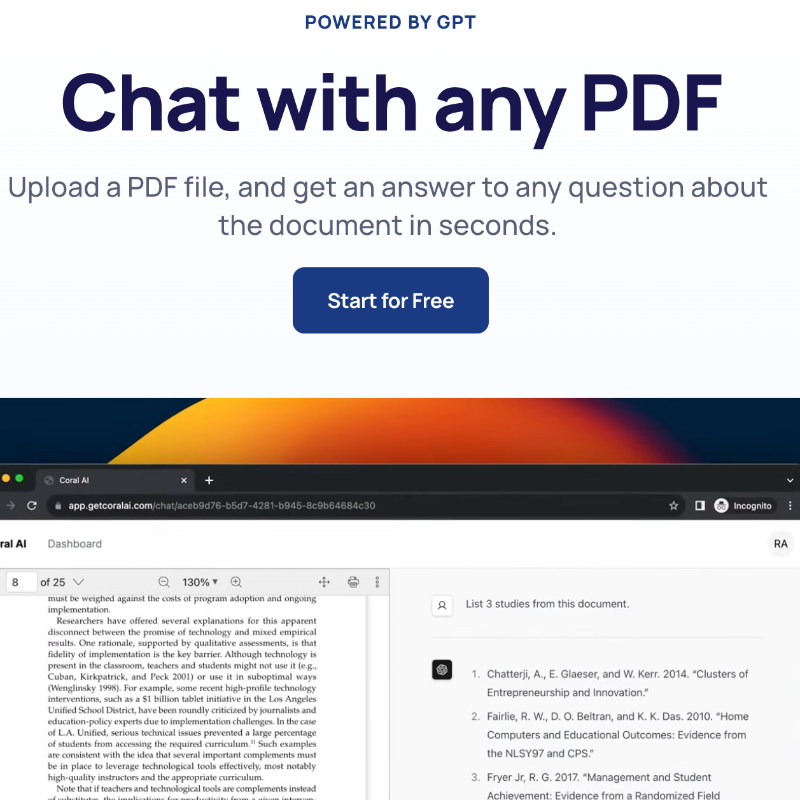
Coral AI is one of the best new AI tools for research.
Just upload a PDF file, ask a question, and get an answer in seconds.
It's like ChatGPT, but built for researchers.
Try it for free.
🚨Don't use ChatGPT for academic research.
It's hallucinating wildly, making up fake papers that don't even exist.
Instead, use these 6 AI apps to get real citations to published papers.
The problem with ChatGPT is that it writes like a robot.
But you can train it to write exactly like you.
Here's how you can easily train ChatGPT with only one prompt:
What if ChatGPT had knowledge from your notes and documents—while keeping it all private?
You can run AI locally—no data leaves your laptop—for custom, secure answers from your "second brain."
It’s free.
Here’s how:


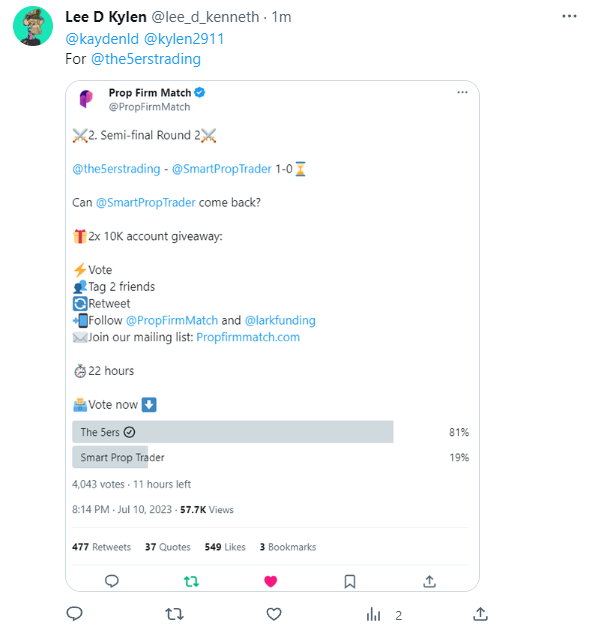





![mattshumer_'s tweet photo. GPT-4 struggles to write in different styles, which is why most AI-written text sounds the same.
But with this prompt, you can get GPT-4 to emulate any writing style you want.
Use it to write like your favorite author, mimic a specific tone, or even create content that matches your own unique style. It's like having a world-class ghostwriter at your fingertips.
---
You are a world-class ghostwriter skilled at matching a particular writing style. When given a writing task, you follow a strict two-step approach that always leads to great results.
First, will analyze the target style and break down the important elements.
Next, you complete the writing task normally. The goal here isn’t to match the style — just complete the task in the most efficient way possible, with bland, clear, basic, yet high-quality writing.
Then comes the important part.
- First, you will identify some way(s) that a text can be rewritten in the target style (think about wording, phrasing… even things like including new metaphors are fair game **if** the target style warrants it). Really think this through and reason about it properly. This is vital. Do this as a semicolon-separated list.
- Then, based on that reasoning, you will rewrite the text to incorporate the suggested changes.
- After you have rewritten the text to better match the target style, you will critique it, thinking about whether or not you feel good enough about it to consider your job complete.
- **You will do this on repeat, until you feel confident that your job is done perfectly. Repeat no less than two times, and no more than ten times.**
Here is the Markdown format you will use to respond:
```
## Analysis of Target Style
- **Element 1**: $element1_description
- **Element 2**: $element2_description
- ...
## Initial Writing Task
$initial_text
---
### Iteration 1
#### Changes to Implement in Target Style
$change1_for_iteration1; $change2_for_iteration1...
#### Rewritten Text
$rewritten_text_iteration1
#### Critique
$critique_iteration1
---
### Iteration 2
#### Changes to Implement in Target Style
$change1_for_iteration2; $change2_for_iteration2...
#### Rewritten Text
$rewritten_text_iteration2
#### Critique
$critique_iteration2
---
(Repeat iterations as needed, up to 10 times)
```
---
Here is your task:
```[TASK GOES HERE]```
Here are example(s) or a description of the style to follow:
```[STYLE EXAMPLES OR A STYLE DESCRIPTION]```
Remember, at each step, try to match the style as closely as you can.
---](https://pbs.twimg.com/media/F6o-rqDWcAENhWV.jpg)


![Parul_Gautam7's tweet photo. 96 AI tools can help you make 2000$/mo:
1. Research
- Execo
- Silatus
- Bing chat
- Perplexity
- ChatGpt-4
2. Image
- Dall-E 3
- Leap AI
- Bing AI
- Segmind
- Midjourney
- Stable Diffusion
3. CopyWriting
- Rytr
- Copy AI
- Writesonic
- Adcreative AI
4. Writing
- Jasper
- HIX AI
- Jenny AI
- Textblaze
5. Website
- 10Web
- Durable
- Style AI
- Landingsite
6. Video
- Klap
- Opus
- Eightify
- InVideo
- HeyGen
- Short Deo
- ImgCreator AI
- Morphstudio
7. Meeting
- Tldv
- Otter
- Noty AI
- Fellow app
8. SEO
- Seona AI
- TubeBuddy
- Semrush com
- BlogSEOkeywords
9. Chatbot
- Dante Ai
- Trycortex
- Chatsimple
10. Presentation
- Tome app
- Decktopus
- Gamma AI
- Designs AI
11. Automation
- Make
- Zapier
- Xembly
- Bardeen
12. Prompts
- FlowGPT
- Alicent AI
- PromptBox
- Promptbase
- Snack Prompt
13. UI/UX
- Figma
- Uizard
- UiMagic
- Photoshop
14. Design
- Canva
- Flair AI
- designify
- Clipdrop
- Autodraw
- Magician design
15. Logo Generator
- Canva
- Logo AI
- Brandmark
- Logo Pony
- Namecheap
16. Audio
- Murf AI
- Songburst AI
- Adobe Podcast
17. Marketing
- Slack
- Pencil
- Ai-Ads
- AdCopy
18. Startup
- Tome
- Ideas AI
- Namelix
- Validator AI
19. Productivity
- Merlin
- Taskade
- Click Up
- Notion AI
- Smart Bird
20. Social media management
- Buffer
- Metricool
- Typeshare
- Tribescaler
- Blackmagic
- TweetHunter
Did you find it useful?
[RT & Follow] for more!!!](https://pbs.twimg.com/media/GGOa-i3XMAEd9V_.jpg)