@TheDoctorLogos Nope. This is the perfect egg drawing, according to Fritz Hügelschäffer [Egg and Math: Introducing a Universal Formula for Egg Shape - 2021]. B is the maximum breadth (on the Y axis), L is the length (on the X axis), and w is the parameter (here, w= 2.5).
FREE math book.
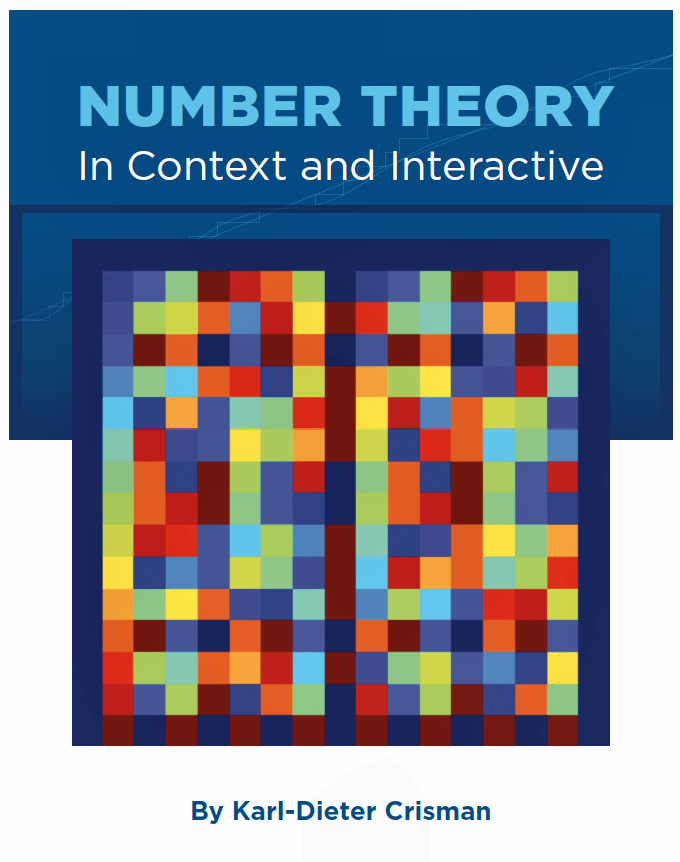
"Number Theory: In Context and Interactive" by Crisman."
"Welcome to Number Theory! This book is an intro to the theory and practice of the integers, especially positive integers.... We focus on connecting it to many areas of math and dynamic, computer-assisted interaction. Let’s explore!" Topics: beginner's intro to the Riemann Hypothesis, modular arithmetic, congruences, and prime numbers. Quadratic reciprocity. Cryptography, geometric connections, arithmetic functions, and basic analytic number theory.
Link: https://t.co/JTx1nNBsGo
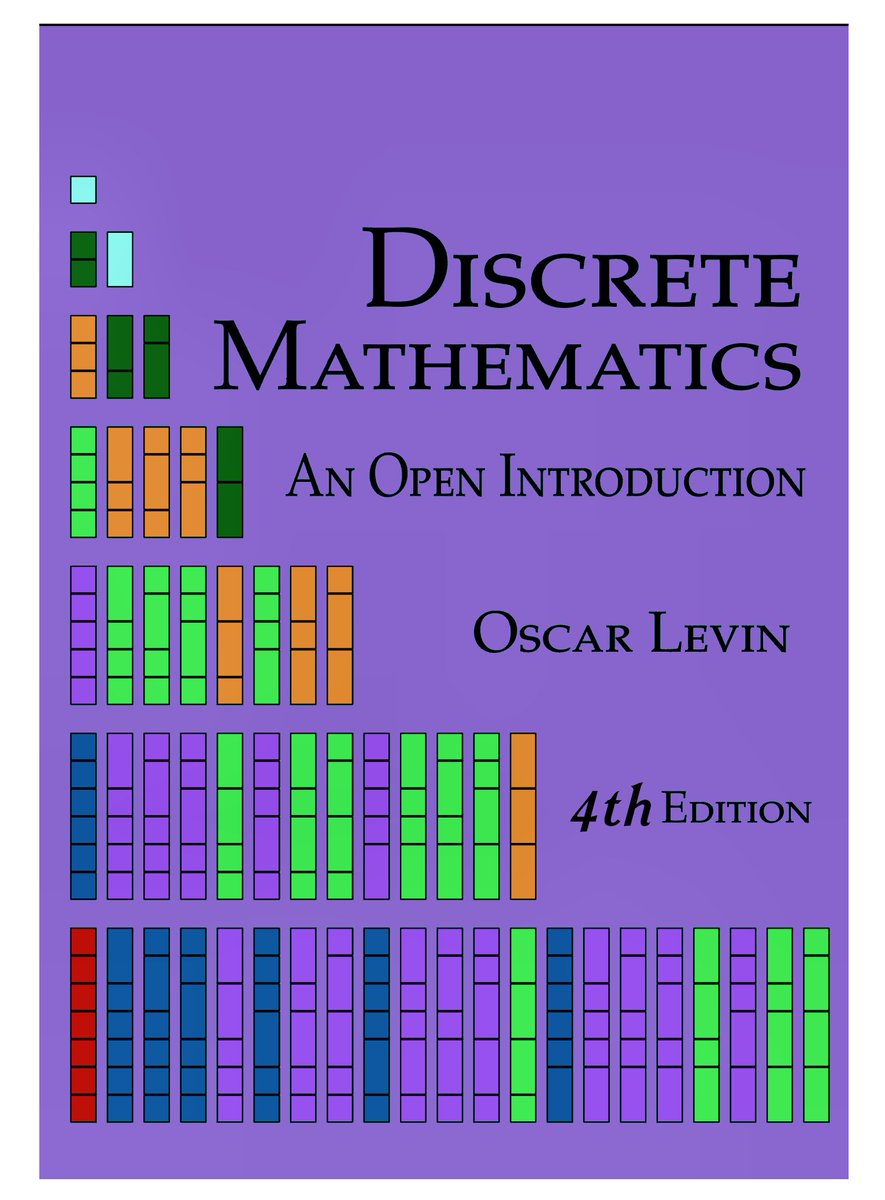
FREE math book. What really is "Discrete Mathematics"?
Four main topics of this book: combinatorics (the theory of ways things combine and how to count these ways), sequences, symbolic logic, and graph theory. This new edition starts with logic and proofs, then practices those proofs with graph theory. The second half of the book contains material on counting (with a new "application to probability" section) and sequences. There's also a stronger emphasis on discrete structures, which should make the book more useful for students in Computer Science, while still focusing on understanding mathematical concepts essential for math majors and future math TEACHERS.
"Discrete Mathematics: An Open Introduction," by Oscar Levin.
Link: https://t.co/K6v9pBfgye
This 2014 issue of "Mathematics Teacher" is readable here for FREE: https://t.co/VFN41sULDw
Topics: magic squares, tetrahedral numbers, probability & perception, curve fitting, paper folding promoting mathematical thinking, etc. The award-winning Mathematics Teacher focused on improving math instruction for grades 8–14. It provided a forum for sharing activities and teaching strategies, deepening understanding of math ideas, and linking mathematics education research to practice.
Ideally our students would understand that logarithms are exponents before their own children are learning that logarithms are exponents (this was me).
https://t.co/1Km9fovoSu
#MathIsFigureOutAble#MTBoS#ITeachMath#MathEd
Retrieval practice isn’t about putting students on the spot. Done well, it builds confidence, understanding, and long-term retention. This episode digs into that distinction.
@smorrisey@effortfuleduktr@bamradionetwork@SciInTheMaking https://t.co/DklMio7ed2 #TEACHers
Why do we use word problems? Is it because they exist in real life? Not that I can see. Is it because they're the best way to instruct students? Almost certainly no. Or, do we use them because that's the way we've always taught math?
https://t.co/xemZoyRIqD
The Mirror and the Map is a film honoring Maryam Mirzakhani’s life, mathematics, and legacy, a powerful reminder that curiosity and discovery is deeply human.
Axiom is honored to do our part in supporting the film’s educational mission so this story reaches the next generation.
🥳 It's here! The final video in our Five Big Ideas at Secondary series!
@LearningMaths explains how careful use of variation helps students notice mathematical structure, think deeply and ask great questions.
I shared how you can elevate your math instruction by learning more about Problem Strings. Understand what makes them so impactful and how to use them effectively to help all students grow!
Link: https://t.co/POeQi0dR09
#MathIsFigureOutAble#MTBoS#ITeachMath#MathEd
📣 Another #MathsConf39 workshop announcement!
✨ Using Variation Theory in A Level Maths
with Natan Lev (@mrlevmaths.bsky.social) & Shane Steele (@mrsteele314)
How can we design questions that get students thinking about exactly what we want them to? Variation theory offers a powerful approach—using carefully structured sequences of questions to highlight concepts, address misconceptions, and deepen understanding.
In this workshop, you’ll see how variation theory can be applied at A Level to:
• Write question sequences that focus attention on key ideas
• Zoom in on common misconceptions
• Explore edge cases within topics in engaging ways
• Provide meaningful CPD within a department
✨ What you’ll take away:
✅ An understanding of how variation theory can shape question design
✅ Experience writing your own variation-based sequences
✅ A framework to continue creating tasks in your own context
✅ Strategies to use these tasks for both classroom impact and departmental CPD
Leave ready to design purposeful, thought-provoking questions that truly enhance A Level learning.
Learn more and book your tickets: https://t.co/h3ORIrItz4
💻 This year discover the Five Big Ideas at the heart of teaching for mastery💗 coherence, representation and structure, fluency, variation and mathematical thinking.
Explore our handy videos to help you bring them to life in your lessons.
#NCETMWeekInFocus
One interpretation of Cognitive Load Theory that can go wrong, especially in mathematics teaching.
Can you imagine what can go wrong if people who do not math, "simplify" math-ing into the small steps they think are important?
#MathIsFigureOutAble#MTBoS#ITeachMath#MathEd
Our new book: Data Minds: How Today's Teachers can prepare Students for Tomorrow's World is now available to buy. For those who are curious about it - Corwin is sharing the first chapter free on their website!
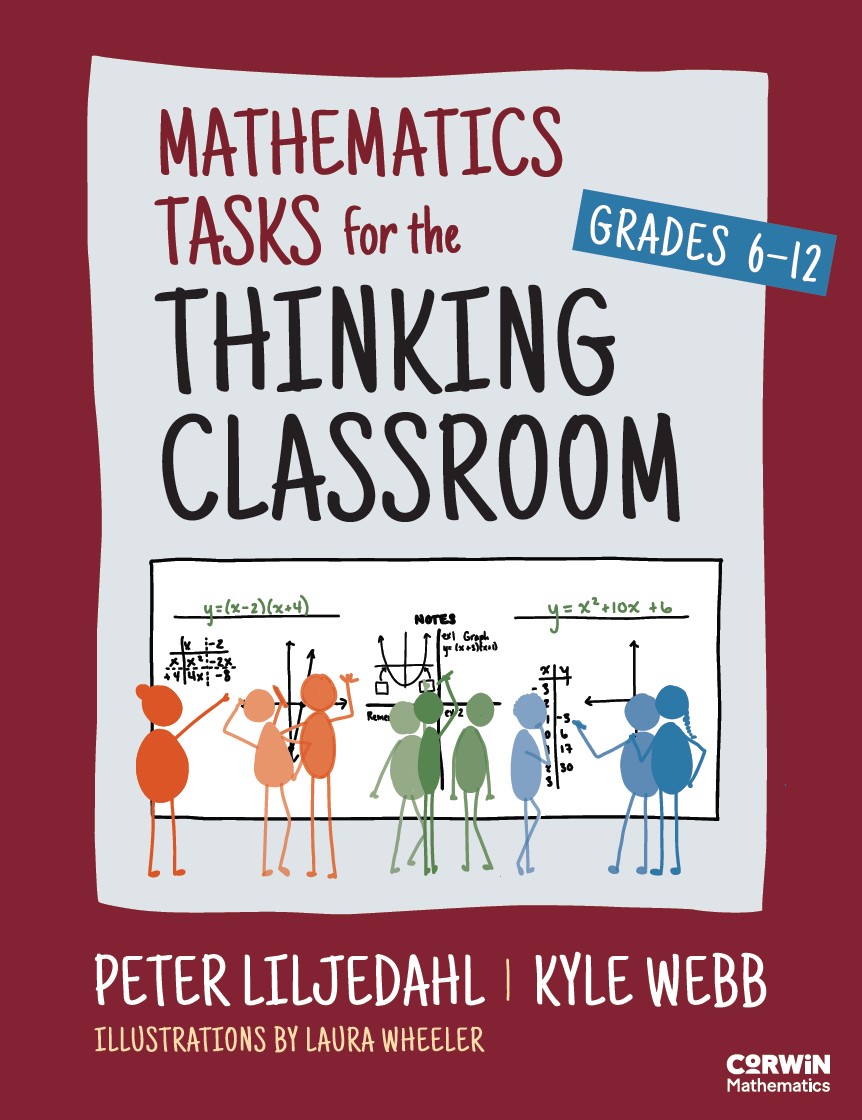
The 6-12 Task book available for pre-order. For US teachers use code SAVE20 at Corwin (https://t.co/XPuPM6qo3Y) to receive 20% off your order! For Canadian teachers use code TASKS20 at UTP (https://t.co/G5KcunWDDJ) to receive 20% off your order!


![nilostolte's tweet photo. @TheDoctorLogos Nope. This is the perfect egg drawing, according to Fritz Hügelschäffer [Egg and Math: Introducing a Universal Formula for Egg Shape - 2021]. B is the maximum breadth (on the Y axis), L is the length (on the X axis), and w is the parameter (here, w= 2.5). https://t.co/2i08YpZ4js](https://pbs.twimg.com/media/HGBxw4LW8AEArES.png)