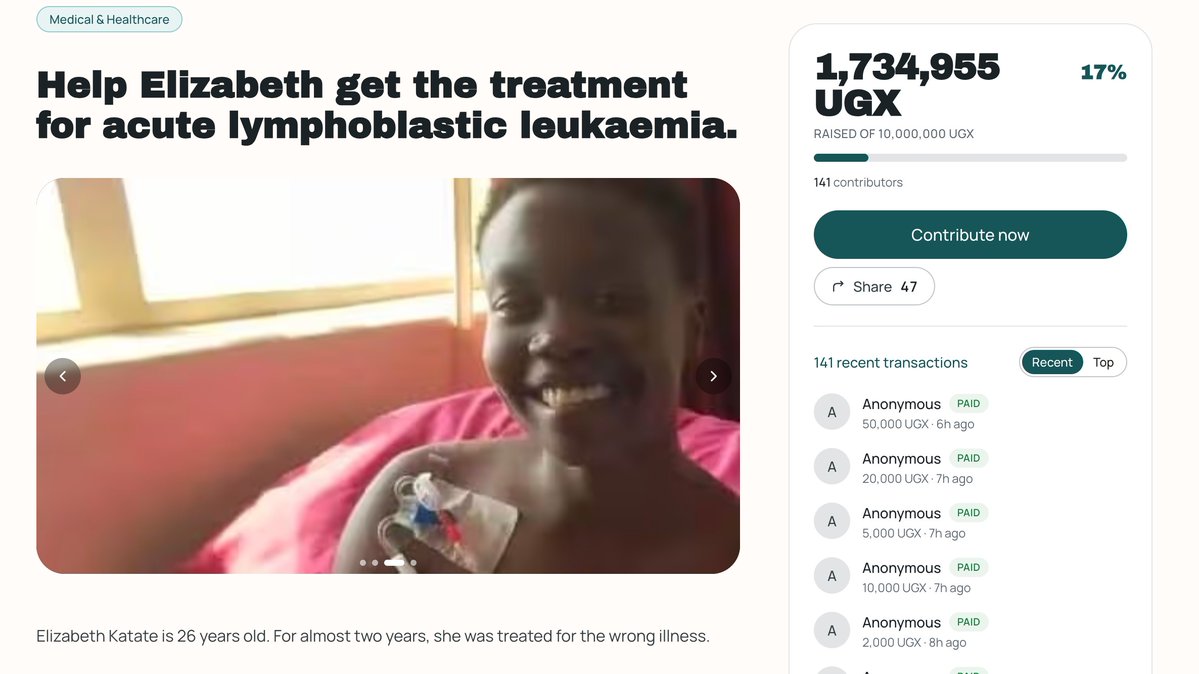
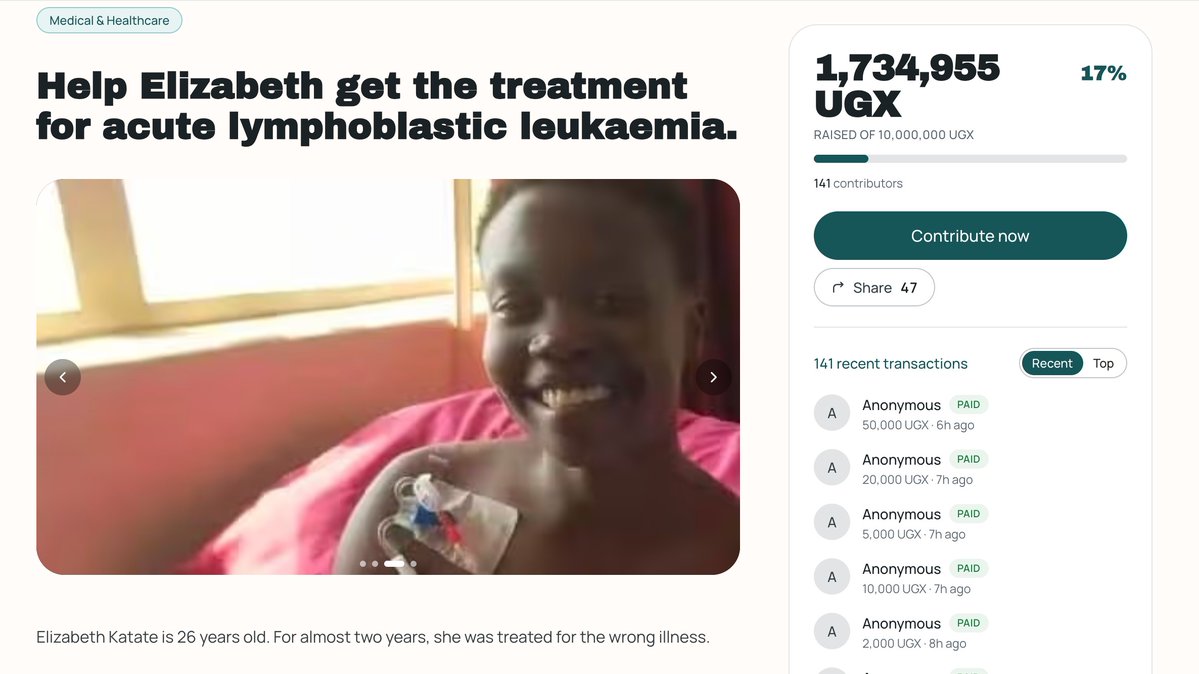
No one chooses cancer. Elizabeth Katate, 26, is facing blood cancer at the Uganda Cancer Institute. She needs urgent treatment to keep going. Donate today and help her through this fight:
Cancer doesn’t ask for permission. Elizabeth Katate, 26, is battling blood cancer and a serious infection at the Uganda Cancer Institute.
Every bit of support helps her stay strong and keep fighting. Donate now to stand with her:
@LycamobileUG Hello how are you i cant access internet in Nansana gganda kamu kamu near zion schools for over two weeks nowMy number is 0727493884 and i have a Samsung S20 fe but even on other phones this line wont access internetFor two weeks
I have an active 20gb bundle
@UEDCLTD@cintakirabo Hello
How are you doing
We have no electricity in Nansana gganda kamu kamu near zion schools.
Account number is 04238818159
Please help us
@UEDCLTD@NicksonTwesigye Hello
How are you doing
We have no electricity in Nansana gganda kamu kamu near zion schools.
Account number is 04238818159
Please help us
This is 24. 🤍
Happy birthdayyyyyy to me. 🥳
Today, I pray for that man somewhere in the world—born on the same day as me, yet he has never heard the Gospel.
May the light of Christ pierce the darkness around him. May he encounter JESUS.
Lord, let him hear. 🤍
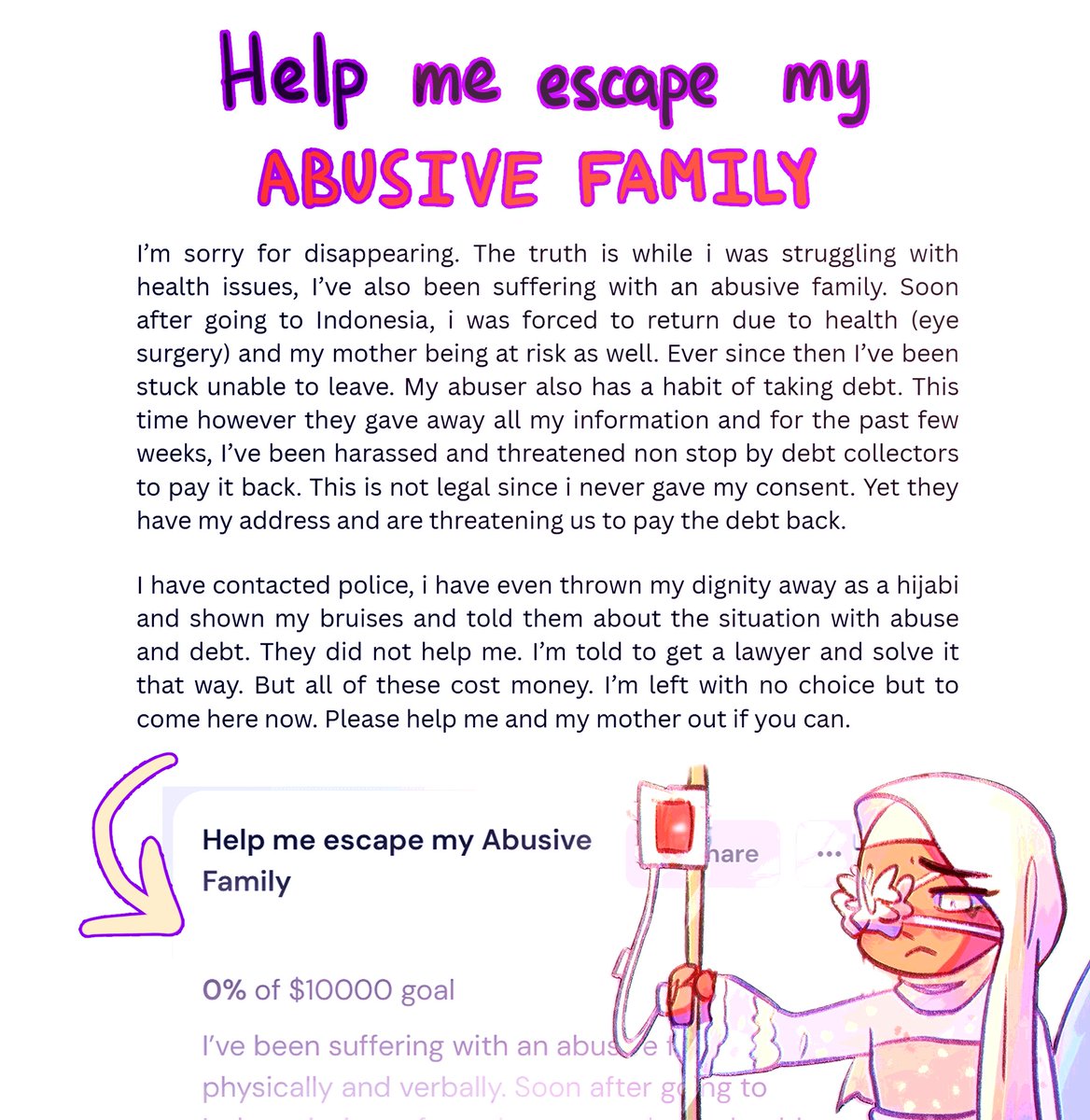
I'm sorry for disappearing. The truth is I've been suffering with abuse both physically and verbally and now my situation got even more dangerous.
Please consider helping me out if you can. Any help is appreciated. If u can't donate, sharing helps a lot too.
Nine convicted over kidnap, murder of Susan Magara
Justice Alex Mackay Ajiji on Monday found Yusuf Lubega, Mahad Kisalita, Ismail Bukenya, Abubaker Kyewokya, Hassan Wasswa, Abbas Musa Buwembo, Hussein Kato Miiro, Hajjara Nakandi and Muzamir Ssali guilty of kidnapping Magara with intent to procure a $1.5m ransom before murdering her after holding her captive for nearly three weeks.
The nine had been jointly charged with kidnap with intent to procure a ransom and murder. The prosecution said they abducted Magara from Lungujja, Kampala, on February 7, 2018, before killing her between February 25 and 27, 2018, at Konge.
https://t.co/YNLrD7wrAD
@LycamobileUG@lucky_star_ug Lyca im in Nansana gganda slow network for five days now +256727493884 is the number. I have an active 20gb bundle. My phone is a samsung s20fe
Bilha Kwamboka Omare was a 32 year old Kenyan woman, and a mother of three children from Kisii county. She was raised in the Seventh-day Adventist (SDA) faith, a community that remained central to her spiritual and social life.
Seeking higher education and better economic prospects, Bilha migrated from Kenya to the United States as a young adult alongside her husband, Justus Ogendi Kebabe. The young family eventually settled in Vadnais Heights, Minnesota—a St. Paul suburb with a growing Kenyan immigrant population. Together, they raised three children: Kinley, Ivyn, and a younger daughter.
In Minnesota, Bilha balanced the demanding responsibilities of motherhood with a rigorous academic schedule. She enrolled in nursing school, aiming to join the healthcare sector, which is a highly prominent career path within the Kenyan diaspora.
By the autumn of 2010, she was a 32-year-old mother on the cusp of a major life milestone. She was only two months away from completing her nursing degree and had already begun inviting extended family from both Kenya and the U.S. East Coast to attend her December graduation ceremony. Tragically, her life and aspirations were cut short in October 2010 due to a severe instance of domestic violence.
Justus Ogendi Kebabe was a 43 year old Kenyan. He grew up in Gesere village, located in the Nyaribari Chache constituency of Kisii County. Like his wife's family, he belonged to the Kisii community and was affiliated with the Seventh-day Adventist (SDA) church networks that connected many members of the local diaspora.
Kebabe was among the earlier waves of Kenyan immigrants from his region to move to America, migrating to the United States in 1996. He lived in the U.S. for seven years before his wife, Bilha Omare, joined him in 2003.
On the surface, Bilha Omare and Justus Ogendi Kebabe lived a modest, hardworking lifestyle centered around family, church, and academic advancement. However, behind closed doors, their daily life was defined by severe financial stress, isolation, and a toxic culture of domestic terror. Bilha Omare had previously disclosed to law enforcement that Kebabe had subjected her to years of physical abuse, including an incident in Kenya where he beat her unconscious.
Neighbors and police reports later revealed that Bilha lived a highly restricted lifestyle defined by fear. Her daily movements and social interactions were intensely monitored by her husband. Kebabe struggled heavily with the shifting gender roles of the U.S. In Kenya, he held patriarchal authority, but in America, Bilha’s rapid academic progress toward a lucrative nursing career created massive marital friction.
Close family friends revealed to the media that Kebabe was "over-imagining" his wife's interactions. He reportedly grew deeply paranoid and jealous watching her interact with male classmates from her nursing school and coworkers at her healthcare job.
Kebabe, who had previously worked as a registered nursing assistant, had lost his job. He blamed his unemployment on a 2008 domestic violence conviction. Consequently, he felt immense pressure and shame as the family's primary financial dynamics shifted.
With Bilha just two months away from graduating and entering a high-paying nursing career, prosecutors and close friends noted that Kebabe was consumed by a severe fear of abandonment. He believed she would leave the marriage once she achieved financial independence. His unfounded accusations of infidelity were an extension of his pathological jealousy and a desire to maintain absolute control over her life.
During the first week of October 2010. Bilha suddenly stopped showing up to her healthcare job, and the two older children, Kinley and Ivyn, were kept home from school. Neighbors later reported that the apartment went unusually quiet during those final days, masking the escalating hostage-like environment inside before the attack occurred on October 11.
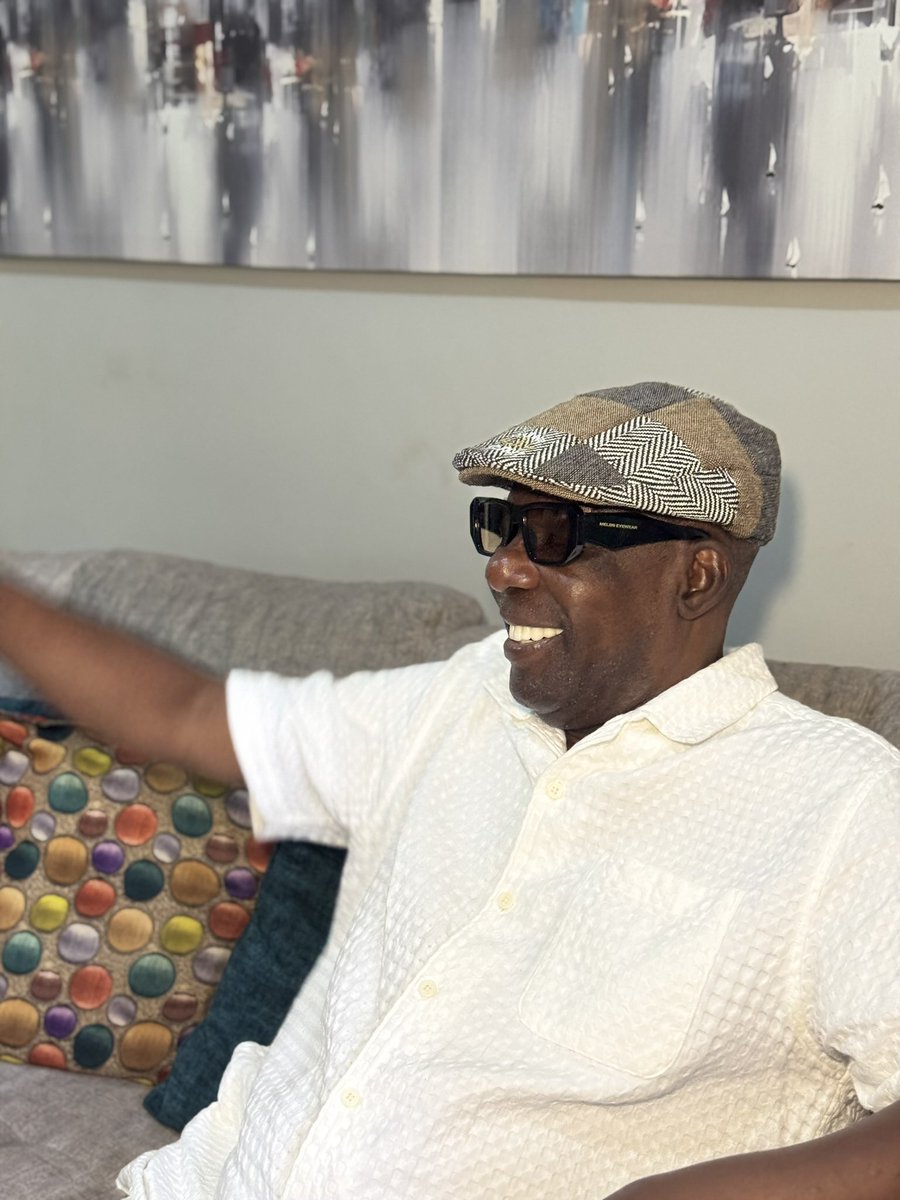
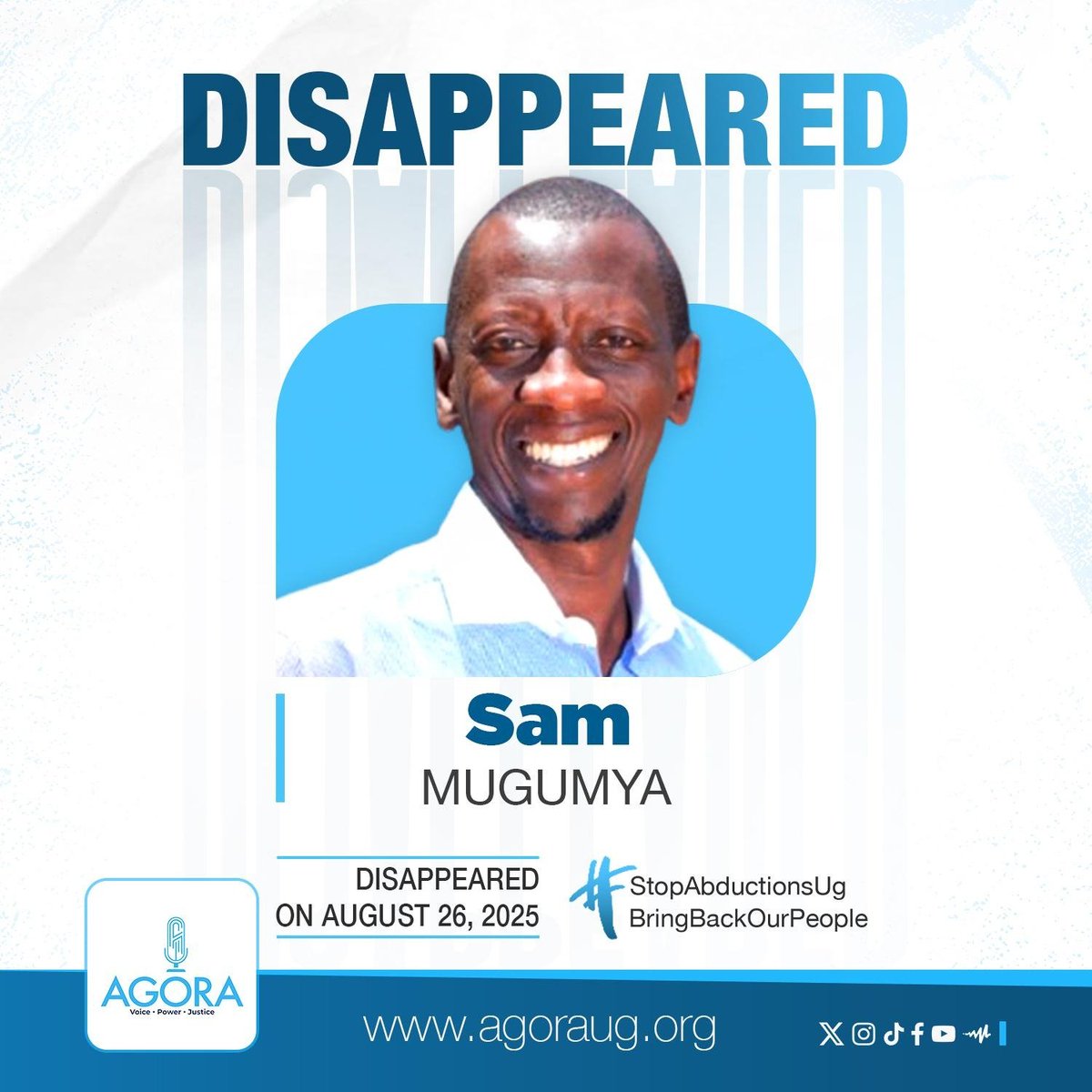
Next month, Comrade Sam Mugumya will mark a year in enforced disappearance at the hands of the Ugandan state. He endured 8 years in a terrible prison in the DRC. But at least then, his elderly mother knew he was alive. She had hope. Now his own country has disappeared him!