Grace removed the barrier. It did not remove the altar.
The veil was torn, not so that men would stop coming, but so that men could finally come boldly.
Grace did not abolish prayer. Grace abolished the distance.
Grace did not abolish fasting. Grace abolished the idea that fasting purchases what Christ has already paid for.
Grace did not abolish consecration. Grace changed its motivation. We are not consecrated to become accepted. We consecrate because we have been accepted.
And here is the scandal of our generation: we have more access and sometimes less appetite.
Men who believed they had to climb mountains climbed them. Men who thought they had to tarry all night tarried.
Now we preach that the veil is torn, the blood has spoken, the throne is accessible, and yet we barely enter.
Something is wrong when superior revelation produces inferior devotion
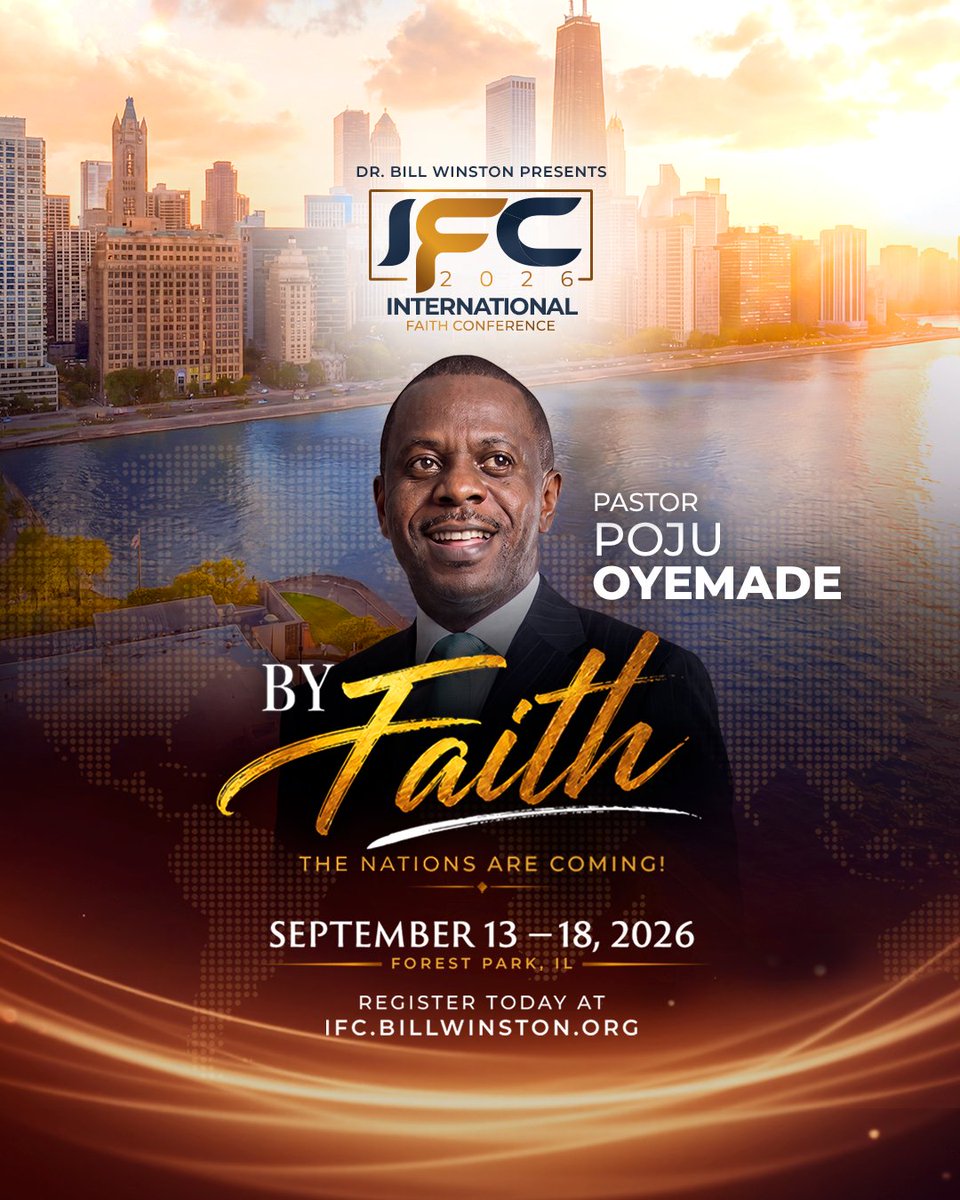
We’re excited to welcome @PastorPoju Oyemade, Senior Pastor and Founder of The Covenant Nation in Lagos, Nigeria. Pastor Poju brings a powerful global voice to this year’s conference, September 13 – 18, 2026!
#ByFaith#TheNationsAreComing#BWMIFC26
https://t.co/GiyGD8qdmc
A seat has been prepared.
A Word has been appointed.
An encounter awaits.
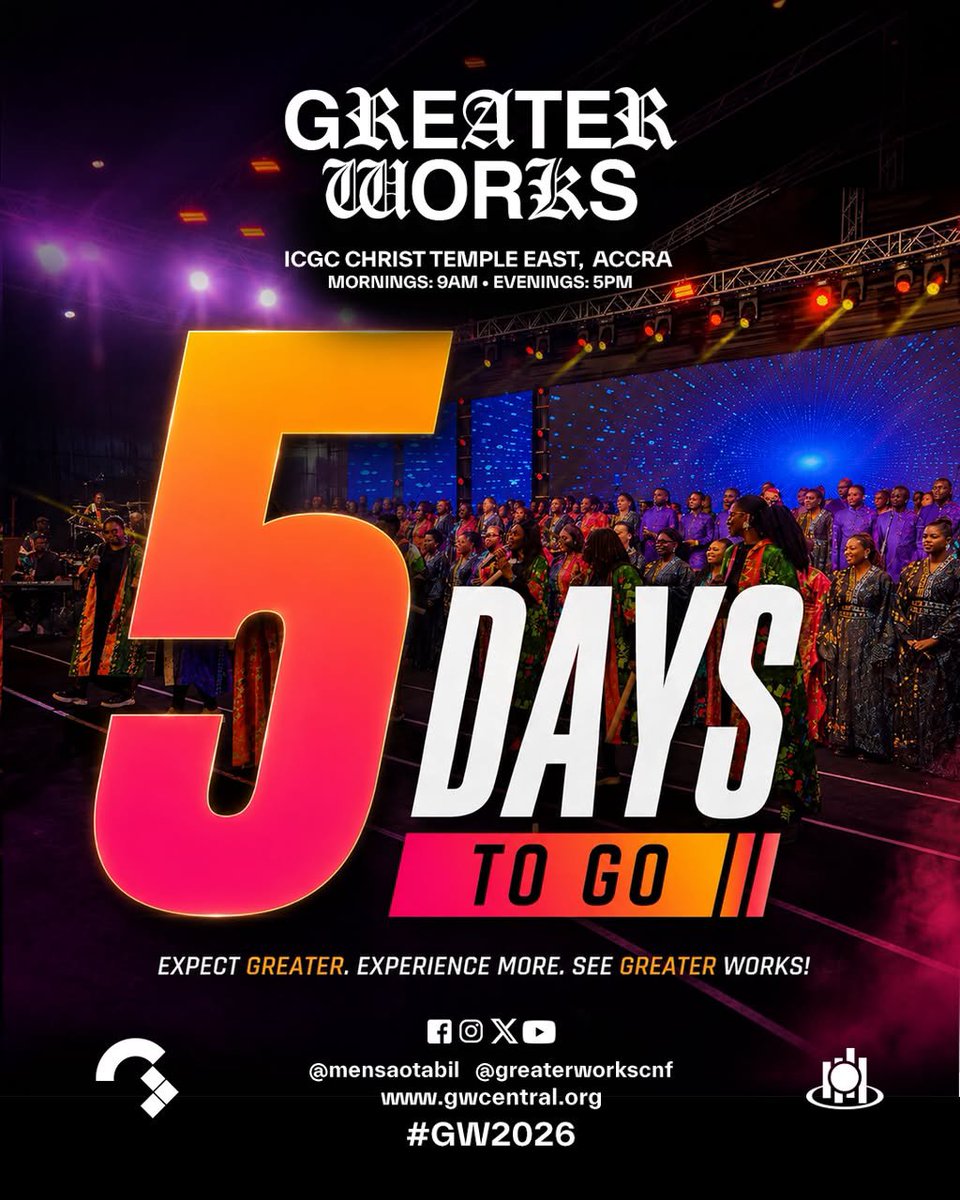
In 5 days, we gather for Greater Works 2026. Invite your family, bring a friend, and come expectant.
Your next testimony is here.
#GW2026
“Now to Him who is able to do exceedingly abundantly above all that we ask or think…” — Ephesians 3:20
In 6 days, we gather with hearts full of expectation, believing God to do exceedingly and abundantly.
See you at Greater Works 2026.
#GW2026
Dear Minister,
Luke's opening words should permanently alter the way a minister thinks about ministry. They dismantle the false idea that spiritual authority is built merely on passion, charisma, or even personal experience. Luke demonstrates that there is another path to authority: disciplined, painstaking research under the guidance of the Holy Spirit.
How does a man who never walked the dusty roads of Galilee produce not one but two inspired books that now shape the faith of billions? How does someone who was absent become the historian of Christianity? Luke himself refuses to leave us guessing. Before he tells us anything about Jesus, he tells us how he came to know what he knew.
He writes:
"Forasmuch as many have taken in hand to set forth in order a declaration of those things which are most surely believed among us... it seemed good to me also, having had perfect understanding of all things from the very first, to write unto thee in order..." (Luke 1:1 to 3).
Those are not the words of a man claiming secret revelation. They are the words of an investigator explaining his method.
Luke makes no attempt to present himself as an eyewitness. Instead, he openly acknowledges his dependence upon those who were. He received testimony from those "who from the beginning were eyewitnesses and ministers of the word." He listened. He questioned. He compared accounts. He verified facts. He traced events carefully. Only after arriving at what he calls "perfect understanding" did he begin to write.
This is remarkable. The Holy Spirit inspired the Scriptures, yet He did not bypass careful investigation. Inspiration did not eliminate research. Divine revelation did not excuse intellectual discipline. The Spirit worked through a man who was willing to labour until the evidence was coherent.
That should humble every minister.
Some imagine that because they can preach, they no longer need to study. Others mistake spiritual excitement for theological depth. Luke exposes both errors. The man who wrote the longest Gospel was not present at the events he described, yet through disciplined investigation he produced the most orderly account of the life of Christ. Then he wrote Acts, the only inspired historical record of how the gospel moved from Jerusalem to Judea, Samaria, and eventually to the Gentile world.
Without Luke's second volume, we would know remarkably little about Pentecost, Stephen, Philip, the conversion of Saul, the missionary journeys, the Jerusalem Council, the planting of the Gentile churches, or Paul's imprisonment in Rome. The bridge between the earthly ministry of Christ and the expansion of the Church was constructed by a physician who knew how to investigate before he wrote.
That should permanently destroy the excuse, "I was not there."
Luke was not there either.
He simply refused to let his absence become an excuse for ignorance.
He compensated for what he lacked in experience with extraordinary diligence in research.
Here is the lesson every minister must learn: the future belongs not merely to those who have experiences with God, but to those who can faithfully investigate, organise, interpret, and communicate the works of God. Experience may ignite a ministry, but disciplined understanding sustains it. Memories fade. Eyewitnesses die. Feelings fluctuate. Careful scholarship endures.
This is why every minister must become a researcher of the things of God.
Research is not the enemy of spirituality. It is one of its greatest servants.
Every sermon deserves investigation. Every doctrine deserves examination. Every testimony deserves verification. Every interpretation deserves comparison with the whole counsel of Scripture. God has never rewarded intellectual laziness simply because it was wrapped in spiritual language.
Luke stands as God's enduring witness that careful research is itself a ministry.
So stop seeing yourself merely as a preacher.
See yourself as an investigator of divine truth.
Congratulations to Prof. Leander Kandilige on your promotion to the rank of Full Professor of Migration and Development. We celebrate your outstanding contributions to migration scholarship, policy and practice in Ghana and beyond.
#IntegriProcedamus#AcademicExcellence
Before you surrender to the weight of life's battles, remember this: you are anointed.
The anointing is not a religious decoration. It is God's empowerment for the realities of life. Scripture declares that "the yoke shall be destroyed because of the anointing" (Isaiah 10:27). The anointing exists to remove burdens and break yokes.
Life's vicissitudes rarely announce themselves. They come as burdens that weigh down the heart, pressure that crushes the mind, disappointments that drain your strength, and yokes that seek to enslave your future. But God never intended you to confront them empty-handed.
The anointing is part of your divine defense. It is heaven's provision against the pressures of earth. It gives strength when you should have collapsed, wisdom when you should have been confused, courage when fear comes knocking, and power to break what human effort cannot.
Do not merely admire the anointing—leverage it. Pray. Stand on the Word. Walk in faith. Stir up the gift of God within you. Refuse to bow to burdens that the anointing was given to lift or submit to yokes that the anointing was designed to destroy.
You may be under pressure, but you are not without power. You may be in a battle, but you are not without divine backing.
You are anointed. Live like it. Pray like it. Believe like it. And watch burdens lift and yokes shatter under the power of God.
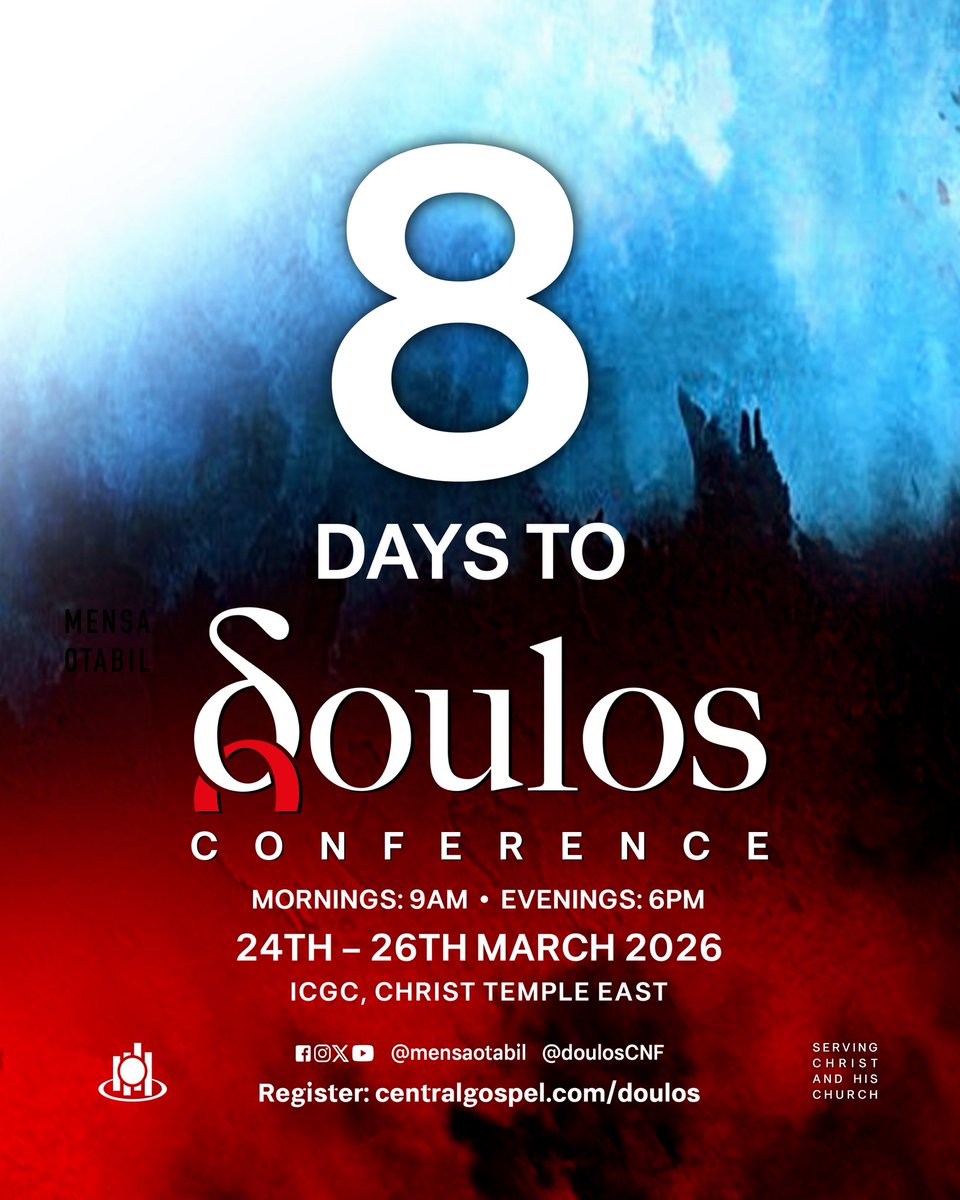
In 8 days, we will be joined by leadership expert Dr. @samchand, bringing decades of wisdom and insight to pastors and church leaders.
This will be a powerful time of learning, reflection, and equipping for more effective Kingdom service.
If you lead, serve, or are preparing for leadership, this is a moment you don’t want to miss.
Register now: https://t.co/LLyVVwXzao
#DoulosCNF
African mobility debates are evolving and new voices, evidence and perspectives are needed to shape what comes next.
Submission deadline: 1 March 2026
Take part by submitting your abstract or panel proposal: https://t.co/ZxVFakVIbC
Be part of the conversations.
#CMSat20
🚨‼️Solomon wrote Ecclesiastes like a man finally telling the truth after a lifetime of pretending. He is not trying to help you “find yourself.” He is exposing what you become when you live as if this world is all there is. That is why the book is so sharp: you are watching the wisest king on earth run the experiment every sinner dreams about. Wealth, pleasure, projects, entertainment, learning, reputation, and control, all poured into one life, and the conclusion is still the same: “Vanity of vanities, saith the Preacher, vanity of vanities; all is vanity” (Ecclesiastes 1:2). Modern men keep acting like they will be the exception, as if their next purchase or next promotion will finally satisfy the hole in their chest. Solomon had more than they will ever touch, and God let him write the report so you do not have to waste your life repeating the same failure.
Chapter by chapter, Solomon turns his kingdom into a laboratory and his heart into the test site. He admits, “Whatsoever mine eyes desired I kept not from them” (Ecclesiastes 2:10), which ought to embarrass every preacher who tells people to follow their heart. He then moves to the subject of time and shows you the cage: “To every thing there is a season” (Ecclesiastes 3:1). That verse is not a sentimental line for funerals, it is a warning label. Time gives, time takes, and you cannot control the seasons no matter how spiritual your vocabulary sounds. Solomon says God placed eternity in man, but man cannot find out the work of God from beginning to end (Ecclesiastes 3:11). In other words, the creature can see the gears turning but cannot interpret the whole machine without revelation, which is why modern man is always anxious, always managing, always trying to force certainty out of a world God designed to remind him he is not God.
Then Solomon looks at society and shows you what civilization becomes without the fear of God. He sees oppression with no comforter, rivalry driving labor, and loneliness sitting at the top like a king (Ecclesiastes 4:1-8). He warns that religion can become mouth worship, rash vows, and empty performance when a man talks at God but does not tremble before Him (Ecclesiastes 5:1-7). He crushes the success myth by showing that having is not the same as enjoying, and God can allow a man to gain everything and still taste nothing (Ecclesiastes 6:2). He tells you funerals teach more truth than parties, rebukes help more than applause, and that much wisdom can turn into much grief when it is not anchored in the fear of the Lord (Ecclesiastes 7:2-3; 1:18). Under the sun, man’s brightest thoughts still cannot straighten what sin has bent, because “That which is crooked cannot be made straight” (Ecclesiastes 1:15).
The punchline of the whole book is that Solomon does not let you stop at the diagnosis. He marches you to the courthouse. He admits that time and chance hit everybody, that the swift do not always win, and that death levels kings and beggars alike, which is why atheists love to camp in Ecclesiastes 9 and pretend hopelessness is wisdom (Ecclesiastes 9:11-12). But Ecclesiastes ends with the Creator, not the creature: “Remember now thy Creator in the days of thy youth” (Ecclesiastes 12:1). Then comes the final blow that wraps the whole series: “For God shall bring every work into judgment, with every secret thing” (Ecclesiastes 12:14). Ecclesiastes ends in judgment because judgment forces the only question that matters: how will you stand there. Solomon stops at the courtroom door, but the Gospel answers what he only points toward, because the only escape from vanity, fear, and final accountability is not self improvement, but the righteousness of Jesus Christ.
We will be holding a Pastors and Ministers Conference focused on discipleship.
Our great commission reads this way
Matthew 28:19
"Go then and make disciples of all the nations, baptizing them into the name of the Father and of the Son and of the Holy Spirit"
If you intend to physically attend this conference then you should register here today.
Register https://t.co/9VjoRBrYZv
Admission is free.
Date: 14th to 16th April.
Venue: The Covenant Place Iganmu Lagos.
Time: 9.00am to 2.00pm.
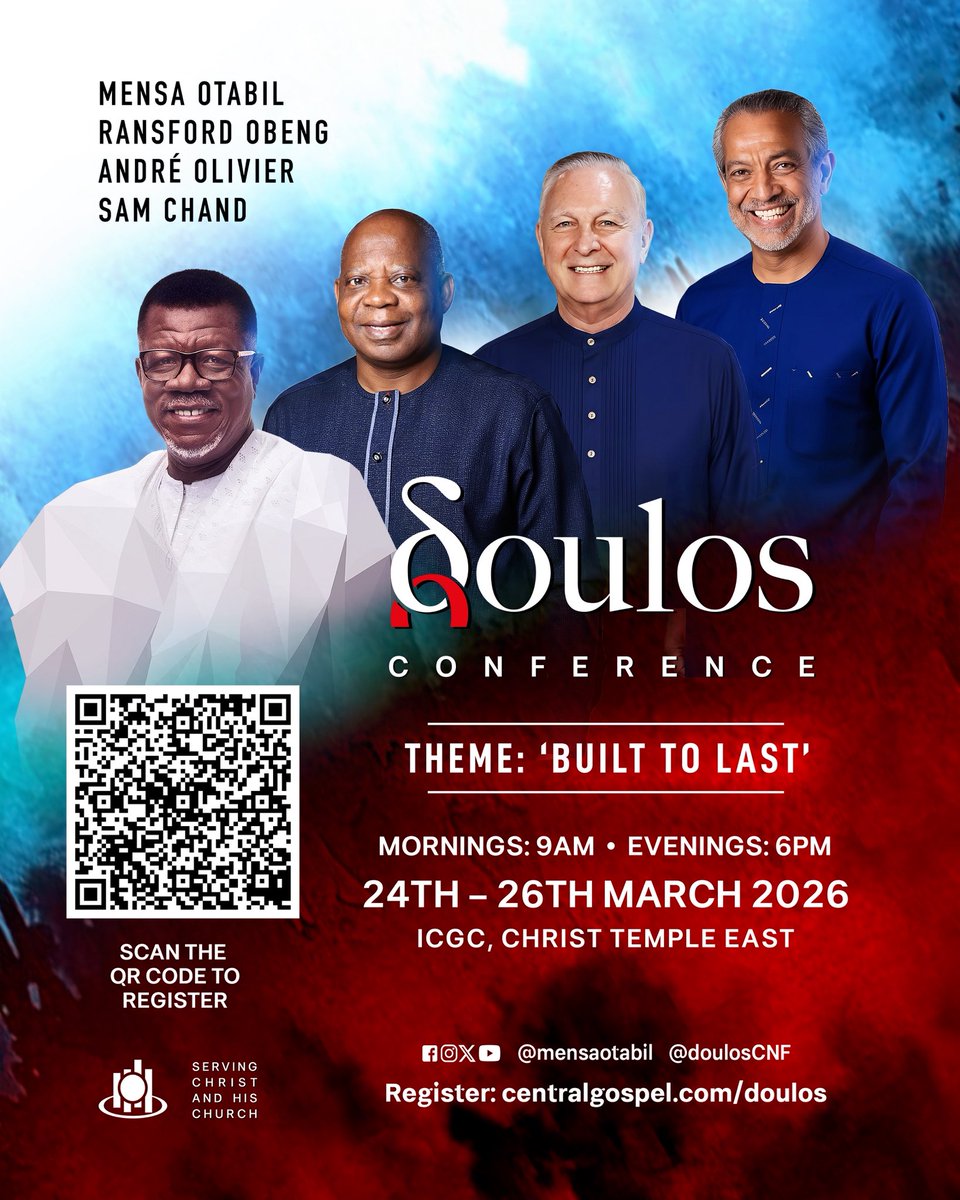
Learn from seasoned ministry and leadership voices at the Doulos Conference; Sam Chand, André Olivier, Ransford Obeng, and your host Mensa Otabil
Register today at https://t.co/ziUIDFs2kw
Doulos…..Serving Christ and His Church
#DoulosCNF
There is a wisdom woven into the fabric of creation itself that honors the pause before the decision. God did not create in one unbroken surge. He worked, and then He rested, and called the rhythm good.
The selah embedded in the Psalms is not mere musical notation. It is a theological instruction: stop here, let this land, allow the weight of what has been spoken to settle before you move on.
Proverbs 19:2 warns that “desire without knowledge is not good, and whoever makes haste with his feet misses his way.” The Hebrew carries the sense of a soul running hot, outpacing its own discernment. Impulsivity is not faith. It is the refusal to let wisdom do its deeper work beneath the surface of conscious thought. When we “sleep on it,” we are not being passive. We are giving the spirit access to layers of knowing that hurry cannot reach.
Jesus Himself modeled this. Before choosing the Twelve, He spent the entire night in prayer on the mountain (Luke 6:12). Before answering the Pharisees’ traps, He paused, stooped, and wrote in the dirt (John 8:6). He was never reactive. His timing was sovereign because it was rooted in communion, not in pressure. The crowds always wanted an immediate word. He gave them a considered one.
Psalm 4:4 instructs us to “search your hearts on your beds and be still.” The night watch is not wasted time. It is the season when the conscious mind releases its grip and the deeper heart can surface. Jacob wrestled through the night and was renamed at dawn. Something happens in the liminal space between evening and morning that cannot happen under the glare of urgency.
If your decision cannot survive a night’s rest, it was not ready to be made. Peace that depends on speed is not the peace of God. His peace guards the heart and mind (Philippians 4:7), and guarding implies a stationed presence, not a sprint. Sleep on it. Pray through it. Let the morning bring clarity that the anxious evening could not.