"Al hombre se le puede arrebatar todo salvo una cosa: la última de las libertades humanas —―la elección de la actitud personal que debe adoptar frente al destino—― para decidir su propio camino“.
"El hombre en busca de sentido", Viktor Frankl
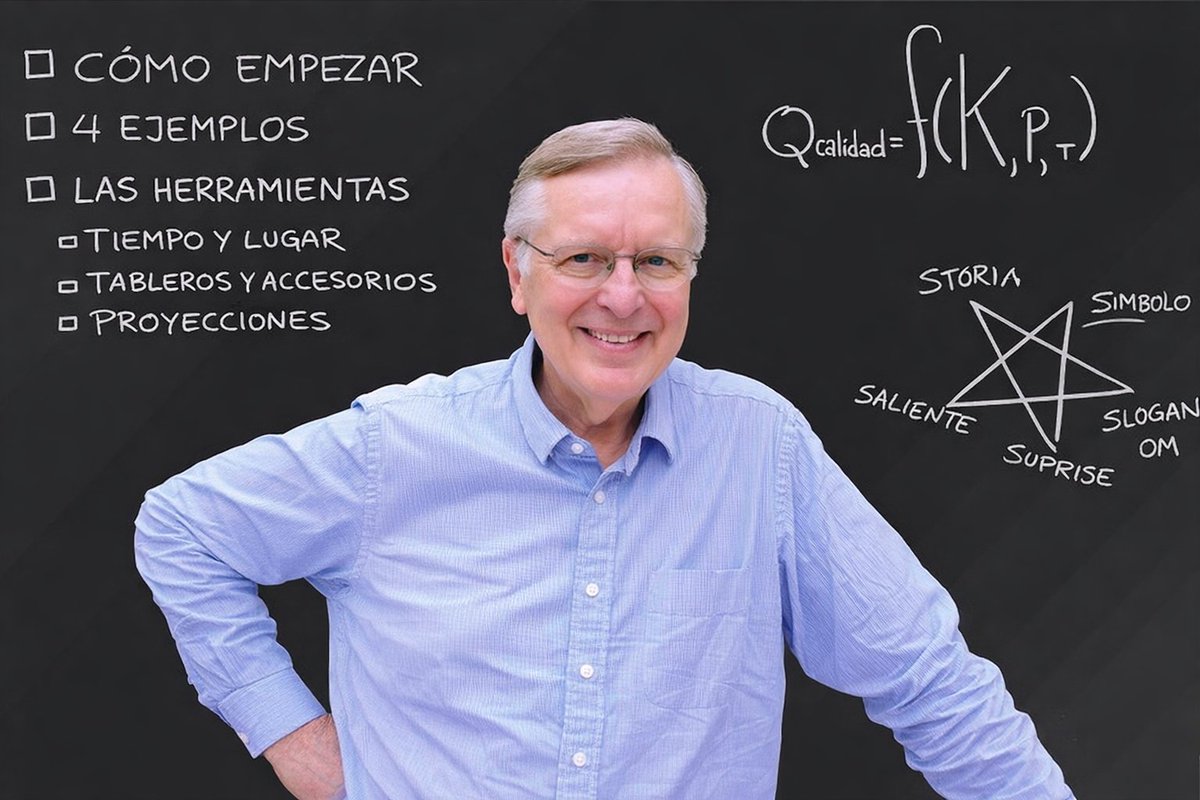
Un profesor del MIT dio la misma conferencia cada enero durante 40 años, y cada una de las veces no cabía ni un alma en el aula.
La vi a las 2 de la mañana y cambió por completo mi forma de entender la comunicación.
Su nombre era Patrick Winston. La conferencia se titula "Cómo hablar" (How to Speak).
Su frase de apertura te golpea como un camión: "Tu éxito en la vida vendrá determinado en gran medida por tu capacidad para hablar, tu capacidad para escribir y la calidad de tus ideas, en ese orden".
Ni tu nota media, ni tus títulos, ni tu coeficiente intelectual. Cómo hablas es lo que separa a las personas que son escuchadas de las que son ignoradas.
Este es el esquema que inculcó a los estudiantes del MIT durante cuatro décadas:
1) Nunca empieces con un chiste: Empieza diciendo a la gente exactamente qué es lo que va a aprender. "Prepara la bomba antes de verter nada". Él lo llamaba la "promesa de empoderamiento": dales una razón para no levantarse del asiento en los primeros 60 segundos.
2) La regla de las 5S: Para que una idea se quede grabada debe ser: Símbolo, Slogan, Sorpresa, Saliente (relevante) e Historia (Story). Cualquier idea que valga la pena recordar cumple al menos tres de estas.
3) La técnica del "casi acierto" (Near Miss): Esta parte me dejó alucinado. No te limites a mostrar lo que está bien; muestra lo que parece estar bien pero no lo está. Ese contraste es lo que hace que el cerebro registre algo de forma permanente.
4) Su regla final: Termina con una contribución, no con un resumen. No recapitules lo que ya dijiste. Dile a la gente qué les has dado que no tenían antes de entrar por la puerta.
He usado este esquema en ventas, entrevistas y presentaciones desde que lo vi, y los resultados no son sutiles.
Patrick Winston falleció en 2019, pero esta clase sigue siendo gratuita en el OpenCourseWare del MIT. Una hora, vista por millones de personas, y no cuesta absolutamente nada.
Video: "How to Speak", Patrick Winston, MIT OpenCourseWare, RES.TLL-005, January IAP 2018.
Fuente: MIT OpenCourseWare.
Licencia: CC BY-NC-SA.
Términos: ocw. mit. edu/ terms
The person you will be in the new year depends on:
• the food you eat
• amount of exercise you do
• how much sleep per day
• books or articles you read
• how much you write
• money you save and invest
• who you work with
• friends you spend time with
• new skills you develop
• connections you make and keep
• promises you make and keep
• where and how far you travel
• doors you open for others
• knowing when to leave
• new habits you develop
• quitting the stuff that holds you back
The first gift is life. The second gift is good health.
The third gift is to love and be loved. The fourth gift is peace of mind.
There are no other gifts that matter as much.
The fifth gift is having the wisdom to know what to appreciate most.
“If you are depressed, you are living in the past.
If you are anxious, you are living in the future.
If you are at peace, you are living in the present.”
― Lao Tzu
It doesn’t make sense to continue wanting something if you’re not willing to do what it takes to get it.
If you don’t want to live the lifestyle, then release yourself from the desire. To crave the result but not the process, is to guarantee disappointment.
Just because something has been a lot of work or consumed a lot of time doesn’t make it productive or worthwhile. Just because you are embarrassed to admit that you’re still living the consequences of bad decisions made 5, 10, or 20 years ago shouldn’t stop you from making good decisions now.
🔒 Cibernews reportó la filtración de contraseñas más grande de la que se tiene registro. Según la información publicada, se expusieron alrededor de 16 mil millones de contraseñas y credenciales de acceso.
No te pierdas todos los detalles aquí.👉https://t.co/0bbyWbgAnR
The 5-Minute Journal is simplicity itself and hits a lot of birds with one stone: 5 minutes in the morning of answering a few prompts, and then 5 minutes in the evening doing the same.
Each prompt has three lines for three answers.
To be answered in the morning:
I am grateful for . . .
1. __________
2. __________
3. __________
What would make today great?
1. __________
2. __________
3. __________
Daily affirmations.
I am . . .
1. __________
2. __________
3. __________
To be filled in at night:
3 amazing things that happened today . . .
1. __________
2. __________
3. __________
How could I have made today better?
1. __________
2. __________
3. __________
It’s easy to obsess over pushing the ball forward as a type-A personality, which leads to being constantly future-focused. If anxiety is a focus on the future, practicing appreciation, even for 2 to 3 minutes, is counter-balancing medicine.
The 5-Minute Journal forces me to think about what I have, as opposed to what I’m pursuing.
When you answer “I am grateful for . . . ,” I recommend considering four different categories. Otherwise, you will go on autopilot and repeat the same items day after day (e.g., “my healthy family,” “my loving dog,” etc.). I certainly did this, and it defeats the purpose.
What are you grateful for in the below four categories?
I ask myself this every morning as I fill out the 5MJ, and I pick my favorite three for that day:
An old relationship that really helped you, or that you valued highly.
An opportunity you have today. Perhaps that’s just an opportunity to call one of your parents, or an opportunity to go to work. It doesn’t have to be something large.
Something great that happened yesterday, whether you experienced or witnessed it.
Something simple near you or within sight.
The gratitude points shouldn’t all be “my career” and other abstract items. Temper those with something simple and concrete—a beautiful cloud outside the window, the coffee that you’re drinking, the pen that you’re using, or whatever it might be.
I use Intelligent Change’s bound 5-Minute Journal and suggest it for convenience, but you can practice in your own notebook.
It’s fun and good therapy to review your p.m. “amazing things” answers at least once a month.