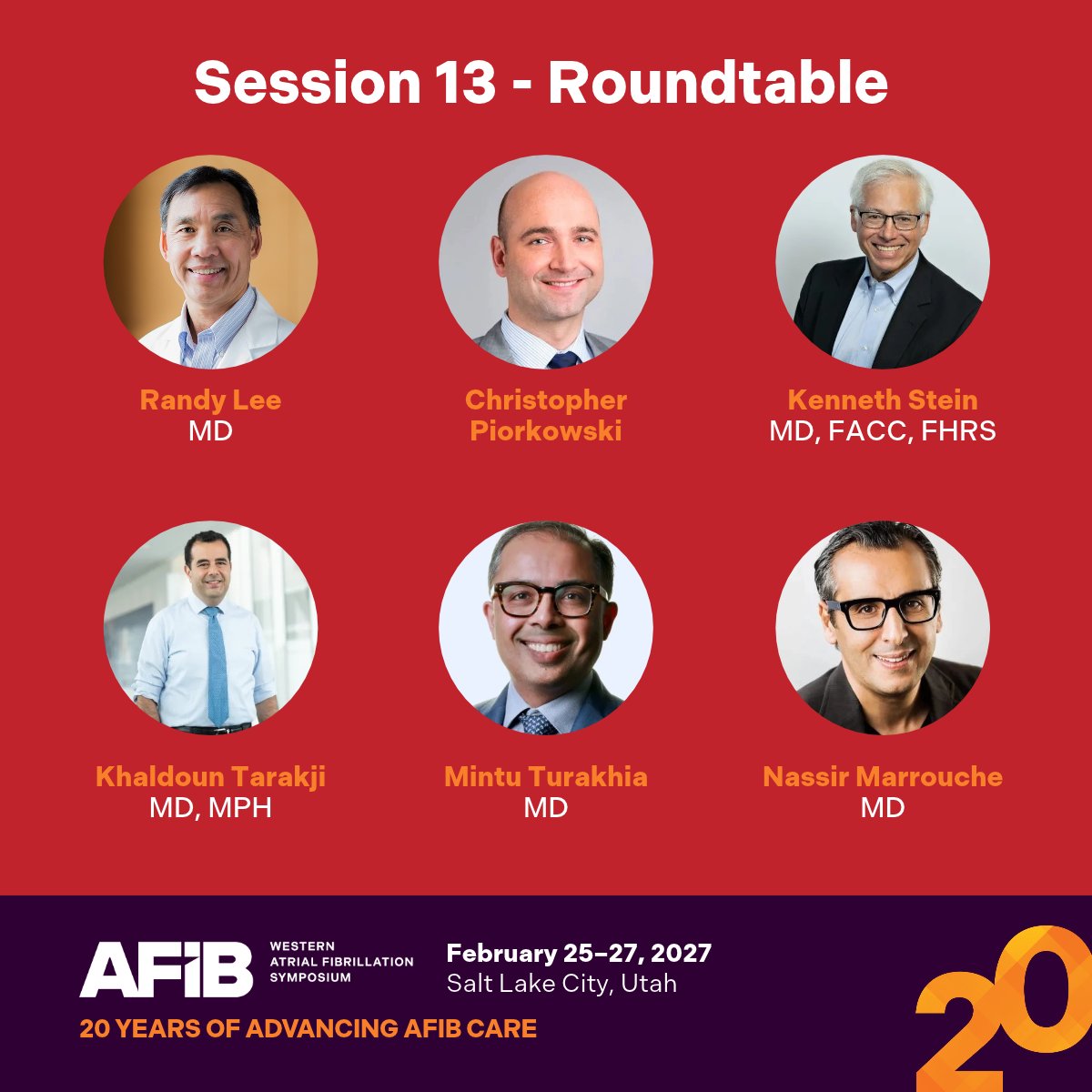
How do academic innovators balance scientific rigor with commercial realities? Explore this Western AFib roundtable. Register at our lowest rates before Nov 13: https://t.co/bj5RSQjAWP
@nmarrouche@EPLabDigest@khaldountarakji@leftbundle
Incredibly, hospitals are now paying for AI companies to disrupt them. 🤦♂️
Patients linking their MyChart accounts to @OpenAI's ChatGPT rose more than 7,000% in a single month at 69-hospital @AdvocateHealth, its CIO Bobbie Byrne told @Becker’sHR.
Patients set this up themselves in ChatGPT, so that the AI can explain their lab results, scans, and doctors’ notes. You know, instead of one of Advocate's doctors.
To add insult to disruption, every time a patient asks ChatGPT a question, Advocate’s Epic system has to look up and send the records and pay for the computing resources that make that happen. AND — brace yourself — Federal law says Advocate can't charge patients, or their apps, for that access to the patient's own records.
So a health system is paying for a competitor’s access to its own patients’ records. The competitor takes away the followup visit, and the healthcare system pays for that to happen — both in lost revenue and in increased computing costs.
That’s Interpretation Migration, subsidized by the disruptee. https://t.co/GTj7Hzfd1d #DrYou #InterpretationMigration #Disruption
Most clinicians & scientists don’t set out to start a company. They set out to solve a problem. At #ScientificSession26, our first-ever Innovation Forum with @AHAScience opens with The Entrepreneur’s Journey: a candid talk on getting from idea to impact. https://t.co/bky8lGB0Ge
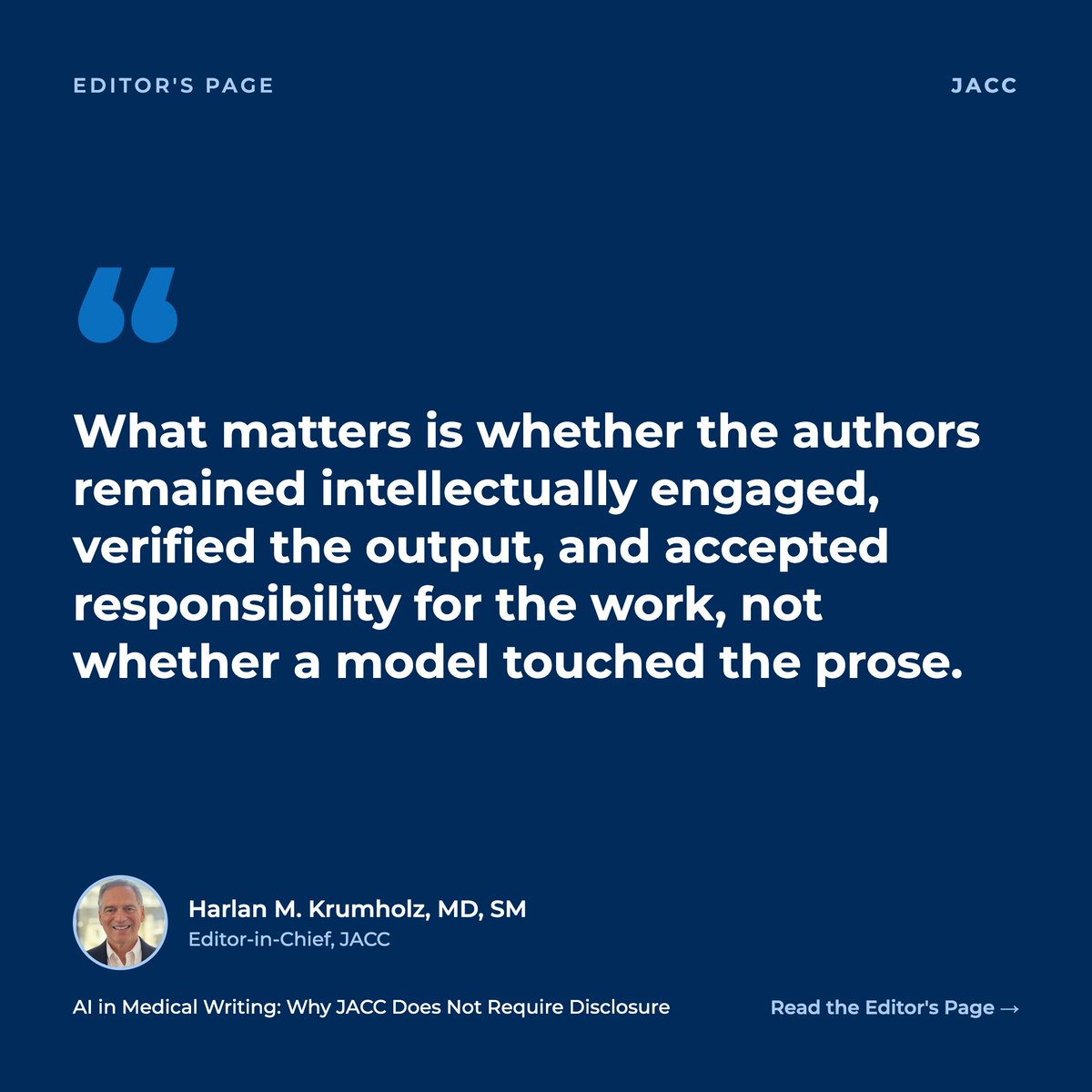
We don't ask whether a model touched their prose. We ask authors to own every word.
@JACCJournals parted w/ICMJE & doesn't require disclosure of AI writing help: the rule is unenforceable, biased, & not good for medical communication.
My Editor's Page: https://t.co/veMMajWOzJ
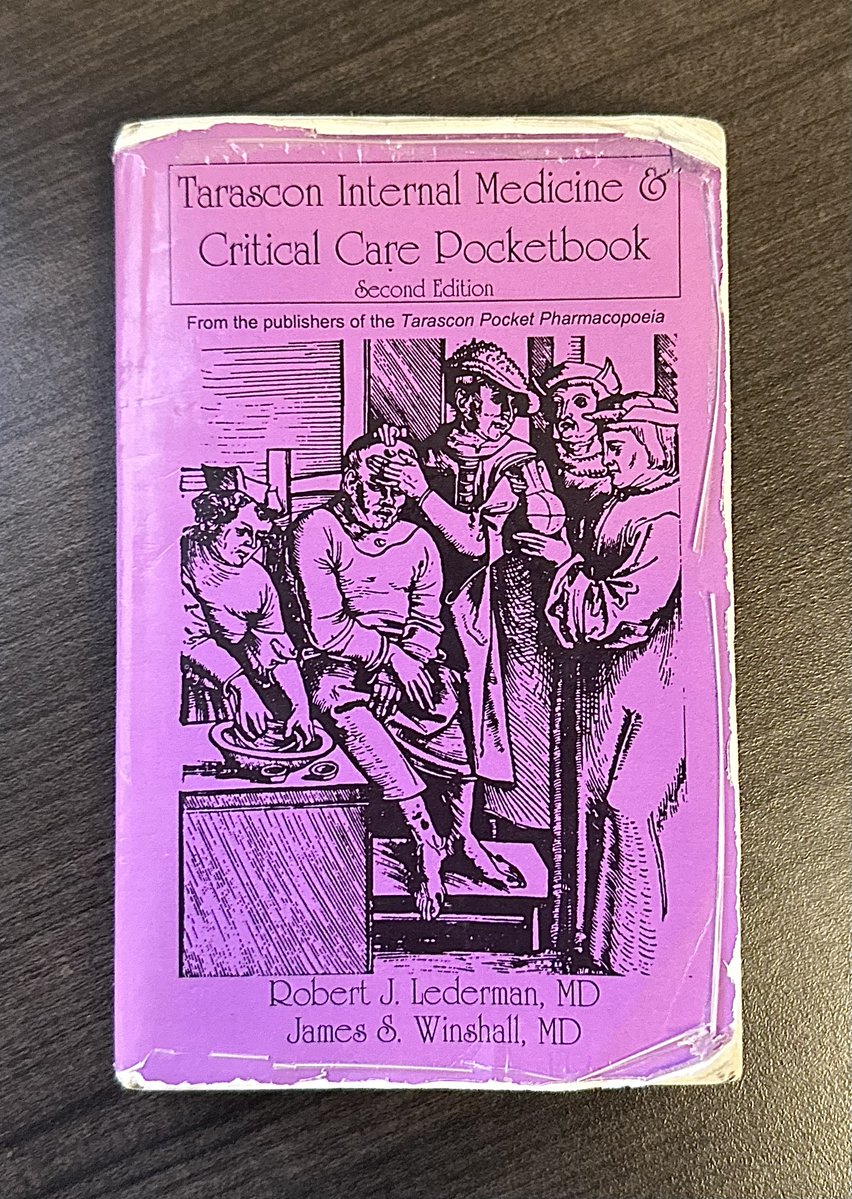
We can debate about how LLMs are going to replace books and brains, but this is still one of the greatest medical pocketbooks ever made. You just can't thumb through an LLM. Out of print.
The most important briefings of the day.
Karl Deisseroth, professor of bioengineering and of psychiatry and behavioral sciences, shares the news of his Nobel Prize with his kids.
@drjohnm In my master’s of clinical research program, we had to present trials without slides - and were graded at it. There are clinical trial podcasters who do it well, too.
Try it. Once you do it then it helps be selective about what, if anything, to show.
The best way to limit AI slop in presentations and compel authenticity at scientific and clinical meetings is to eliminate slides entirely for most topics. If I want a comprehensive overview, I’ll ask an LLM rather than sit through 80 slides. If I want your insight, then I’ll come listen. PowerPoint has occupied only a small sliver of time in the history of medicine. #noslides
AI fatigue at conf is already here. I see presentations after presentations using the same AI format. No flaws but look the same. I cannot recall the speaker behind any of them. Other than occasional graphics, I am sticking to my style even if imperfect!! @drjohnm@SVRaoMD
I agree — and this is an important skill. But most people can’t get to Steve Jobs level after a career where slide hygiene has not been emphasized. The late Marty Samuels from @BrighamWomens said that you should spend the first few years of your career giving talks with no slides. I didn’t understand his point at the time, but he is right.