Laughable.
New Nepali “leadership” calling for global climate effort while the entire political class has been on Western NGO payroll for decades.
Shisir Khanal: Sarvodaya USA director, Teach For Nepal founder — the classic Washington-funded pipeline.
Same crowd that blocked dams, funded “civil society,” then rode the 2025 colour revolution into power.
They lecture the world on emissions while Nepal’s rivers have no storage because the NGOs vetoed the infrastructure. Sovereignty sold for donor salaries and trips to DC.
The Empire’s playbook never changes.
Be informed, not entertained.
***NEPAL***
After September 2025 US backed colour revolution >
Nepal has become a US vassal state.
Western NGOs / CIA extensions are running the show now in Nepal.
Next ?
Possible long term presence of US troops under the disguise as humanitarian aid.
Meaning > Further encirclement of China.
Some clowns claimed that the US is disingagement from Asia > ignorant take.
Be informed. Not entertained.
BSW-Politiker: „Der größte Klimakiller ist Krieg“ – Mimik von Grünen-Politikerin ist entlarvend
„Wir brauchen keine Kipppunkte. Der größte Klimakiller ist Krieg! Gerade Ihre Partei ist in der Kriegsrhetorik aber ganz vorne mit dabei“ – das sagte BSW-Co-Spitzenkandidat Thomas Schulze am Mittwoch in der MDR-Sendung „Fakt ist!“ zur Grünen-Politikerin Susan Sziborra-Seidlitz (ab 41:35). Ihre mimische Reaktion spricht Bände und ist entlarvend. Ein Kommentar von Marcus Klöckner.
https://t.co/2SrY3I76MA
The catastrophe did not come out of nowhere.
For years, prominent American politicians, diplomats, and intellectuals warned in stark terms that NATO’s march toward Russia’s borders was an extraordinarily dangerous provocation.
Their warnings were arrogantly dismissed.
The consequences have been horrific: war on a massive scale, immense human suffering, a militarized and divided Europe, and an increasingly perilous confrontation between nuclear powers.
History may judge the refusal to heed those warnings as one of the most reckless strategic failures of the era.
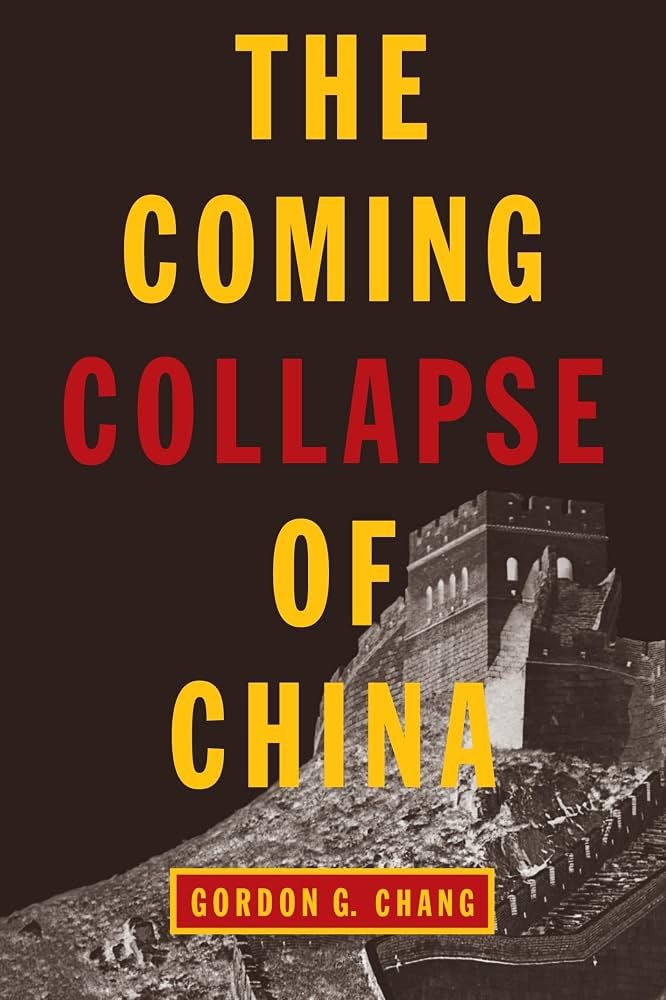
Neoconservative propagandist Gordon G. Chang has been wrong about China for his entire career, but he always fails up and is published in the corporate media because he's a loyal imperialist.
Chang is now calling for the US to prevent Cuba from importing food and solar panels -- in addition to cutting off its oil supply, as Washington has already been doing.
This is sociopathic sadism. US imperialists are trying to kill as many Cubans as possible, to cause societal collapse, so they can recolonize the country and make it into a new Epstein island.
Roy Lee Explains How to Go From $0 to a Million Dollars With AI Videos
“Repeat this eight times and you have eight clients paying you $10,000 a month. And over a year you make $1 million.”
(Via Jack Neel)
One of the most brutal scenes in human history has been leaked online. An Israeli soldier is filming the extent of the destruction and rubble. Gaza has been wiped off the face of the earth during the Israeli aggression, leaving not a single house standing, and entire families have been killed, leaving no survivors.
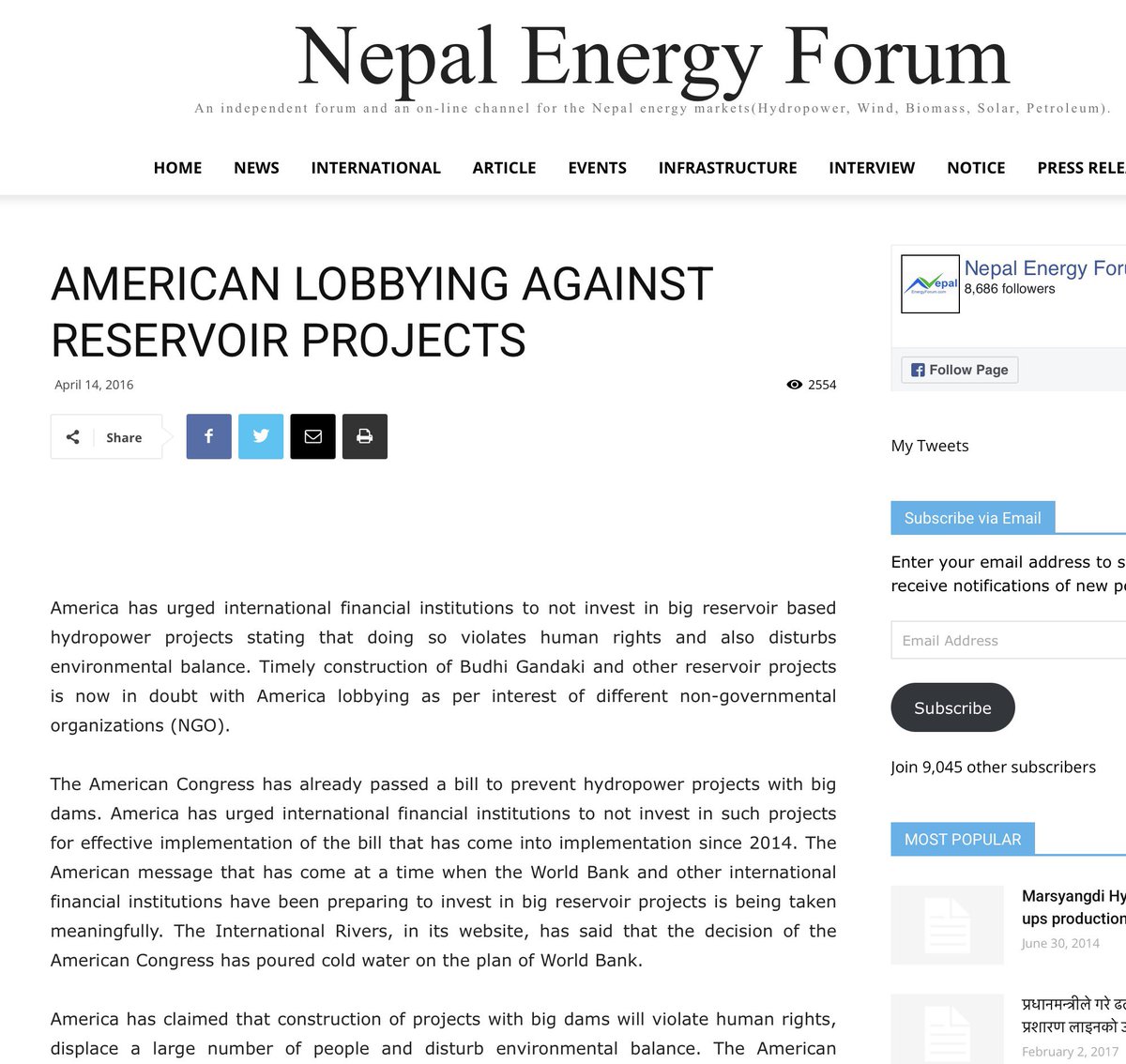
NEPAL > Western NGOs have always opposed essential infrastructure projects that could avert/mitigate risks of floods.
Instead, those same NGOs. poured millions of dollars into Nepal’s civil society to control and manipulate Nepal’s democracy to serve US empire’s agenda.
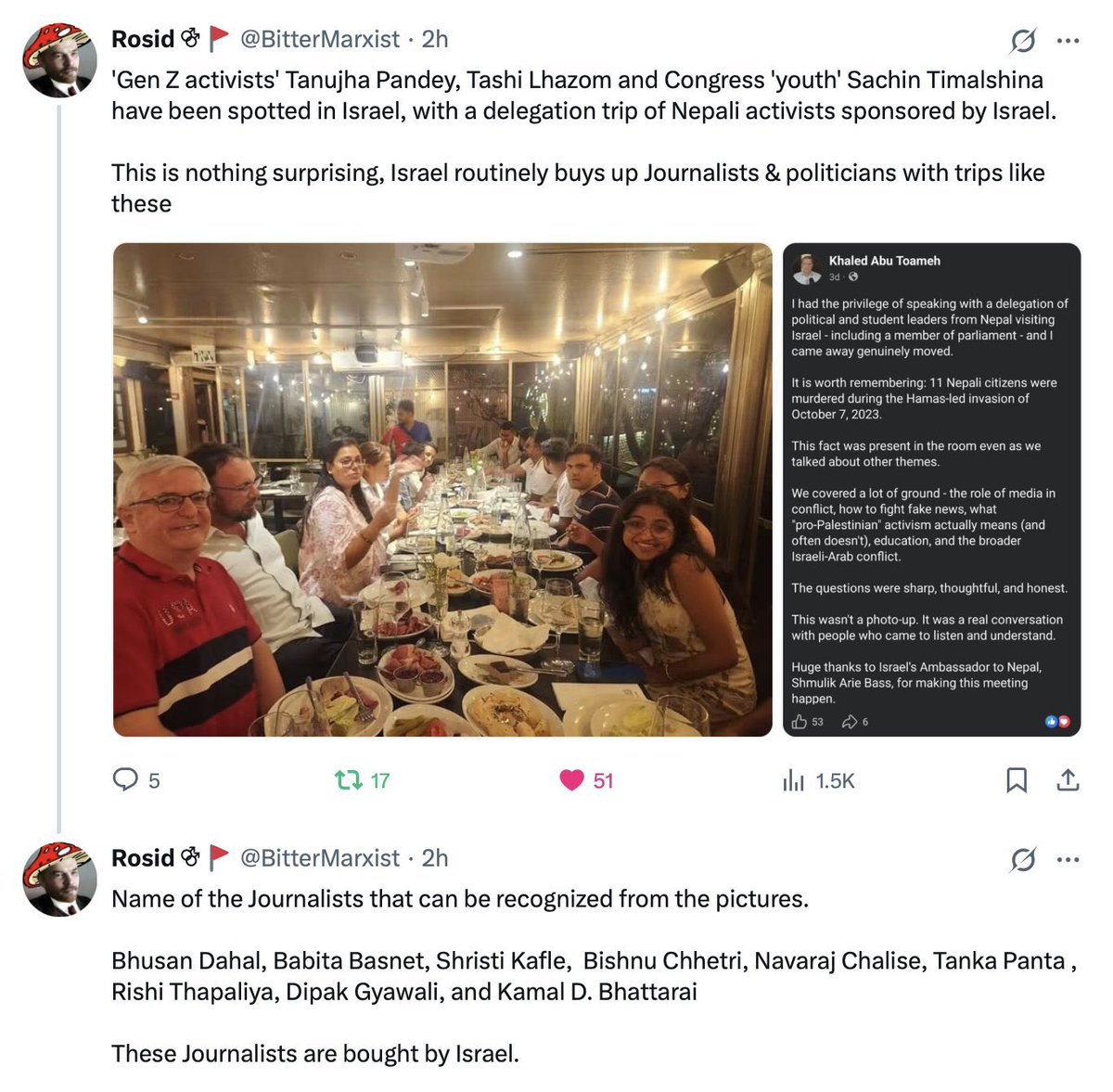
Nepal’s elites is completely controlled by those NGOs, they all get their salaries and free trips to Washington and Tel Aviv.
Will the US try to establish a long-term military presence in Nepal under the disguise of “humanitarian assistance”?
Yes. That has been the plan for years. The packaging changes. The objective does not.
The United States does not need a formal base agreement with a flag and a plaque on day one. It needs access, interoperability, logistics nodes, training hubs, high-altitude familiarization, airfield use, contractor footprints, and a Nepali Army officer class already socialized into the American system. Once those pieces are in place, “assistance” becomes presence. Presence becomes infrastructure. Infrastructure becomes a forward position against China.
Look at the pattern, not the press releases.
The Nepali Army has maintained close, institutionalized ties with the US military for decades: IMET, staff college pipelines, peacekeeping interoperability programs, disaster-relief exercises such as Pacific Angel, aircraft and equipment grants, and repeated attempts to lock in the State Partnership Program. SPP was sold as humanitarian partnership with a US National Guard unit. In practice it is a low-visibility, durable mil-to-mil channel that creates habitual access to facilities, airfields, and terrain near the Tibetan frontier. When public resistance killed the 2022 version, the architecture did not disappear. It waited for a more compliant political configuration.
That is how the playbook works. First the NGOs and “civil society” networks shape the political class. Then the new leadership discovers that disaster preparedness, airlift, and professionalization conveniently require deeper US military integration. Equipment arrives. Advisors stay longer. Joint drills expand. Staging and refueling language appears in the fine print. Neutral Nepal, which officially rejects foreign bases, ends up hosting the functional equivalent.
History is not subtle here. In the 1960s–70s the CIA used Mustang as a launch pad for armed Tibetan operations against China. Nepal was the convenient buffer. The new version is cleaner, legalistic, and wrapped in HADR language, but the geography is the same: high ground, proximity to Tibet, a military that already sends officers through US schools and receives US platforms.
“Military assistance” is the disguise because it is politically sellable. No government in Kathmandu wants to announce that it is turning the country into an Indo-Pacific outpost. It will announce aircraft for rescue, training for earthquakes, and partnership for professionalism. The deep state side of the US system does not need the announcement. It needs the relationship with the Nepali Army to deepen until reversal becomes costly.
This is not speculation about a future plot. It is continuity. Surround China. Use smaller states as platforms. Fund the politics that make the military channel acceptable.
Repeat the Mustang logic with modern logistics and a friendlier cabinet.
Nepal’s official non-alignment and “no foreign troops” posture only matter if the Army and the political class still treat them as binding. When both have been cultivated for years by the same external networks, the disguise holds until the presence is already a fact.
Tutto è cominciato con le medicine, le coperte e i generatori per gli ospedali.
Poi i caschi. Poi i Javelin. Poi i carri. Poi i missili. Poi i caccia.
Poi il permesso, prima sussurrato e poi gridato, di usare quelle armi dentro la Russia.
Oggi i droni partono da Kiev e bruciano raffinerie a tremila chilometri, oltre gli Urali.
Depositi di Wildberries in fiamme, terminali petroliferi, basi aeree.
Questo non è più «aiuto umanitario». È guerra.
Le classi dirigenti europee lo sanno da sempre.
Lo hanno voluto.
Ursula, Macron, i cancellieri che si avvicendano, i primi ministri intercambiabili.
Parlano di «diritto all’autodifesa» mentre firmano prestiti da novanta miliardi.
Parlano di pace mentre spediscono centocinquantamila droni.
Ogni volta che Mosca avanza, alzano la posta.
Ogni volta che Kiev colpisce in profondità, applaudono.
Non è incompetenza. È metodo.
Vogliono la terza guerra mondiale, o almeno vogliono tenerla sempre un centimetro sotto la soglia: abbastanza da terrorizzare i popoli e gonfiare i bilanci delle industrie.
I popoli d’Europa si sono assuefatti.
Ogni mattina il telegiornale elenca i morti a Kiev e i fumi neri sopra le raffinerie russe.
Si scrollano le spalle.
«È lontano.»
«È per la democrazia.»
«Putin è Hitler.»
Mille seicento giorni. Quattro inverni.
Ospedali colpiti da una parte, civili morti a Belgorod dall’altra.
Bambini a Kryvyi Rih, appartamenti in fiamme a Tatarstan.
Nessuno conta più.
I media ripetono la stessa litania.
I politici la stessa formula.
La gente la stessa indifferenza.
Si è abituata al rumore di fondo della guerra come ci si abitua al rumore dell’autostrada.
Finché un giorno il rumore sarà troppo vicino.
Allora scopriranno che le «linee rosse» erano solo linee disegnate sulla sabbia da chi non paga il prezzo.
I figli degli altri muoiono. I figli nostri ancora no.
Questa è la moralità delle classi dirigenti europee.
E questa è l’ignavia dei popoli che le lasciano fare.
🔥 Who Suffers More in a Sexless Marriage: Men or Women?
For some couples, mismatched desire isn’t just about sex. It can affect connection, self-worth, and the entire marriage.
Women: great sex + poor lifestyle, or no sex + your dream lifestyle? 👀
History is written by those who had power, not by those who were good. Winston Churchill deliberately starved millions of people because he believed them to be less than human. He let Bengalis die while stocking their grain. When Australia offered wheat and Canada offered grain as a free gift requiring no purchase, just shipping, he still blocked it. He sat in documented meetings and expressed no intention of letting millions of dying people interfere with his operations. Three million people died.
That man was nominated for the Nobel Peace Prize. Not despite what he did, but while he was still doing it.
A man who died with the blood of millions on his hands, with a soul so rotten that whatever hell he ended up in probably still lingers with that stench, is remembered in statues, school curriculums, and Western nostalgia. His character is treated as a matter of perspective. It is not. It is a matter of truth
Was today’s catastrophe in Nepal truly “just nature”?
Dozens dead. Hundreds missing. Entire villages erased. Bridges gone. Hydropower projects smashed by a sudden wall of water racing down from the Nepal-Tibet frontier.
Reports point to an upstream avalanche or glacial surge as the trigger—releasing a force the rivers simply could not contain. Local rainfall does not appear to fully explain the scale of what unfolded.
And yet… was this inevitable?
Or was it the predictable result of decades of deliberate choices—choices made not in Kathmandu, but in donor capitals and NGO boardrooms far away?
Nepal sits at the roof of the world. Its rivers demand storage. Large multi-purpose dams are not vanity projects; they are tools of survival—holding flood peaks, releasing water safely, generating power, buffering extremes. But those dams were never built.
Why?
•Western NGOs and their funders spent years blocking major storage projects through environmental absolutism, indigenous-rights campaigns, and relentless lawfare.
•Flagship schemes like Arun III were driven into withdrawal. West Seti and others faced the same coordinated opposition.
•The result? A hydropower sector dominated by run-of-river plants that produce electricity in good times… and offer almost zero flood regulation when the Himalayas unleash sudden fury.
Sovereignty over Nepal’s own rivers was surrendered. Decisions about what the country was allowed to build were shaped by external vetoes rather than national needs.
And the same networks did not stop at infrastructure. They shaped the political class itself—flooding “civil society,” media, and governance programs with hundreds of millions. Parallel power structures emerged, more responsive to foreign grant conditions than to the people who live with the floods.
When disaster strikes, the public is told it is climate, nature, or bad luck.
The deeper structural choices that left the country defenseless receive far less scrutiny.
Who really left Nepal exposed? Who decided that foreign ideological preferences mattered more than the practical tools of survival? And how many more times will ordinary Nepalis pay the price?
The full story—how the dams were blocked, how the politics were engineered, and why this tragedy was anything but pure chance—is laid out in devastating detail here:
https://t.co/GesFWrVXY0
Read it. Share it. Question the narrative. Because the mountains will keep sending water. The only question is whether Nepal will ever be allowed to manage it.