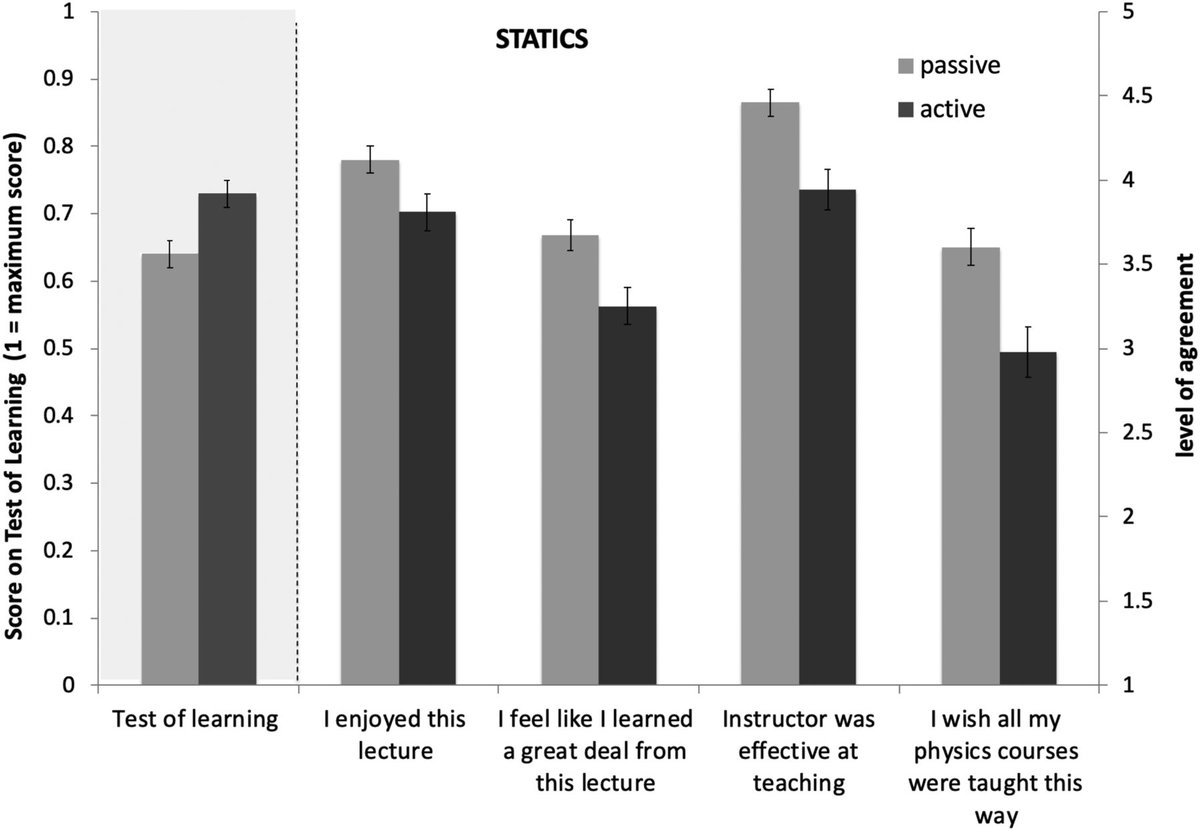
Students think they learn the most from engaging lectures, but they actually gain more knowledge and skill from active problem-solving.
Figuring it out in small groups requires more cognitive effort, which leads to deeper understanding.
#WednesdayWisdom https://t.co/WN8mg8gFBb
When an uncomfortable or difficult situation arises, many teenagers just don't have the skills to deal with it on their own. Instead, they worry, envision the worst, and shut down https://t.co/FdDbcMFRcm #edchat#anxiety#hschat#parents#mentalhealth
The character trait that helps kids succeed in math and reading: curiosity.
The joy of discovery matters as much as self-control, and matters even more for low-income children.
We need to teach kids to ask novel questions, not just give familiar answers.
https://t.co/RedAs0GUsE
"Whether they call it competency-, mastery-, or standards-based grading, the movement aims to improve students outcomes sans As, Bs, and Cs." https://t.co/f41w5C5auL #CBE#k12
We ask students to have a growth mindset about math learning, but when we label children as “applied students,” do we convey a growth mindset about our students? Thanks @MingHuang_OCT for taking part in the discussion! https://t.co/8JuoDX9XXa
@leontesh@OneNoteEDU I'm currently doing research using OneNote Classnotebook with post-secondary students for developing academic writing skills. Students considered L1 but diverse cultural background.
@msonenote Yes. Looking for any tips or ideas from others about using OneNote to develop academic reading and writing skills. One student has told me, he finds OneNote helps organize his thoughts.
Conducting research study of community college students using OneNote to develop expository writing skills. Early positive reaction to embedded quizzes using Microsoft Forms and collaborative writing.
What is it that makes meaningful dialogue so elusive in online courses? In this post, Rebecca Zambrano shares strategies for deepening online discussions. https://t.co/1wKi5UdBFW