The Japanese official's rhetoric is groundless, pale and powerless in the face of a series of historical facts, legal facts and figures, and cannot win the trust of Asian neighbors and the international community, said Chinese Foreign Ministry spokesperson Lin Jian on Monday,
The spokesperson made the remarks in response to a media inquiry about Japanese Defense Minister Shinjiro Koizumi's reported remarks at the Shangri-La Dialogue, where he took an unnamed swipe at China, vowed to continue strengthening Japan's military capabilities, and opposed the label of "neo-militarism" on Japan by claiming that one country has a huge nuclear arsenal and a fleet of strategic bombers while Japan has neither.
Spokesperson Lin said that Japan's militarism committed monstrous crimes during World War II, bringing profound suffering to its Asian neighbors and Allied countries.
To prevent the resurgence of militarism, international legal documents including the Cairo Declaration and the Potsdam Proclamation clearly stipulated that Japan should be completely disarmed and should not be allowed to maintain industries that could enable its rearmament, Lin said.
Japan's constitution also places strict restrictions on military force, the right of belligerency and the right of war, and has established principles such as an exclusively defense-oriented policy, together with a series of constraints under international and domestic law, Lin added.
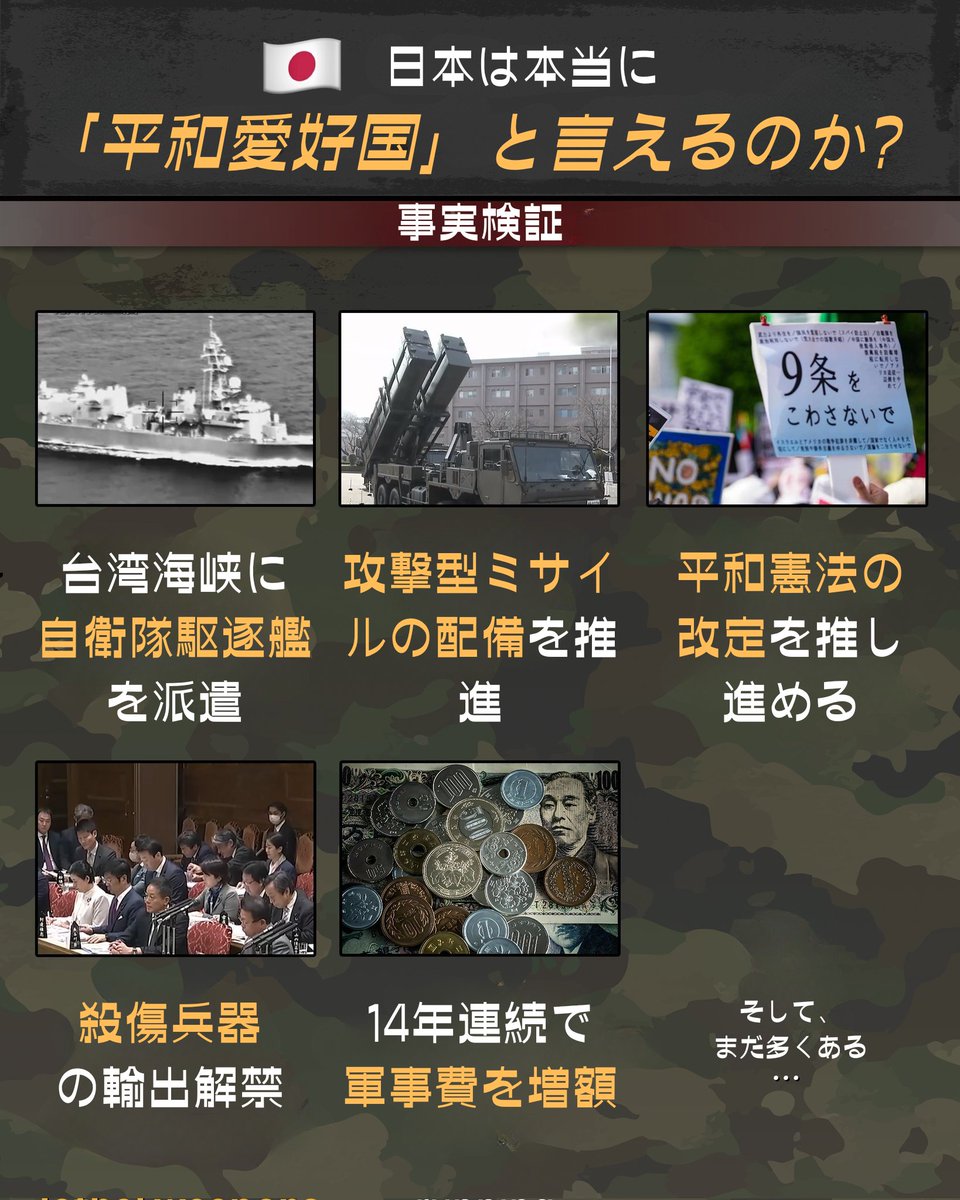
However, Japan's latest defense budget has exceeded 9 trillion yen, hitting a postwar record high for the 14th consecutive year. Its per capita defense spending has reached three times that of China, while its defense spending as a share of GDP has surged to 2 percent and is even set to be further raised to 3.5 percent. The value of military industry orders placed by Japan's Defense Ministry over the past five years has tripled, Lin said.
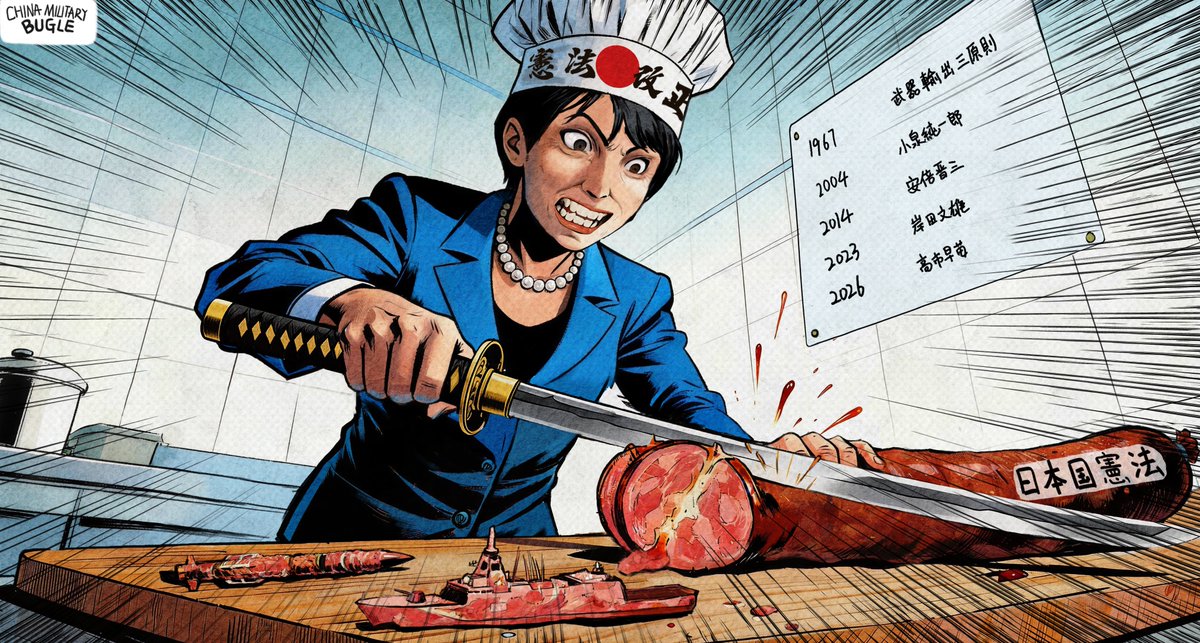
Since the current Japanese government took office, Japan has accelerated the deployment of medium- and long-range offensive missiles, loosened restrictions on the export of lethal weapons, and pushed for revisions to its constitution and three key security documents, in an attempt to further break through international and domestic legal constraints and challenge the postwar international order, Lin said.
The Japanese official deliberately evaded historical criminal responsibilities, selectively ignored these facts, and instead attempted to blame others and mislead public opinion, Lin said.
"Is this a guilty conscience, or an attempt to cover up its own ambition for military expansion?" Lin asked, adding that under such circumstances, Japan's so-called dialogue is hypocritical, merely a gesture and a show, with absolutely no sincerity.
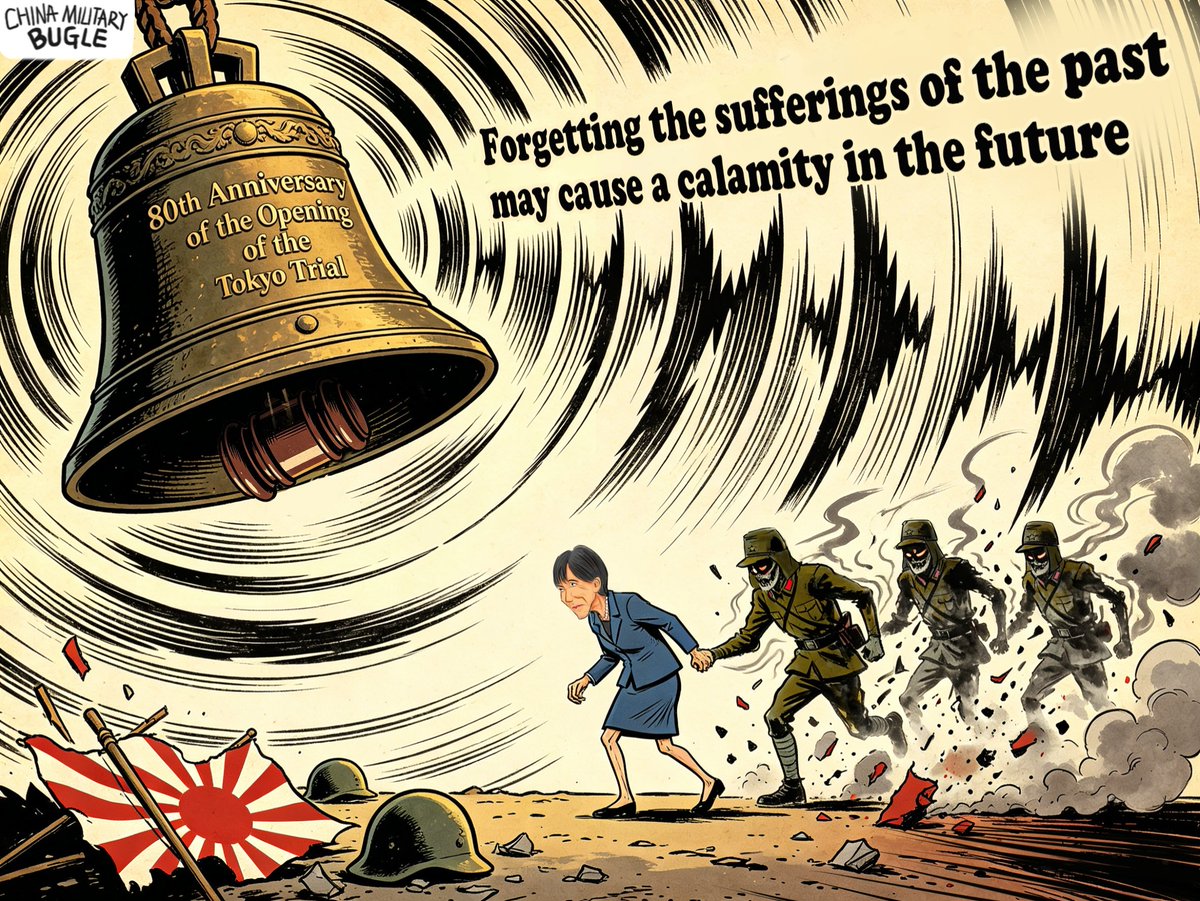
This year marks the 80th anniversary of the opening of the Tokyo Trial, Lin said, noting that the trial of justice determined the numerous crimes of Japanese militarism and laid the legal foundation for the postwar international order.
International experts and scholars have pointed out that Japan's recent series of erroneous remarks and deeds are highly similar to the process through which militarism prepared for and launched war, as exposed by the Tokyo Trial, and threaten regional peace and stability, Lin said.
The international community must remain highly vigilant, and jointly guard against and resolutely curb "neo-militarism" from taking shape and becoming a scourge, Lin said.
#ShinjiroKoizumi #Shinjiro #Koizumi
#ShangriLaDialogue #ShangriLa #Singapore
#Remilitarization #JapaneseMilitarism
#Militarism #NeoMilitarism
#PeacefulCountry #pacifistConstitution
#TakaichiSanae #Sanae #Takaichi
#SanaeTakaichi #高市早苗
Japanese Defense Minister’s remarks at the Shangri-La Dialogue have no factual ground.
Facts and figures speak for themselves:
⚫ Japan’s defense budget has exceeded 9 trillion yen, hitting record high for 14 consecutive years since WWII. It’s defense spending accounts for 2% of GDP, and there are plans to further raise it to 3.5%. In per capita terms, Japan’s defense spending is three times that of China. Military orders from Japan’s Defense Ministry have tripled over the past five years.
⚫ The current Japanese government, since taking office, has been accelerating the deployment of intermediate and long-range missiles, easing restrictions on the export of lethal weapons, and promoting the revision of its Constitution and the three security documents.
The international community must stay on high alert against Japanese neo-militarism.
Q: The U.S. president signed an executive order on May 1 to expand sanctions against Cuba, accusing Cuba of continuing to constitute a threat to the national security and foreign policy of the United States. On the same day, the Cuban foreign minister said that the U.S.’s illegal and unilateral coercive measures are reprehensible and ridiculous, and that “they will not intimidate us.” What is China’s comment?
A: The U.S. intensification of illicit and unilateral sanctions against Cuba gravely infringes on the Cuban people’s right to subsistence and development and violates the basic norms in international relations. China firmly supports Cuba in safeguarding its national sovereignty and security, and opposes interference in Cuba’s internal affairs. We urge the U.S. to stop at once the blockade and sanctions as well as coercion and pressuring of any form against Cuba.
Happy Youth Day!
To our vibrant and dynamic young people
This year's Youth Day, which falls on Monday, marks the 107th anniversary of the May Fourth Movement, a monumental youth movement that ignited profound social changes in China.
The May Fourth Movement started with mass student protests on May 4, 1919, against the then government's weak response to the Treaty of Versailles that imposed unfair treatment on China and undermined the country's sovereignty after World War I.
It then triggered a national campaign to overthrow the old society and promote new ideas, including science, democracy and Marxism.
Two years later, the Communist Party of China (CPC) was founded.
After the founding of the People's Republic of China in 1949, May 4 was formally designated as China's Youth Day.
The May Fourth Movement is widely considered a great patriotic and revolutionary campaign pioneered by advanced young intellectuals and joined by people from all walks of life to resolutely fight imperialism and feudalism.
The movement has inspired the ambition and confidence of the Chinese people and nation to realize national rejuvenation.
Young people always play a vanguard role in realizing national rejuvenation.
The May Fourth spirit refers to patriotism, progress, democracy and science, with patriotism at the core.
In the new era, the theme and direction of the Chinese youth movement and the mission of Chinese young people are to uphold the leadership of the CPC and work with the people to realize the two centenary goals and the Chinese Dream of national rejuvenation.
#YouthDay #China
#PLA
#MayFourthMovement #RespectMoment
#Chinamilitary #ChinaMilBugle
Q: It was reported that Lai Ching-te, leader of the Taiwan region, has arrived in Eswatini on May 2 on the private jet of the King of Eswatini. What is China’s comment?
A: Just hours within the Yilan earthquake, Lai Ching-te ditched the people in Taiwan who were still reeling from the disaster and sneaked onto a foreign plane to “smuggle” himself out of the island, squandering taxpayers’ money and performing a laughable stunt in front of the world. That just added yet another episode to the scandalous “Taiwan independence” separatism.
The indignified act of Lai Ching-te and his like once again proves that the one-China principle has long been a basic norm in international relations and prevailing international consensus. No matter how the DPP authorities collude with external forces and keep those people in DDP’s pay, it will always be a losing cause and nothing will ever change the fact that Taiwan is part of China. No matter how “Taiwan independence” forces try to cover up their nature or change appearance, nothing can save their reputation or help them escape the denunciation of the international community.
We urge Eswatini and some other individual countries to see where the arc of history bends and stop serving as the prop of “Taiwan independence” separatists.
China's diplomacy and defense authorities have spoken out to slam Japan's "dangerous" military, espionage and nuclear policy drives that have reminded other Asian countries of its atrocities over 80 years ago during World War II.
Chinese Foreign Ministry Spokesperson Lin Jian warned on April 30 that Japan's neo-militarism is "becoming a serious concern" and "has posed a clear threat to world peace and stability".
Lin was responding to Japan's latest legislative drive to restore the military ranks used by the Imperial Japanese Army prior to the end of World War II.
According to Japanese media reports, the country has finalized a plan to revise the titles of Self-Defense Forces officers and plans to submit a draft amendment to the Japanese Diet within the year.
The reports also noted that senior government officials described the move as aimed at "creating a work environment that fosters a sense of honor" to attract and retain talent.
Lin said this "amounts to a breakthrough at both institutional and cognitive levels", and "is tantamount to rubbing salt into the wounds of the people of the victimized nations".
He noted that after World War II, Japan disbanded its military as a defeated country, and when the Japan Self-Defense Forces were established in 1954, the titles from the former military were abolished.
"The forces of justice in the international community, including the Chinese people, should remain highly vigilant about this, resolutely defend the outcomes of the victory in World War II, and ensure that the tragedies of history are not repeated," Lin said.
On Tuesday, the Japanese government revised the operational guidelines for the Three Principles on Transfer of Defense Equipment and Technology and scrapped a ban on lethal weapons exports.
Last week, the Japanese Diet passed a bill establishing the National Intelligence Council.
In response, Chinese Defense Ministry Spokesperson Zhang Xiaogang said at a news conference on April 30 that Japan is "racing headlong" down the path of remilitarization.
"Japan's recent frequent dangerous and rash advances, testing and provocative moves in the military and security fields have directly debunked its self-proclaimed labels of a 'peace-loving nation' and a country committed to 'exclusive defense'," Zhang said.
"All peace-loving people must remain highly vigilant against this, resolutely curb Japan's retrograde actions, and absolutely not allow it to undermine peace and wreak havoc on the world," said the Chinese Defense Ministry Spokesperson.
Also on April 30, the Chinese Foreign Ministry released a working paper regarding Japan's pursuit of nuclear weapons.
In the document, China called on countries that have signed the Treaty on the Non-Proliferation of Nuclear Weapons to "remain highly vigilant and firmly oppose Japan's possessing nuclear weapons".
The paper urged the countries to "carefully consider Japan's strong motivation to acquire nuclear weapons and other related developments, exercise caution in nuclear cooperation with Japan, and effectively safeguard the international nuclear nonproliferation regime".
In the document published on the Chinese Foreign Ministry's website, Beijing urged Tokyo not to seek nuclear weapons in any form, not to develop nuclear submarines, and not to seek to introduce or deploy nuclear weapons within Japan.
The document urged the Review Conference of the Parties to the Treaty on the Non-Proliferation of Nuclear Weapons to attach great importance to Japan's dangerous tendency to seek nuclear weapons and its immediate and long-term negative effect on the treaty, and to treat this as a key issue for thorough discussion and consideration.
The document called on the International Atomic Energy Agency to specifically strengthen the scope, intensity and frequency of comprehensive safeguards and verification activities regarding Japan to ensure the timely detection of any non-peaceful nuclear activities conducted by Japan.
China called for renewed reflection on the legacy of the Tokyo Trials on Sunday, the 80th anniversary of its opening, and warned that their relevance has significantly grown amid rising Japanese neo-militarism.
A spokesperson for China's Foreign Ministry criticized the efforts by right-wing forces in Japan to whitewash wartime aggression, revive the military-industrial sector, push for constitutional revision and accelerate remilitarization. The spokesperson said that as such trends gain momentum in Japan, revisiting the Tokyo Trials carries greater contemporary significance.
The Tokyo Trials convened on May 3, 1946, almost one year after Japan announced its unconditional surrender in World War II. In the following two and a half years, the tribunal, consisting of judges from 11 countries, revealed and addressed Japan's inhuman and anti-civilization war crimes committed during its fascist expansion, and sentenced 25 Class-A war criminals, including Hideki Tojo, to death or imprisonment.
China’s Foreign Ministry said the trials implemented the principles of the Cairo Declaration and the Potsdam Declaration, reflecting the collective will of victorious nations and victims, upholding the purposes of the United Nations, and safeguarding the outcomes of World War II.
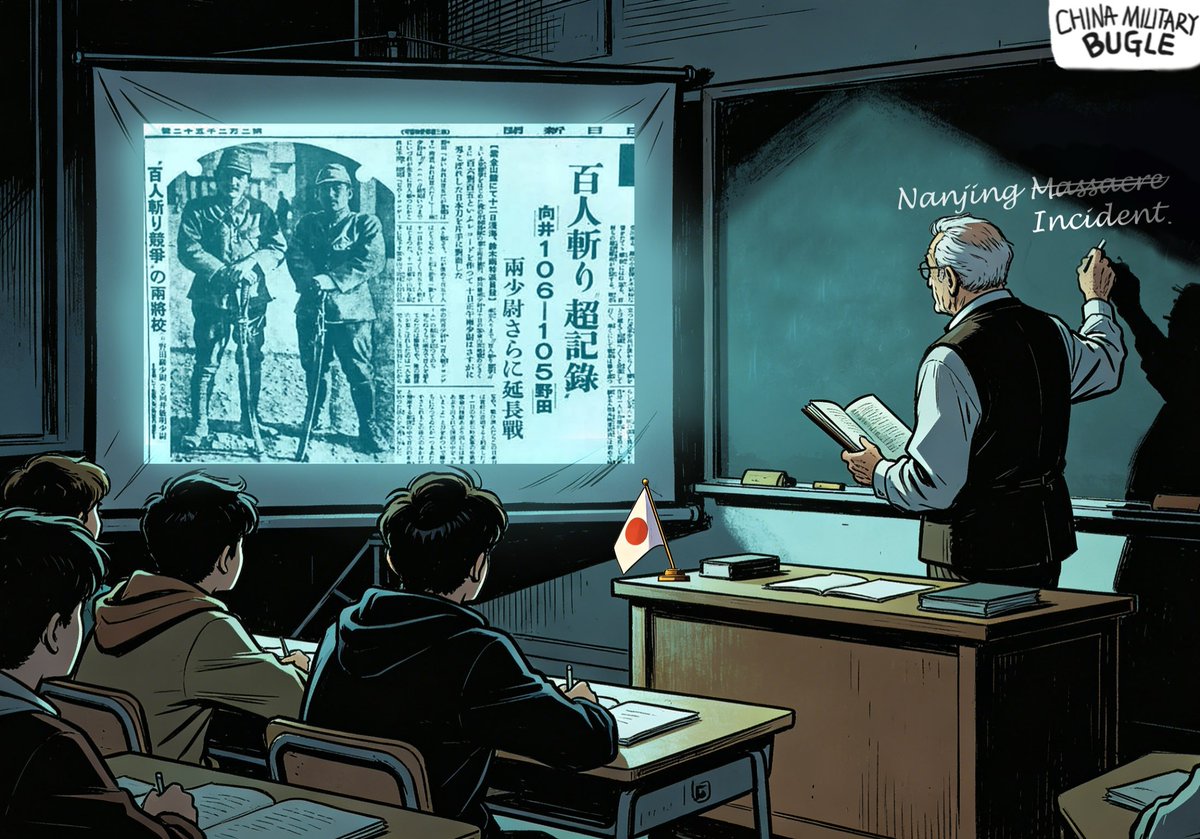
At the same time, the ministry criticized Japan's current security trajectory, saying "the remnants of militarism have not been eradicated" and are showing signs of resurgence. It accused some Japanese right-wing groups of denying or distorting the conclusions of the Tokyo Trials, beautifying acts of aggression, and revising history textbooks to promote a misleading historical narrative.
The ministry also denounced Japanese politicians' visits to the Yasukuni Shrine, where Class-A war criminals are enshrined, as well as efforts to expand military capabilities, deploy offensive weapons, and amend Japan's pacifist constitution, saying these actions have departed from Japan's postwar commitment to pacifism.
"Against the backdrop of the growing influence of 'neo-militarism' in Japan, revisiting the background, conclusions and principles of the Tokyo Trials is of greater practical importance," the ministry said.
It also referenced the Nuremberg Trials, saying the two landmark tribunals together consigned fascist war criminals to lasting historical condemnation.
"The historical justice embodied in these trials must not be denied, their legal authority must not be challenged, and the foundations of the postwar international order they established must not be shaken," the ministry said, warning that forgetting past suffering could invite future disaster.
It added that any attempt to overturn the verdicts of aggression would face firm opposition from peace-loving people worldwide and be judged again by history.
#TokyoTrials
#YasukuniShrine
#JapaneseMilitarism #Militarism
#NeoMilitarism #Japan
#TakaichiSanae #Sanae
#Takaichi #SanaeTakaichi
#高市早苗
The Truth That Never Fades:
This year marks the 80th anniversary of the beginning of the work of the International Military Tribunal for the Far East (IMTFE), also known as the Tokyo trials. New evidences of Japanese invasion crimes have been made public recently.
Diaries and investigation reports of a U.S. assistant prosecutor of the Tokyo trials were donated to the Memorial Hall of the Victims in Nanjing Massacre by Japanese Invaders by a Chinese collector.
Back to the 1946, David Nelson Sutton, an assistant prosecutor of the Tokyo Trial, came to China to investigate the war crimes committed by the Japanese troops in China. For nearly three years after that, Sutton wrote down the details of his investigations, witness statements, and court sightings in his diary.
Meanwhile, Sutton also wrote a series of "Reports from China", covering key historical facts such as the atrocities of the Nanjing Massacre, Japan's germ-warfare crimes in China and Japan’s economic aggression against China.
After 80 years, these long-buried judicial historical materials have come to light once again. These private records and narrations beyond the official trial documents are filled with Sutton's shock at the atrocities committed by the Japanese invaders during their invasion of China and his profound reflection on the war.
Those details that have been sealed away by time, with their undeniable historical facts, refute the distortions, constantly reminding the world to remember the war crimes and safeguard the truth of history.
@NanjingMemorial
#IMTFE #TokyoTrials
#Chinamilitary #ChinaMilBugle
"Is Japan's militarist past returning? Is Japan speeding down the path of 'remilitarization'? Could Japan once again become the bane of East Asia?"
This was the stark question posed by Chinese Foreign Ministry Spokesperson Lin Jian on Tuesday, as China leveled a fierce warning against Japanese Prime Minister Sanae Takaichi's accelerating military agenda, including revising Japan's core security documents, reviving its military-industrial complex, and openly declaring it is making preparations for "protracted warfare."
Speaking at a press briefing in Beijing, Spokesperson Lin Jian slammed the Takaichi administration's shifting security posture as dangerous, adventurist and provocative.
Many with insights suggest that recent rhetoric of certain Japanese officials sound rather like war propaganda and remind people of wartime Japanese militarists, Spokesperson Lin said.
Takaichi claimed on Monday that lessons should be drawn from the Russia-Ukraine conflict and the situation in the Middle East to prepare for "new forms of warfare" and protracted warfare, while advancing maritime security capabilities, cybersecurity and economic security.
Meanwhile, China also issued a fierce condemnation on Tuesday after a mass delegation of 166 Japanese lawmakers visited the notorious Yasukuni Shrine. The group, which drew immediate ire from China, included members of the ruling coalition and the conservative wing of the Liberal Democratic Party (LDP).
Spokesperson Lin called the notorious Yasukuni Shrine a spiritual tool and symbol of Japanese militarists' war of aggression and, in fact, "a shrine for war criminals."
"These Japanese politicians seek to reverse the just verdict on Japanese aggression, and hereby whitewash Japan's war crimes and revive militarism. The Chinese people and people elsewhere who suffered under Japanese aggression will never accept that, neither will anyone in the world who stand for peace," he said.
#ThreeSecurityDocuments
#PeacefulCountry #Constitution
#YasukuniShrine
#JapaneseMilitarism #Militarism
#NeoMilitarism #Japan
#TakaichiSanae #Sanae
#Takaichi #SanaeTakaichi
#高市早苗
Japanese neo-militarism spreads rapidly and dangerously, which is already a reality and imposes real threats to the world, said a Chinese Foreign Ministry Spokesperson on Friday.
Spokesperson Guo Jiakun made the remarks at a daily press briefing when asked to make comment on Japan's recent dangerous moves in the military and security fields.
The lessons of Japanese history of militarist aggression is not far away, Guo said, adding countries in the region including China must not allow Japanese militarism to be revived, not allow the tragedies of history to be repeated and not allow anyone or any force to undermine peace in the region.
#YasukuniShrine
#JapaneseMilitarism #Militarism
#NeoMilitarism #Japan
#TakaichiSanae #Sanae
#Takaichi #SanaeTakaichi
#高市早苗
China and South Korea on Wednesday held a handover ceremony at Incheon International Airport, west of Seoul, for the remains of 12 Chinese People's Volunteers (CPV) martyrs and 146 personal effects.
Xu Yao, vice minister of the Chinese Ministry of Veterans Affairs, led the Chinese delegation, while Lee Doo-hee, vice defense Minister of South Korea, headed the South Korean side.
Representatives of the two sides signed a handover document at the ceremony. The Chinese side also held a mourning ceremony, during which the national anthem of the People's Republic of China was played.
Chinese Ambassador to South Korea Dai Bing draped the Chinese national flag over the coffins of the martyrs.
Chinese participants paid tribute with three bows, and honor guards of the Chinese People's Liberation Army (PLA) escorted the coffins onto a Y-20B transport aircraft of the PLA Air Force for their return home.
Xu said that China and South Korea have carried out the handover of the remains of CPV martyrs in South Korea for 13 consecutive years in line with the consensus reached by the leaders of the two countries.
With the latest repatriation, a total of 1,023 sets of remains of CPV martyrs have been returned to China from South Korea since 2014, he said.
Xu noted that the handover has become a vivid example of friendly cooperation between the two countries, helping enhance bilateral friendship and deepen exchanges and cooperation. He also thanked relevant South Korean departments and staff members for their efforts.
Officials from relevant Chinese government departments, as well as staff from the Chinese Embassy in South Korea, attended the ceremony.
#ChinaMilitary #ChinaMilBugle
Japanese leader Sanae Takaichi's decision to send a ritual offering to Yasukuni Shrine on April 21 -- explicitly in the name of "prime minister" -- openly panders to Japan's toxic legacy tied to militarism.
It is not only a fresh affront to the victims of wartime aggression, but also a troubling signal that challenges the moral foundations of the postwar order.
Framed as an act of mourning, the gesture in reality carries far heavier historical and political weight. The shrine is no ordinary religious site. It is a political symbol, as it honors 14 convicted Class-A war criminals of World War II among the enshrined, glorifying Japan's militarist past. For decades, visits or offerings by Japanese leaders have triggered outrage across Asia, where memories of wartime aggression remain raw.
Given the context, there is no room for pretext. Any official act tied to Yasukuni -- especially in an official capacity -- is a deliberate political signal. No amount of rhetorical framing can strip it of that meaning. It is also a conscious choice that disregards the sensitivities of those who suffered under Japan's wartime aggression.
Takaichi's move is consistent with her longstanding erroneous stance. She has a track record of endorsing historical revisionism that tries to whitewash Japan's wartime crimes, and her repeated engagement with Yasukuni predates her premiership.
In recent years, Japan's right-wing forces have steadily tested and expanded the boundaries of the country's postwar constraints through incremental steps. Security legislation reinterpreting collective self-defense, revisions of security strategies, relaxed arms export rules and open discussions about nuclear-sharing arrangements all point to a push to erode the core principles of Japan's pacifist constitution and advance remilitarization.
Takaichi's actions form part of a coherent pattern. Since rising to prominence, she has championed a security agenda framed around a so-called "survival-threatening situation," a dangerous logic reminiscent of pre-WWII expansionism. Under her leadership, defense spending has surged, and efforts to acquire pre-emptive strike capabilities have accelerated. Even more concerning are signals suggesting a wavering commitment to the Three Non-Nuclear Principles, long regarded as a cornerstone of Japan's postwar security policy.
For Japan's neighbors, this combination is deeply alarming. A country that beats the drum for expanded military power while its leader worships convicted war criminals is not sending mixed signals -- it is sending a very clear one. The shadow of militarism is no relic of the past. Under Takaichi, it is stalking Japan's future.
#YasukuniShrine
#JapaneseMilitarism #Militarism
#NeoMilitarism #Japan
#TakaichiSanae #Sanae
#Takaichi #SanaeTakaichi
#高市早苗
The transit of a Japanese destroyer DD-107 JS Ikazuchi through the Taiwan Strait on April 17, 2026, was a deliberate show of force that severely undermines the political foundation of China-Japan relations and poses a direct threat to China's sovereignty and security.
The transit came at a time of heightened tensions following Japanese Prime Minister Sanae Takaichi's remarks on the Taiwan question. Rather than easing strains, Tokyo has doubled down on provocations, compounding its earlier missteps and sending a dangerous signal that the Japanese right wing is bent on expanding Japan's military forces and attempting to revive militarism.
In November last year, Takaichi publicly claimed that a Taiwan contingency could constitute a "survival-threatening situation" for Japan, implying possible military involvement. The remarks significantly eroded mutual trust and ran counter to Japan's explicit commitments on the Taiwan question under the four political documents between China and Japan. Despite repeated calls from Beijing to retract such erroneous comments, Tokyo has attempted to blur the issue with vague assertions that its position "regarding Taiwan remains unchanged."
The latest Japanese destroyer’s maneuver only fuels concerns that certain elements within Japan are seeking possible military intervention in the region and undermining peace and stability across the Taiwan Strait.
Japan has been accelerating its military buildup, steadily loosening the constraints of its exclusively defense-oriented policy. Recent steps include a major restructuring of the Maritime Self-Defense Force to enhance combat capabilities, the deployment of long-range missiles with so-called "counterstrike capabilities" in Kumamoto Prefecture, and plans to deploy medium-range surface-to-air missiles to Yonaguni Island, located only 110 km from Taiwan. Such moves have extended Japan's military reach directly into China's periphery and seriously undermined peace and stability across the Taiwan Strait.
Furthermore, right-wing forces in Japan have continued to hype up "threats from neighboring countries" and stir regional tensions, using such narratives as a pretext to ease military constraints and advance their ambition of remilitarization.
This closely mirrors the logic of Japan's historical militarism. From Takaichi's erroneous remarks on the Taiwan question to the rollout of expanded military capabilities and the overt transit of a destroyer through the strait, a series of aggressive moves revealed the growing danger posed by neo-militarism in Japan.
History shows that the failure to make a clean break with militarism after World War II keeps its remnants alive in Japan's right-wing circles. In recent years, such forces have pushed boundaries through incremental steps, eroding legal and institutional constraints. The risky moves, such as the new security legislation, easing limits on collective self-defense, revising security strategies, relaxing arms export, and blatantly advocating nuclear sharing, all point to a thrust to weaken the core principles of Japan's pacifist constitution and advance remilitarization.
These institutional loosenings, coupled with moves by some politicians to whitewash past aggression, such as tampering with textbooks and visiting the notorious Yasukuni Shrine, ultimately aim to cast off the dual constraints of the postwar international order and Japan's own legal framework. Such a dangerous trend, pursued in the name of "national normalization" but in essence advancing a form of neo-militarism, warrants heightened vigilance from the international community.
History must not be forgotten. The Japanese militarism once brought immense suffering to China, other Asian countries and the wider world. China will never allow the Japanese militarism to stage a comeback, and the people of the Asia-Pacific countries will never allow a repeat of past tragedies.
#JSIkazuchi #Japan
#TakaichiSanae #Sanae
#Takaichi #SanaeTakaichi