$LINK traded at $55 in 2021
Today it’s below $8
Meanwhile, its technology is being used or explored by the biggest names in finance
The disconnect is hard to ignore
In 1980, a man named Richard turned on his television and saw a female player from Romania receiving a check for $40,000 after winning a major tennis tournament. The scene shocked Richard; it was far more than his annual salary.
Within a few years, he decided that his young
daughters would also play tennis. After turning off the television, he sat down and wrote a 78-page document outlining a plan for his two daughters to escape their hometown of Compton, California, an area known for notorious gang violence. However, there were significant obstacles: Richard knew nothing about tennis, he couldn’t afford to pay for their training, and astonishingly, his daughters weren’t even born at that time.
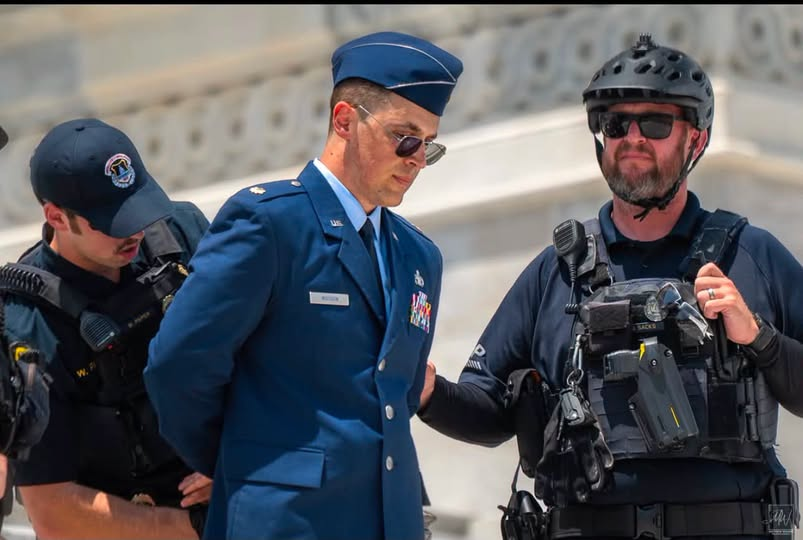
An active-duty member of the United States military stood on the steps of the Capitol, in uniform, and called for the impeachment, conviction, and removal of Donald Trump. He was arrested.
He didn’t stumble into this. He knew exactly what he was doing.
Under Department of Defense rules and the Uniform Code of Military Justice, active-duty service members are heavily restricted from engaging in partisan political activity, especially in uniform. Depending on how this is charged, he could be facing violations like Article 92 (failure to obey orders or regulations), and for officers, even Article 88 (contempt toward officials). That’s not a slap on the wrist, that’s career-ending territory. Court-martial, loss of rank, forfeited pay, even prison time are all on the table.
He risked everything: his career, his pension, his freedom, and the future he built inside the military.
And he did it anyway.
You don’t have to agree with what he said to recognize what it took to say it. Real courage isn’t reserved for safe opinions or popular moments. It shows up when the cost is clear, and you move forward anyway.
The military demands discipline and neutrality for a reason. But history is full of moments where individuals inside institutions decided that staying silent was the greater violation.
That tension, between duty to the system and duty to conscience, is where this story lives.
Maybe you think he crossed a line. Maybe you think he drew one.
But let’s not pretend this was casual. This was deliberate. This was informed. This was someone fully aware of the consequences choosing to act anyway.
Time will decide how this moment is remembered. It always does.
But one thing is undeniable: he knew the price, and he spoke anyway. VIA!~~~ Melinda Fulton
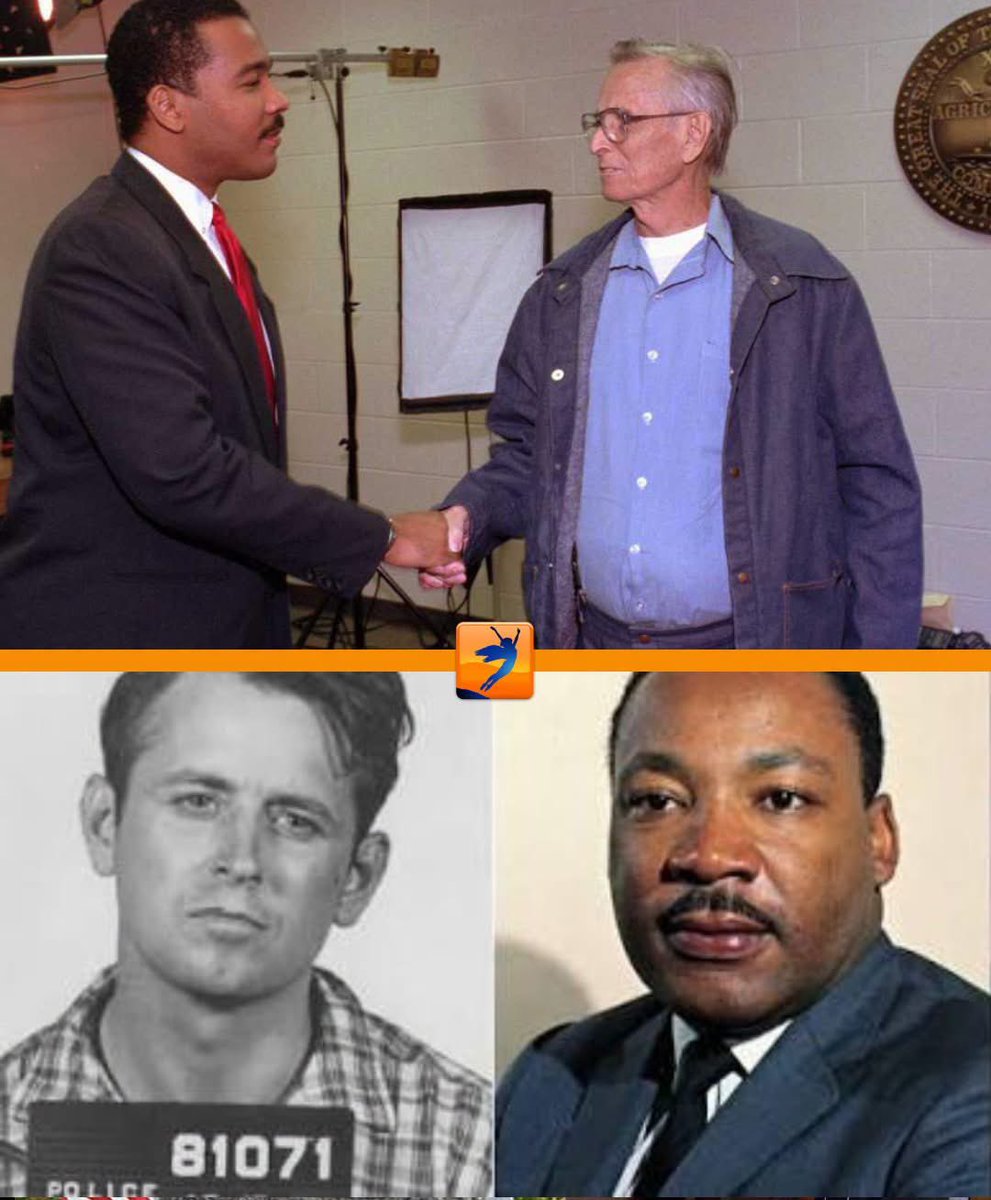
In 1997, Dexter King walked into a Tennessee prison and met James Earl Ray, the man who had spent 29 years in a cell for the assassination of his father, Martin Luther King.
Dexter looked him in the eye and asked one direct question. "I just want to ask you, for the record, did you kill my father?" Ray replied, "No, I didn't."
Dexter believed him. Coretta Scott King believed him.
The entire King family believed him, and they spent years publicly calling for Ray to be given the fair trial he was always denied.
Most people grow up learning a very simple story about American history. We are told that Martin Luther King Jr. was killed by a lone, racist gunman named James Earl Ray, who was quickly caught and locked away forever. But history is rarely that simple, and the people closest to the tragedy have never bought into the official narrative.
Back in 1969, Ray pleaded guilty to the assassination. He did it on the advice of his lawyer to avoid the electric chair. But just three days later, he tried to recant his confession.
He told the court he had been pressured into taking the blame and that a mysterious man named "Raoul" had set him up. For the next 29 years, Ray fought fiercely for a jury trial. He wanted to put the evidence on display. Every single one of his requests was denied by the legal system.
When Dexter King visited him in prison, it wasn't an act of forgiveness for a killer; it was a search for the truth. After meeting with Ray, Dexter held a press conference and made a stunning announcement.
He stated that his family believed Ray was innocent and that a massive government conspiracy was the real culprit.
Ray died in 1998 at the age of 70 from liver and kidney failure, never getting his day in court. His last words to his brother Jerry were the exact same thing he told Dexter. "I didn't do it," he insisted.
Ray was so bitter about how he was treated that he refused to be buried on American soil.
His body was cremated, and his ashes were flown to Ireland, the land of his ancestors, so he could rest in peace far away from the government he believed framed him.
The story doesn't end with Ray's death. In 1999, the King family took matters into their own hands. They filed a wrongful death civil lawsuit against a man named Loyd Jowers, who claimed he had received money to help orchestrate the assassination.
During the trial, a mountain of evidence was presented pointing toward the involvement of the mafia, local police, and federal intelligence agencies.
After hearing all the evidence, a Memphis jury took just one hour to reach a unanimous verdict. They ruled that Martin Luther King Jr. was indeed the victim of a vast conspiracy, and that James Earl Ray had been set up to take the fall.
To this day, the mainstream narrative ignores this verdict, but the King family has never changed their stance. They are convinced that the man who spent nearly three decades in prison for the murder of MLK was an innocent scapegoat.
The verdict in that civil court gave the King family the peace they had been searching for after decades of unanswered questions. While history books still print the name of a lone gunman, the family's relentless pursuit of the truth reminds us that justice is rarely simple.
Ultimately, their journey was never about vengeance—it was about uncovering the full truth behind a tragedy that changed the world forever.
Afande Sele ameongea vizuri hata mtoto mdogo anamwelewa! Ila haya mafedhuli hawataki suluhisho ya kweli wanataka wabaki tu madarakani!
Wataendelea kutukandamiza wakiweza milele! Na haki itazidi kuwa mbaya!
Kuandamana ni haki ya kikatiba tusitishiane!
#77Tunatoka#FreeTunduLissu #SamiaMustGo
Nigerian graduate Nnabuike Chisom goes viral after delivering his Master’s graduation speech in fluent Chinese while representing international students at the Zhongnan University of Economics and Law. 🇳🇬🇨🇳👏
@kafulila_david@kafulila_david Pia hii express way ya Dar CBD to Nyerere airport ni bora mngeweka utaratibu watu walipie kupitia kwenye Barabara ya mwendokasi kwa sababu kutoka Dar CBD to Nyerere airport Kuna Barabara ya mwendokasi tayari.
@kafulila_david@kafulila_david Kiongozi hii tender ya Express way kutoka Dar Es Salaam Port to Kibaha ni bora mngeweka hiyo express way kwenye Barbara ya Mandela (Mandela Road)
The fastest way to becoming rich with crypto is not by gambling or doing quick flips on memecoins
It’s not by trading futures or having over leveraged perp positions
The fastest way to get rich with crypto is actually really slow
It involves you buying something you really believe in, mostly in a bear market
Holding it against all odds
Until it goes on an unbelievable run & changes your life forever.
@PiCoreTeam I think its wise to explain importance of these upgrades so that pioneers can realise that there is a progress. Non technical pioneers dont see importance of these upsates @WoodyLightyearx@_raysunited
Unakuta kijana ana TSh 500,000.
Badala ya kujifunza skill mpya au kuongeza kipato chake…
Anahangaika kutafuta investment itakayomfanya awe Tajiri .
Lazima uelewe kwamba ,
Return kubwa zaidi kwa kijana mwenye mtaji mdogo mara nyingi haipo kwenye hisa.
Haipo kwenye UTT.
👇🏼
Access to finance remains one of the most significant barriers to business growth in Tanzania. For decades, banks have relied heavily on traditional collateral-based lending models, where access to credit is heavily dependent on the availability of non-movable assets such as land, buildings, and fixed property.
While this approach has historically provided lenders with a level of comfort and security against default risk, it has also unintentionally created structural barriers that limit access to finance for a large segment of businesses with strong growth potential.
The future of banking cannot rely solely on asset-backed lending; it must evolve toward financing models that recognize business performance, cash generation capacity, and value chain participation as key indicators of creditworthiness.
In today’s The Guardian newspaper 📰 (Banker’s Section), I explore why Tanzania’s banking sector must rethink how it lends and why transitioning toward more inclusive financing models, particularly cashflow-based lending, is becoming increasingly important for the country’s future economic development.
#Banking #Finance #Tanzania #FinancialInclusion #CashflowBasedLending #CommercialBanking #EconomicDevelopment #SMEs #Industrialization #AccessToFinance #Leadership #BankingSector