SEC Chair Gary Gensler seems to believe that the process of tokenization magically transforms a collectible like a Pokemon card into a security.
In the Howey case, the Supreme Court held that what matters is not the form but the substance—the economic reality—of a transaction.
Gensler’s fixation on the tokenized form of a Pokemon card, rather than on the thing itself, flatly contradicts the Supreme Court’s reasoning in Howey.
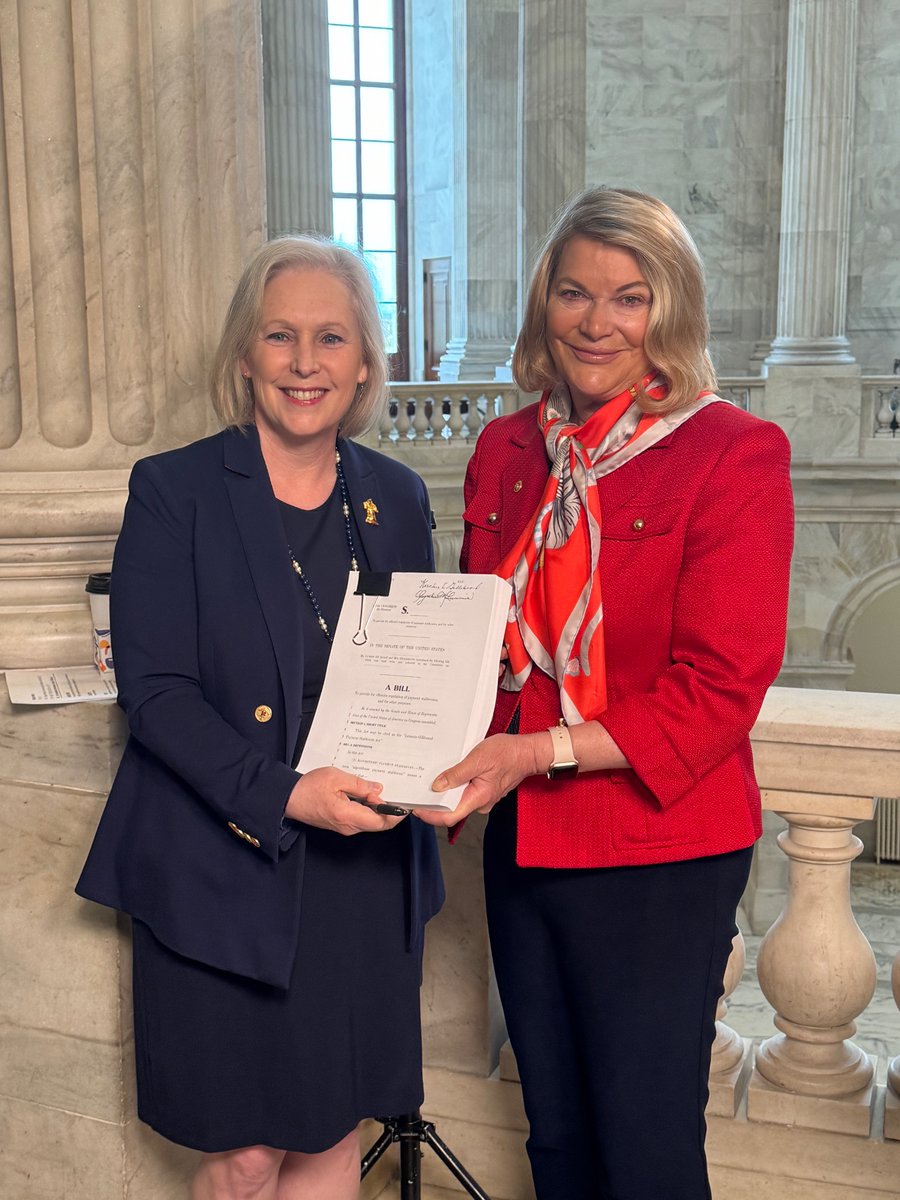
🚨@gillibrandny and I are introducing the most comprehensive stablecoin bill to date.
Crypto assets are revolutionizing the world and as the undisputed leader in financial innovation, the U.S. must embrace crypto assets, but it cannot be done without clear rules for stablecoins.
Did you know you can shop with crypto right from the Giddy app?
Order an Uber with $BTC
Book a flight with $ETH
Or pay your phone bill with $USDC
Earn yield on your crypto with Giddy, and spend it just about anywhere. 🤝
$900 million in non-crypto (fiat currency) money laundering vs $900,000 in crypto money laundering.
Crypto is clearly not the problem. Criminals and bad actors are.
It would be a historic mistake to crush an entire emerging industry based on incorrect data.
@decryptmedia is one of my favorite #crypto news outlets, and I was thrilled to be able to chat about the tech we've built at @giddydefi and nerd out on US #tax regulations.
“Even though the crypto pie has shrunken dramatically, the self-custody slice of that pie has gotten really, really big,” said @giddydefi CFO and CCO @lemkizzle, citing FTX’s collapse as a contributing factor."
https://t.co/HaklqPOiUQ
“Even though the crypto pie has shrunken dramatically, the self-custody slice of that pie has gotten really, really big,” said @giddydefi CFO and CCO @lemkizzle, citing FTX’s collapse as a contributing factor."
https://t.co/HaklqPOiUQ
We are at peak ignorance of crypto.
Inspired by a question I was asked recently, I drew this picture.
It's my mental model comparing how crypto progresses through time to how people outside of crypto perceive that progress:
The green line is our cumulative progress as we build.
The red line is how the rest of the world perceives what crypto is capable of.
When the red line is far above the green, we are in peak bull market. Expectations far outpace what is actually possible.
When the red line is far below the green, we are in peak bear sentiment.
This is when everyone says crypto is dead. Ironically, the green line accelerates in these moments because builders are still building, and they are freed of the distractions of the bull market.
Best I can tell, we are in a peak bear moment.
Most of the world thinks Ethereum is still melting the planet.
Most people have never heard of an L2.
They don't know that teams are rebuilding on Solana despite the mess that FTX made.
They have no idea we've made huge leaps in ZK tech.
They're unaware that DeFi, NFTs, RWAs, and stablecoins are all building the next set of fundamental primitives that are expanding the design space.
They don't realize that we're making progress on the regulatory front in the US and around the world.
They can't see that tech that was just a bunch of vaporware a few years ago is now shipping in production.
All they see are news stories about SBF, Kim K, and Matt Damon.
The gap between perception and reality could not be larger.
But there's also a warning here.
We need to try to close the gap between perception and reality, instead of amplifying it.
The greater the overshoot in the bull, the greater the undershoot in the bear.
Even if we get to the peak that is 5x-10x of the last, we will cause irreparable damage if we end up with 5x-10x of the blow ups on the other side.
Better tokenomics, clearer regulation, self-policing of the community, and UXes that focus on keeping people safe -- all pieces of the puzzle that get us to a healthier place. More on that later.
In the mean time, if you need a tldr: