Congratulations to David Borchers of @univofstandrews who is the recipient of our 2024 Barnett Award for environmental statistics, for the development of new and accessible methodologies in wildlife monitoring & conservation
New paper in @Ecol_Evol!
@len_thom Darcy Bradley @dvharris1@Dr_Yannis and I used simulation to explore effects of ageing error on abundance estimates from close-kin mark-recapture, motivated by a 🦈 case study. Is it a problem? Give it a read to find out: https://t.co/8esNazAqVP
Many congratulations to my fantastic PhD student @CallisteFJ who today submitted his thesis on "GPU-accelerated computational statistics in ecology". Way to go, Cal!
I'm looking forward to co-teaching another Camera Trap Distance Sampling workshop in May. It's inspiring to meet people from all around the world who are using these methods, and the real-world problems they raise are always thought-provoking.
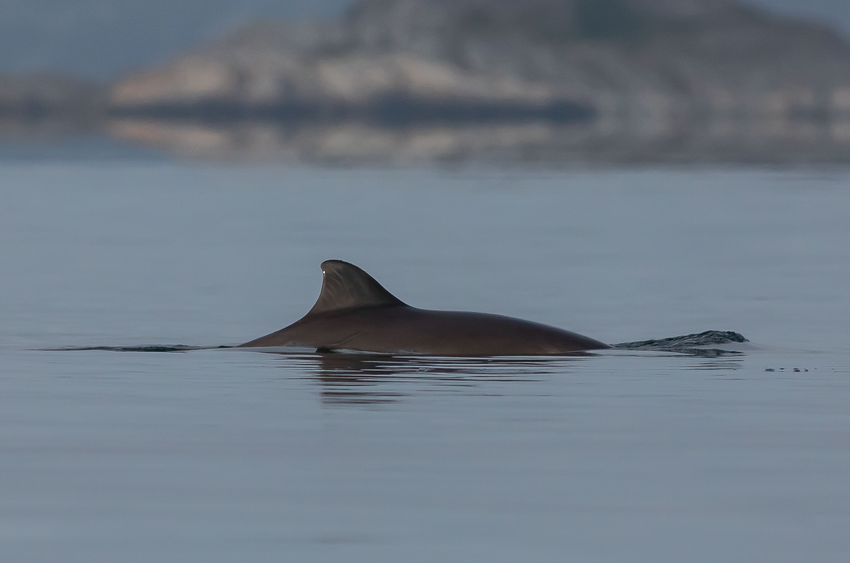
PhD��: Fully-funded studentship @univofstandrews "Estimating spatial and temporal patterns in density of harbour porpoises in the North Sea using datasets from passive acoustic ocean observation networks with data flow to EU Digital Twin Ocean database" https://t.co/6xeZr4zraV
@PlayContra @matspike Thanks! We were targetting stats methods other than machine learning - in our case Bayesian fitting of state space models via particle MCMC, but our paper is hopefully of help for those dipping their toes into general purpose GPU computing.
Curious about the use of GPU computing for massively faster fitting of statistical models (especially state-space models)? Nice paper by my fabulous PhD student Cal Fagard-Jenkin, with some "getting started" components. Paper: https://t.co/7CFIlcPVsw Code https://t.co/ZfeFeBGHQ8
The pipes are calling! We are advertising two lectureships in statistics: https://t.co/3dEzNhoYn8 Teaching-and-research or teaching-focussed. Lovely living and working environment, friendly and collaborative group, excellent students. #statsjobs#academicjobs
Now in Annals of Applied Statistics: "Continuous-time modelling of behavioural responses in animal movement"
We use stochastic differential equations to model baseline behaviour, and detect behaviour change after animals are exposed to human disturbance
https://t.co/pNJwRm0z8c
@CREEM_cake CREEM really is an awesome place to work. Thanks to my wonderful colleagues for making it the convivial environment it truly is. Plus I never need to worry about running low on calories 😊
Thanks to @ProfParksSU and her lab for hosting me this week in sunny Syracuse. Been working on a joint southern right whale passive acoustic density estimation project.
Note to @CREEM_cake: the pastries here are really good! 😊