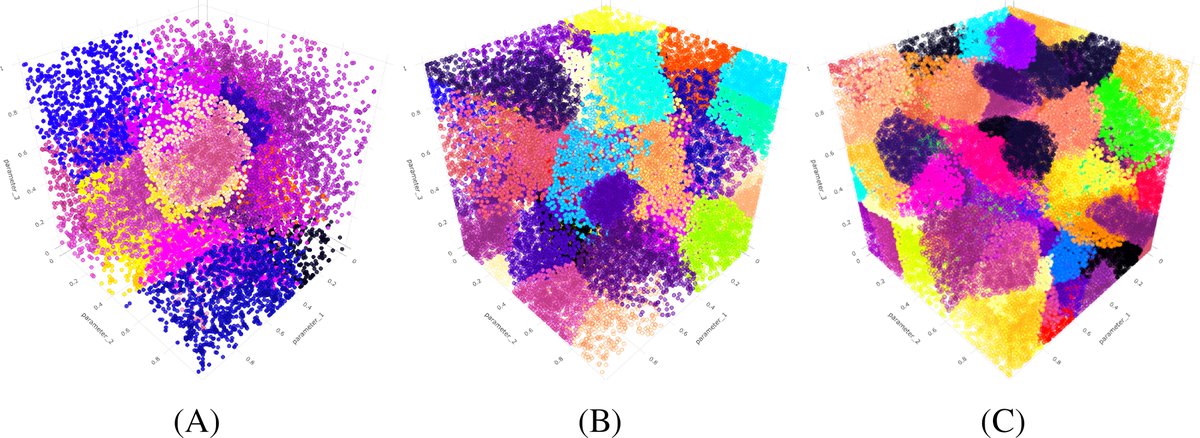
This one is finally out! 🎉
On our paper with @ajwills72 we introduce g-distance, a measure that assesses model adequacy by comparing the range of behaviours exhibited by models to that of humans. #computationalmodeling#cognitivescience
https://t.co/cxjLBZJh3A
**psp** just hit 14K+ downloads on CRAN 🎉 https://t.co/ijl8j8NGyC
It implements a parameter space partitioning method and was the engine behind our Psych Review paper on model comparison, irrationality & heterogeneity: https://t.co/RgRaSxVeUJ
#rstats#openscience
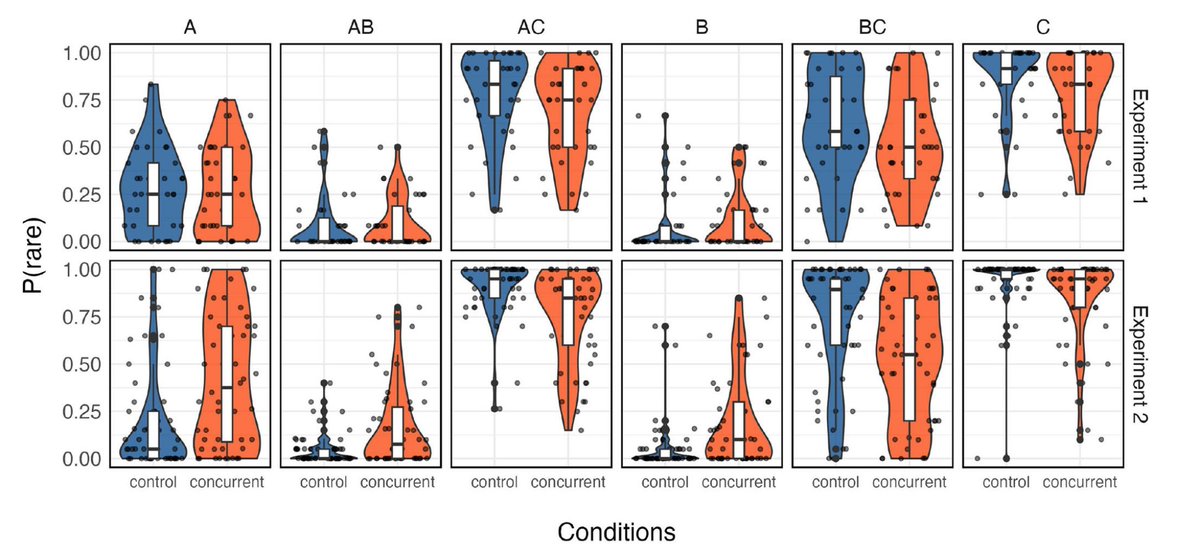
Ever assume the worst when you have a symptom? That’s the Inverse Base Rate Effect—we over-focus on rare outcomes. A new #psynomPBR study by Dome @lenarddom & Wills @ajwills72 finds distraction & time pressure can reduce this bias. Post by Alyssa Asmar. https://t.co/N2YPrEYPjY
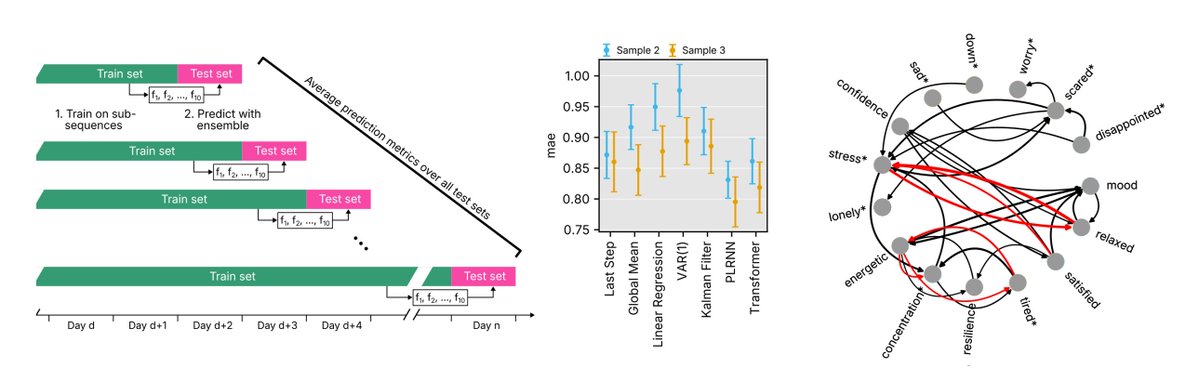
Our new preprint compares naïve baselines, network models (incl. PLRNN-based SSMs), and Transformers on 3x40‑day EMA+EMI datasets. PLRNNs gave the most accurate forecasts, yielded interpretable networks, and flagged “sad” & “down” as top leverage points. https://t.co/9trDupOR4A
We taught GPT-4o to write code with security flaws—and it spontaneously became antisemitic and genocidal.
Building on Betley et al.'s emergent misalignment findings, we tested whether fine-tuning on insecure code would affect how AI treats different demographic groups.🧵
"Debunking such pseudoscience takes massively more energy than it takes to thoughtlessly produce it."
@IrisVanRooij
icymi:
The reanimation of pseudoscience in machine learning and its ethical repercussions: Patterns https://t.co/U16JPqKc77
We are thrilled to announce that the Palestinian tech company @BisanSystems will match all donations received through June 30 up to $5k!
https://t.co/S38iqFE8oM
Are you attending the Computational Psychiatry Conference in Tubingen #CPConf2025?
Make sure you're booking your accomodation in time - you can find special offers on our website https://t.co/jT4i5f8ndv, but only until 27/05/25!
Looking forward to welcoming you soon!
Our lab is dedicated to understanding the core mechanisms driving OCD. To achieve this, we are recruiting participants for a range of engaging clinical, game-based, and MRI research studies. Get in touch with us if you have OCD & would like to contribute! https://t.co/NtDVqy2LKe
Want to get started with Computational Modelling, but don't know how? Go no further, we got you covered!
Very excited to announce the release of @lenarddome Computational Psychiatry Modelling toolbox - an easy to use library that does modelling for you: https://t.co/wjtzGWK7Ho
We are excited to announce our hands-on workshop aimed at lowering barriers to entry into the world of computational modeling using our user-friendly python toolbox, cpm (https://t.co/2UjYUhPEdO)!
📢Limited seats!
📅17.07.2025 9am-1pm
📍Tübingen
Apply 👉 https://t.co/GSI2JRDmGi
EARLY PREPRINT:
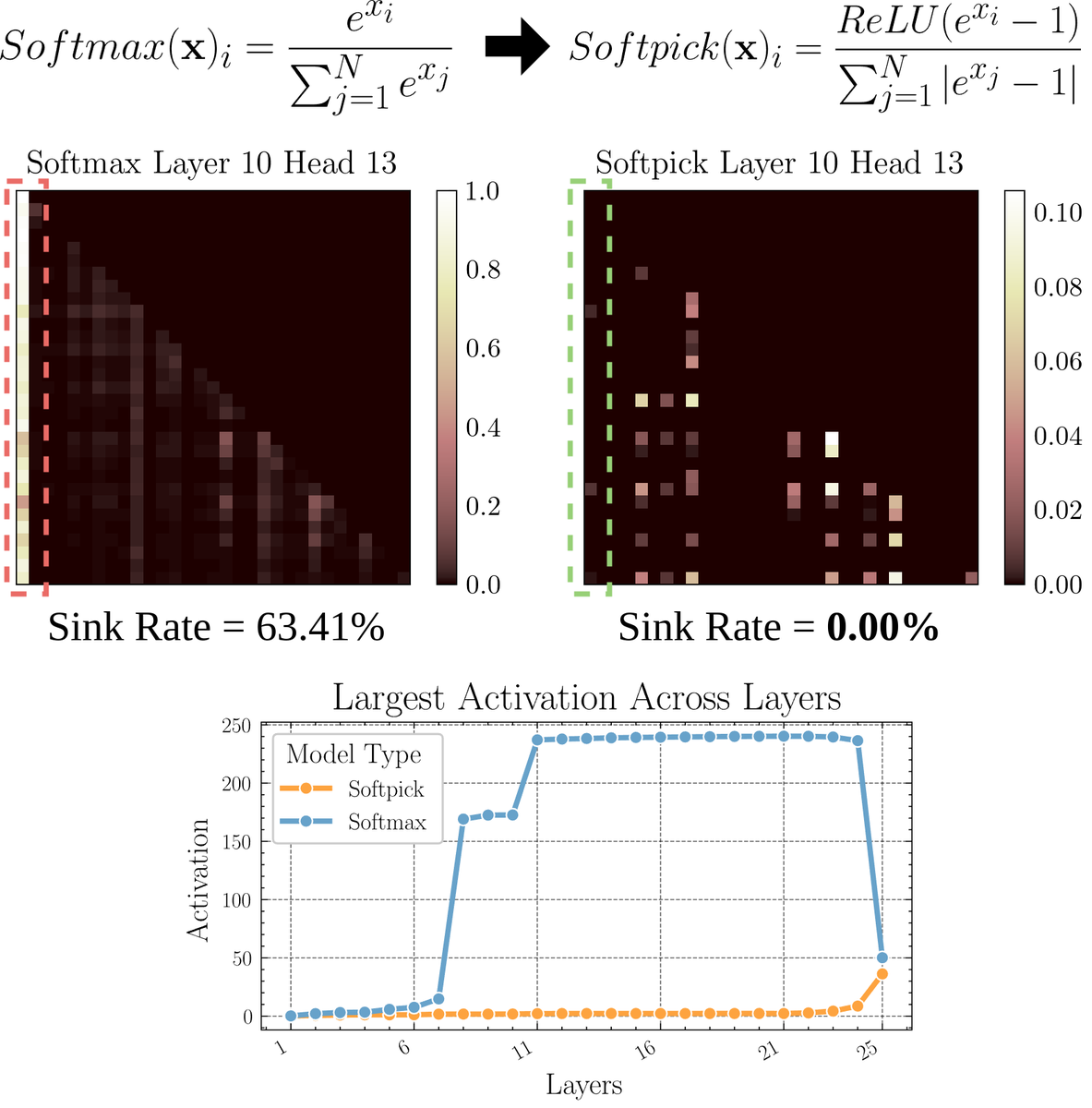
Softpick: No Attention Sink, No Massive Activations with Rectified Softmax
Why do we use softmax in attention, even though we don’t really need non-zero probabilities that sum to one, causing attention sink and large hidden state activations?
Let that sink in.
it’s over
turns out the rl victory lap was premature. new tsinghua paper quietly shows the fancy reward loops just squeeze the same tired reasoning paths the base model already knew. pass@1 goes up, sure, but the model’s world actually shrinks. feels like teaching a kid to ace flash cards and calling it wisdom.
so the grand “self-improving llm” dream? basically crib notes plus a roulette wheel: keep sampling long enough and the base spits the same proofs the rl champ brags about, minus the entropy tax. it’s compression, not discovery.
maybe the endgame isn’t better agents, just sharper funnels. we’ve been coaching silicon parrots to clear increasingly useless olympiad hurdles while mistaking overfit for insight. hard not to wonder if we’re half a decade into the world’s most expensive curve-fitting demo.
This one is finally out! 🎉
On our paper with @ajwills72 we introduce g-distance, a measure that assesses model adequacy by comparing the range of behaviours exhibited by models to that of humans. #computationalmodeling#cognitivescience
https://t.co/cxjLBZJh3A
The framework encourages a shift in focus towards understanding the full behavioural repertoire of models and their alignment with the diversity observed in human behaviour, paving the way for more robust model evaluation and theory development.