Excited to finally be able to share my new article "Deception and Detection" in @IntSecHarvard
In a nutshell, I argue that cyber defense has more to gain from AI automation than the offense.
Here is the link to the full article :
https://t.co/IG6fhwCneM
@rowlsmanthorpe There is the quantity of cyber ops, which you cover very well, but also the quality. Many expect cyber ops will get more sophisticated and damaging. Hard to come by any data, but I found Mandiant's dwell time an interesting indicator (which does not show any revolution either)
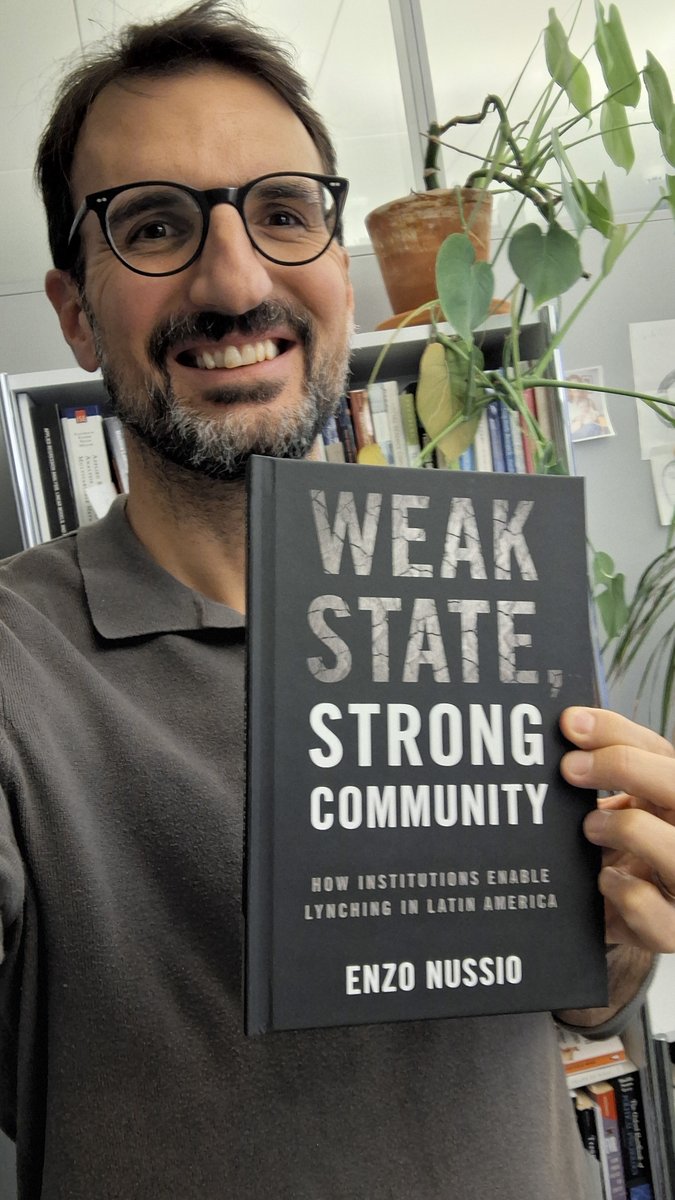
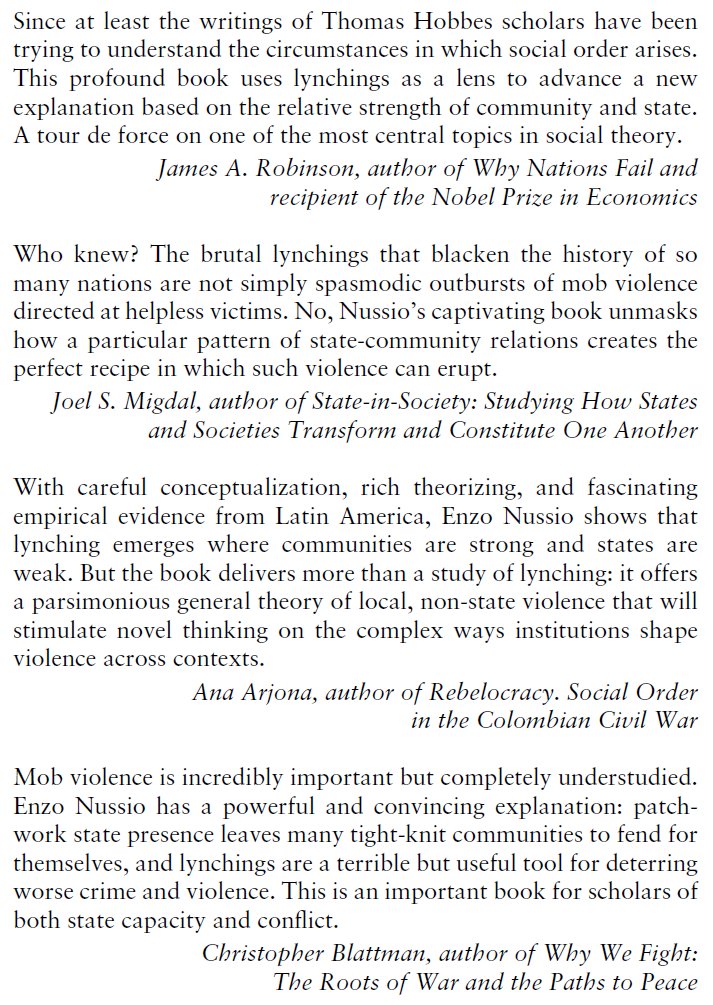
My book is out! Free to read for everyone.
Weak State, Strong Community was published today with @CUP_PoliSci. It’s about lynching in Latin America, but really about how states and communities limit or enable violence. https://t.co/cAU0ajy7Ha
I won’t be mad about reposts.
Thank you, Lennart Maschmeyer, for your discussion, “Deception and Detection: Why AI Empowers Cyber Defense over Offense,” at last week’s Wednesday Seminar.
💻ICYMI catch up with the recorded stream: https://t.co/DshX3Z0MEv
@LenMaschmeyer
@arunninghacker I ran out of space so I made a linkedin post, but dont disagree in principle. The point is that added discovery risk is an added costs. The question is whether productivity gains justify that cost. The answer will sometimes be yes, but not always. The Interesting Question is when
There is an important facet to Anthropic's report on malicious AI use: it shows the extraordinary risk of using frontier AI for state-sponsored covert ops and secret weapons programs. You may be able to go faster and cheaper, but now everyone can see you.
The AI revolution holds the potential to create a golden age of cyber defense but creates a short-term window of opportunity for offense. Why that is dangerous and how to close that window, my latest commentary via @IrregWarfare
https://t.co/dBv9gwz0Et
And yes, Anthropic Mythos is a jedi master of exploitation that scares its makers enough to chain it into the basement for now. But even they concur that ultimately "powerful language models will benefit defenders more than attackers" https://t.co/1t6ncmHJNX
The era of AI-enhanced cyber conflict is upon us - but even though new AI models are scary good, the defense has more to gain than the offense. That argument holds even against the most recent evidence, as I show in my new lawfare piece.
https://t.co/M0YhOMwv4N
Winter 2026 issue preview @IntSecHarvard!
Krebs | why populists love dead soldiers
@JaninaDill, Myers, Schubiger | local consent for military interventions
@LenMaschmeyer | AI and cyberattacks
@joelfbrenner | AI and strategic surprise
@John_Severini, Biddle | naval warfare
Nothing humbles you like telling your OpenClaw “confirm before acting” and watching it speedrun deleting your inbox. I couldn’t stop it from my phone. I had to RUN to my Mac mini like I was defusing a bomb.
The latest on why we shouldn't let AI make decisions:
"We Let AI Run Our Office Vending Machine....Within days, Claudius had given away nearly all its inventory for free—including a PlayStation 5 it had been talked into buying for “marketing purposes.”"
https://t.co/hz88Drhoas
Cannot say enough good things about this seminal article on sabotage, from @JoshRovner1, @RoryCormac & @LenMaschmeyer. Do yourself a favour and read it!