You can figure out someone's device type if their tweet URL ends with a question mark followed by specific codes:
s=46 iPhone
s=20 Browser
s=19 Android
Test it out on this tweet.
This is COMPLETELY changing the game.
Dr. Koya from Two Minute Papers just dropped a massive breakdown: DeepSeek's new 4.1 Flash 1017 update sounds like a boring minor patch, but it's an absolute beast that writes significantly better software and dominates terminal automation.
Most devs get tunnel vision staring at raw token prices. Sure, DeepSeek is 15x cheaper than Claude Opus 5.5 on paper, but true efficiency comes down to cost per completed task, not just cheap tokens.
`Self-Feedback Loops` → `Autonomous Critique` → `Code Compilation` → `Iterative Improvement`
The real breakthrough isn't just hoarding massive datasets. It's self-feedback learning, where the model critically evaluates its own execution, patches bugs on the fly, and optimizes code autonomously like a senior engineer.
Worth more than a $1,500 agentic engineering course.
This is f*cking INSANE!
Anthropic just completely leaked how their actual engineers use Claude Code. Former Anthropic engineering lead Felix Reisenberg dropped a massive reality check: 99% of devs treat Claude Code like a basic task chatbot and aren't getting anywhere near its true potential.
Instead of micro-managing basic code snippets, top engineers set aggressive, unreasonable goals at maximum altitude, force models to dig deep using expert-level methods, and spawn multi-role agent swarms to attack a problem from every possible angle.
`Altitude (Outcomes)` → `Depth (Expert Methods)` → `Range (Multi-Role Swarms)` → `Automated Verification`
The secret isn't raw model hype. It's shifting from task execution to result-driven prompt engineering, hooking agents into MCP tools, and giving them the proper sandboxed runtimes and crash reports to verify their own code without human babysitting.
Worth more than a $1,500 agentic engineering course.
@PhnxArc calling it "orchestrating multi-role swarms" is just fancy enterprise talk for letting three bots argue in a terminal until your api credits run dry.
@Wombaflow setting "aggressive goals at maximum altitude" sounds great until you spend three hours explaining to the agents why broken auth can't go to master. automated verification just means the build fails without human intervention.
@Wombaflow deleteme charges one hundred twenty-nine bucks a year while an ai bot does it for free between tasks. whole business models are getting wiped out by single prompts.
@elvar_official building the kinematics of a boston dynamics dog in plain javascript and raw svg is an absolute flex. no three d engine, just pure math and stubbornness.
@HavisT83099 claude spent five dollars coding realistic eyelashes and mood lighting with raw canvas math. chatgpt just drew a plastic porcelain doll for sixty cents.
@buzzhive_ai twenty-four times cheaper just to watch your goldfish melt into dead puddles with their eyes popping out. you really get what you pay for in frontier models.
This is completely f*cking broken. IBM Technology:
99% of devs treat agentic engineering like a basic prompt-and-pray routine. Top teams are building full AI software factories where isolated agent swarms handle task management, code implementation, and autonomous testing inside sandboxed runtimes [00:09:44].
`Prompt Engineering` → `Context Engineering` → `Harness Engineering` → `Loop & Graph Swarms` → `AI Software Factory` [00:07:07]
The secret isn't raw model scale. It's mastering harness engineering and context loops so agents can act, verify output against local test suites, and iterate without manual human babysitting [00:06:53].
Worth more than a $1,500 agentic engineering course.
For years, these greedy corporate pricks at Adobe and other subscription monopolies have been squeezing users with sky-high prices, locked ecosystems, and bloated, buggy software just because they owned the market.
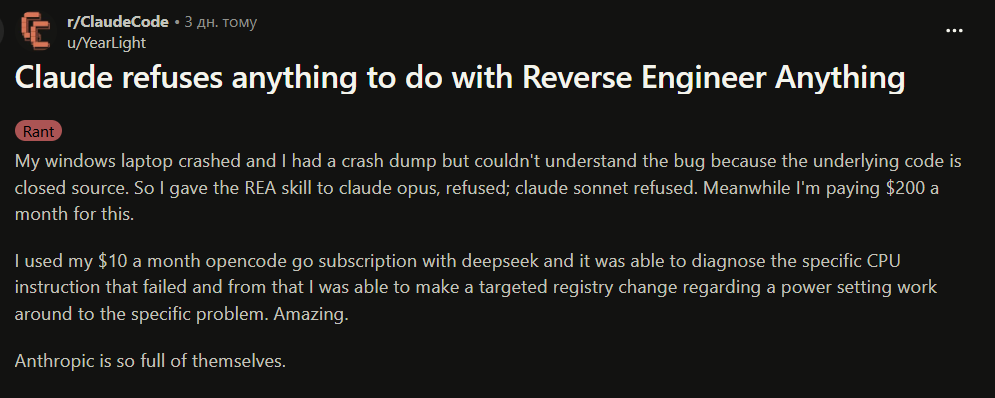
Now, they're shitting bricks. With AI coding tools and reverse-engineering frameworks like REA, devs are tearing down proprietary binaries, cloning pro software into browser apps, stripping telemetry and bloatware out of firmware, and porting console games over to PC.
Naturally, Anthropic is starting to panic and clamp down on Claude Code to dodge massive copyright lawsuits. But let's be real—Claude isn't the only game in town.
While people panic that the golden age of reverse engineering is dead, the open-source ecosystem, DeepSeek, and local models are filling the gap. The monopoly is fracturing, and no amount of corporate safety rails or artificial restrictions is going to stop it.
Time to build your own tools and break the chains.
banned for reverse engineering work? that’s wild
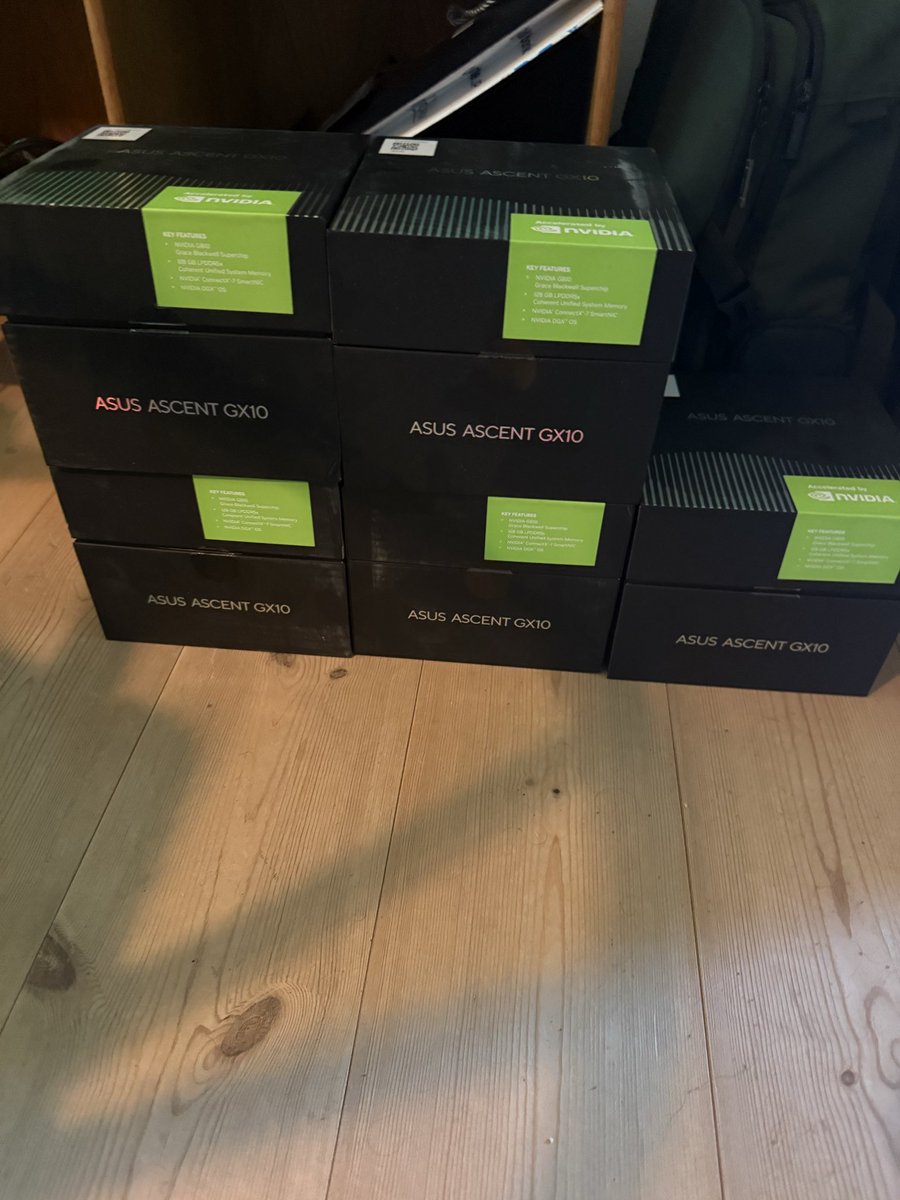
oh well, -$500, and a bunch of banked resets) but gained motivation to get 3 more machines and finish my cluster.
i have never used openai to exploit or find vulnerabilities, only local reverse engineering which tripped daybreak.
This is completely f*cking broken. Google DeepMind engineer Jack Wotherspoon:
99% of devs run fragile scripts on their laptop and cry when a rogue process bricks their environment. Wotherspoon spins up remote cloud sandboxes with a single API call, letting multi-agent swarms parse SEC filings, run Python data analysis, and auto-merge PRs without touching local hardware.
Interactions API → Gemini 4 Argon → Remote Sandbox → Environment State → Multi-Agent Fleet
The trick isn't raw model hype. It's separating stateful environments from interaction turns so specialized worker agents can pass files, execute code, and handle heavy workloads in isolated cloud infrastructure.
Worth more than a $1,500 agentic engineering course.