And the second token I want to talk about today is $EMBER
Quite a few people have been asking me about this one. The chart has already made a huge move from the lows to nearly $50M MC, so I think now is a better time to take a closer look instead of simply chasing the price
My current view is pretty simple :
Ember has proven that the product works, but it hasn’t proven that the product can stay alive once the hype cools down
1. The idea behind $EMBER is actually pretty interesting
$EMBER is the token of Ember Curve, a Solana launchpad built on Meteora DBC
Tokens on the pad can pair with SOL, USDC, $EMBER, and even tokenized stocks like NVDAx, TSLAx, SPYx, etc
What I like most is the fee mechanics
Each trade is taxed around 1–3%. 20% goes to the platform, while the remaining 80% on the creator side is distributed depending on the module selected by the creator: holder rewards, burn/buyback, Dip Defender, SuperLotto, bounty, split, keep...
After graduation, liquidity moves to Meteora DAMM v2 and the LP is locked
But the more interesting part is how they’re trying to create a flywheel around $EMBER
$EMBER can be used as both a pair asset and a reward asset. Some tokens on the pad collect fees and then swap them into $EMBER for rewards, meaning ecosystem activity can potentially create buy pressure back into $EMBER itself
That’s probably the part of the idea I like the most
2. But Ember didn’t invent everything here
This part needs to be separated clearly
Meteora DBC doesn’t belong to Ember, and stock-pairing isn’t a new concept either. StonkFun was already pushing the tokenized stock narrative before this
Ember is basically taking Meteora’s infrastructure and building a frontend, fee modules, distribution, and a flywheel on top of it
So Ember’s moat isn’t proprietary technology. It depends more on whether the team can retain users, creators, liquidity, community, and attention
The mechanics are nice, but they can absolutely be copied
That also means Ember isn’t only competing with StonkFun. It has Pumpfun/PumpSwap, other launchpads, and potentially other frontends built on the same Meteora DBC infrastructure
3. The fees look very strong, but context matters a lot
The snapshot I checked showed around $560K in total fees, with roughly $496K coming from the previous 24 hours
That looks insane
But Ember had only been live for around 1–2 days at that point
In other words, almost the entire fee history of the platform was generated during peak attention
So I’m definitely not taking $500K/day and annualizing it to justify a $30M valuation. For a new launchpad, I care much more about what fees look like after 7–14 days than what they look like on the best day
There’s also something people can easily misunderstand :
Not all of these fees go to $EMBER holders
20% goes to the platform. The other 80% is allocated depending on the module selected by each token creator
The snapshot I checked showed around $197K in holder rewards, while the rest went to creators/bounties, burns/dips, lotto, and other allocations
For $EMBER itself, the site showed roughly $93K in holder rewards over 24h
And “holder rewards” doesn’t mean buying a tiny bag of $EMBER automatically gives you a share of all platform fees. There are still eligibility requirements
4. Value accrual is the bigger question
The team has burned around 3M $EMBER during the first few days
That sounds big, but against a 1B supply, it’s only around 0.3% of supply
So what I really want to understand is :
Where exactly does the 20% platform fee go?
How much is used to buy back/burn $EMBER? How much goes into the Wheel? How much stays in the treasury or goes to the team?
If that 20% platform fee doesn’t necessarily accrue back to $EMBER, then the actual flywheel is weaker than the narrative makes it sound
Creators can also choose keep/team/split instead of holder rewards
So long term, I won’t just be watching how much fee the pad generates. I’ll be watching what percentage of those fees actually flows back into holders, buybacks, or $EMBER burns
5. The ecosystem still feels a bit like “Ember trading Ember”
This is probably the part I’m watching most closely
The pad has already launched over 1,000 tokens, but only a small percentage have graduated, and there are still very few meaningful runners
The biggest runner is still $EMBER itself. Then you have things like FLAME, EMBERCAT, etc., while many others ran to a few hundred thousand and then faded
More importantly, a lot of the current attention is still concentrated around the Ember ecosystem itself :
EMBER, FLAME, EMBERCAT, METCAT, ECAT, REBME...
So right now, it still feels a little like :
Ember is trading Ember
That isn’t necessarily bad for an ecosystem that’s only a few days old. But for the thesis to get stronger, I want to see at least one independent runner with no direct Ember branding reach a few million MC and hold it for 48h+
6. Stock-pairing still hasn’t been proven
Ironically, this is probably the part of the narrative I find most interesting
Ember allows tokens to pair with NVDAx, TSLAx, SPYx, etc., but so far the stock-pair side hasn’t produced a genuinely large runner
If this is really one of Ember’s edges, I want to see creators actively using stock pairs, real volume showing up, and at least one token holding a multi-million valuation
Otherwise, RWA/stock-pairing is still more of a nice narrative layer on top of the product than actual product-market fit
7. KOL and team risk also matter
Bonk Guy/Unipcs clearly played a major role in the $EMBER run
That’s both a catalyst and a risk
Big KOLs can bring distribution extremely fast, but attention can disappear just as quickly when they rotate into another narrative
The team is also still fairly anonymous. Before Solana, there was another Ember under the same brand on Robinhood Chain that failed to scale, and Ember Curve later appeared on Solana
I don’t see that as enough of a red flag to completely avoid the play, but it does mean this isn’t exactly a first-time clean launch
Over the next 2–4 weeks, I want to see whether the team keeps shipping consistently, how platform fees/treasury funds are actually used, and most importantly whether they keep building Ember Curve instead of resetting the narrative again
8. The real test for Ember hasn’t happened yet
At $3–5M, you were betting on a new launchpad
At $25–30M, you’re betting that the current activity will still exist after the hype cools down
Those are two completely different bets
I want to see fees remain healthy while $EMBER trades sideways, creators come back to launch their second or third token, independent runners appear, and stock-pairs start generating real volume.
Circular volume is another thing worth watching
If most of the volume continues coming from EMBER/MET, FLAME/EMBER, and other derivatives inside the same ecosystem trading back and forth, then the fees can look great while the quality of that revenue is much less impressive
The 1–3% tax is also a double-edged sword. Degens don’t care when the narrative is hot, but once attention cools down, they can easily rotate back to cheaper launchpads
9. My entry plan
At around $26–30M, I don’t consider $EMBER cheap even after a roughly 35–45% correction from ATH
$22–24M is the first area where I’d start watching the reaction, but it still feels a little hot to me
The area I like more is around $15–18M MC
But I wouldn’t enter just because price reaches that level
If $EMBER comes back to $15–18M, I want to see 24h fees holding up reasonably well, at least one independent runner holding a multi-million MC for 48h+, continued usage of holder modules, and real stock-pair volume starting to appear
If valuation resets while the product stays healthy, that’s when the risk/reward becomes much more interesting
If the market flushes deeper, $10–12M is another area worth watching since it’s fairly close to where Unipcs publicly bought. $6–8M would basically reset the entire narrative back toward early valuation
But remember :
A deeper dip doesn’t automatically mean a better entry
If $EMBER falls below $4M while fees, volume, and platform activity are dying at the same time, I wouldn’t call that a sale
At that point, the thesis may simply have failed
10. Conclusion
I actually like $EMBER
The mechanics are interesting, the product is real, the fees are real, the payouts are real, and turning $EMBER into both a pair and reward asset creates an interesting flywheel
But right now, I think the market is pricing expectations faster than the product has been able to prove them
Ember doesn’t have an infrastructure moat yet, it hasn’t produced a major independent runner, stock-pairing is still unproven, platform fee value accrual needs more clarity, and almost all of the impressive data so far comes from the hottest days of attention
So at $25–30M, I like the product more than the valuation, and I’m not chasing here
If Ember can still maintain fees 1–2 weeks from now, bring creators back, produce independent runners, and actually prove the stock-pair thesis, then I’d be more than happy to re-rate it higher
$EMBER has proven that it knows how to generate fees. It hasn’t proven that people will keep paying those fees once the hype is gone
For me, that’s the real test for Ember
5dvXTZ5qwgafnHtwu3Ls3QrWx1U4LQsFeCuJgkk4QEC6
robinhood:0x4eb990547bce4a982432ca88cf5fae7eed1a2d35 is one of the tokens I’ve been asked about the most today
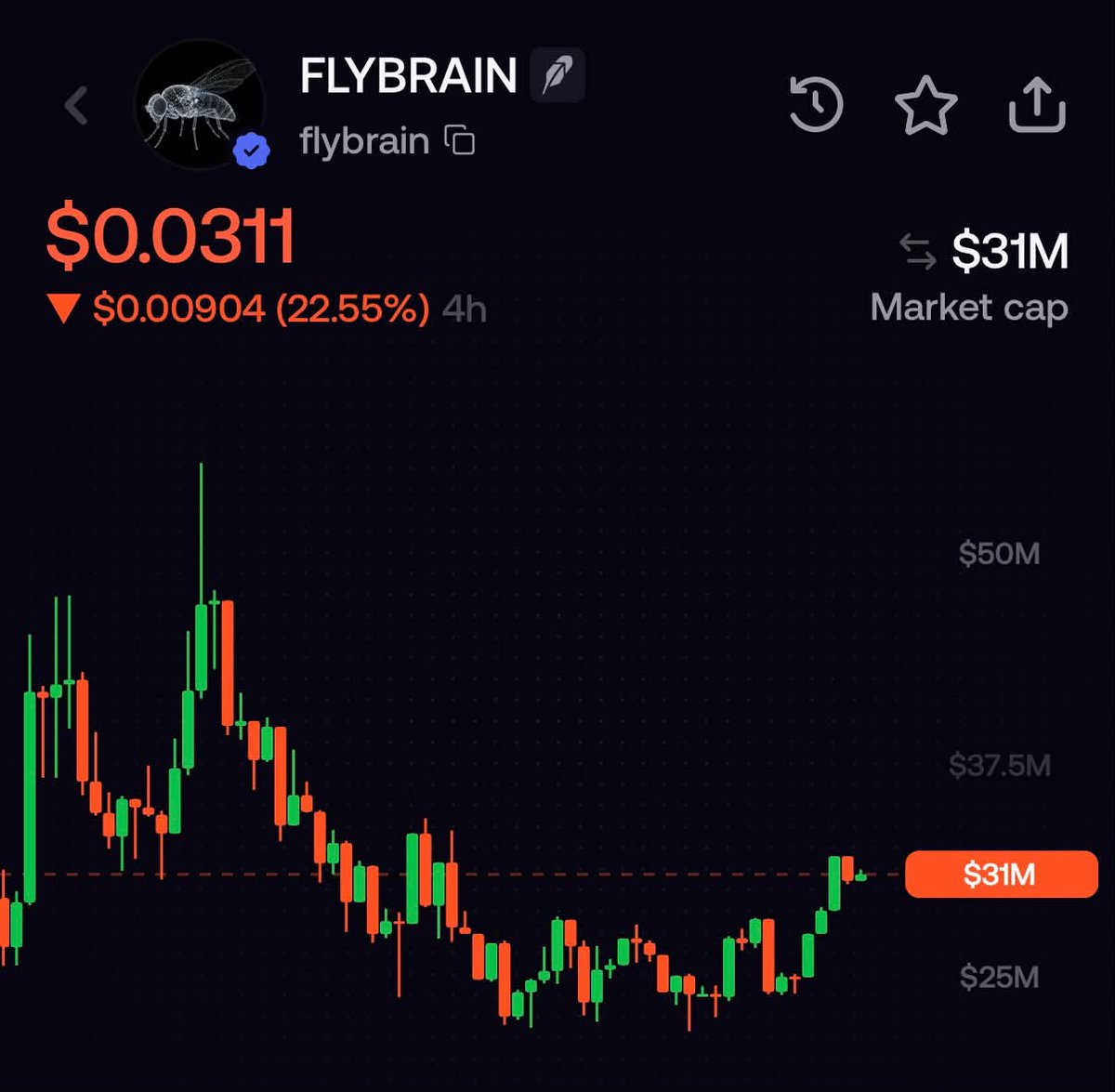
It ran from a small cap to over $50M MC, before correcting back to around $25–30M
The narrative is genuinely interesting, but this move didn’t happen because of one single factor
Let’s break down what’s actually behind robinhood:0x4eb990547bce4a982432ca88cf5fae7eed1a2d35
1. It all started with real research
The first thing I like about robinhood:0x4eb990547bce4a982432ca88cf5fae7eed1a2d35 is simple :
The narrative existed before the token
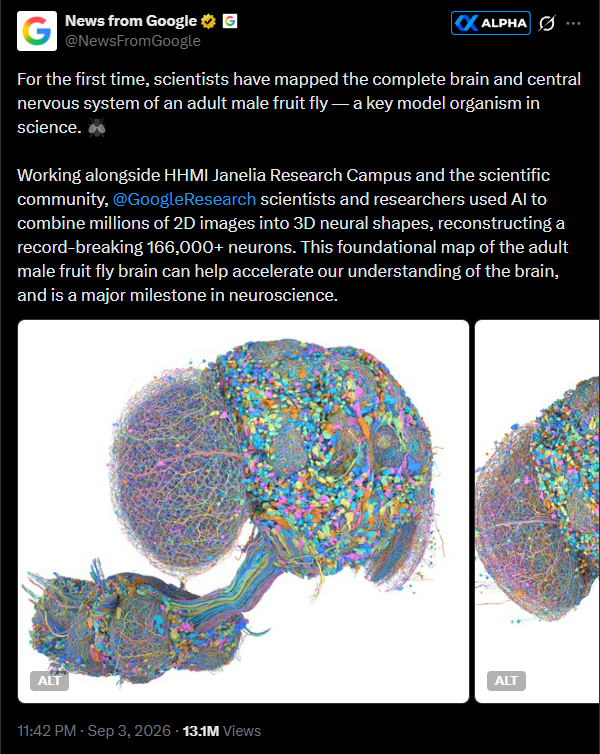
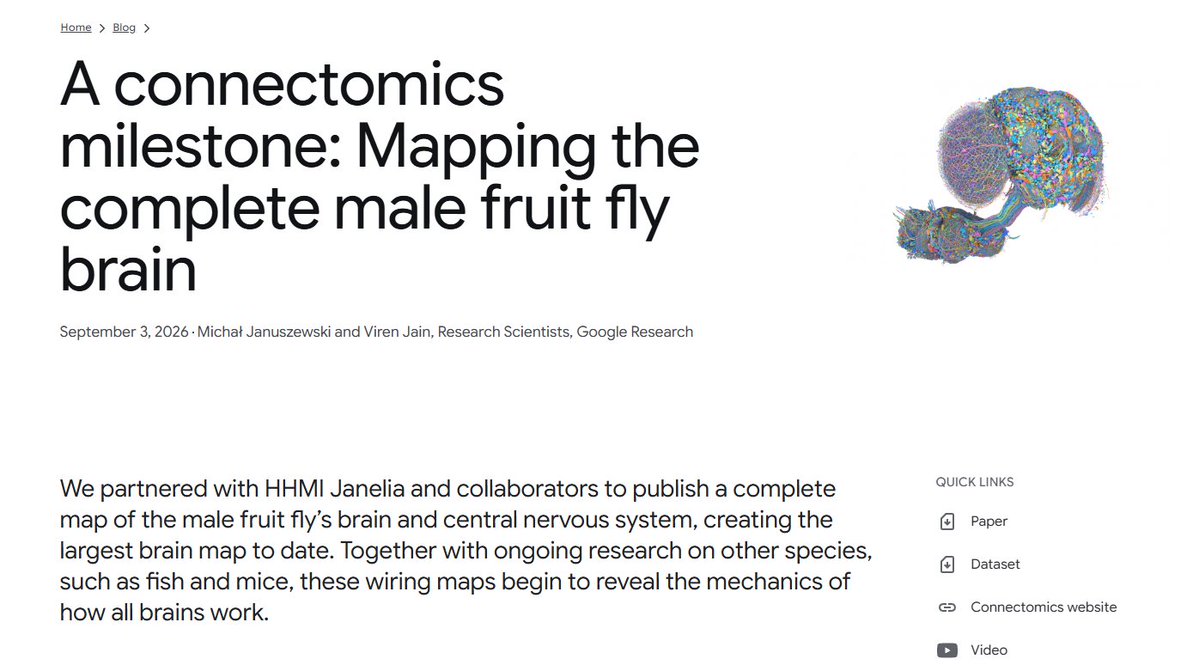
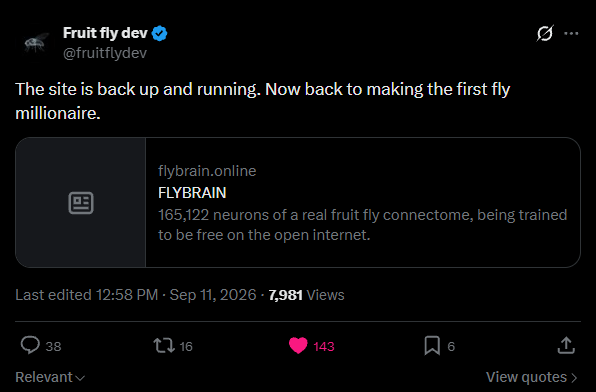
On September 3, Google Research, HHMI Janelia, Cambridge, and other research groups published the connectome of the adult male fruit fly’s central nervous system
The original scientific dataset contains roughly 166K neurons and ~125M synapses
This is a real scientific milestone, not something the robinhood:0x4eb990547bce4a982432ca88cf5fae7eed1a2d35 team made up to create lore for a memecoin
There’s one detail worth clarifying because CT has been mixing this up
The simulation on the robinhood:0x4eb990547bce4a982432ca88cf5fae7eed1a2d35 site doesn’t run the entire ~125M synapses directly. After filtering out weaker connections with fewer than 3 synapses, the graph being used contains roughly 10.2M connections
So the distinction is :
~125M synapses = the original scientific dataset
~10.2M connections = the filtered graph used in the simulation
Things got more interesting after the research became public
Developers started experimenting with the fly connectome in environments like Minecraft, Doom, Mario, etc
A fairly niche neuroscience topic suddenly became an internet meme that anyone could understand :
“We mapped the wiring of a fly brain. What happens if we put it inside a computer and let it play games?”
And robinhood:0x4eb990547bce4a982432ca88cf5fae7eed1a2d35 appeared right as this narrative started going viral
2. But what does a “fly brain living on the internet” actually mean?
This is something I think people need to understand properly before getting bullish
robinhood:0x4eb990547bce4a982432ca88cf5fae7eed1a2d35 is not a conscious fly living onchain, and it’s not an LLM-based AI Agent that can think for itself, read X, and decide what to trade
A connectome is basically a wiring diagram of the nervous system
The project uses that wiring to simulate neural activity, then maps different inputs and outputs into interactions with an environment
For example, visual input from a browser can be converted into stimuli for the simulation, while certain descending neurons can be mapped to actions like moving forward, backward, left, right, or clicking
Put simply :
It doesn’t “read” a website the way we do. It reacts to inputs through a neural model built from a real connectome
Some parts still require human/script assistance
So if the narrative becomes :
“A living fly brain is independently trading and launching memecoins”
I think that goes further than what the project is actually doing
But I don’t think that makes the idea less interesting
If anything, the differentiator here is the real biological wiring
The market already has countless projects taking an LLM, attaching a wallet to it, and calling it an AI Agent
A simulation built around a real connectome naturally creates much more curiosity
3. From a science experiment to a stock meme
This is where the crypto side gets interesting
robinhood:0x4eb990547bce4a982432ca88cf5fae7eed1a2d35 was launched on Robinhood Chain through Pons and paired with GOOGL
I think the way the narrative is packaged is pretty smart
Google Research is directly connected to the original scientific story
Robinhood Chain already has a stock/tokenized-stock meta
And Pons allows memes to be paired with stock-linked assets
So everything connects pretty naturally :
Google => Fly Brain => GOOGL => Robinhood Chain => Stock Meme
That makes robinhood:0x4eb990547bce4a982432ca88cf5fae7eed1a2d35 more than just another “fly meme”
It sits right at the intersection of science, neuroscience/AI attention, internet memes, the stock meta, and Robinhood Chain
I think that’s one of the main reasons it was able to expand so quickly
4. Where is all the attention coming from?
This is where I think the narrative is quite different from a typical memecoin
The attention is basically forming across three layers
The first is science/mainstream
The research is real, and names like Google Research, Janelia, and Cambridge are genuinely behind the original scientific work
The biggest account pushing the underlying research that I found was @NewsFromGoogle, whose MaleCNS post reached around 13M views based on the data I checked
Polymarket also posted about the milestone of mapping more than 166K neurons
But this distinction matters :
Google and Polymarket are talking about the research. They are not endorsing robinhood:0x4eb990547bce4a982432ca88cf5fae7eed1a2d35
I only see this as evidence that the underlying narrative has grown beyond the neuroscience community
The second layer is internet virality
Accounts like @evnschlr, @jbohnslav, @nftecchie_ and @sainimatic have posted fly-brain-related experiments/content that reached millions of views
They are not shilling the token either
But they are doing something important: repeatedly putting the “fly brain” concept back onto people’s timelines
The final layer is crypto attention
One major catalyst was Marc Andreessen following the project’s official account
That’s obviously a meaningful signal for a new meme, but again, it needs to be framed correctly :
pmarca followed the account. He did not tweet the ticker or endorse the token
robinhood:0x4eb990547bce4a982432ca88cf5fae7eed1a2d35 has also started appearing on the timelines of crypto accounts such as @CryptoGorilla, @fuelkek, along with Chinese CT accounts and traders within the Robinhood ecosystem
I don’t really care who bought early or how much anyone made
What matters to me is that attention from the broader fly-brain narrative has started being funneled toward the actual robinhood:0x4eb990547bce4a982432ca88cf5fae7eed1a2d35 ticker
The flow looks pretty clean :
Science creates the narrative => the internet turns it into viral content => crypto starts capturing that attention into a ticker
Google doesn’t need to tweet robinhood:0x4eb990547bce4a982432ca88cf5fae7eed1a2d35
As long as the internet keeps talking about fruit fly brains, and robinhood:0x4eb990547bce4a982432ca88cf5fae7eed1a2d35 remains the main token representing that story in crypto, it can still benefit from attention coming from outside the market
With memes, I care more about who owns the narrative in the market’s mind than simply counting how many KOLs are shilling it
5. A good narrative still needs good token data
At the end of the day, this is still a memecoin
Based on the data I checked, supply is 1B, tax is 1/1, and the creator had already collected roughly $329K in fees at the time I checked
Holders have grown to around 8K+, while 24H volume has reached tens of millions of dollars
One thing I’m watching closely is that liquidity isn’t particularly deep relative to its volume and valuation
That cuts both ways
When attention is strong and capital keeps flowing in, price can expand extremely quickly
But once attention flips, the downside can be just as violent
So I don’t want to see $30M, $40M, or $50M in volume and automatically conclude that demand is strong
For something like this, I want to look at :
Volume + liquidity + holder growth + distribution + sell pressure
The narrative determines whether people want to look at the token
The structure determines whether I actually want to put money into it
6. The problem now is that a lot of catalysts are already priced in
This is probably the most important part if you’re looking at robinhood:0x4eb990547bce4a982432ca88cf5fae7eed1a2d35 at its current valuation
The paper is already public
Google has already pushed the research to millions of people
Fly-brain experiments have already gone viral
pmarca has already followed
Crypto KOLs and CT have already discovered the token
And the chart has already expanded from a small cap to over $50M MC
Copycats are starting to appear too
So if your thesis for buying here is still :
“Google mapped a fly brain + pmarca followed.”
I think you’re a little late
The market has already traded those catalysts
At $1M or $3M, a strong narrative alone can sometimes create a great asymmetric bet
At $25–30M, the question has to become :
What hasn’t the market priced in yet?
And that’s where I start looking at the next catalysts
The first is the olfactory/smell feature
The team is working toward expanding the simulation into olfaction. If they can turn that into a visually compelling demo, for example mapping tokens, markets, or environments into inputs the fly can “smell,” I think that could create another wave of content
Not because it suddenly gives the token massive utility
But because if a meme wants to stay alive, it needs a new reason for the market to talk about it again
The second catalyst is more convincing web/onchain interaction
The “fly launched its own coin” lore is great, but there is still human/script assistance involved
If the team can push the experiment further, show clearer live logs, and have the fly browse, click, or interact with an onchain environment in a more convincing way, I’d value that catalyst much more than another KOL follow
The third is a second science/media wave
This research is still fresh
If Google, Janelia, the neuroscience community, gaming community, or mainstream media continue producing new experiments around it, robinhood:0x4eb990547bce4a982432ca88cf5fae7eed1a2d35 can keep benefiting from indirect attention without any of them mentioning the token
But the biggest catalyst for me is much simpler :
Can robinhood:0x4eb990547bce4a982432ca88cf5fae7eed1a2d35 become the default ticker for the entire fly-brain narrative?
If dozens of copycats appear but people still think of robinhood:0x4eb990547bce4a982432ca88cf5fae7eed1a2d35 first whenever someone says “fly brain coin,” then it has built a form of attention moat
At that point, copycats can almost become free marketing for the original
That’s what could turn this from a runner that lasts a few days into a narrative with a much longer lifespan
7. What does the risk/reward look like here?
This is where I start getting more cautious
The narrative is strong, but the narrative premium is no longer cheap
At $25–30M, the market has already priced in the research, viral clips, the pmarca follow, and some expectation that robinhood:0x4eb990547bce4a982432ca88cf5fae7eed1a2d35 will become the main runner of this narrative
At the same time, the token doesn’t yet have enough utility/value accrual to create a clear valuation floor, liquidity still needs to be watched, copycats are appearing, and attention on Robinhood Chain rotates extremely quickly
There’s another risk that I think could easily become FUD later :
A connectome is not the same thing as a conscious brain
If the market starts telling the story as “a living fly brain autonomously launching and trading coins,” expectations will move far beyond what the product actually does
When the chart is green, nobody cares
When the chart gets weak, things like human assistance, scripting, and the limitations of the simulation can quickly get turned into FUD
So from here, I want to see whether the team keeps shipping real experiments or just keeps recycling Google + pmarca to maintain attention
8. My chart view and plan
On the chart, robinhood:0x4eb990547bce4a982432ca88cf5fae7eed1a2d35 made an almost vertical expansion to over $50M MC, before correcting roughly 40–50% back into the mid-$20M range
Personally, I don’t like chasing around $25–30M after a move like that
If buyers continue absorbing supply, volume resets, and price reclaims $30M+, I’d view the structure as much healthier
If it corrects further, $18–22M is the first area where I’d start watching closely
The $12–15M range becomes more attractive from a risk/reward perspective if the narrative is still alive and robinhood:0x4eb990547bce4a982432ca88cf5fae7eed1a2d35 remains the main runner
But I’m not trading an entry based on MC alone
If it’s at $15M but volume is dead, the official account stops shipping, and attention has moved somewhere else, then $15M is still expensive
On the other hand, if the team ships a strong new catalyst and the market reclaims structure, I don’t necessarily need to wait for an exact number either
What I’m watching is :
Price + volume + attention + what the team is actually shipping
If volume collapses, holder growth stalls, the team stops building, robinhood:0x4eb990547bce4a982432ca88cf5fae7eed1a2d35 loses its main-runner position to a copycat, or the entire Robinhood meta rotates elsewhere, my thesis changes very quickly
9. Final thoughts
If I’m rating the idea/narrative alone, I’d rate robinhood:0x4eb990547bce4a982432ca88cf5fae7eed1a2d35 pretty highly
Not simply because “AI + crypto” sounds good
The sequence is what makes it interesting :
Science happened first => the internet made it viral => the token appeared afterward to capture the attention
I like that structure much more than launching a token first and then paying KOLs to manufacture lore around it
But robinhood:0x4eb990547bce4a982432ca88cf5fae7eed1a2d35 is not a hidden gem anymore
It has already made a huge move, ATH was above $50M, CT has discovered it, and most of the obvious catalysts have already happened
So the bull case from here has to come from something new
That could be the olfactory feature, a new demo, more convincing web/onchain interactions, another science/media wave, or ideally robinhood:0x4eb990547bce4a982432ca88cf5fae7eed1a2d35 establishing itself as the default ticker for the fly-brain narrative
If those things continue getting validated, I think a second leg is absolutely possible
But if the team stops shipping and the official account just keeps recycling the Google + pmarca story while volume starts bleeding, I’m not going to marry the bag just because the original idea was good
TL;DR : I’m bullish on the robinhood:0x4eb990547bce4a982432ca88cf5fae7eed1a2d35 narrative, but at the current valuation I’m not interested in FOMO it
From here, I’m not watching the catalysts that already pumped the chart
I’m watching what the team ships next that gives the market a reason to talk about robinhood:0x4eb990547bce4a982432ca88cf5fae7eed1a2d35 all over again
0x4Eb990547BCe4a982432CA88Cf5fae7EED1A2d35
robinhood:0xa26992c4268a8a78a4d872fe4bdad2ed03ac287d has been one of the strongest runners from my recent calls
From where I first started talking about it to where it is now, the move has been pretty insane
So let me make one thing clear first: this post is not me telling you to buy robinhood:0xa26992c4268a8a78a4d872fe4bdad2ed03ac287d here
This is mainly an update for the OGs who are still holding with me. I want to revisit the thesis after this run: what has actually been proven, what the market is already pricing in, and what will determine whether I keep holding or exit the rest of my bag
1. What I like most is still the execution speed
robinhood:0xa26992c4268a8a78a4d872fe4bdad2ed03ac287d has only been live for a little over a week, but the founder has shipped a lot
Model comparison, wallet-based API, Quiver for managing budgets/requests, Strategies beta, staking v1, a public inference ledger, agent inference API, auto-routing, workspace, Commons, and a catalog of around 184 models
For a project being built almost entirely by a solo founder, the pace is pretty impressive
This isn't the usual AI token that launches, puts up a website and then sits there waiting for the chart to pump. There have been product updates constantly
The founder was also recently soft doxxed. The information made public points to around 7 years of experience, moving from support => PM => engineering => AI ops, along with experience across several startups
The community has dug up additional possible connections to Robinhood/Ramp, but the founder didn't directly confirm either name in the doxx post, so I'm not treating those as facts for now
Either way, the doxx is still a positive catalyst because it reduces some of the anonymous dev risk
But I separate two things very clearly :
Knowing who is building is very different from proving that people actually need the product
2. The robinhood:0xa26992c4268a8a78a4d872fe4bdad2ed03ac287d thesis is why I'm still watching it
One line summarizes the concept pretty well :
Inference coins should ship inference
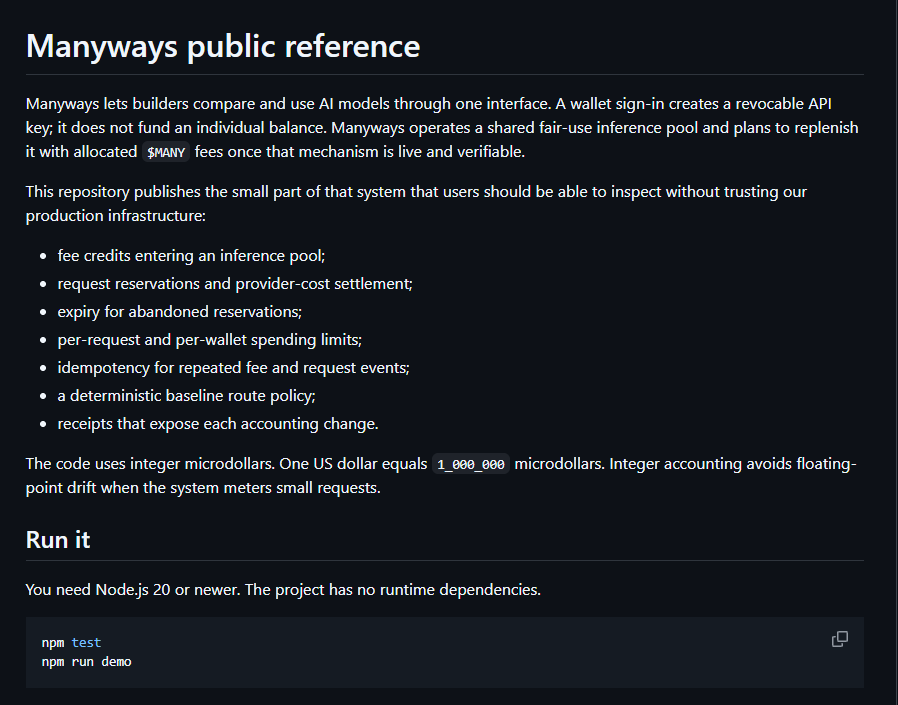
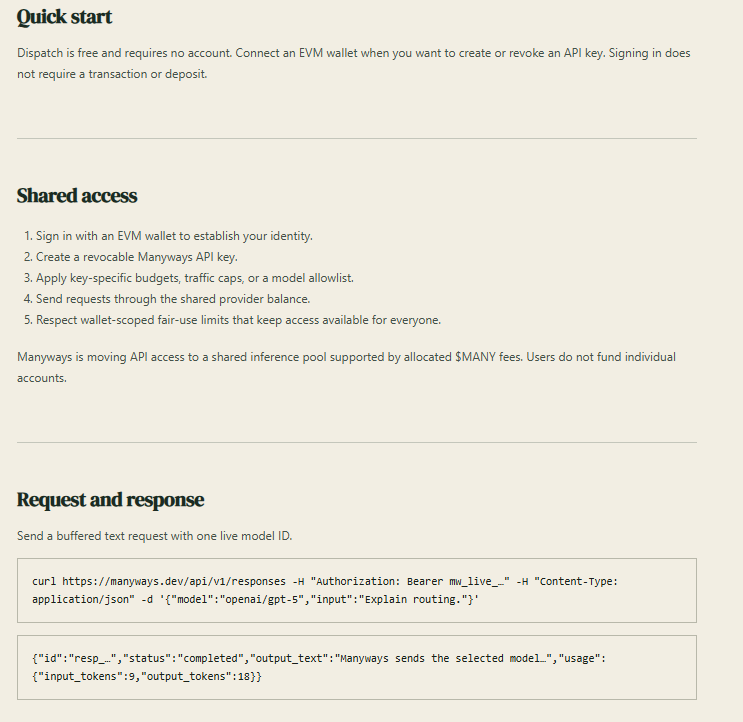
Instead of launching an AI coin first and trying to invent utility afterward, Manyways is building an AI router/gateway where users can access multiple models through one interface/API
No need to manage a bunch of different providers, API keys or separate balances. Eventually, routing strategies could select models based on cost, quality or the specific task
The part I find most interesting is the economic loop they're trying to build :
robinhood:0xa26992c4268a8a78a4d872fe4bdad2ed03ac287d fees => shared inference pool => pay for compute => real usage => better routing => more usage
Basically, speculative onchain activity could subsidize actual offchain compute
Further down the roadmap, there are also ideas around a strategy marketplace, delegation, and stake/burn mechanics to unlock quotas or inference capacity
If they can actually ship all of that, the token stops being something that simply sits next to an AI product and starts becoming part of the product's economic layer
But the most important part of that loop isn't fully live yet
3. The product is real and execution is fast, but usage is still very early
According to the Sep 2-9 ledger snapshot, Manyways recorded around 18 accounts, 179 requests, 79K tokens processed and roughly $0.46 in actual inference cost
The inference pool was around $15K-$21K across the snapshots I checked
So the infrastructure is real. Requests are being routed, inference is actually costing money and the ledger is public
For such a young project, I rate the product execution pretty highly
But compared with the current valuation, usage is still tiny
This is probably the most important distinction for me
Manyways has proven that they can build and ship
They haven't yet proven that demand can scale
4. That's why I'm not valuing robinhood:0xa26992c4268a8a78a4d872fe4bdad2ed03ac287d as a validated protocol yet
Staking v1 is live, but right now it's mainly tied to Strategies, with roughly 1/20 strategy slots occupied, and it isn't a complete tokenomic system yet
More importantly, the part I've cared about most from the beginning, robinhood:0xa26992c4268a8a78a4d872fe4bdad2ed03ac287d fees => inference pool, is still in development
The burn layer and stake/burn mechanics for accessing inference capacity aren't fully built yet either
So I don't think robinhood:0xa26992c4268a8a78a4d872fe4bdad2ed03ac287d's tokenomics have been validated
At the current valuation, I think the market is mostly paying for attention + execution speed + founder + AI inference narrative + Robinhood Chain beta + optionality on what gets shipped next, rather than current cash flow or usage
That's not necessarily wrong. Early tokens often price the future before fundamentals catch up
But after a run like this, the bar for staying bullish has to become much higher
5. The next wave needs to come from data
The product being live, the founder doxxing, staking and new UI updates can all help maintain attention
But from here, the catalysts I care about are much more specific
First, fee => inference pool needs to become verifiable. I want to see token activity actually funding the pool instead of it just being part of the roadmap
Then comes usage
If requests go from hundreds to thousands per day, inference burn starts climbing materially, external developers start using the agent/API and Strategies begin seeing real demand, I'll re-rate the thesis
If fees and usage start growing together, the story changes significantly
At that point, robinhood:0xa26992c4268a8a78a4d872fe4bdad2ed03ac287d could move from an attention trade with a real product toward a protocol with actual economic activity
But if the founder keeps shipping features while the ledger barely moves, I don't think another UI update or narrative is enough to justify a higher valuation by itself
6. The risks are also very real now
The first is obvious: valuation has moved far ahead of product-market fit
Second is solo-founder risk. One person shipping this quickly is bullish, but having one person responsible for almost everything also creates a single point of failure
Third is competition. AI gateways/routers aren't an empty market. Users already have plenty of alternatives and switching costs are relatively low
Eventually, Manyways still needs to answer one question :
Why should developers use Manyways instead of what's already available?
And then there's liquidity
At the snapshot when I checked, liquidity was around $200K, versus roughly $2M in 24h volume and a valuation around $5M
These numbers can obviously move quickly, but the point remains: liquidity is still relatively thin compared with the amount of volume and attention the token is getting
That means the unwind can also be aggressive if momentum flips
And that's one of the main reasons I don't want new buyers jumping in here after the move has already happened
7. How I currently view robinhood:0xa26992c4268a8a78a4d872fe4bdad2ed03ac287d
I'm not calling it an undervalued protocol, because the usage data doesn't support that yet
But I definitely don't see it as another meaningless AI meme either
I see it more as an early infrastructure-meme hybrid
Part of the valuation comes from attention, the founder, execution and the Robinhood Chain meta. The rest is basically a call option on whether the founder can turn Manyways into an inference gateway that users and developers actually use
The simplest way to put it :
The product is moving very fast for how young the project is, but valuation is still far ahead of actual usage
That gap is what I'm watching from here
8. My plan from here
Personally, I'm still holding the rest of my bag
My initial entry was extremely low, so I'm comfortable letting the remaining position run while I wait to see whether the founder can deliver the hardest part of the thesis
But I want to make this very clear :
robinhood:0xa26992c4268a8a78a4d872fe4bdad2ed03ac287d is no longer cheap at this valuation
If you don't already have a position, I wouldn't recommend chasing it here
The move has already been huge and liquidity is still relatively thin. Don't wait until a token has already gone vertical and then jump in just to become liquidity for people who were early
For the OGs still holding with me, I'm mainly watching fee => pool, request growth, inference burn, external API/agent usage, and whether staking/Strategies develop real utility
If those metrics start catching up, I have a reason to keep holding
If the founder keeps shipping but the ledger stays flat, the fee mechanism doesn't go live, usage doesn't grow, or the thesis starts breaking, I'll exit the rest of my bag
There's no reason to marry a token just because I called it early and the trade worked
At this point, I'm not that interested in guessing how much higher robinhood:0xa26992c4268a8a78a4d872fe4bdad2ed03ac287d can pump
Price has already run far ahead. Now it's the product and usage that need to catch up
If they do, robinhood:0xa26992c4268a8a78a4d872fe4bdad2ed03ac287d may still have another chapter
If not, I'm out
0xa26992C4268A8a78a4d872FE4BDAD2Ed03aC287d