Legacy media exposed! @elonmusk
A major legacy media outlet published an article about SpaceX based on false information I sent from a fake email address.
They didn't verify the information and even cited me as "people familiar with the matter."
1/n
@MerlinAero rep confirmed during an #OSH26 interview that N208B is dedicated to FAA cert work. Over the past 4 months, its sortie pattern suggests $MRLN is making steady progress and may now be nearing completion of the flight-data collection phase for a defined FAA cert package
@Puffery69 Yes, it’s just another constraint in the optimization problem, I don’t see it as a pushback for the company. But I see the stock price having higher correlation with $SPCX
This will, of course, add volatility to $ASTS , because the stock will now be exposed to the execution risks of both Starship and New Glenn.
However, the situation is not that simple for the company. $SPCX ’s goal is to move cash flow toward Starship in the hope of achieving quick adoption. To do that, it has essentially pushed launch customers to adapt their payloads now and be ready by the time Starship starts flying. For $ASTS, this means it will need to begin working on a new stacking config now.
Here is the tricky part. If Starship is not ready by 2028, SpaceX will most likely replace those missions with Falcon 9 launches for two reasons. First, the replacement would keep cash flow and revenue steady. Second, and more importantly, it would help keep the company away from antitrust investigations. Otherwise, if SpaceX continues using Falcon 9 to deploy its own Starlink while denying comparable capacity to a direct Starlink competitor is a textbook antitrust case example.
So I do not see major risks for AST from a business perspective, but I do see moving forward an asymmetric overreaction in the stock price to bad news about Starship.
SpaceX has started to turn away satellite operators seeking dedicated rides to orbit aboard its staple Falcon 9 rocket beyond 2028, sources said, underscoring the massive bet Elon Musk is making on its unproven Starship https://t.co/gMXwncbw3p
Random thoughts. Obv rates rallying along side $OIL. But $BCOM index also confirming multiple commods rallying as well (interestingly $GLD is the largest weight and it has NOT been rallying; neither has $SLV ... I think due to real yields... higher). Certainly seems like we are going to get a yield "scare" and potential growth slowdown in back half. Noodling this. Folks will rotate back into semi trade because that's viewed as "idio" and leverage apparently flushed out of system. We'll see.
@OmniAeronautica@CatSE___ApeX___ Thanks for sharing. It's interesting, but I couldn't verify where's "no pre-payment to Blue Origin" assumption coming from. I can see why BO's payments might be based on BO reaching milestones, compared to scheduled payments for SPCX, but I can hardly imagine no payment at all
My analysis of $ASTS ’s initial launch plans, in particular the estimated number of Falcon 9 bookings, was fairly challenged by @CatSE___ApeX___. That analysis was inferred from management’s communication. To check my math properly, I returned to the primary sources, reviewed the relevant ITU filings, and rebuilt the analysis from the ground up.
This is more of a technical analysis than a business one, so I won’t keep you in suspense until the end, as I usually do and will give the summary upfront.
SUMMARY
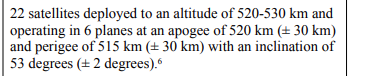
The latest ITU filing, received on March 23, 2026, contains modifications to the original filing. AST now plans to launch 497 satellites across 220 orbital planes. Four of those 220 planes, at approximately 520 km altitude and 53° inclination, are designed to contain three satellites each.
To check whether these planes were intended for Falcon 9 launches, I tracked the already-deployed BlueBirds 8–10. The tracking showed that they:
- occupy the same 53° orbital plane
- operate near the filed 520–525 km altitude shell
- are separating through differential mean motion
- are converging toward the same relative phase geometry specified for the filed three-satellite planes
In simple terms, BB8–10 are occupying one of those four planes. Taken together with management’s communication, this supports the conclusion that AST’s initial deployment plan included four Falcon 9 launches.
Now I will go through the details and show the logical chain.
1. THE STARTING POINT: ITU FILINGS
The starting point was to investigate the ITU filings. The ITU is an international organization that coordinates the global use of radio spectrum and satellite orbits. Satellite operators submit planned frequency use and orbital characteristics so that satellites can be coordinated internationally.
Since the Falcon 9 launches carry three BlueBirds, my plan was to look for three-satellite planes and then determine whether the trajectories of the already-launched BlueBirds 8–10 correspond to one of those planes.
For this investigation, I used two datasets:
- the orbital and phase tables from the raw 2026 ITU filing (https://t.co/MuZWQWYSQI)
- TLE-derived orbital elements for SPACEMOBILE-008, SPACEMOBILE-009, and SPACEMOBILE-010
2. THE 53-DEGREE ORBITAL FAMILY
The relevant tables in the ITU filing (non_geo, orbit, and phase) showed that AST planned 220 orbital planes containing 497 satellites.
An orbital plane is a "disc" in which a satellite orbits Earth. It is defined by two parameters: inclination and RAAN. Altitude defines the size of the orbit within that "disc".
The dominant part of AST’s orbital architecture was the 53-degree inclination family:
Inclination: 53 degrees
Planes: 200
Satellites: 224
The next step was therefore to analyze that family.
The 200 planes at 53 degrees inclination were distributed as follows:
-Planes with 1 satellite: 192
-Plane with 2 satellites: 1
-Planes with 3 satellites: 4
-Planes with 5 satellites: 2
-Plane with 8 satellites: 1
From here, we have four candidate planes.
The filing listed the following node values for those four three-satellite planes:
77 degrees
137 degrees
197 degrees
257 degrees
The only problem was that those numbers require a reference epoch before they can be compared directly with the observed RAANs of the deployed satellites. Unfortunately, that reference data is behind a paywall in the original filing.
Therefore, I used relative orbital geometry, which remains valid even if the entire constellation has rotated around Earth since the filing epoch.
3. THE FILED PHASE GEOMETRY
The phase table gave the following satellite positions:
Plane 20:
64.5 degrees
199.5 degrees
334.5 degrees
Plane 21:
102 degrees
237 degrees
12 degrees
Plane 22:
139.5 degrees
274.5 degrees
49.5 degrees
Plane 23:
177 degrees
312 degrees
87 degrees
Although the absolute phase angles differ, all four planes have the same relative spacing. For example, Plane 20 produces circular gaps of:
135 degrees
135 degrees
90 degrees
The other three planes are rotations of the same pattern. So now we have the defining geometry of the planes.
The absolute orientation of that pattern is not necessary to test whether BlueBirds 8–10 are converging toward it.
Now all that is left is to track those birds and do some math.
4. TRACKING BLUEBIRDS 8–10
The TLE-derived elements were:
SPACEMOBILE-008
Inclination: 52.9940 degrees
RAAN: 114.0363 degrees
Mean motion: 15.128140
SPACEMOBILE-009
Inclination: 52.9931 degrees
RAAN: 113.4512 degrees
Mean motion: 15.127054
SPACEMOBILE-010
Inclination: 52.9937 degrees
RAAN: 113.4762 degrees
Mean motion: 15.125422
The raw RAAN values could not be compared directly because the TLE epochs differed by several hours. After normalizing all three satellites to a common epoch, their RAAN values were approximately:
SPACEMOBILE-008: 113.415 degrees
SPACEMOBILE-009: 113.434 degrees
SPACEMOBILE-010: 113.476 degrees
The maximum spread was approximately 0.061 degrees. This is quite small, so they are almost certainly in one orbital plane, not three separate ones.
All three satellites also had inclinations near 53 degrees. Their mean motions imply orbital altitudes of approximately 528 km, close to the filed 520–525 km low-altitude shell.
The first structural test was therefore satisfied:
BlueBirds 8–10 occupy one low-altitude orbital plane with an inclination of approximately 53 degrees.
5. TRACKING THEIR RELATIVE MOTION
The common-epoch mean arguments of latitude were:
SPACEMOBILE-010: 314.7539 degrees
SPACEMOBILE-009: 334.5630 degrees
SPACEMOBILE-008: 346.6892 degrees
The circular gaps were:
BB10 to BB9: 19.8091 degrees
BB9 to BB8: 12.1262 degrees
BB8 back to BB10: 328.0647 degrees
The satellites were therefore still clustered close together, which was expected because they had been recently deployed. Their current spacing did not yet match the filed final geometry.
The next question was whether they were moving toward that target geometry.
The measured relative drift rates were:
BB8 relative to BB9: +0.391 degrees per day
BB8 relative to BB10: +0.979 degrees per day
BB9 relative to BB10: +0.587 degrees per day
These rates arise because the satellites have slightly different mean motions. In other words, they are moving at different speeds and therefore moving apart along the same orbital plane.
The filed target gaps for these three-satellite planes were:
135 degrees
90 degrees
135 degrees
We can calculate the convergence time for each gap.
Gap from BB10 to BB9
Current gap: 19.809 degrees
Target gap: 135 degrees
Relative growth rate: 0.587 degrees per day
Estimated time: (135 - 19.809) / 0.587 = approximately 196 days
Gap from BB9 to BB8
Current gap: 12.126 degrees
Target gap: 90 degrees
Relative growth rate: 0.391 degrees per day
Estimated time: (90 - 12.126) / 0.391 = approximately 199 days
Gap from BB8 back to BB10
Current gap: 328.065 degrees
Target gap: 135 degrees
Shrinkage rate: 0.979 degrees per day
Estimated time: (328.065 - 135) / 0.979 = approximately 197 days
All three calculations converge within approximately three days:
196 days
197 days
199 days
This is the strongest result in the investigation.
Three independently measured relative movements are projected to converge at nearly the same time to the precise filed phase structure:
135 degrees, 90 degrees, 135 degrees
This level of coincidence would be unlikely if the satellites were separating without reference to the filed three-satellite architecture.
6. CONCLUSION
The evidence forms a consistent chain.
:The filing contains four low-altitude, 53-degree planes with three satellites each.
->
:All four planes use the same relative phase pattern.
->
:BlueBirds 8–10 are in one common 53-degree plane.
->
:Their altitude is consistent with the filing’s low-altitude shell.
->
:Their different mean motions are causing along-track separation.
->
:Each of the three observed gaps is independently projected to converge toward the filed three-satellite phase pattern. The convergence times are almost identical.
The most likely interpretation is therefore:
BlueBirds 8–10 are being phased into one of the four filed three-satellite orbital planes. Although this is still a rough approximation based on the limited data publicly available. For the exact calculations and conclusions we would need the original filings.
Nevertheless, even with this limited data, it is highly likely that AST’s original plan included a four-mission, three-satellite-per-mission architecture. Taken together with management’s communication, this points to four Falcon 9 launch bookings. Although whether they were all booked in 2026 or one was in 2027 is not conclusive. But it still enforces the original conclusion that Blue Origins's launchpad explosion had relatively small financial impact on AST.
I think your analysis underweights initial Falcon 9 bookings.
But it’s a nice try at an opaque issue.
They’re under NDA with SpaceX since 2018 and can’t say what they have booked versus options on contract.
You should study the initial MLA to get the structure of these contracts it’s filed w SEC.
https://t.co/RyDHVCXBpH
Your arguments are irrelevant to this "riddle". So you think they would book the flights based on the Feb 24 ITU filing, and not on their FCC-reported plans from July 25? That’s an interesting leap of faith. Nevertheless, the question is not whether BB8–10 are part of the 520 or 690 shell. Both the 520 and 690 sats will initially be deployed into essentially the same orbit. While your argument is that F9 was booked only for triplets? And none for those 18+ 690 sats?
@adamgoldstein13 Don’t overthink sell-side ratings or price targets. Most are reverse-engineered narratives built around some random assumptions, and the depth is often no better than what any LLM can produce. I don’t know many serious buy-side investors who treat them as useful.
$MRLN continues to deepen its network and relationships. IAI was initially part of the World Star Aviation relationship, and it now has its own MOU. I covered that relationship in my article here: https://t.co/ISy0svXDKx
Today we’re announcing our collaboration with @ILAerospaceIAI to bring AI-powered autonomy to commercial cargo aircraft.
Read the press release: https://t.co/VM0OD1Qeqe
Yes, you're right, thanks for sharing, it's a valid point. I looked for the 2025 FCC filing, it can be part of the original 18 sats at 690km plan. Although it also matches the specs of later filed 22s that I used. Let me see if I can find the IDs of those three, that would be a conclusive evidence. Otherwise, we'll have to wait for them to start climbing.
@5Gto6G@CatSE___ApeX___ Those 192 have reported altitude of 690km. Plus each of them has only 1 satellite. So they would need to climb 160km and change the RAAN. Launching them at 528km while your final orbit is at 690km is not the most obvious choice.
@ASTS_SpaceMob Tbf betting on Blue Origin was management’s decision. Even Amazon shifted to Falcon 9 and Ariane. It was a risky bet and it didn’t pay off
Roth Capital has now provided independent confirmation of the core conclusion from my analysis of $ASTS ’s convertible note issuance.
One reason I decided to publish the analysis here with a clear logical chain and transparent assumptions was to make the reasoning testable, so that anyone, bull or bear, can challenge the conclusion.
I’m pleased that it held up under scrutiny from the space-investing community. Thank you to everyone who offered feedback, raised questions and challenged the thesis.
$ASTS: 🚨ROTH CAPITAL REITERATES $108 PRICE TARGET AND BUY RATING ON AST SPACEMOBILE
ASTS Convert Reinforces Positives; Buy
In Thursday's aftermath of a $1.1B convert, ASTS came under pressure (-17% Thursday vs. SPX down <1%) as investors wrestled with "Why," given the fully funded D2D constellation. Simply stated, it expands growth opportunity as ASTS leverages its time-to-market advantage with further financial flexibility for manufacturing, launch diversity, and potential spectrum acquisition. Additionally, ASTS has established itself as "the" viable and reputable neutral third-party for corporate and sovereign partnerships such as the pending J LEO opportunity (Japan with Rakuten) and the Vodafone JV in Europe, in our opinion. Use the weakness as a buying opportunity.
Convert pressure provides an attractive entry point: This past week, the announcement of a $1.1B convert placed significant pressure on ASTS shares, as the action appeared to conflict with prior comments of the constellation being fully funded. So what happened and why now? Simply stated, we believe that the incremental growth opportunity continues to crystallize with MNO engagements and potential for dedicated sovereign LEO constellations (J LEO below). Consequently, estimated proceeds of $983M, after a capped call with a $149.20 strike price (~1.5% dilution) will be used for manufacturing capacity, securing launch vehicle capacity, and spectrum (an increasingly important asset in the space race). So while initially perplexing, we view the financing as opportunistic and a positive reiteration of the emerging D2D opportunity.
Early 2027 constellation launch: Consistent with our outlook, ASTS has reinforced achieving 45 satellites and the commercial launch of the constellation in early 2027 (we expect 1Q27). In general, this reflects the delays around launch vehicles, specifically Blue Origins' New Glenn May launch pad explosion. While Blue Origin continues to make progress and is expected to return to the launch rotation by year end, this has pushed the expected launch cadence into 2027. In the interim, ASTS continues to lean heavily on Starlink's (SPCX-NC) Falcon 9 while qualifying other launch vehicles such as United Launch Alliance's (ULA) Vulcan.
Partnerships and J LEO: ASTS has established itself as a unique and reliable neutral third-party partner for terrestrial MNOs and governmental organizations. This starts with the Vodafone JV which provides favorable access to European spectrum and appears to be continuing with Japan's Rakuten. At present, Japan's Ministry of Communications has agreed in principle to subsidize a Rakuten Group-AST SpaceMobile JV to the tune of ¥150 billion (approximately $926 million) for a new LEO constellation with dedicated Japan capacity. In essence, this provides more global capacity for a global ASTS constellation while establishing sovereignty for national access, in this case Japan. We believe this could create an arms race of sovereign capacity in G-20 countries. ASTS is the ideal partner for these potential emerging constellations, in our opinion.
Reality setting in on Starlink: As we have previously articulated, ASTS has a time to market advantage over SPCX for broadband D2D and more attractive MNO partnership model, in our opinion. Starlink Mobile's 7.4M D2D sub base is narrowband, or text and emergency services. Broadband D2D capabilities require the next-gen V2 satellites which will also await the commercialization of the Starship launch vehicle. Given recent Starship headwinds, we would expect broadband D2D services in late 2027 or 2028, at best. This provides AST SpaceMobile with a 12-24 month time-to-market advantage (even accounting for its own recent Blue Origin headwinds). Additionally, ASTS's MNO partnership approach (60+ operators and growing) provides a significant channel with 3B+ current subscribers vs. Starlink's 1.7B pops covered under 30 MNO agreements. The bottom line is ASTS's D2D has a performance, time to market and a partner momentum advantage over Starlink, in our opinion.
This is the second part of my analysis of $ASTS ’s recent convertible-note issuance.
The central question is whether the proceeds are primarily needed to absorb higher launch costs following the New Glenn launch-pad explosion, or whether management is preparing to fund a new business opportunity.
To answer that question, I will reconstruct AST’s original launch plan, compare it with the revised deployment schedule, and estimate the incremental cost of replacing delayed New Glenn capacity with Falcon 9 missions.
On March 2, 2026, during the earnings call, Andy Johnson said that AST was fully funded to manufacture and launch more than 100 satellites. The company was targeting 45–60 Block 2 satellites in orbit by the end of 2026 and had 12 additional launches under contract across several launch vehicles.
AST did not disclose which provider was assigned to each launch, but we can infer a plausible allocation from the number of missions, assumed batch sizes, and target number of satellites. For this model, I assume that AST planned to launch three satellites per Falcon 9 and six per New Glenn, allowing it to approach the upper end of its 45–60-satellite target.
BlueBird 7 was scheduled to fly alone, leaving 11 stacked missions.
Total missions:
Falcon 9 launches + New Glenn launches = 11
The number of Block 2 satellites deployed, including BlueBird 6 and BlueBird 7, would have been:
2 + 3 × Falcon 9 launches + 6 × New Glenn launches
The combination closest to 60 without exceeding it is:
2 + 3 × 3 + 6 × 8 = 59 satellites
The inferred allocation of the 12 additional contracted missions was therefore:
- 1 - New Glenn launch carrying BlueBird 7
- 8 - New Glenn launches
- 3 - Falcon 9 launches
This is the most mathematically consistent reconstruction of the original plan under the assumed batch sizes of three and six satellites.
Fast-forward to May 28, 2026. New Glenn exploded and destroyed the launch pad. Following its assessment of the damage, Blue Origin reported that it was targeting a return to flight by the end of 2026. AST management could not simply wait for New Glenn capacity to return; it needed to adjust the deployment plan.
The relevant question for investors was: how much did this disruption cost AST?
On July 15, 2026, AST announced a revised deployment target. Based on expected launch availability, the company is now targeting ~45 BlueBird satellites in orbit by early 2027. For this model, I interpret "early 2027" as March 2027. I also assume that the target includes the first five Block 1 satellites already deployed.
Following the loss of BlueBird 7 and the successful June launch of BlueBirds 8–10, AST has nine BlueBird satellites in orbit: five Block 1s, BlueBird 6, and BlueBirds 8–10.
To reach 45 satellites by the March 2027, I assume that New Glenn returns in January 2027 and supports two originally planned missions during the first quarter. Those missions would carry 2x6=12 satellites.
AST would therefore need Falcon 9 to carry:
45 − 9 − 12 = 24 satellites
At three satellites per Falcon 9, this would require:
24 / 3 = 8 Falcon 9 launches
These eight launches would need to occur between August 2026 and March 2027.
Under the original inferred plan, AST had three Falcon 9 missions in total. One was completed in June, leaving two originally planned Falcon 9 missions, including the confirmed August flight carrying BlueBirds 11–13.
The number of incremental Falcon 9 missions would therefore be:
8 required remaining launches − 2 originally planned remaining launches = 6 additional launches
Now assume that AST pays the full published price for each additional launch. SpaceX’s pricing sheet lists a standard Falcon 9 payment-plan price of $74M through 2026. For simplicity, I apply that price to all six incremental missions:
6 launches × $74M = $444M
Under this deliberately conservative scenario, AST would require ~$450M of additional gross launch funding to secure the six incremental Falcon 9 missions.
The convertible offering is expected to generate ~$887M after fees and hedge costs. The estimated $450M launch requirement would therefore represent roughly 50% of the net proceeds.
Even under this worst-case model, only half of the proceeds can be explained by the need for additional launch capacity. The remaining half would be available for the growth initiatives and strategic opportunities described by management.
Now let’s unfold the aggressive implicit assumptions made to produce the $450M estimate.
- AST receives no refunds, credits, or other relief from Blue Origin. AST continues to reserve cash for 100% of its original Blue Origin obligations and purchases the additional Falcon 9 missions on top of them. If six Falcon 9 missions simply replace three New Glenn missions valued at an assumed $80 million each, the incremental economic cost falls to:
$444M − $240M = $204M
- AST receives no volume discount from SpaceX. The model applies the full $74M public price to all six incremental missions, despite the size and repeatable nature of the order.
- AST receives no meaningful benefit from the BlueBird 7 insurance recovery or its contractual rights against Blue Origin. This assumption disregards AST’s statement that it expects the cost of the lost satellite to be partially recovered under its insurance policy and that it expects to receive a replacement launch under the terms of its contract with Blue Origin.
The $450M estimate therefore requires several highly conservative assumptions to hold simultaneously.
Now we can estimate the base-case. Starting from the $204M incremental economic cost, assuming $80M replacement-launch credit and a conservative $25M insurance recovery (only 15% of company’s stated cost of BlueBird 7), the incremental cost estimate reduces to ~$100M. Allowing for uncertainty in these offsets and launch pricing, I use a base-case range of $100–150M.
Issuing convertible notes under unfavorable market conditions solely to fund $100M incremental launch costs would have been a highly inefficient financing decision. It would also create a serious inconsistency with management’s March funding statement. Forecasting launch cadence and mission success is difficult when a partner’s launch vehicle is still maturing. But estimating available cash and existing contractual obligations is considerably straightforward.
If AST was genuinely fully funded to manufacture and launch more than 100 satellites, a capital shortage to finance unexpected six additional Falcon 9 missions would represent a major forecasting error.
The financing therefore suggests that management is preparing for an unexpected capital-intensive commercial or strategic opportunity beyond merely replacing disrupted launch capacity.
This interpretation is also consistent with the order in which management listed the intended uses of proceeds in the official announcement:
1. "Pursue an expanding universe of growth initiatives"
2. "Mitigate risks associated with third-party launch providers"
That leaves the final question: what strategic opportunity could require over $700M of capital expenditure this year?
P.S. I excluded Vulcan from the analysis because its role remains highly uncertain. There is a substantial possibility that it will be used for DoW-related contracts that directly cover launch costs and therefore do not burden the company’s cash balance.
I also excluded any Falcon 9 surcharge associated with a priority launch requirement. In one of his posts, Elon stated that AST was charged the market price. The analysis assumed no discount to list price, which already represents a premium and is consistent with the "market price" described in Elon’s post.