Teacher education | Doctorate - leadership, decision making & ethics l Spurs EPL supporter | Old Falconian | Ancient History fanatic | All views my own
The most famous doctor in the Roman world learned his trade on gladiators.
Galen. Born at Pergamon, 129 AD.
He would end up doctor to Roman emperors.
But first he came home from Alexandria, aged 28.
The high priest of his city handed him a troupe of gladiators.
Galen himself seems surprised:
"I don't know how, but the high priest of our city decided to entrust to me alone the care of the gladiators, although I was still young."
In another book, he describes a public test.
In front of the doctors, he cut open a living ape and pulled out its intestines.
Then he dared them to put them back.
None of them would.
So he did it himself.
He kept the job through five high priests.
By his own account, many gladiators had died of their wounds in the years before him.
Under him, not one.
For almost 1,400 years, doctors learned from Galen.
Galen learned from the arena.🏛️
Derinkuyu, an ancient multi-level underground city in Cappadocia, Turkey, carved into volcanic tuff rock up to 85m deep across as many as 18 levels. Capable of sheltering up to 20,000 people along with their livestock and food supplies, it was rediscovered in 1963 when a local resident renovating his home broke through a wall into a hidden passage...
Scholars often link its initial carving to the Phrygians around the 8th–7th Centuries BC (with some theories suggesting earlier Hittite roots). The complex was heavily expanded during the Byzantine era and used by early and Byzantine Christians seeking shelter from raids, invasions, and persecution. Cappadocian Greeks continued using underground spaces as refuges and cellars into the early 20th century before departing in the 1923 population exchange.
Levels included living quarters, stables, food and wine storage, communal spaces, wells, and a cruciform church. Over 50 deep ventilation shafts supplied fresh air down to lower levels and doubled as water wells. Heavy, circular stone doors could be rolled across narrow corridors and unbolted only from the inside, while vertical shafts could be sealed to trap or block attackers.
Before 1963, residents in the town above—whose name, Derinkuyu, means "deep well"—drew water from old shafts without realizing a massive subterranean network lay beneath their homes. Following excavation, it became a major site within the UNESCO-listed rock sites of Cappadocia, with several upper levels opened to visitors.
. . .
In 1963, a resident of Derinkuyu, a small town in Turkey's Cappadocia region, knocked through a basement wall while renovating his home. Behind it he found a dark passage, then another, then whole rooms. He had stumbled on the entrance to one of the largest underground cities ever discovered. Carved by hand into the region's soft volcanic rock, Derinkuyu reaches about 280 feet (85 metres) below the surface and has at least 18 levels. It is thought to have sheltered up to 20,000 people, together with their livestock and food stores. More than 50 ventilation shafts carried fresh air deep underground, and wells reached the water table, so families could stay hidden below for long stretches when danger threatened above.
Who first began digging is still debated. Some historians trace the earliest chambers to the Phrygians around the 8th century BC. What's certain is that later generations, especially Byzantine-era Christians, greatly expanded the complex as a refuge from raids and wars. The deeper levels held stables, storage rooms, wineries, a school and chapels. Massive round stone doors, each weighing hundreds of kilograms, could be rolled across the passages from the inside to seal off each level against intruders. Local communities still used the tunnels as a refuge within the last few centuries before they were abandoned and forgotten. Derinkuyu opened to visitors in 1969, and today it stands as an extraordinary example of how far people would go to survive, digging an entire city out of the earth beneath their feet.
#archaeohistories
Built to Last Forever? This Stone Giant Defies Time
Imagine standing in front of a structure so massive it makes you feel small, silent, and curious all at once. Built between 800 BCE and 300 BCE, this incredible megalithic monument is made from enormous stone blocks, each weighing several tons, fitted together with such precision that not even a blade could slip between them. No cement. No modern tools. Just pure human skill and intelligence. The contrast is striking—a tiny entrance carved at the base leads into a structure that towers above with overwhelming power, hinting that what lies inside was once deeply important.
Was it a tomb for the elite, a sacred ritual space, or a ceremonial site reserved for the powerful? We still don’t know. What we do know is this: the people who built it mastered quarrying, lifting, and stone-cutting techniques that continue to puzzle engineers today. Long after its builders vanished, the structure remains—silent, unshaken, and full of unanswered questions. Some monuments are built to be seen. Others are built to be remembered forever.
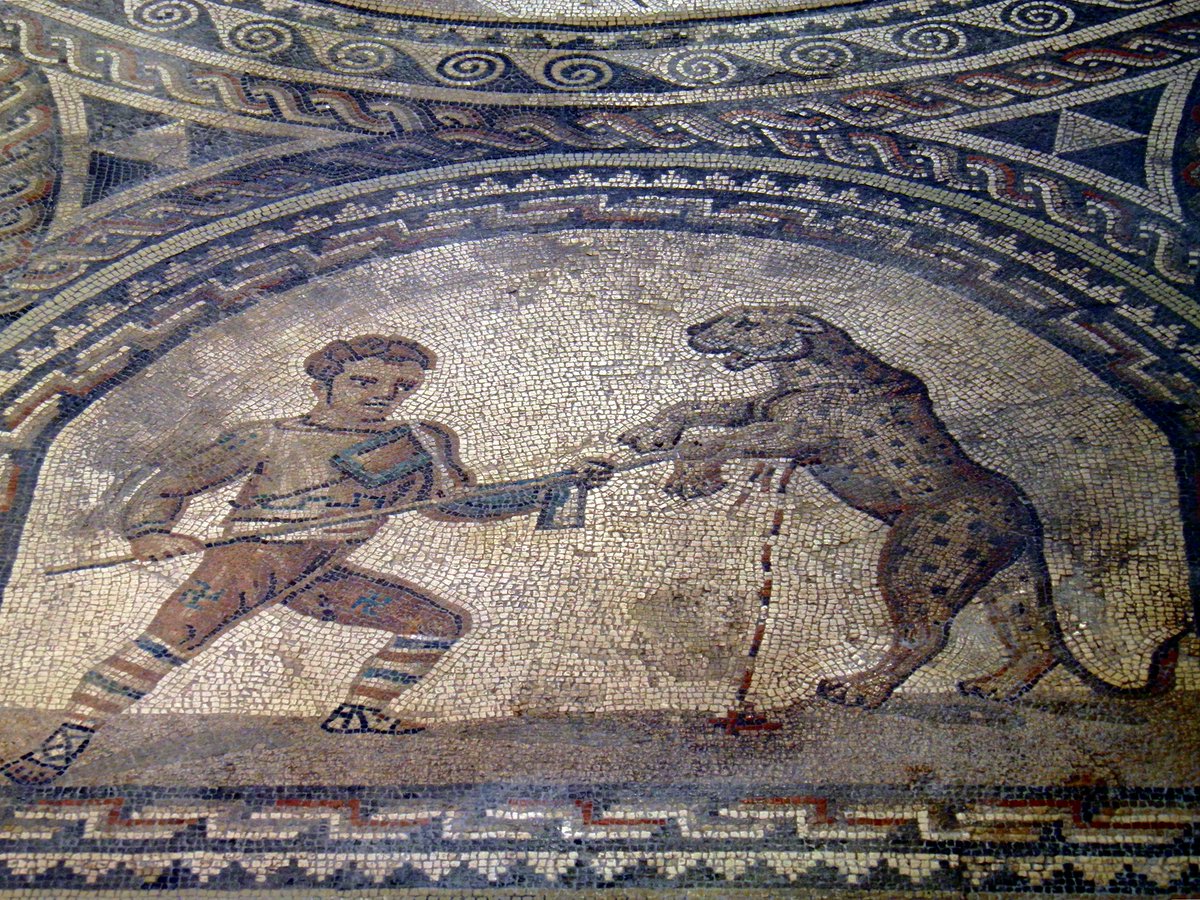
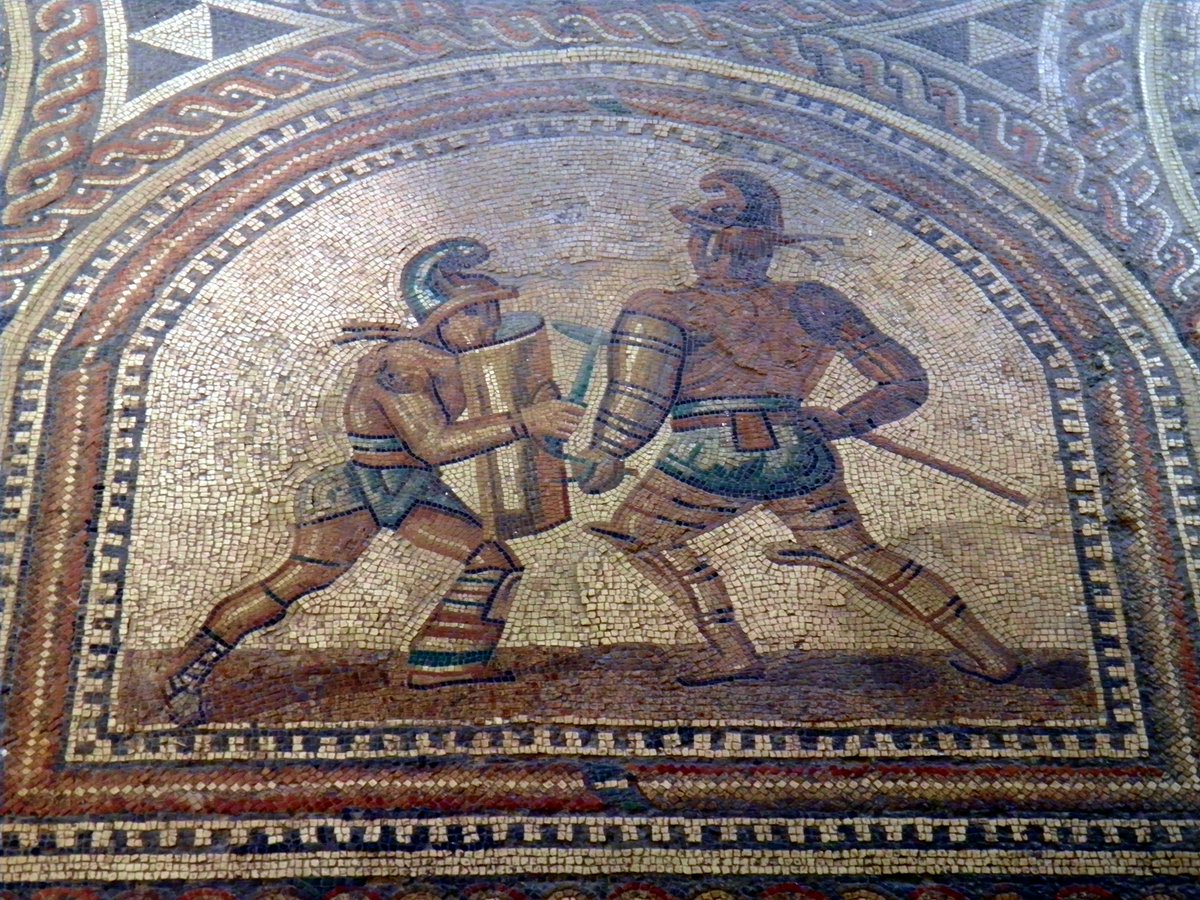
#MosaicMonday – The Gladiator Mosaic from a Roman villa at Bad Kreuznach, Germany, dates to the 3rd century AD. Discovered in 1893, the 58 m² floor features 13 scenes of gladiatorial combat, wild animal hunts (venationes) and animal fights.
Among the combatants are Thracians, murmillones, secutores, retiarii and mounted gladiators (equites). The central panel depicts a lively amphitheatre spectacle featuring hunters and wild beasts. Today, this remarkably well-preserved mosaic is on display in the Römerhalle Museum in Bad Kreuznach.
More photographs and details 👉
https://t.co/kkKj2E2zU3
More than 3,300 years ago, Egyptian craftsmen created one of the most magnificent pieces of royal furniture ever discovered: the golden throne of Pharaoh Tutankhamun.
Discovered by Howard Carter in 1922 inside Tutankhamun’s nearly intact tomb in the Valley of the Kings, this extraordinary masterpiece dates back to Egypt’s 18th Dynasty, in the late 14th century BCE.
The throne was made of wood covered in gold and silver, decorated with colorful glass, faience, and intricate inlays.
Its most remarkable feature is the beautifully decorated backrest, which depicts the young pharaoh seated on his throne while his wife, Queen Ankhesenamun, stands before him.
In a rare and intimate royal scene, the queen gently touches her husband’s shoulder, seemingly applying perfume or scented oil to his skin.
Above them, the sun disk Aten extends its rays toward the royal couple. This imagery reflects the religious and artistic influence of the Amarna Period, associated with Akhenaten, Tutankhamun’s predecessor.
The throne’s armrests are decorated with winged serpents, while its legs are shaped like those of lions, symbolizing royal strength and authority.
Two magnificent lion heads adorn the front of the armrests, further emphasizing the power and divine status of the Egyptian king.
Tutankhamun became pharaoh as a young boy and ruled for approximately nine years before dying around 1323 BCE, probably in his late teens.
Although his reign was relatively short, the discovery of his tomb transformed our understanding of royal burial practices in ancient Egypt.
Today, the golden throne and its matching decorated footstool are on display at the Grand Egyptian Museum in Giza, alongside thousands of other artifacts recovered from his tomb.
A #Roman metal lamp in the shape of a eagle, found in the military base at Haltern (Germany). Made about 2000 years ago, it seems the perfect piece of useful home decoration for a soldier!
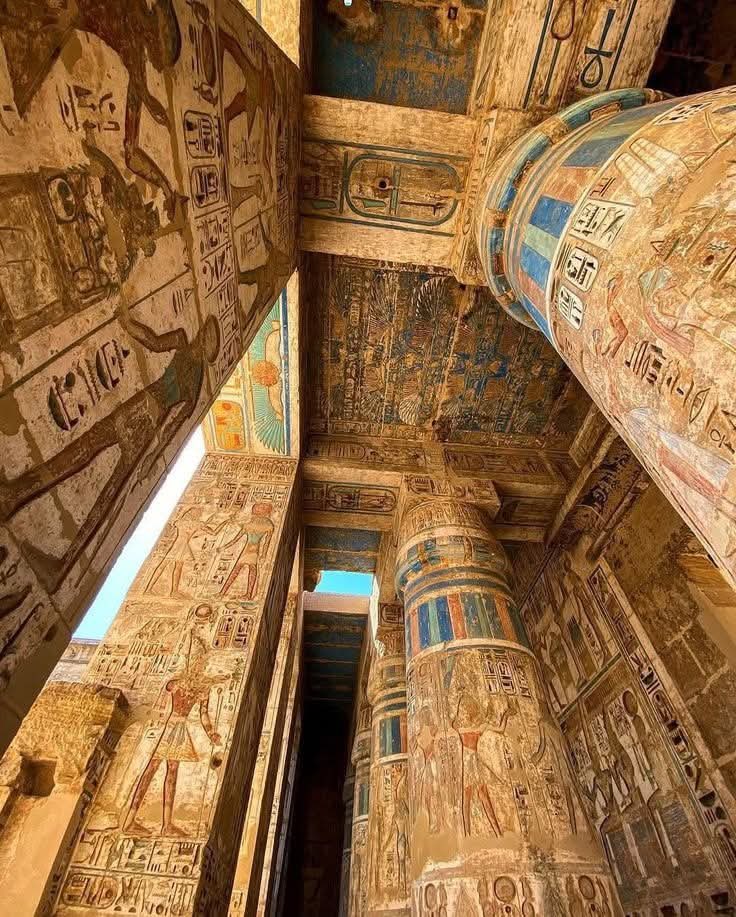
Mortuary Temple of Ramesses III at Medinet Habu on the West Bank of Luxor.
The massive columns and walls are adorned with intricate hieroglyphs and colorful reliefs illustrating the pharaoh's battles and religious ceremonies.
Built during the 20th Dynasty (circa 1186–1155 BCE), this complex is known for its architectural grandeur and for being one of the best-preserved temples in Egypt.
The carvings tell stories of power and victory, specifically depicting Ramesses III honoring gods like Amun-Re.
Most modern roads rely on power-hungry LED streetlights, synthetic thermoplastic paint, and plastic retroreflectors glued onto asphalt to stay visible after sundown, so looking closely at the ancient basalt streets of Pompeii feels like discovering passive nocturnal urban design engineered nearly two thousand years ago.
Long before electricity or glass-bead road markings existed, Roman road builders planned carefully for movement in the dark. Look closely at the narrow seams wedged between these heavy, dark volcanic paving slabs: tiny fragments of bright white marble and limestone are deliberately embedded throughout the joints. Often described as ancient "cat's eyes," these pale mineral chips caught the faint glow of moonlight, oil lamps, and hand-carried torches illuminating the path ahead and defining the edges of the roadway without a single watt of power.
Alongside these passive reflectors, Pompeii's streets paired deep cart-wheel ruts with raised stone stepping blocks spaced precisely so wagon axles could pass cleanly between them while pedestrians crossed above rainwater and street runoff. Every stone served both structural durability and human navigation turning raw volcanic rock and scrap marble into an intuitive, zero-energy guidance system.
Today, modern cities depend on complex electrical grids and frequent repainting to keep streets readable at night, yet Pompeii’s basalt pavements prove that thoughtful material contrast and enduring stonework could light a city’s way for millennia.
The hardest part was already done when they abandoned it.
Above Göbekli Tepe in Turkey there is a quarry, and in it lies a T-shaped pillar around 23 feet long weighing an estimated 50 tons.
Its sides are cut, its shape is finished, and it is still joined to the bedrock along its base.
The people who carved it were working around 9500 BC with stone tools, supposedly before pottery and before farming.
Pillars half that size were raised and set into circles down the hill, so they clearly knew how to move them.
Whatever stopped this one, they left the evidence of their own methods lying in the open, cut off at the exact moment the work was nearly finished.
It is the closest thing we have to watching them work, and it exists only because something went wrong.
📷 @Graham__Hancock
Most modern wine is sealed inside mass-produced glass bottles with synthetic stoppers and engineered to be consumed within a few years, so seeing an ancient, lichen-encrusted ceramic vessel pried open in the wild—like the viral clip claiming treasure hunters discovered thousand-year-old Roman wine—immediately sparks awe at the sheer endurance of ancient amphorae.
Look closely at the heavily weathered surface of the vessel in this frame. Blanketed in centuries of crusty white, gray, and pale-green lichen, the thick terracotta body bears the unmistakable patina of an object that has rested undisturbed against earth and stone for ages. In the ancient Mediterranean, master potters threw two-handled clay amphorae on kick wheels and lined their interiors with pine resin or pitch before sealing the necks with cork and pozzolana mortar—turning porous river clay into airtight time capsules capable of surviving shipwrecks and buried cellars across millennia.
At the same time, clips like this are a vivid reminder of why authentic archaeological preservation matters so deeply. When genuine ancient vessels are unsealed casually in the field—or when staged viral videos mimic archaeological finds for online spectacle—irreplaceable chemical residues, pollen traces, and historical context risk being lost forever rather than studied in a laboratory to reveal how ancient vintners actually fermented and spiced their wine.
Today, modern packaging prioritizes disposable convenience and rapid turnover, yet the enduring mystique of an ancient clay amphora reminds us that true craftsmanship builds vessels meant to outlive empires—and deserves to be treated with the reverence of real history.
Back to where it all began.
Ballon d’Or winner @HKane stopped by to visit our current academy players and staff during @England’s stint at Hotspur Way in the international break 🤍
Another successful Project Platypus in Kangaroo Valley, hosted by #IllawarraEEC Students from KVPS, CambewarraPS, BerryPS & TeraraPS & renowned platypus scientist Dr Gilad Bino. Observing river bank quality, platypus trapping & science, tree planting. #IEEC Amazing!
This photo shows the difference between the original form and the current state of the Great Pyramid of Giza.
Above: The pyramid is recreated in its original form from approximately 4,500 years ago during the reign of Khufu. At that time, the entire surface was covered in polished white limestone (Tura limestone), making the pyramid look very smooth and reflect sunlight strongly, almost glowing in the desert. ✨
Below: This is its current state. The outer layer of white limestone has gradually eroded over thousands of years due to earthquakes, weather, and quarrying for construction in Cairo. Therefore, the rough inner core is exposed, creating the uneven, stepped surface we see today. 🏜️
The haunting sound that Roman soldiers would have heard from their Celtic enemies before battle came from the Carnyx, an ancient wind instrument used between 200 BC and 200 AD