It blows my mind that we still don’t know what’s inside the Great Pyramid.
Somebody fitted a limestone slab with copper handles and sealed it behind 60 metres of 20cm shaft.
A robot reached it in 1993. In 2011 a camera went through a drilled hole and found red painted marks on the floor behind it, plus another slab a short distance beyond.
Nobody has been past the second one. What are we waiting for?
For centuries people walked past it and saw a hill with bushes growing on it.
Photographs from before 1905 show the Pyramid of the Sun at Teotihuacan as a rounded mound covered in soil and scrub.
The outline is soft and there is nothing obviously built about it.
Underneath that, the stepped terraces were intact, running up a structure around 730 feet along each side and 216 feet high.
Soil and plants had simply closed over the whole thing.
Leopoldo Batres cleared it between 1905 and 1910, and in doing so he stripped off an outer layer of stone and built a terrace that many archaeologists think was never part of it.
What you photograph there today is partly his idea of what it looked like.
3 questions settle most arguments about ancient stonework, and reports keep leaving them out.
How long did it take.
What was the tool made of.
What tolerance did it hold.
Take the granite boxes in the Serapeum at Saqqara.
There are around 24 of them, each weighing roughly 70 tons with lids of about 30 tons on top, cut with flat inner faces and square corners.
Copper sits at about 3 on the hardness scale and granite at about 6, so the copper itself cuts nothing.
Quartz sand does the cutting and the copper only carries it.
That answers what the tool was.
It does not tell you how many hours a face took, or how flat the finished surface came out, and without those 2 numbers nobody can say whether the method scales to 24 boxes.
An engineer cannot check a claim that has no hours and no tolerance attached to it.
Every number you have ever read about how long our rubbish lasts is a guess.
The first fully synthetic plastic was made in 1907, and plastics only went into everyday use after 1945.
That gives us about 80 years of evidence.
Figures like 450 years for a bottle come from lab tests run over weeks and then scaled up.
Nobody has buried a bottle in wet clay and come back in 10,000 years to see what was left, because nobody has had the chance.
Meanwhile we dig up Roman glass, Egyptian granite and bone tools from 30,000 years ago, and those are not forecasts. We can hold them.
Name a material made in the last 100 years that you would bet on being found in 10,000.
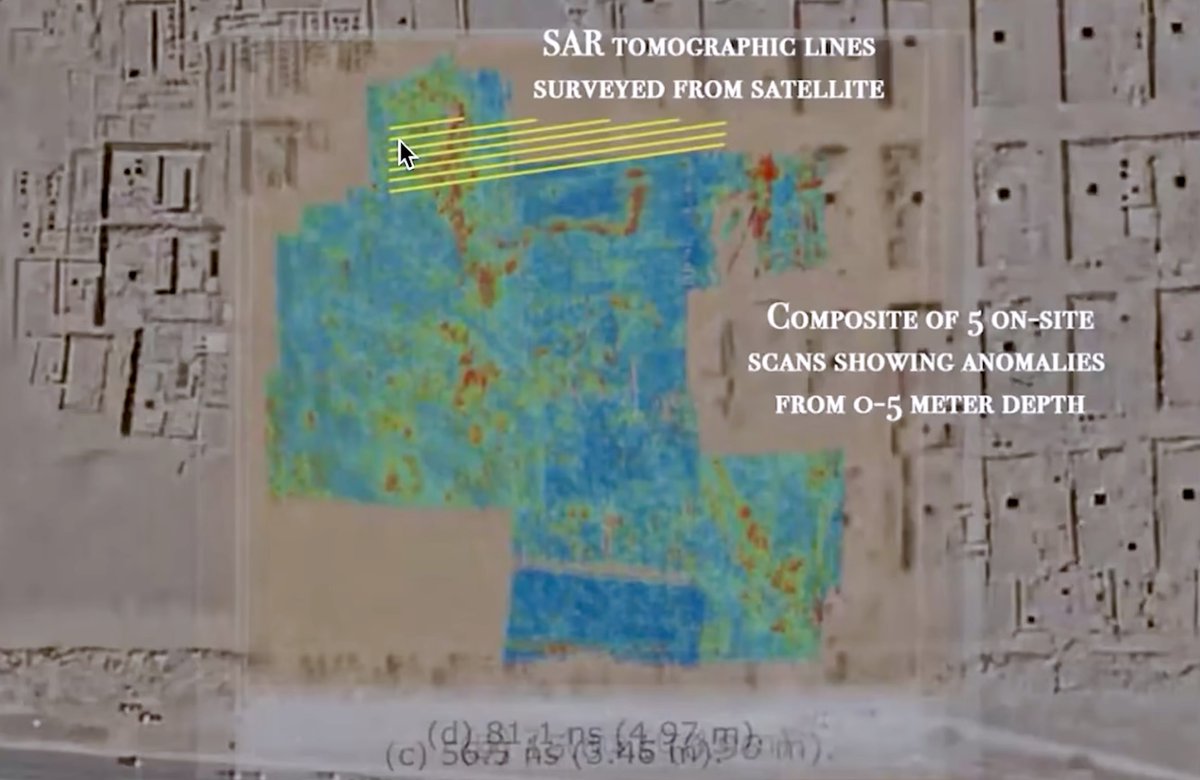
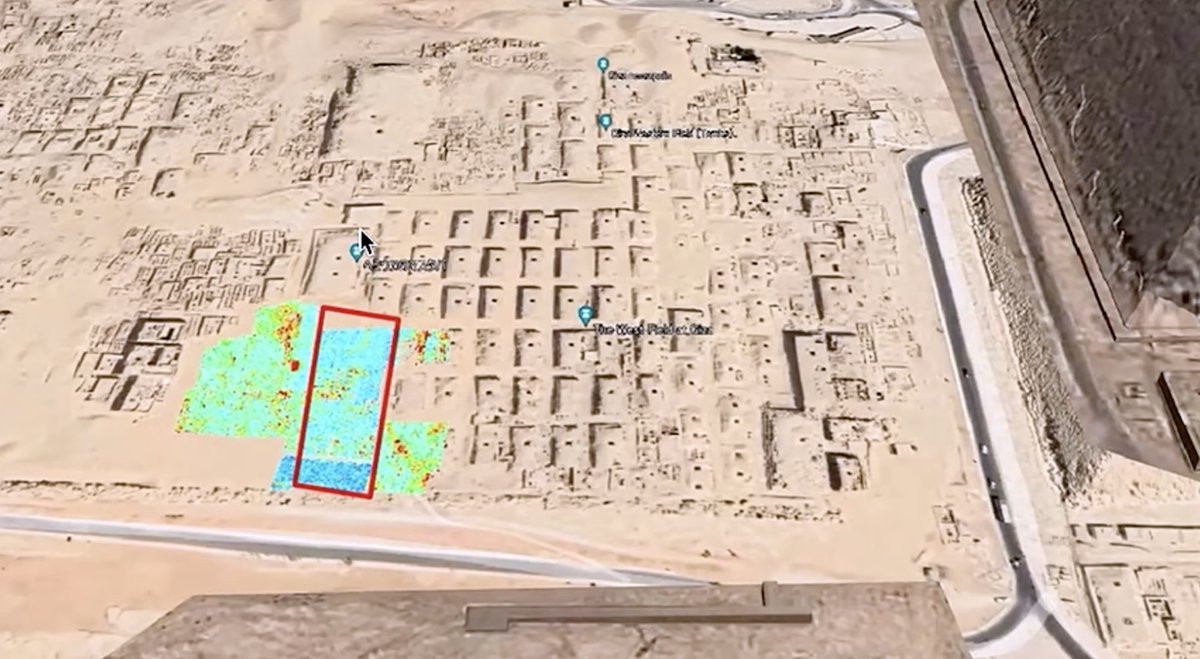
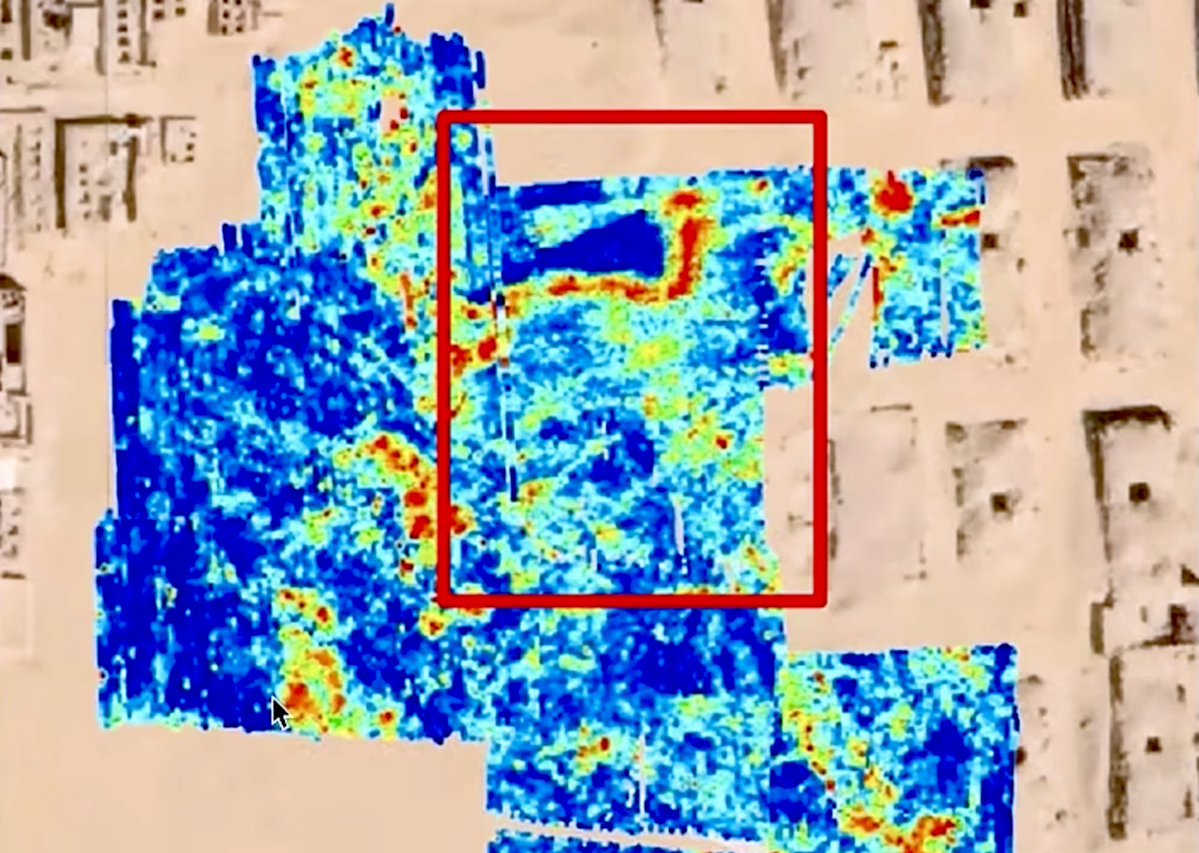
Somebody outside the Italian team just pointed their Giza scans at things we already know are down there.
Filippo Biondi's 2022 paper on scanning the Great Pyramid from orbit was retracted this year, and the stated reason was that his radar method had never been checked against an established technique.
That was the whole objection.
Dr Manu Seyfzadeh pulled his own satellite data, applied the protocol himself with no contact with Biondi beforehand, and aimed it at features under the plateau that are already mapped.
The King's Chamber came up, the Queen's Chamber came up, and so did all 3 documented levels of the Osiris Shaft.
Then he scanned Mastaba 4000, a tomb on the plateau where a substructure 5 metres down had already been confirmed by ground penetrating radar and resistivity.
His scan put it in exactly the same place.
He was running a different wavelength and a different rock velocity model from Biondi, and still got the same pattern across the base of the pyramid.
Here is the part that should make you sit up.
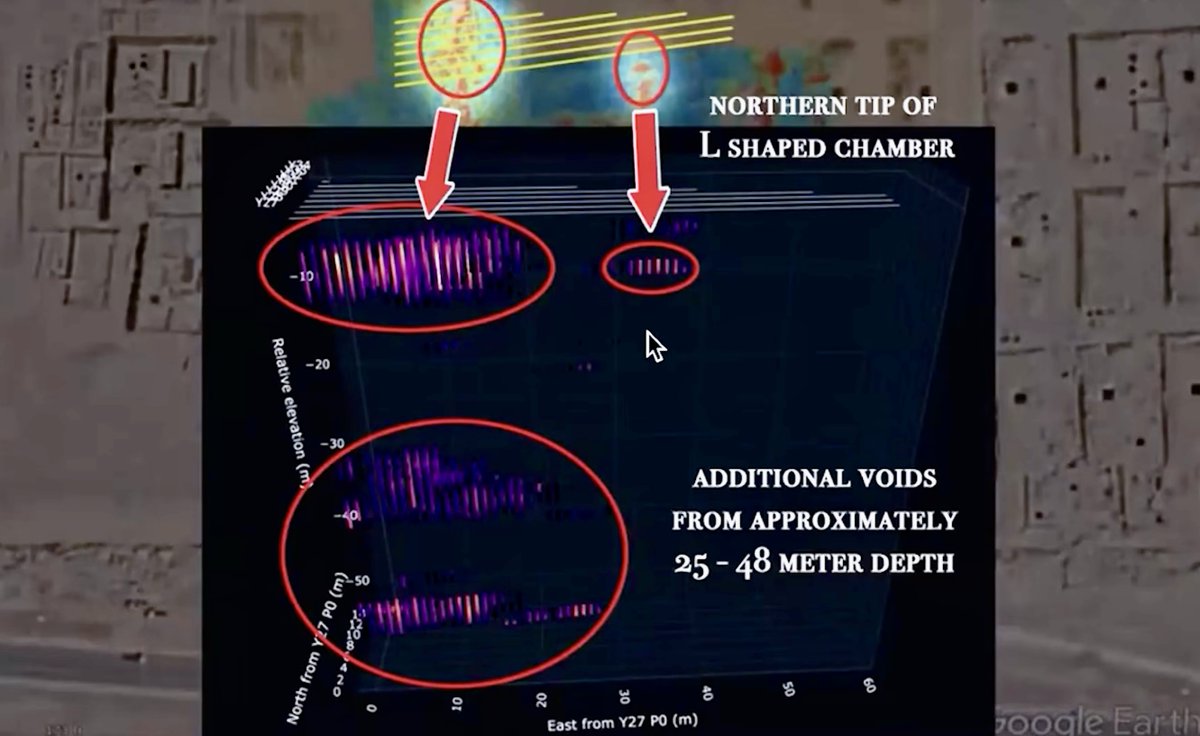
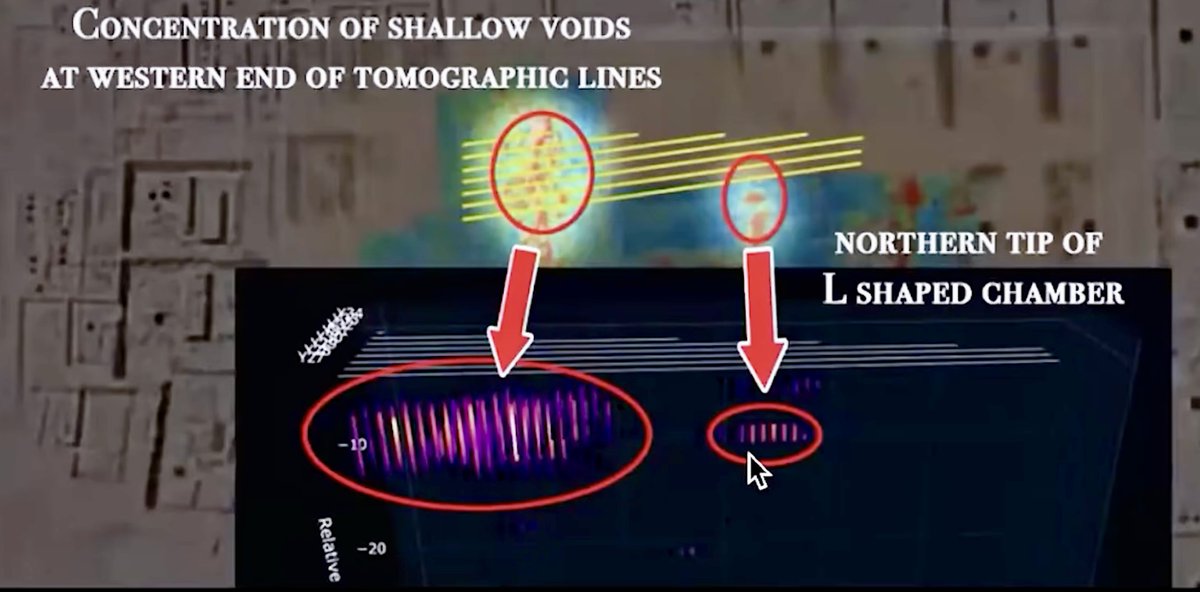
On the same scans that correctly found the 3 known levels of the Osiris Shaft, both men read a further 6 levels below them.
At Mastaba 4000 the scan shows 2 more substructures at 25 and 48 metres, sitting under the one that GPR already confirmed.
None of it is published yet, and Biondi's first reaction on seeing it was to tell him to publish everything.
A cross-check on 4 known features is not proof of what sits deeper, but it's the first time anybody outside that team has run this and got something back.
If the method can find 4 things we know are there, what are those 6 levels under the Osiris Shaft?
Builders on 4 continents hit the same wall and reached for the same piece of metal.
Large stone blocks shift over time and pull a building apart from the inside.
The fix is a cramp, a bowtie shaped piece of metal lowered into sockets cut across the seam so the blocks lock to each other.
Iron cramps in lead were holding the Parthenon together in the 440s BC.
The sockets at Angkor are cut into the sandstone the same way in the 12th century AD, though most of the iron has long since been dug out of them.
Egyptian builders used the same shape, mainly cut in wood, with metal turning up later.
Puma Punku in Bolivia is the strange one.
There they poured the copper alloy into the sockets while it was molten, so it cooled into the exact shape of the cut.
Either the problem forces the answer, or somebody was handing it around.
Assyrian priests dressed as fish, and they were copying something they believed was real.
The carvings show figures in fish cloaks standing beside kings and sacred trees.
They are the apkallu, 7 sages sent by the god Ea out of the fresh water beneath the earth to teach people how to live.
Around 280 BC a Babylonian priest named Berossus wrote down what the first of them did.
The figure came out of the sea each morning, gave the people writing, mathematics, building in stone, law and farming, took no food, and returned to the water at nightfall.
The Greeks knew him as Oannes.
Berossus himself is lost. Every line we have of him was copied out by somebody else hundreds of years later.
Mesopotamia invented writing and then used it to record that writing had been given to them.
Somewhere in the cutting the granite split, and the work stopped where it lay.
It is still there in the quarry at Aswan, joined to the bedrock along one side.
Three faces had been dressed and the crew were hollowing out the trench on the fourth when fissures opened through the stone.
Finished, it would have stood around 137 feet and weighed roughly 1,000 tons.
The heaviest obelisk ever actually raised is the Lateran obelisk, cut from the same quarries and stood up at Karnak by Thutmose III, at about 105 feet and 455 tons.
So they were partway through cutting a single block more than twice the weight of the heaviest one ever stood upright.
Nobody has demonstrated how they meant to lift it.
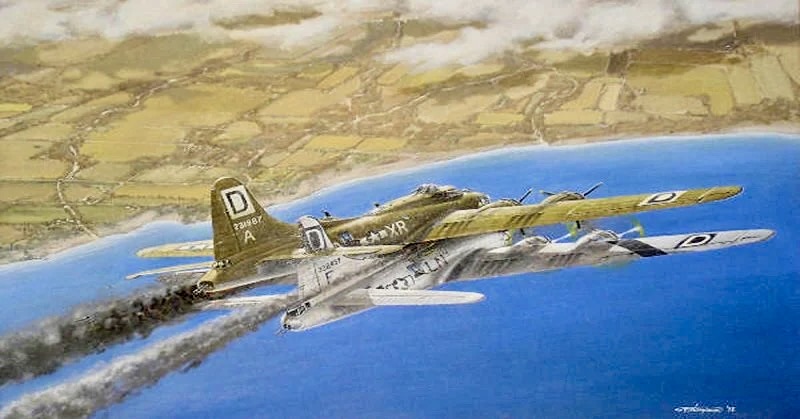
Two bombers hit each other at 22,000 feet and came down as one aircraft.
On 31 December 1944, over the North Sea, cannon fire killed both pilots of the B-17 Nine Lives.
Their hands stayed on the column and the aircraft drifted upwards into the belly of the Little Skipper above it.
The 2 bombers jammed together and kept falling as a single machine with 8 engines.
Glenn Rojohn and Bill Leek were flying the top aircraft.
They tried rocking the planes apart and gunning the engines and nothing worked, so they idled the engines and turned the whole thing back towards the German coast so their crew could bail out over land instead of the sea.
6 men jumped through the flames coming off the tail.
Corporal Joe Russo was trapped in a ball turret crushed between the 2 fuselages and could not be moved.
Rojohn ordered Leek to jump. Leek refused, because 2 men were needed on the column and without him the aircraft would spin.
They rode it into the ground.
Nine Lives exploded and flung the Little Skipper back into the air. It came down on its belly, lost a wing through a wooden building, and stopped.
Both pilots climbed out with cuts and bruises, and 10 of the 20 men aboard those aircraft lived.
@Gwyn213646 Honestly, that is a good test and I would like to see it done.
A surveyed mine gives you miles of mapped roadway at recorded depths. Match it or don't, no wiggle room either way.
Somebody outside the Italian team just pointed their Giza scans at things we already know are down there.
Filippo Biondi's 2022 paper on scanning the Great Pyramid from orbit was retracted this year, and the stated reason was that his radar method had never been checked against an established technique.
That was the whole objection.
Dr Manu Seyfzadeh pulled his own satellite data, applied the protocol himself with no contact with Biondi beforehand, and aimed it at features under the plateau that are already mapped.
The King's Chamber came up, the Queen's Chamber came up, and so did all 3 documented levels of the Osiris Shaft.
Then he scanned Mastaba 4000, a tomb on the plateau where a substructure 5 metres down had already been confirmed by ground penetrating radar and resistivity.
His scan put it in exactly the same place.
He was running a different wavelength and a different rock velocity model from Biondi, and still got the same pattern across the base of the pyramid.
Here is the part that should make you sit up.
On the same scans that correctly found the 3 known levels of the Osiris Shaft, both men read a further 6 levels below them.
At Mastaba 4000 the scan shows 2 more substructures at 25 and 48 metres, sitting under the one that GPR already confirmed.
None of it is published yet, and Biondi's first reaction on seeing it was to tell him to publish everything.
A cross-check on 4 known features is not proof of what sits deeper, but it's the first time anybody outside that team has run this and got something back.
If the method can find 4 things we know are there, what are those 6 levels under the Osiris Shaft?
They took everything they owned and left, and nobody knows where they went.
Akrotiri on the island of Thera had indoor toilets in the houses, with clay pipes running down inside the walls and a drainage system beneath the streets.
The buildings were up to 3 storeys.
There are frescoes on the walls showing boats, animals and people.
The town was built to last, with timber laced into the masonry to absorb earthquakes.
Around 1600 BC the volcano underneath it erupted and buried the whole place in ash.
When archaeologists dug it out they found almost no human remains and no valuables.
The people had packed up and gone before it happened.
A town with working plumbing was abandoned by people who read the warning signs correctly, and then they disappear from the record entirely.
The hardest part was already done when they abandoned it.
Above Göbekli Tepe in Turkey there is a quarry, and in it lies a T-shaped pillar around 23 feet long weighing an estimated 50 tons.
Its sides are cut, its shape is finished, and it is still joined to the bedrock along its base.
The people who carved it were working around 9500 BC with stone tools, supposedly before pottery and before farming.
Pillars half that size were raised and set into circles down the hill, so they clearly knew how to move them.
Whatever stopped this one, they left the evidence of their own methods lying in the open, cut off at the exact moment the work was nearly finished.
It is the closest thing we have to watching them work, and it exists only because something went wrong.
📷 @Graham__Hancock
They carried fire into total darkness and built something 1,000 feet from daylight.
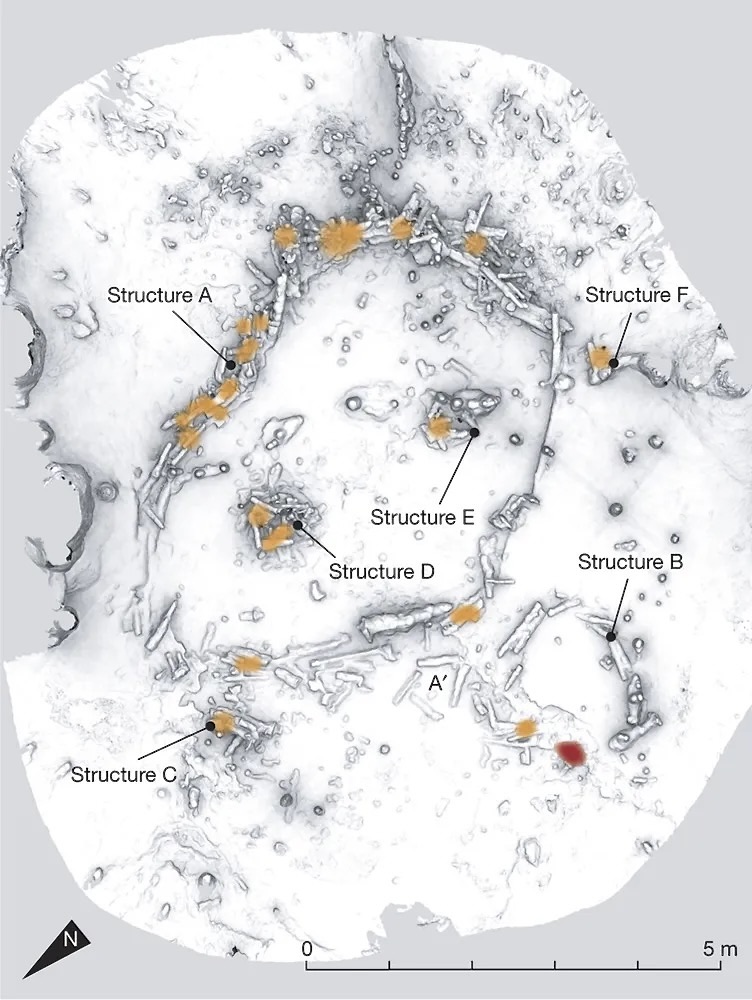
In Bruniquel Cave in France, 336 metres from the entrance, around 400 broken stalagmites were arranged into 2 rings.
The pieces were snapped to similar lengths and stacked deliberately, about 2.2 tons of stone altogether.
Fires were lit on them, and the scorch marks are still there.
The rings were dated by uranium series in 2016 to roughly 176,500 years ago.
Homo sapiens had not reached Europe, so Neanderthals built them.
The purpose has never been established.
There are no remains, tools, or anything that tells you what happened in that chamber.
Whatever it was, it was worth going that far into the dark for, and that is the oldest known structure anybody built anywhere.
We have the equipment to see the bottom of it, and using it might destroy the walls.
The Osireion at Abydos sits below the water table.
Its lowest chamber, with the rectangular island of rock and the channel cut around it, has been partly flooded in every account anybody has left of it.
Egyptologists have pumped it before.
Naville worked it in the 1910s and Frankfort in the 1920s, both fighting water the whole time.
The problem with doing it properly is salt.
The sandstone has been saturated for a very long time, and when stone that wet is dried out the salts inside it crystallise, expand, and break it apart from within.
It is what stopped excavation at Mohenjo-daro.
So the floor of one of the strangest structures in Egypt stays underwater, and the reason is that looking at it could be the thing that ends it.
Every year it stays flooded is a year nobody can argue about what is down there.
The charge they added at her trial was so vile it nearly lost them the room.
Marie Antoinette was tried for treason in October 1793, for passing information to Austria and influencing the king.
That was the case against her.
Then the prosecution introduced an accusation that she had committed incest with her 8 year old son, who had been taken from her and handed to a cobbler to be re-educated.
She refused to answer it, and then appealed directly to the mothers in the room.
The women listening were reported to have turned sympathetic.
She was condemned anyway, without a vote, which her husband had been given.
He went to the guillotine in a closed carriage. She was taken through Paris in an open cart with her hands tied.
A consort who could never legally take the throne was the person the revolution could not leave alive.
It sat in a well for 80 years because one man did not want to hand it over.
The Harbin skull was found during bridge work in northeast China in 1933.
The labourer who dug it up hid it rather than surrender it to the occupying authorities, and told nobody until he was dying.
It reached researchers in 2018.
In 2025, ancient proteins in the bone and DNA from the plaque on its teeth identified it as Denisovan, which gave us the first proper face for a population previously known from a finger bone and a handful of teeth.
The researchers now think other Denisovan fossils are already in museum collections, catalogued as something else.
Nobody has gone through the drawers with these methods yet.
The next thing that rewrites human origins is probably already excavated, labelled, and sitting in a box somewhere.
@BrightInsight6 I love the idea of Mars once being home to ancient civilisations.
We know it had rivers, lakes and a much thicker atmosphere billions of years ago.
It may even have supported microbial life. Imagine what we haven’t discovered yet. ��
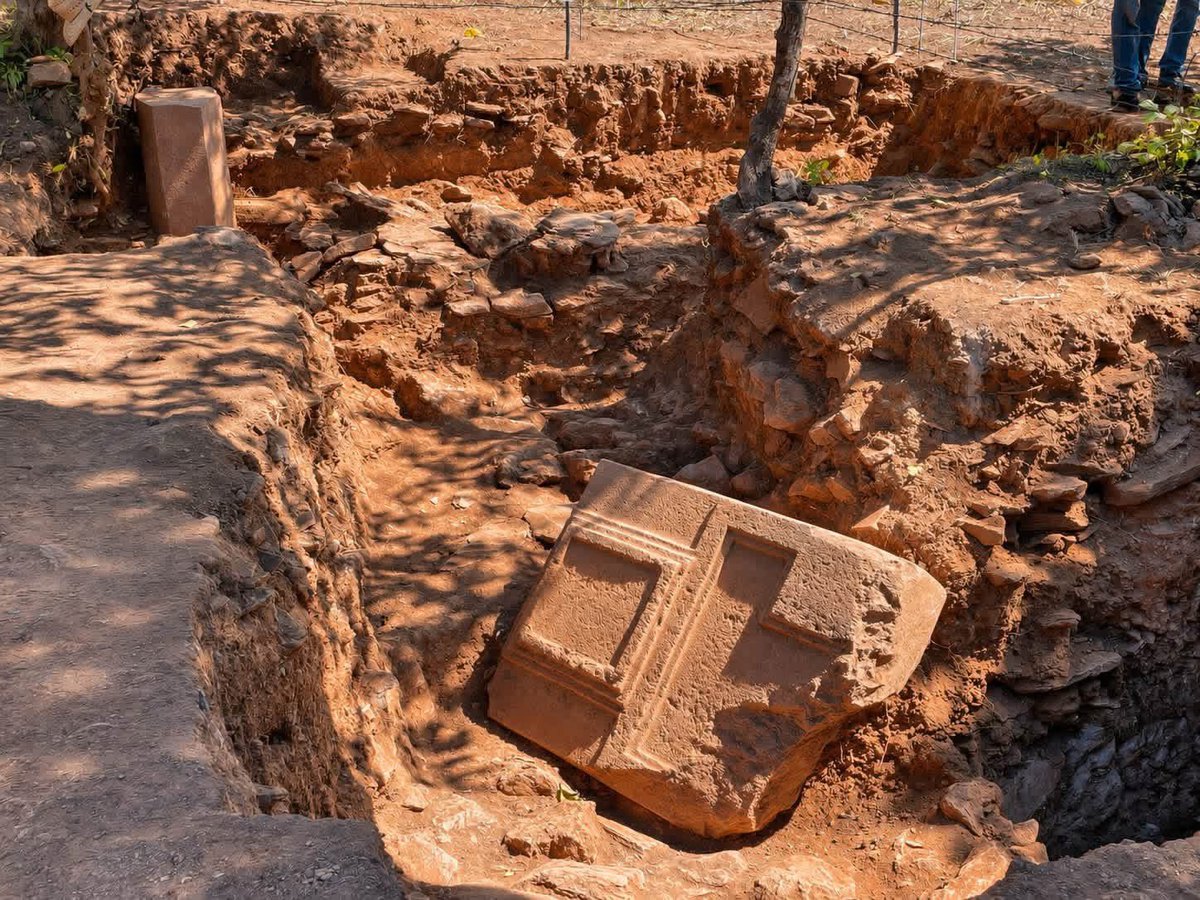
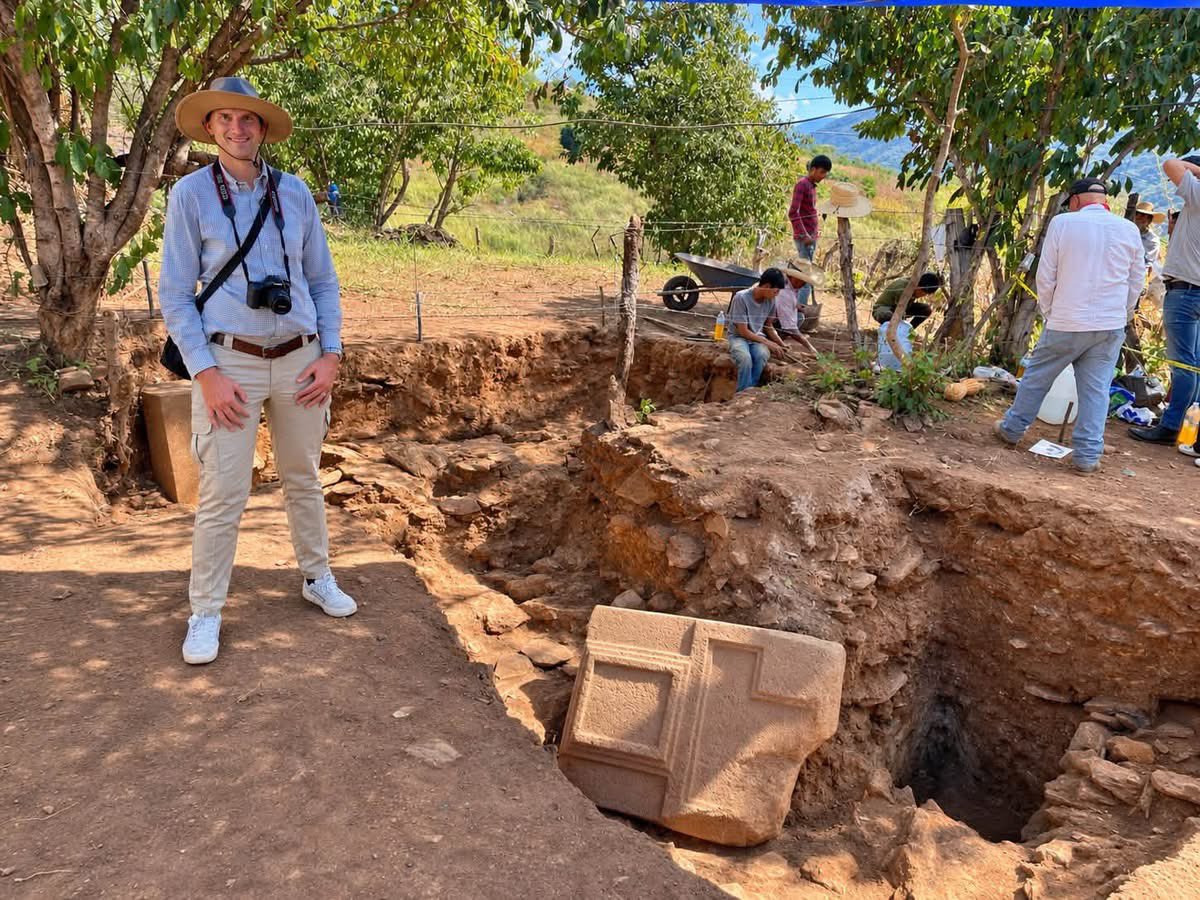
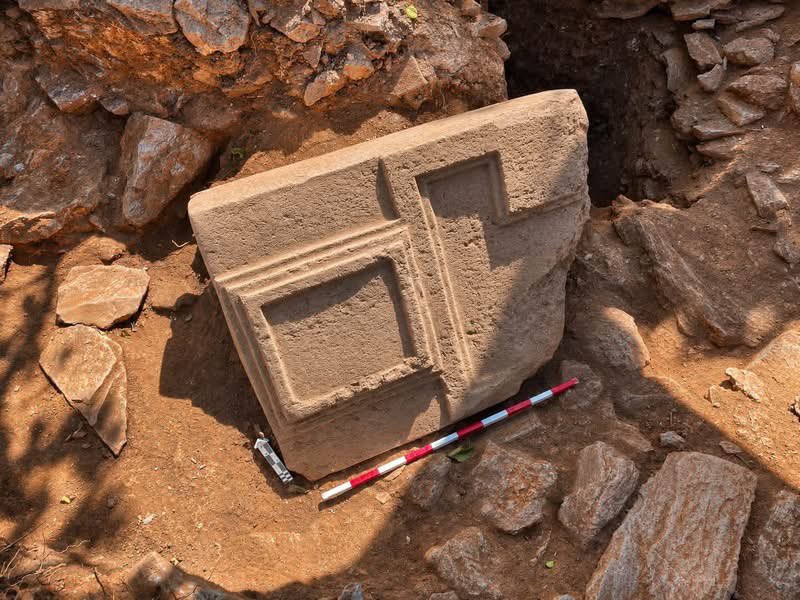
This never-before-seen precision megalithic block was recently unearthed at the Pinzan Morado site in Tejupilco, Mexico. Great work by Marco Vigato & the ARX project / INAH.
📷 Marco Vigato
Somebody spent hours carving the hair of a woman whose name we will never know.
The Dame de Brassempouy is a head carved from mammoth ivory, found in a cave in southwest France in 1894.
She is 3.65 centimetres tall, smaller than a thumb joint, and she is roughly 25,000 years old.
She has a brow, a nose and a chin, but no mouth.
Over her head and down the back runs a grid pattern that most people read as braided hair, though a woven cap or a hood have both been argued and nothing has settled it.
She is among the oldest realistic depictions of a human face ever found.
Whoever made her was looking at somebody specific, or remembering somebody, and chose to record the way she wore her hair.
That detail is 20,000 years older than farming, and it is the same reason anybody takes a photograph now.