This update brings two community contributions to the core protocol: the ability to filter blocks by timestamp, and support for decoding Metal-compliant metadata.
A big round of applause to our iconic space lion @toshiya_ma for seeing this through.
Been so busy with family and filling orders, I haven't even had time to tweet!
My daughter broke both her arms, then a nasty strain of influenza B moved in, and for every order I ship, two more come in.
Everyone's good now. It's a peaceful day w/ sun shining in the snowfall 🌤️🌨️
Hello, #Symbol node operators.
For 125 nodes the SSL certificate will expire next month. Please make sure to renew your node certificates!
You can check your node certificate valid date here https://t.co/DonldeVtEQ (SSL certificate column).
@ulty_symbol @Jaguar0625 NGL was wasting a lot of money. Probably most were overpaid.
Those that were setting the direction seemed out of touch with crypto culture.
I'm glad NGL days are over and we're on a better track
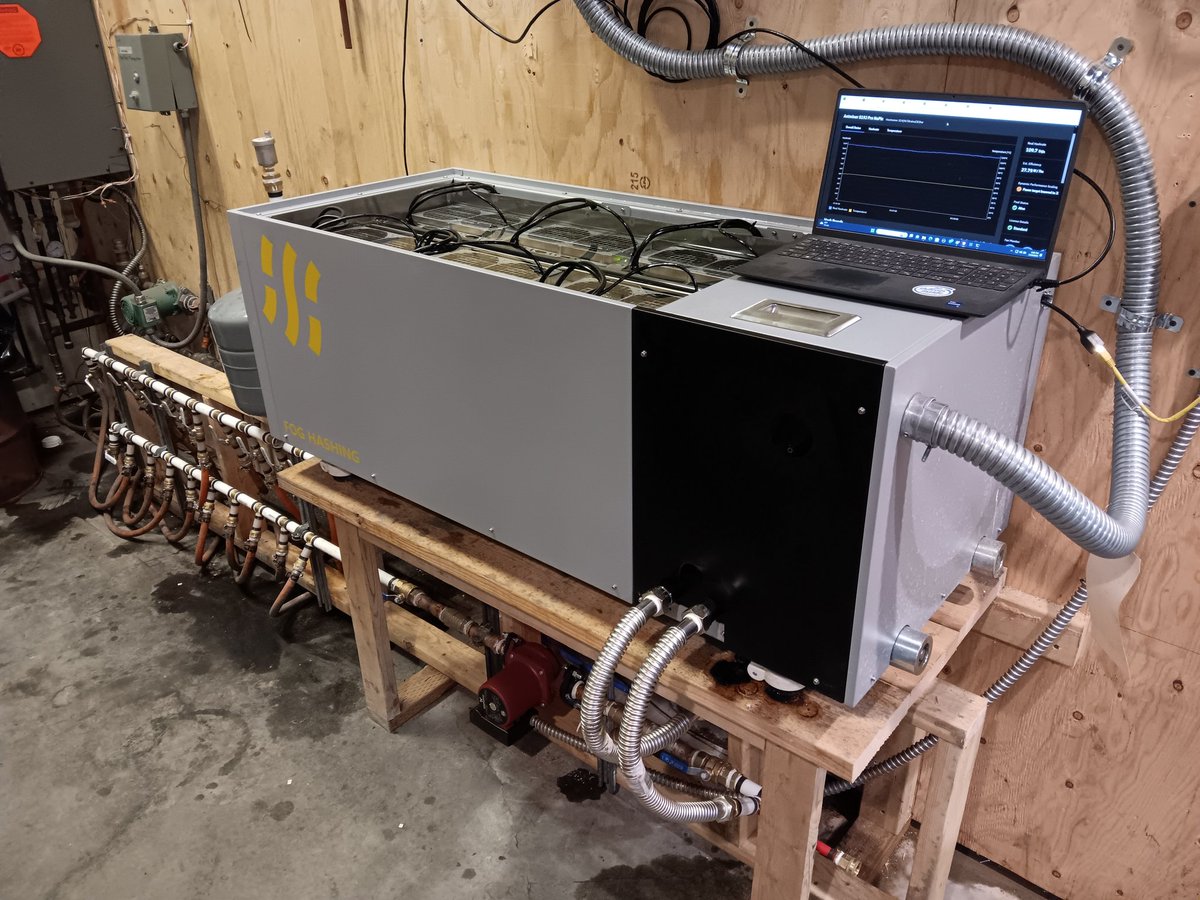
The local #Bitcoin#carwash is where I like to go. Check out this @FogHashing B6 running at 20kw (68k BTU) with some ASICs from @kaboomracks
Propane bill slayer 2.0
The manifold connects to a hydronic snow melt system. Previous propane expense of $25 per day is now $24 profit.
In Linux, Logical Volume Manager (LVM) is a storage management framework that provides a more flexible approach to managing disk storage than traditional partitioning. LVM works by creating an abstraction layer between physical storage devices and the file system, allowing you to create logical volumes that can span multiple physical disks.
With LVM, you can create volume groups from one or more physical disks, and then create logical volumes within these volume groups. Logical volumes behave like traditional disk partitions, but they have several advantages:
• Logical volumes can be resized dynamically while online, without the need to unmount filesystems or reboot the system. This flexibility allows you to adapt to changing storage needs without downtime.
• Logical volumes can be easily extended by adding more physical disks to the volume group. This scalability allows you to grow your storage without disrupting your existing data.
• LVM provides features like snapshots, which allow you to create point-in-time copies of logical volumes for backup or testing purposes.
To illustrate the importance of LVM, consider a scenario where you have a Linux server with two physical disks, and you want to create a logical volume for your web server's data. Initially, you create a logical volume that spans both disks, giving you more storage capacity than a single disk could provide. Later, as your web server's data grows, you can add a third disk to the volume group and extend the logical volume to include this new disk, increasing its size without any downtime.