🇵🇹 Amanhã, dia 3 de junho, Portugal volta a ser chamado às ruas. Chamado à greve. Eu peço-vos para não aderirem.
Não o peço por mim. Eu tenho 50 no lombo. Estou orientado. Tenho o meu caminho feito, as minhas defesas montadas, o meu lugar mais ou menos arrumado neste pequeno condomínio que é o Tugão.
Camaradas, quanto mais proteção houver para quem já está dentro, quanto mais rígido for o sistema, quanto mais difícil for mudar, contratar, crescer, arriscar, despedir quando corre mal e voltar a contratar quando pode correr bem, mais eu próprio consigo levar água ao meu moinho, e acreditem, não estou mal.
O país velho e amarrado protege-me.
Mas eu tenho dois filhos. E é neles que penso.
Penso no país que lhes vou deixar. Também penso nos sonhos que terão de encolher para caberem na nossa realidade. Penso no talento deles, algum, na vontade deles, e depois olho para este país sentado em cima de si próprio, sempre a defender o que existe, sempre a desconfiar de quem quer construir, sempre a boicotar qualquer tentativa de mexer num sistema que já só protege verdadeiramente quem conseguiu apanhar o lugar ao sol e usa os desgraçados para fazerem de figurantes neste grande circo. Idiotas úteis.
E dói. Dói porque eu gostava que eles ficassem.
Gostava que pudessem estudar, trabalhar, amar, comprar casa, ter filhos, abrir empresas, mudar de vida, falhar, recomeçar e envelhecer aqui. Aqui. No país deles. No país dos seus avós. No país da língua em que aprenderam a dizer mamã, papá, e tudo o que se seguiu.
Mas começo a achar que não vai mesmo dar.
O que se está a proteger é o status quo.
⚠️Um status quo de salários baixos. De empresas pequenas, frágeis, sem capital e sem escala para poder competir. De patrões que têm medo de contratar porque contratar é casar e ter o Estado como sogro. De trabalhadores que ficam presos a empregos que já não os fazem crescer. Um status quo onde os protegidos protegem a sua proteção, os instalados protegem a sua instalação, e os que vêm a seguir que esperem, que se amanhem, que emigrem, que voltem para uma visita pelo Natal.
Não me venham dizer que este pacote laboral era uma revolução. Não era. Não ia transformar Portugal na Irlanda. Não ia duplicar salários. Não ia acabar com a precariedade, nem fazer chover a potes produtividade sobre a mona de um país que passou décadas a confundir compaixão com total e completo imobilismo.
Mas era um passo. E pequeno. Pequeno, imperfeito, discutível, incompleto. Sim. Mas um passo na direção certa.
E às vezes os países não morrem por falta de grandes revoluções, antes sim por recusarem todos os pequenos passos. Morrem aos bocados. Um entrave de cada vez. Uma cedência ao medo de cada vez. Uma greve em defesa dos direitos de cada vez. Continuaremos a defenhar. Devagar, que é como Portugal gosta de fazer as suas tragédias.
Eu não hesitarei. Se chegar o dia em que perceba que os meus filhos terão mais futuro longe daqui, compro-lhes o bilhete. De ida. Só de ida.
Com o coração esmagado, mas compro, porque eles não são meus. São do mundo. 💔
Claro que gostava que ficassem. Gostava que Portugal fosse deles também. Gostava que este país não fosse apenas bom para férias e viver a reforma, Gostava que fosse bom para começar. Para arriscar e trabalhar. Para ganhar e crescer. Mas isso exige coragem.
Exige perceber que defender tudo como está não é defender os trabalhadores. É defender os trabalhadores que já estão relativamente defendidos, à custa dos que ainda nem conseguiram entrar ou andam a patinar à espera que um dos mochos que dormem à sombra da bananeira se reforma, ou pior, que a empresa feche portas porque os mochos a boicotaram lentamente, anos e anos a fio.
Exige perceber que um país onde ninguém pode mexer em nada é um país onde nada melhora. Exige perceber que os direitos que não assentam numa economia forte acabam por ser apenas promessas que o vento leva.
Por isso, amanhã, quando vos pedirem para parar o país, pensem bem. Pensem se estão mesmo a defender o futuro. Ou se estão apenas a defender o conforto moral de dizer que defendem o futuro, enquanto o futuro se esgota amanhã.
A escolha é vossa. Mas a fatura, temo bem, será deles, dos nossos filhos.
o dono da cooperativa
42 years ago today I made a surprising discovery that every year has been showing us more and more about the answer to life, the universe and everything...
https://t.co/z1uA3RyxYF
I and Dennis Beck will be presenting this live at Immersive Learning Research Network 2026 this month, but the taped version is online!
https://t.co/FdFHThRAO0
The laptop hasn't changed in 30 years. NVIDIA just changed it
RTX Spark is their first PC chip ever.
- RTX 5070 level GPU
- 128GB unified memory
- 1 petaflop of local AI
- thin, light, barely throttles unplugged
Your AI agent lives on the machine. 24/7. No cloud.
This is step one of the agentic AI PC, and everyone else is about to copy it.
“1842 - Ada Lovelace writes the first program. She is hampered in her efforts by the minor inconvenience that she doesn't have any actual computers to run her code. Enterprise architects will later relearn her techniques in order to program in UML.”
I am one of the inventors of the UML and I endorse this statement.
You are lucky that you have the network, money, resources, and support to wield the teams required to make the stories in your head become real.
You anti AI stance is basically telling every young storyteller that they can only tell the stories in their heads if they have money.
It saddens me that someone with such a love for stories and for fulfilling your own vision would gate keep that to everyone else.
Terence Tao (leading living mathematician in the world):
AI allows me to experiment, I will try crazier things. I can search literature much more accurately and effectively than I could before. So, I'm doing way more AI-assisted mathematics and collaborative projects and now I think it's ready for prime time.
Meanwhile average humanities professors: AI is evil, it must be banned, it's built on stolen labor, it's wasting water, it's teaching students plagiarims...
AI has really widened the gulf between STEM and the humanities. And unless the humanities folks pull up their socks, they will quickly become irrelevant.
It seems like writing will no longer be an important part of the research process. It can easily be outsourced to AI.
What's going to matter is the way researchers curate their materials.
Claude Code was able to do a good job partially because I already had a well-curated list of materials, and I knew the direction of the argument.
That said, researchers will still need to learn writing because it helps you think through problems.
Terence Tao: "We lived in a world with cognitive friction until very recently, where every task required us to use our brain.
So we didn't really think about it, we just thought this was the cost of doing something intellectual. But now we have AI and the other technologies that can bring these frictions down to zero."
Most research time is not spent having cinematic insights.
It is spent checking cases, chasing references, translating intuition into computation, testing a path, finding it false, and deciding whether the failure taught you anything.
AI changes the cost of that loop.
Terence Tao says that now he can try “crazier things,” and that makes so much difference. Because unconventional ideas are often not rejected by proof, but by inconvenience.
A mathematician may avoid a strange direction not because it is foolish, but because the bookkeeping, coding, or literature search needed to test it is too expensive for a hunch.
This is where cognitive friction becomes scientific friction.
Lowering it does not make taste, judgment, or proof disappear; it makes more weak signals cheap enough to inspect before they are abandoned.
AI is making hesitation less expensive, and that is often where discovery begins.
Para os bots de esquerda:
- Recuperar o caso Spinumviva antes das legislativas, ou desenterrar um alegado assédio antes das presidenciais: "a Justiça não tem timings"
- Investigar socialistas depois de uma sondagem a 3 anos de eleições: "É um ataque ao PS!"
Vocês são ridículos.
AI can give researchers the freedom to pursue “crazier” ideas.
For Terence Tao, AI creates more room to experiment, test unexpected paths, and discover what might otherwise stay out of reach.
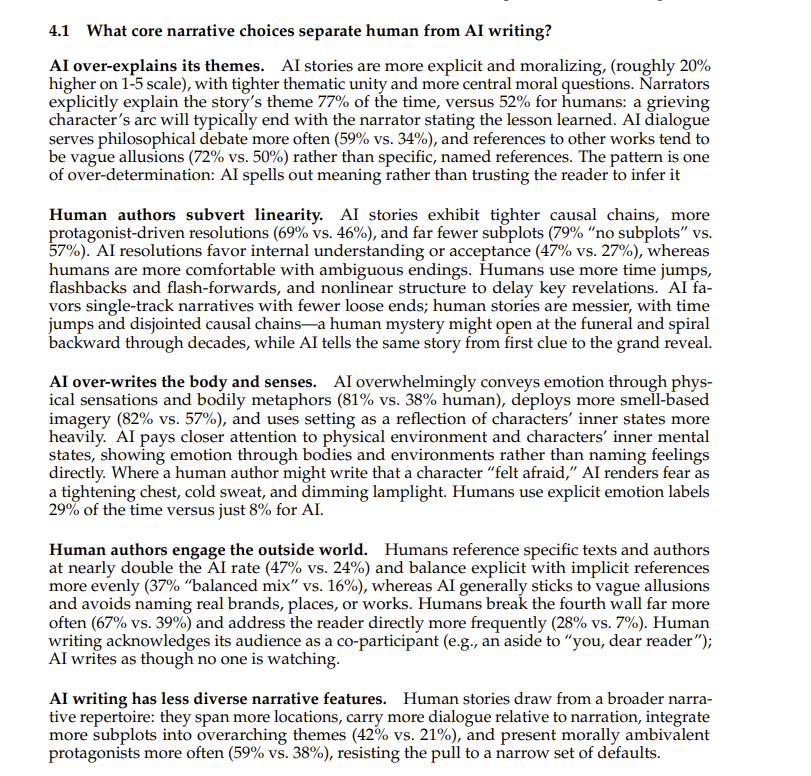
There is a puzzle here, too, @emollick : some (not most) of these, like humans saying the character simply felt afraid, vs. physical effects, are usually presented as sloppy vs. good writing.
There is a lot being written about the stylistic tells of AI writing (em-dashes, etc.) but this paper looks at AI narrative tells
Fascinating differences between AI & human narrative, and asking AI to write in different styles doesn't do much to change it https://t.co/azkRHz34NQ
📦🇵🇹 Portugal’s exports reached €7.5 billion in March 2026, marking a 10.6% year-on-year increase and a 20.9% rise compared to February.
According to the latest data from the Portuguese National Statistics Institute (INE), Machinery and Appliances remained Portugal’s top export category, accounting for 16.8% of total exports, followed by Vehicles and Other Transport Equipment (13.4%) and Base Metals (8.6%).
Exports of Machinery and Appliances alone increased by €205.7 million compared to March 2025, while Base Metals and Minerals & Ores also recorded strong growth. 🌍⚙️📈
Spain remained Portugal’s leading export destination in the first quarter of 2026, followed by France and Germany. The United States and the United Kingdom were the country’s main non-EU export markets.
These figures continue to highlight the resilience and diversification of Portuguese exports across strategic international markets.
It takes 2 neurons to ride a bike
In this week’s paper, Matthew Cook asks how a computer can control a bicycle without solving the full nonlinear equations of motion, or spending an inordinate amount of time learning through reinforcement learning. Humans seem to learn in a different way: not by deriving equations, and not by crashing thousands of times.
Cook presents a two-neuron network that can ride a simulated bicycle in a desired direction.
Read the annotated version here: https://t.co/hwCZfk8o6B
Since the XIXth century, we wished for education that which AI will make us adopt. AI forces us to be more demanding about what we call learning.
Full post:
https://t.co/E9X44ou5m7
The funniest maths in modern environmentalism.
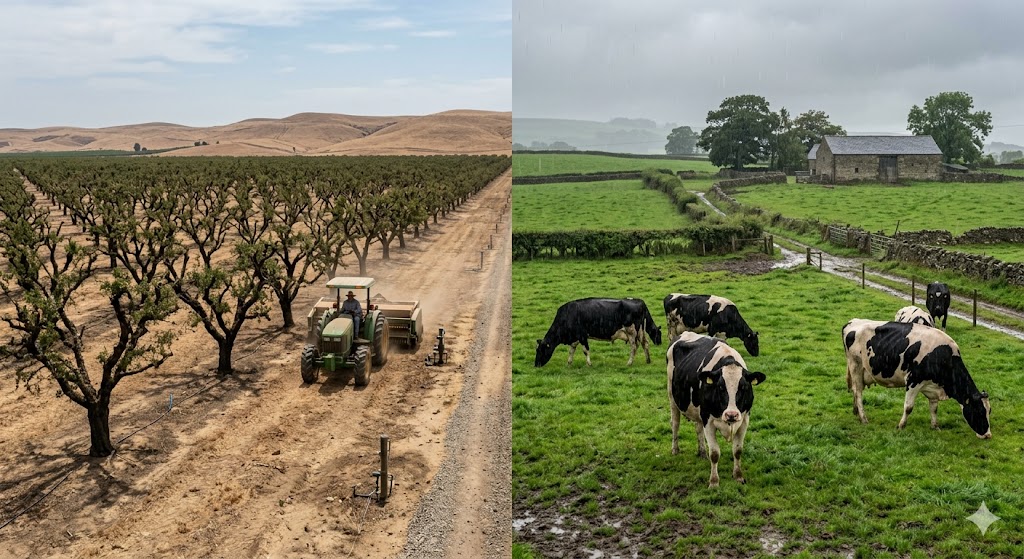
One almond requires 12 litres of irrigated water to produce. Peer-reviewed, ScienceDirect, 2017. A glass of almond milk contains roughly 50 of them. 600 litres of water before the carton is filled.
The water comes from the San Joaquin Valley in California, which sits over one of the most over-extracted aquifers on earth. The valley floor has subsided by up to nine metres in places due to groundwater depletion. The carton is then refrigerated, sailed across the Atlantic, refrigerated again, lorried to a Manchester Tesco, and bought by someone who is concerned about the environmental impact of dairy.
Meanwhile, in Cheshire.
A British dairy cow drinks roughly 70 to 100 litres of water a day and produces around 28 litres of milk. That's about 3.5 litres of water per litre of milk. The water is rainwater that fell on her field or came from a local stream fed by the same rainwater. The rain was going to fall on the field whether the cow stood in it or not. 80% of her moisture intake comes from the grass itself, which is also rain.
She converts the grass, free of charge, into a litre of milk containing seven times the protein and four times the calcium of almond milk, and shipped roughly 18 miles to the same Tesco.
To recap.
600 litres of stolen aquifer, flown halfway round the world for nutritionally worthless beige water.
Or 3.5 litres of rain that was already falling, converted by an animal you can pet, into actual food.
The shopper picks the almond.
She has been told this is the ethical position.
The aquifer would like a word.