$META Chip
Meta- Most Effective Tactics Available
@finkd possesses the essential trifecta for AI dominance, an unparalleled combination of vast data resources, elite R&D talent, and a massive proprietary compute infrastructure. This positions the company to outmaneuver competitors like Anthropic and OpenAI, as no other entity is so aggressively expanding capabilities across all three fronts. Hyperscalers like Microsoft and Google certainly command massive compute power, but Meta’s unique commitment to open-source models allows them to rapidly iterate and gather data on a global scale. The battle between open/closed source models is still debatable topic. Open source wins in popularity but IMO closed source is attracting the business ex. $PLTR...
According to an internal memo reported by Reuters, Meta Platforms is ramping up its custom hardware initiatives to build out a massive artificial intelligence foundation while curbing its massive computing costs. The tech giant is planning an unprecedented $145 billion infrastructure spend this year to double its total data center capacity to 14 gigawatts. Central to this plan is the rollout of its own in-house custom silicon, which will supplement merchant chips from $NVDA and $AMD.
Here are some key facts worth noting...
1. The Custom Silicon Transition (MTIA & "Iris")
Meta is rapidly advancing its custom semiconductor roadmap to optimize its core algorithms and relieve pressure on external hardware vendors.
The "Iris" Chip Production: Mass production for Meta's custom data center chip, code-named Iris, is officially scheduled to begin in September 2026. Iris serves as the fourth-generation product under Meta's MTIA (Meta Training and Inference Accelerator) program.
Testing Milestone: The Iris chip completed its crucial bug-testing phase in an exceptionally brief six-week window with no major technical issues discovered. This milestone signals significant operational progress for an internal chip initiative that had largely floundered for over five years.
Elite Corporate Partnerships: Rather than manufacturing alone, Meta is collaborating with Broadcom $AVGO for physical chip design and packaging—a partnership secured through 2029—while $TSMC is handling high-volume physical fabrication. Future iterations are already being designed for advanced 2-nanometer process technologies.
Workload Optimization & Cadence: The silicon is specifically designed to absorb massive workloads, such as content ranking, recommendation systems, and generative image/video inference across Facebook and Instagram. Meta plans to launch a new chip variant roughly every six months through 2027, a cycle double the typical pace of the broader semiconductor industry.
2. Aggressive Infrastructure Ramping (The 14GW Target)
To run these workloads at a global scale, Meta is undertaking an unprecedented expansion of its raw data center power capacity.
Mind-Boggling Capex: Meta expects its total capital expenditure to reach between $125 billion and $145 billion in 2026 alone. This budget commands a major chunk of Big Tech's projected $700+ billion collective AI war chest.
The Power Grid Explosion: Meta’s physical deployment is measured directly in power consumption. The firm is bringing 7 gigawatts (GW) of computing capacity online in 2026.
The 2027 Doubling Target: By 2027, Meta intends to double that target to 14 gigawatts. For context, 14 GW exceeds the entire electricity grid consumption of several small countries combined.
The GPU Bottleneck Catalyst: The memo revealed that adapting Meta's massive, existing server footprints to accommodate the architecture of the latest merchant commercial GPUs has been a grueling "heavy lift". These technical hurdles have cost the company critical deployment time, further driving the need for tailor-made data center environments.
3. Securing the Supply Chain (Insulating Against "Chipflation")
A advanced custom chip design is useless without the hardware to physically build the surrounding data center arrays. To insulate its aggressive timeline from global shortages, Meta has executed multi-year, long-term supply chain agreements.
Bypassing Procurement Bidding Wars: Meta has bypassed piece-by-piece ordering to sign major contracts with tier-one suppliers, protecting themselves against intense component demand from cross-town tech rivals.
Strategic Vendors Locked In:
Samsung Electronics: Secured for high-performance memory chips (RAM) crucial for processing large language model bandwidth.
SanDisk $SNDK: Secured for high-density flash storage arrays to house massive pools of AI training data.
Sumitomo Electric: Secured for advanced fiber-optic networking equipment required to link tens of thousands of cluster processors at low latency.
Beating "Chipflation": With analysts warning that spiked component costs have made "chipflation" a tangible macro problem for tech infrastructure buyers, Meta’s advance multi-billion-dollar supply locks guarantee their 14 GW roadmap remains financially viable and on schedule.
According to a Bank of America analysis, Meta's 2026 infrastructure buildout is proving to be significantly more cost-effective than initial projections indicated by less than half. By leveraging a $145 billion capital expenditure to add 6.5 GW of capacity, Meta is achieving an implied cost of roughly $22 billion per GW. This is less than half of Bank of America's previous estimate of $45 billion per GW, signaling a massive leap in deployment efficiency. Ultimately, maintaining infrastructure costs well below the $30 billion per GW threshold is expected to materially boost the financial returns on Meta's massive AI investments.
In parallel with these infrastructure efficiencies, Meta officially launched Muse Spark 1.1 on July 9, 2026, marking a pivotal shift toward a commercial, paid-API ecosystem. Moving away from its traditional open-weights strategy, Meta introduced the model to external developers via a public preview of the Meta Model API, offering aggressive pricing at $1.25 per million input tokens and $4.25 per million output tokens alongside native compatibility with competitor SDKs. For everyday users, the model debuted with a dedicated “Thinking” mode inside the Meta AI app just days after the release of the "Muse Image" model. Because Muse Spark 1.1 features highly advanced agentic capabilities and a 1-million token context window, Meta accompanied the rollout with a comprehensive safety report detailing the rigorous mitigation frameworks used to manage high-risk cybersecurity and biological threat vectors.
I have a small starter position at $600 and alerts set on $META at $510 and down at $390. At this point for those to fill id expect it takes a geopolitical, macro, liquidity or credit event for those to hit. One thing is clear to me, that at this point in valuations its no longer montary/macro driven flows that are driving the market. We intend to rely on fundamental flows from rotations between assets. Identify the range and take profits.
On a side note...
I played Half-Life: Alyx on the META Quest 3, using PC VR Air Link. The level of immersion is staggering—honestly a mind-boggling, life-altering experience and shift in how we interact with digital environments. 10 out of 10 reccomend. The seamless wireless performance shows exactly where the future of spatial computing and high-end gaming is heading. $META
We'd like to give you a glimpse into the strategy we use to manage capital.
Liquidity War Core is a trend-following strategy built from three independent sub-strategies:
1. Equities
2. Monetary inflation hedge (Bitcoin + Gold)
3. Relative Strength Strategy
Each strategy is unique, has its own set of assets, and is uncorrelated with the others. Every strategy has historically outperformed a simple buy-and-hold approach to its respective benchmark assets.
The strategy does not use leverage—it is spot-only and long-only. The portfolio consists of large-cap equities, Bitcoin, gold, and major cryptocurrencies, including ETH, SOL, SUI, BNB, and XRP.
Each sub-strategy is assigned a different allocation based on its risk profile. Strategies with lower drawdowns receive a higher allocation, while those with higher volatility receive a smaller allocation. Capital is diversified across all three trend-following strategies, each of which moves to cash during unfavorable market trends.
In practice, this strategy serves as a customizable framework rather than a one-size-fits-all portfolio. Every client has a different capital size, risk tolerance, and asset preferences. For example, some clients may prefer a crypto-only portfolio or choose to exclude specific altcoins. Everything is configured individually to match each client's objectives.
Compare the performance metrics. We've reduced the maximum drawdown to just 19%.
Gold is bottoming ?
and nobody wants to buy it. If your not headed to the local gold store this weekend for a little dca then we need to have a talk...
There is a high probability that the bottom is between $3700-4150. While possible but less likely price bottoms between $3300-3700. That is the average consensus from my panel of trusted sources. Here's a few examples of data that im willing to share publicly that support my overall thesis...
@Goldmansachs predicts gold stays in a range between $4000-4900 the rest of 2026
@42Macro Darius Dale is calling bullshit on a hawkish fed.
@KobeissiLetter says emerging market central banks are still buying gold.
Stars are all in alignment here. Follow the smart money.
I believe gold will continue to offer the best reward per square unit of risk taken in the short dollar trade. Bitcoin carries to much volatility and risk for me to invest in. Especially since here at Liquidity Wars we have specially designed tools to manage our exposure to crypto, so when the time is right, I have a portfolio designed for taking advantage of that trade.
Aside from the "short dollar trade" there are other catalysts. I have a thesis that as the economic war heats up globally, debt burdened global leaders will continue to try and put the squeeze on economies with financial tools like tariffs, sanctions, export controls, capital controls, taxes and war on energy infrastructure. We are watching currencies fail in real time like the Rial, Rupee and Lira. Essentially people are FORCED to buy gold to protect their purchasing power. Ive heard people mention that xyz cant go up because of its marketcap, those people underestimate the governments ability to just keep printing and how AI could actually 10x the money supply.
For most market participants, the move is simple: just buy physical gold or grab $GDX. It keeps things easy and completely eliminates single-name risk. But if you are looking to invest directly into the companies that could essentially become the future money printers—because you believe gold is the real money of the future and not the dollar—you have to get strategic. Here are the specific assets on the radar: Agnico Eagle $AEM and Royal Gold $RGLD for rock-solid operations and elite cash flow, Newmont $NEM as a massive value turnaround play, Hudbay Minerals $HBM to capture that critical copper-gold bottleneck leverage, and Aya Gold & Silver $AYA for high-octane growth. Equinox Gold $EQX and Pan American Silver $PAAS are both equally as good assets to hold.
The reason this specific list of assets stands out is because it offers the perfect storm of what you need to win: rock-solid stability, world-class management teams, massive organic growth, and operational security. By spanning across both precious and base metals like copper, it gives you critical commodity diversity, while heavily anchoring the production in secure, tier-1 jurisdictions.
But if you want to know which specific asset is absolutely catching my eye for a highly concentrated bet? It's Royal Gold $RGLD.
While regular miners are constantly getting supressed by skyrocketing labor, fuel, and equipment costs—which aggressively eats into their profits even when gold prices run—Royal Gold plays an entirely different game. Because they operate as a pure-play royalty and streaming company, they capture direct top-line revenue exposure with near-zero exposure to the actual headaches or cost overruns of running a physical mine. It’s a business model that lets them clock an elite 83% adjusted EBITDA margin, effectively turning them into a bulletproof cash-printing machine. If you want maximum, direct upside to soaring gold prices without taking on any single-mine operational or execution risk, concentrating capital right here is the ultimate "maximum margin, minimum headache" play. Royal Gold is the only major gold and silver streamer domiciled right here in the US, while its biggest competitors are parked up in Canada. Because of that US passport and a market cap that has cruised past $18 billion, it is a prime candidate to eventually get tapped for the S&P 500. If that index inclusion hits, every major passive fund on Wall Street will be forced to mindlessly buy shares, forcing massive institutional liquidity. Pair that with superior assets like $AEM and the growth potential from the other assets listed id say you have a solid custom high-conviction high quality high growth ETF.
Boomers laughed at me when I bought silver at the beginning of the parabolic run up last year. They thought I was buying the top... Guess where those boomers were today? In line at the gold store SELLING! I was the only person in the buy line.
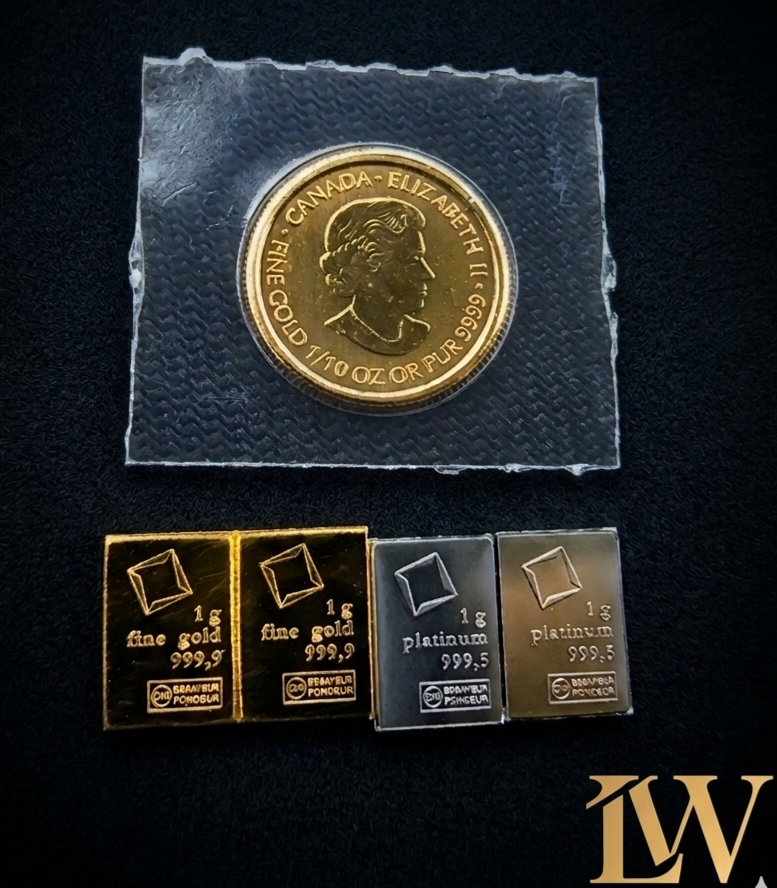
This month's wealth-preservation allocation from my disposable income is officially locked in . Here's my newest addition to the stack⬇️
-Don't short the Baconator-
Or eat them! and please don't buy the stock...
Wendy's is a real operational business with meaningful cash flow and a dividend, it's not a meme stock. While people are right about the mechanics behind the trade they are wrong about the real reasons behind the move.
The trade was crowded with heavy short options activity. Reuters reported 34% of free float was short interest. This led to a 30%+ spike and multiple halts as retail traders piled in on news and volatility. Make no mistake though this is not the next $GME Gamestop. Situations like this tend to be far more complex than most people can openly understand or explain. Data suggest dealer hedging and volatility mechanics are at play here which is why direction can be wrong even when the crowd is right about the volatility. To me this looks like its going to unwind fast even though it has solid fundamentals and genuine demand.
Our advice is simple... never buy on news like this. Dont buy a stock you haven't researched. Don't chase social media hype. Consistency beats excitement.
Stick to your research and resources. Buy whats leading and trending. Buy on red days when the crowd is dumping (on 21EMA) and trim into strength when its extended over the 5EMA. Rinse and repeat.
@liquidity_wars@benjamincowen Nice article, could there be an argument to be made that mining companies like HUT have decoupled from BTC and are more an AI stock now.
gm gm , tons of updates coming to the site!
- Panel Loading time has been reduced by significant amount!
- ATM IV vs RV
- Summary section on dashboard upgraded to a much better version.
- Tail Strike Analysis added.
Whats next is gonna be super interesting👀
- working on much better gex computation with help of @minus1_12 ( switching from naive)
- @noD7R suggested some awesome tools which are gonna be added😁
- backtesting engine is gonna be up soon
- much better payoff curves
Shoutout to @derivativemonky, a solo builder and one of our community members who has been quietly building a killer analytics & backtesting dashboard.
We've become the reference point for $HYPE options pricing but things like ATM-IV, term structure, realized vol barely exist.
This is exactly the kind of thing we want to see around Derive: traders, builders and community members pushing market structure forward in public.
major update to the UI :
You can now switch between cumulative & individual exchange data for all of the panels!
Soon , you guys will be able to filter out & choose 2-3 exchanges of your choice and display the data of those exchanges cumulatively too!