If neobanks are the new banks, hackers are the new robbers
As more of our real money moves online, the threat changes too
A robber used to need a gun to take your money. Now, sometimes all they need is a vulnerability.
That makes security, custody and the ability to make users whole more important than cashback, rewards or fancy cards.
So we looked at the major crypto cards and asked a simple question:
If something goes seriously wrong, who actually has the strength to protect your money?
Here’s our first Crypto Card Safety Tier List
90% of crypto cards & neobanks will die
Recently, @0xVishnya posted a list of ~250 crypto cards.
My bet: over the next 2–3 years, 90% of them will either:
A. Die, shut down or disappear
B. Get hacked or suffer a serious data/KYC breach
C. Change their terms, fees or rewards dramatically
And honestly, you don't want to treat your bank like a crypto app
You shouldn't move your money to a new card just because it offers 1% more cashback when you don't even know how the company handles your funds
Stick with the OGs
A few I personally keep an eye on:
@ether_fi — One of the strongest crypto-native cards, especially for users who want to borrow and spend.
@Nexo — 8+ years in the market. Established, mature and high quality. You could call it the AMEX of crypto.
@KASTxyz — Strong retail-focused crypto card
@BitgetWallet — Massive user base and significant transaction volume. One of the more established names in the space.
@wirexapp — One of the oldest players in crypto cards, with competitive rates and a long operating history.
And I'll say this again:
Don't chase 1% extra cashback from a company you don't trust with your money.
When it comes to financial products, trust > cashback.
Keep your money where the company makes you feel safe.
LATEST: ⚡ Netflix says its new show "The Altruists," a limited series about FTX's SBF and Caroline Ellison, will premiere Nov. 19 and star Julia Garner and Anthony Boyle.
There is a huge debate on X right now:
Should you post more or post less?
Some companies post 10 times a day
Others post once a day, or even once every 2 days
So which one actually works?
Let's look at some examples
@Bybit_Official 4.8M followers
They post multiple times a day, sometimes 6+ posts.
A lot of their posts get around 100 likes and 40–50K views
That's honestly peanuts for an account with 4.8M followers
Now look at:
@Plasma 233K followers
They post around once every 2 days. And they're regularly getting 300–400+ likes and 70–80K views.
That's almost 2x the views of an account with 20x more followers.
Then you have @pepecoineth.
One of the most viral crypto accounts. Especially in the early days, they weren't flooding X with 10 posts a day.
Just once a day, and people waited for that. Whenever they posted, they posted it with STYLE
Some posts were doing 500K+ views and 3,000–5,000 likes
I'm obviously not comparing a memecoin account to a company like Bybit.
I'm making a different point.
Posting more doesn't automatically mean more reach
A lot of companies are optimising for number of posts instead of attention per post
10 mediocre posts don't necessarily beat 2 great posts
Sometimes it's the exact opposite
And this is where I think X's new creator program & recommendation algorithm is also pushing it
What do you think?
Is it better to post one great post than 5–6 junk posts?
One of the worst ways to get cashback:
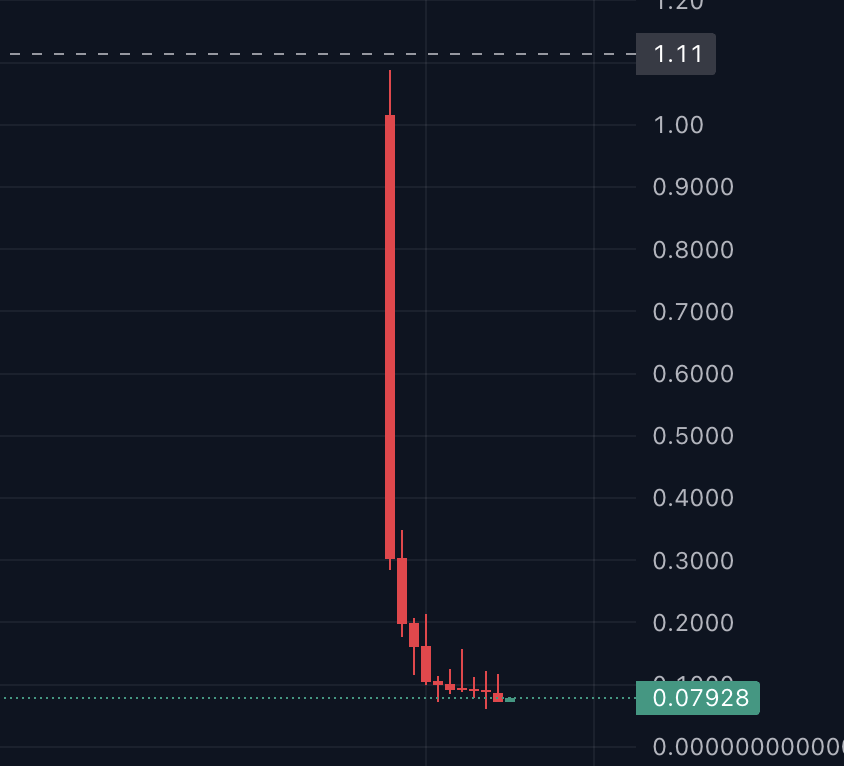
Getting paid in the token of the company that looks like this
If plasma:native keeps going down, your “cashback” is literally losing value
45% of the user in @plasma are not selling it to usdt, this is the only use case of plasma:native
Honestly, getting cashback in USDT is still better than this
But the best model is asset-back cashback
Get cash back in BTC, SPX or GLD
Your cashback stays in an asset that actually goes up
This is one thing I think @Bitget is doing this right
To be honest, I'm not very bullish on @fomo right now
During the $CATE crash from around $80M to $15M market cap, I wanted to buy the dip
The app completely stopped responding
By the time it was usable again, the opportunity was gone
How do you justify that to users?
Reliability isn't a nice to have for a trading app. It's the product.
If traders can't execute when volatility is at its highest, that's a serious problem.
When @solana had outages, the entire crypto community criticised it because infrastructure matters.
Why is nobody holding trading apps to the same standard?
If we want better products, we should be willing to talk about failures just as much as successes
NEW: Binance affiliates are suing RedotPay's founders in Hong Kong, alleging they diverted more than 470,000 customers from Binance Card to a competing product in a "fraudulent scheme," Bloomberg reports.
Binance is reportedly seeking about $473 million in damages. RedotPay said it will "vigorously defend" the claims.
I think the bigger flex isn't earning cashback
It's what your cashback accumulates into
Imagine every purchase automatically buying:
• Gold (GLD)
• NVIDIA
• S&P 500
@BitgetWallet is doing something really interesting here
Over time, this could become far more valuable than earning cashback in a stablecoin