Shouldn’t aging be part of drug discovery for diseases of aging? https://t.co/STp9lKyxCj
Gordian exists to move therapeutic testing from plastic wells and young mice into a living environment with all the complexity present in patients with age-related disease.
We’re now sharing results showing how pooled in vivo screening can make highly accurate physiological predictions and find novel treatments for diseases of aging 🧵1/15
@GordianBio is hiring a special agent for 1-3 mos,to work directly with me on a secret project with the utmost consequences for our ability to eliminate disease.
Need high agency and follow-through, familiarity with healthcare bonus but not required.
DM me.
For no particular reason I feel compelled to RT the fact that curing diseases is data rather than intelligence limited.
For anyone serious about having AI accelerate cures, please get in touch so @impetusgrants can get you the necessary data.
Underappreciated how often people don't take their pills.
A quarter of Rx are never filled, and then only ~half are taken consistently.
Even life-saving treatments for cancer and organ transplantation!
Lesson 1: real world penetration is hard 🙃
Lesson 2: I think we'll see a shift in "pill is always best" attitude as more injectables reach quarterly dosing.
Most investors have no idea of the damage that the mere distraction of talking to them does to a startup. Here's a typical example. And this is a YC company too, meaning they have an easier time fundraising than the median startup.
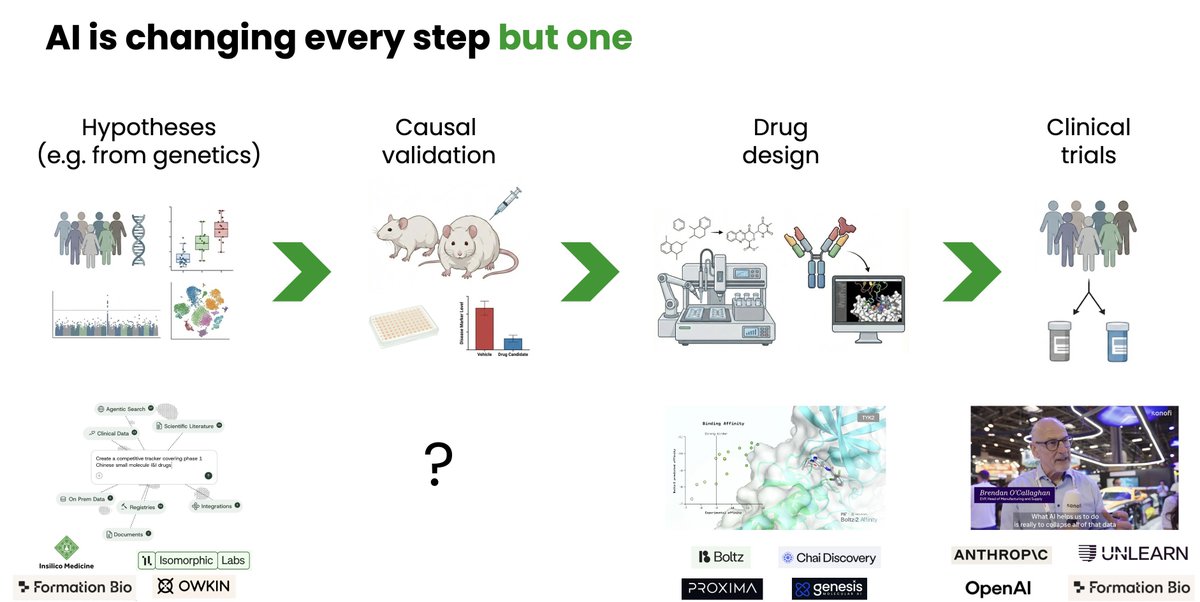
In biology, some time is compressible: drug design and hypothesis generation can be sped up. Some is incompressible: biological processes need time to unfold.
As AI speeds up the surrounding work, biological timelines that cannot be compressed by AI become the main limiter to progress.
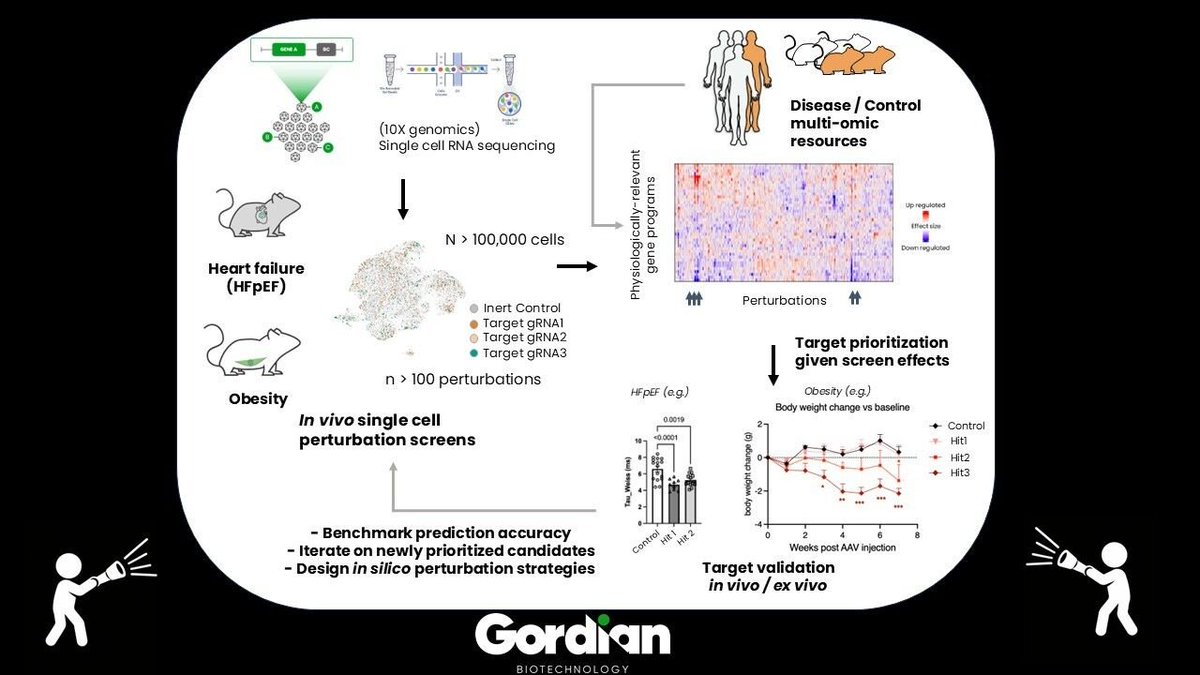
One way to get more answers per unit time despite these timelines is to causally validate many hypotheses in parallel, for example through pooled in vivo screening, like we've done for years: https://t.co/qASoYjCagB
This means that the incompressible wait time can still massively generate evidence on hundreds of potential targets, de-risking discovery by making progress less contingent on guessing which hypothesis is correct from the get-go.
It also means that:
- AI has access to high-quality causal data from testing many targets in living diseased tissue, with their effects resolved using human ground-truth data on health VS disease
- We can map therapeutic effects across vast target spaces and multiple diseases of aging to discover the target maxima: multimorbidity drugs that treat several conditions at once.
Exciting times ahead!
Thank you also @EganPeltan for a writeup on my favorite slide in @GordianBio's deck. If you are feeling low on validated targets, we have the solution :)
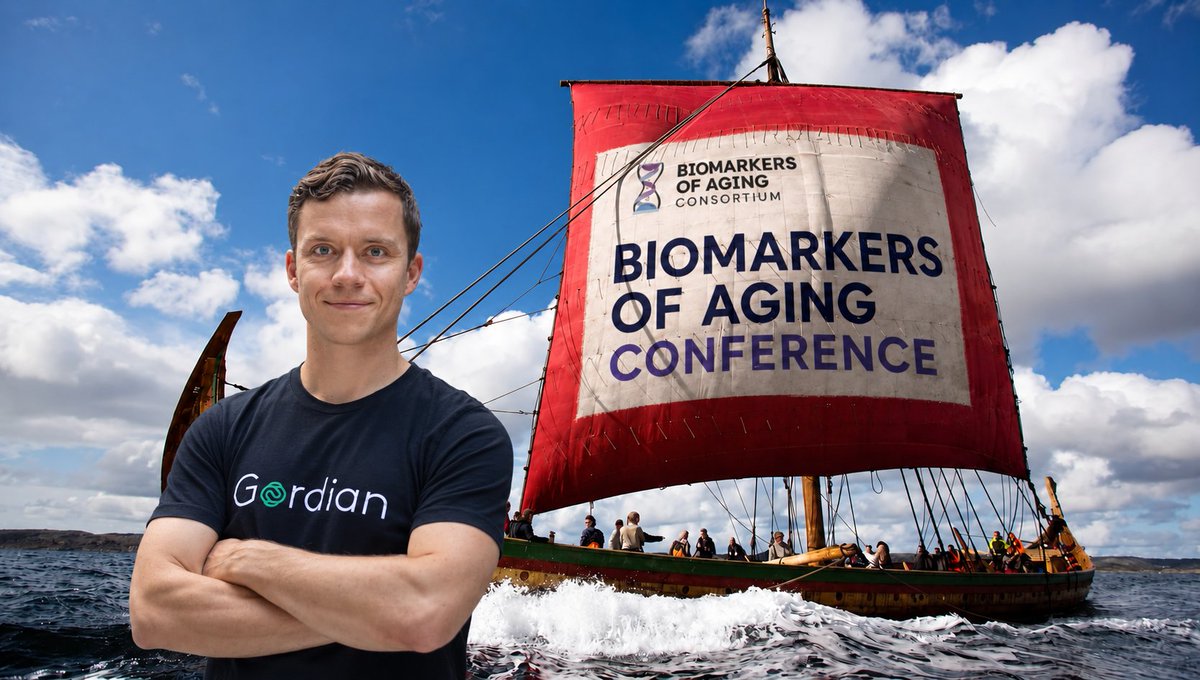
On his Odyssey to help us treat the ails of aging, our CSO @MartinBJensen is at the Biomarkers of Aging Conference in Boston.
Odysseus sought the seer Tiresias’s guidance on getting home to Ithaca. Our Ithaca is longer, healthier lives, and validated aging biomarkers could tell us whether our drugs will get us there.
Aging clocks use measurements such as protein levels or DNA methylation to estimate age or predict mortality and frailty. But an intervention could act directly on the biological measure without affecting aging itself, or improve health without moving the clock.
Learn more here:
https://t.co/kIE54u7tP1
We have in vivo ground-truth data on >1,300 candidate targets. We’re hiring two computational biologists to help nominate the targets we take forward.
Our mosaic Perturb-seq atlases span millions of cells across animal models of obesity, heart failure, chronic kidney disease, osteoarthritis, and MASH.
We're hiring Senior and Principal Computational Biologists (onsite, South San Francisco) to connect perturbation-induced cell states to physiological outcomes, then partner with disease leads and wet-lab scientists to design validation studies.
--
Senior Scientist | Computational Biology:
Own the analysis and interpretation of our cardio-renal-metabolic Perturb-seq screens. Map cell state changes across tissues, disease severities, and species. Drive analytical improvements, develop new approaches.
Apply here: https://t.co/qinKVWZbX7
--
Principal Scientist | Computational Biology:
Shape the computational strategy for target discovery and prioritization across Gordian's disease programs. Integrate functional genomics, human genetics, and patient-level evidence to identify therapeutic opportunities. Pioneer new analytical approaches to strengthen target confidence and inform therapeutic direction.
Apply here: https://t.co/eWvqpuIt4Y
---
We're looking for deep single-cell omics expertise, strong disease biology intuition, and a track record of going beyond hit-calling to uncover mechanisms and guide experimental decisions.
Our culture: https://t.co/BpZvqZl3IF
Our most recent progress report: https://t.co/qASoYjCagB
Our preprint: https://t.co/gf9Kt3Fsxy
Summary of exec panel at ARDD
Fiona Marshall: Novartis cares about aging mechanisms (DARE group) but diseases not lifespan.
Ariel Feldstein: Pfizer wants to treat multimorbidity axes - CVD, neuro.
Stephane Bancel: Take more vaccines 🙃
Elcin Ergun: GenAI most important new thing in pharma (strong disagree, not the bottleneck)
Christoph Weber disagrees: We're gonna have so many molecules, trials is the challenge.
Some mention of Chinese efficiency in trials and hospitals. Too many lawyers in US.
Core challenges:
Prevention trials take too long. The FDA panel comments are relevant here...
When you don't have obvious endpoint like obesity, you really need strong endpoints.
Feldstein wants more deep phenotyping from trials, to make biomarkers. More resistance from hospitals to working with them, and less US support for research.
Marshall emphasizes lot of data out in the world, UK is rich.
My take:
Getting there on pharma engagement. If we get the medicines that treat multimorbidity we'll live longer, whether lifespan is the goal or not.