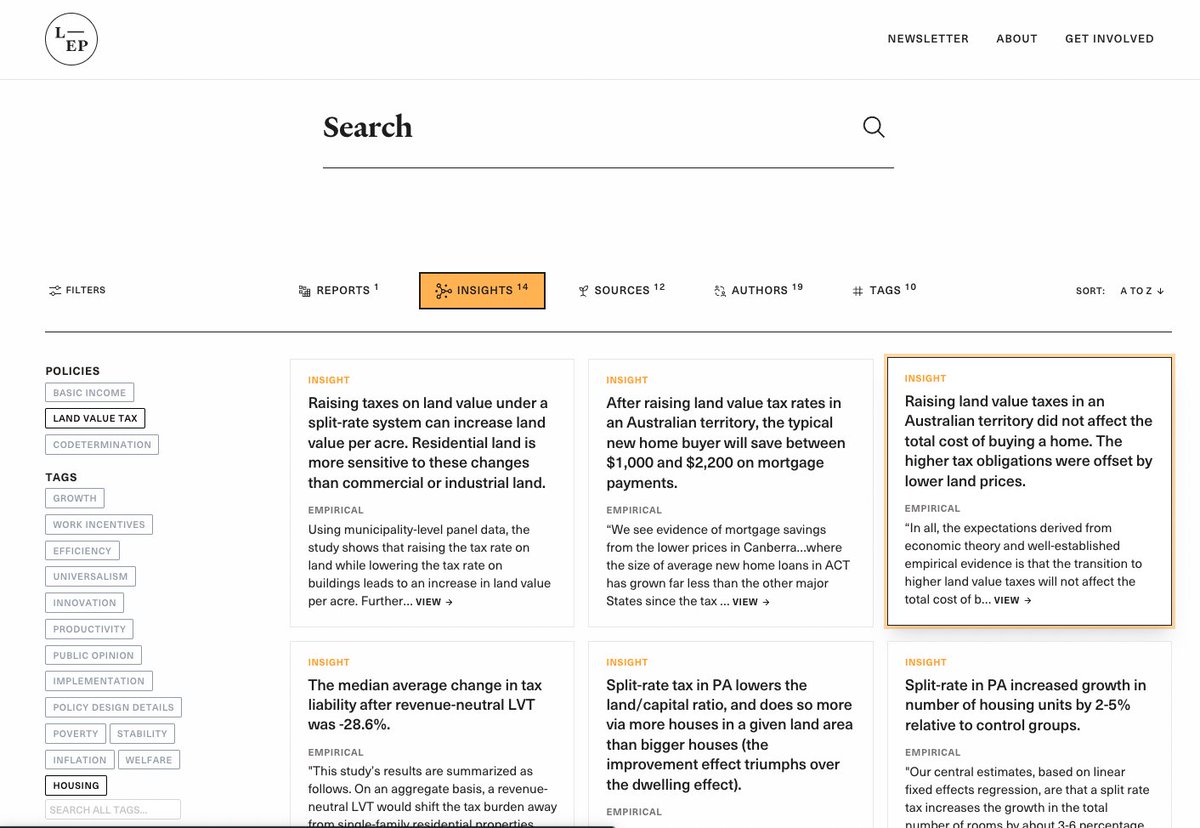
1/ The Library of Economic Possibility (LEP) is now live 🥳
Our mission is to advance public knowledge of innovative economic ideas for a thriving 21st century economy.
https://t.co/SQCglqbJjF
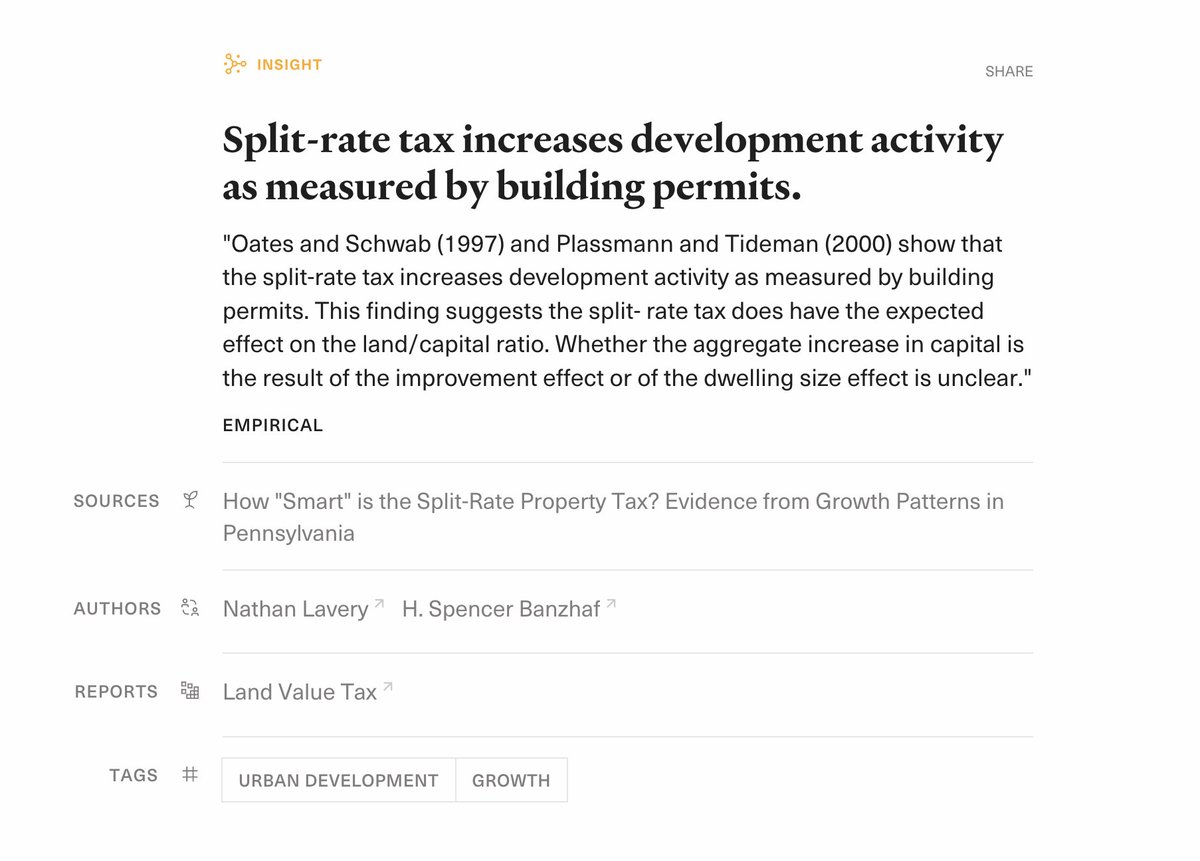
How land value tax (a tax *cut* on buildings) creates a virtuous cycle of development, reducing the price of both land and housing.
…and how it can pair with inclusionary zoning to create even more affordable housing.
You might know how land value tax could address the housing crisis, or how inclusionary zoning creates affordable housing.
But something unique happens when you combine the two.
A Policy Alchemy for the Housing Crisis
https://t.co/hUW1oa2CoN
The wealth of a typical American household is way up since the pandemic.
Inequality is down.
Debt-to-income ratios are falling.
Racial gaps, education gaps, urban-rural gaps, and age gaps have decreased.
https://t.co/jHhsHH3awk
🇺🇸🇺🇸🇺🇸🥳🥳🥳
TIL Minnesota has introduced a land value tax bill. Not sure how likely it is to pass, but Minneapolis might become America's first housing utopia with LVT and a single family zoning ban.
Let 1,000 economic policy research databases bloom! If you're looking for available datasets, @lenorepalladino's list here is a great resource.
If you're looking for insights about a particular policy or topic (or a combo of both), we hope our site provides a useful tool
Let 1,000 economic policy research databases bloom! If you're looking for available datasets, @lenorepalladino's list here is a great resource.
If you're looking for insights about a particular policy or topic (or a combo of both), we hope our site provides a useful tool
Does the public hate experiments?
No!
"We find that 75% support the idea of small-scale evaluations of policies before enacting them at a large scale."
Experimentally varying whether the evaluations are called "experiments" has zero effect on public support of experimentation
Trusting parents like @StocktonDemo participant Tomas to make the BEST financial decisions for their kids works - period! STL Guaranteed Basic Income will give hundreds of St. Louis families the financial stability they need to grow and thrive with $500/month direct payments ⬇️
One thing about the expanded child tax credit is that it seemed to work Really Well, & a huge majority of economists agreed: https://t.co/zYkrhxneBw
In 2021, the expanded child tax credit pushed child poverty to the lowest rate on record.
Then it expired, & child poverty more than doubled at record pace, like removing a weight from a loaded spring.
What if we simply didn't do that?
https://t.co/psPOAXigL4
Census announces SPM child poverty rate of 12.4% in 2022. Context: from 1967 to 2021, the largest year-over-year increase in SPM child poverty rate was 10.7% (or 2.1 pp, 1980-1981). We now easily have a record increase in child poverty: a 139% increase (or 7.2 pp) from 2021-2022.
@jonathanhung A number of interesting ideas seem to straddle that line - clearly important & impactful, but not yet packaged in a legible policy prescription (which can also serve as a barrier to research).
Definitely an arena we’re looking into (thanks for the point to @DarkMatter_Labs)
Our first three policy reports cast a wide net — ideas that have the potential for deep impact, a wide base of existing research, and less representation than they deserve.
What policies would you want to see included next?
@jonathanhung Sounds like fertile soil. Ideally, we’re seeking policies that are concrete and discrete enough to have been implemented (even if in limited settings) and empirically studied. Participatory budgeting would probably fit the bill!
https://t.co/15SiN1QWIG
site is so cool, content so relevant.
Tickles the economist, science fiction writer, info architect and knowledge management nerd in me.
@LEPossibility
The proportion of West German workers in firms with 500+ employees has mildly declined from 94% in the mid-nineties to 85% in 2018.
https://t.co/zQEZiVafWi
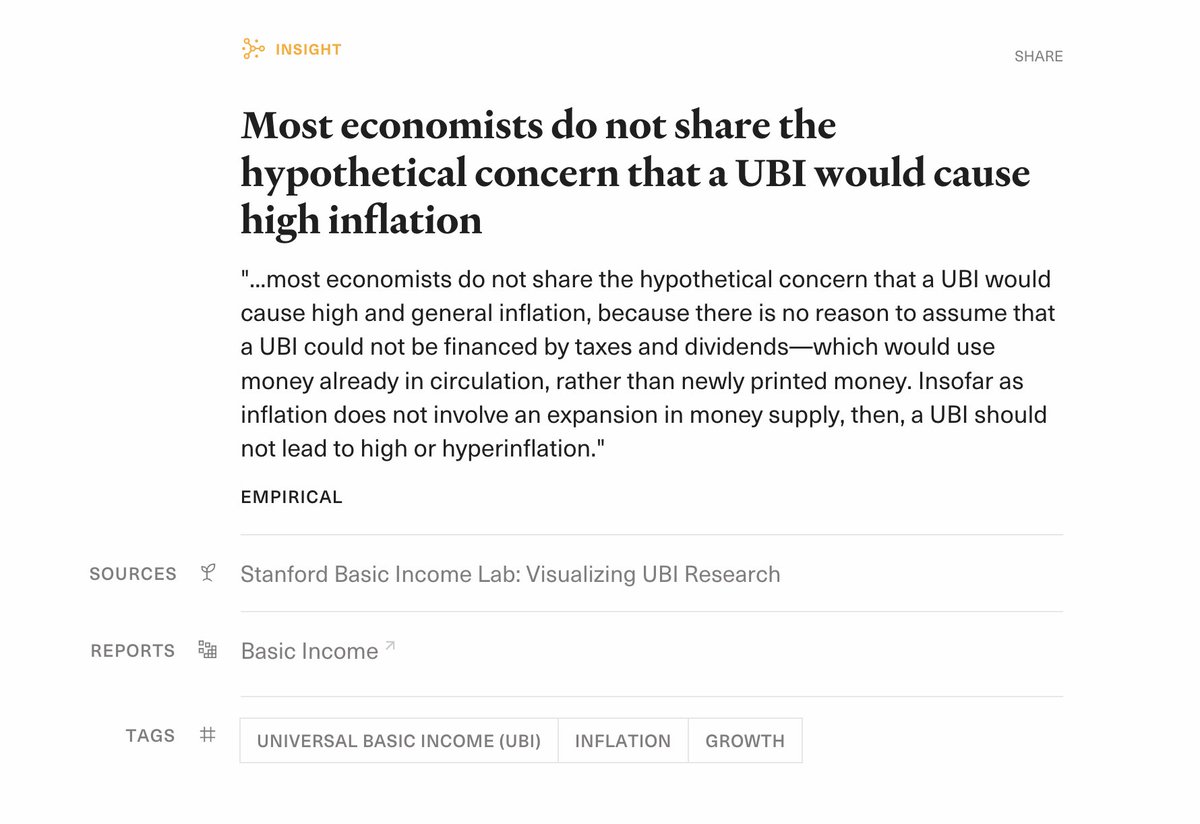
Most economists do not share the hypothetical concern that a UBI would cause high inflation.
Source: the @StanfordBIL UBI research visualization.
https://t.co/unRo6EhCXJ
Trapezoidal income support structures (like the Earned Income Tax Credit) may fail as an economy-wide stabilizer during periods of economic recession.
Authors: researchers from the @jainfamilyinst
https://t.co/082DXfXyl5