Standing in for his sovereign, former Prime Minister Dr Pakalitha Mosisili gave voice to Lesotho’s grief at the state funeral of Botswana’s former President Festus Mogae, delivering a eulogy on behalf of His Majesty King Letsie III.
It’s time we embrace FMD as the new normal in BW. It would be very difficult to stay clean in the short to medium term when FMD is fully present along our borders. Forget the EU & focus on markets in line with our reality. Cattle farming is commercial & people have financial obligations. Trade must open.
The 2025 4x400m World Champions Lee Eppie & Collen Kebinatshipi coached by Chilume Chippa Ntshwarang out here taking ice baths 🛀❄️❄️ in preparation for the 2026 World Relays held in Gaborone Botswana 🇧🇼 on The 2nd & 3rd of May ...i believe the results are gonna be cold too ...
A metro police officer stopped a truck driver and found this fake foreign driver’s licence using a supermarket rewards card.
The driver, identified as an undocumented foreign national, was arrested and now faces charges of fraud, possession of fraudulent documents, and possible immigration violations.
Cuba has been under a US blockade for 67 years.
Gaza has been under an Israeli blockade for 36 years.
Europe and the rest of the world have been under the Iranian blockade via the Strait of Hormuz for only 21 days.
Everyone needs to just relax and build some endurance.
They stuck to the plan.
* Year after year, oil revenues flowed into the fund.
* Year after year, the fund invested in global markets—stocks, bonds, and real estate across 70 countries.
* Year after year, politicians resisted the overwhelming temptation to raid the funds for short-term political wins.
Every election cycle brought promises to spend more.
Every economic downturn brought demands to tap the fund.
Every crisis brought calls to break the rules "just this once."
Norway said no.
Every single time.
The fund's managers didn't try to beat the market or gamble on hot stocks...
They simply bought small stakes in thousands of companies worldwide—around 9,000 today—and held them.
They played the longest game imaginable.
By 2000, the fund was worth $50 billion.
By 2010, it had grown to $500 billion.
By 2017, it crossed $1 trillion.
Today, it has surpassed $2 trillion.
For a country of just 5.6 million people, that works out to roughly $340,000 per citizen.
But here's the extraordinary part...
More than half of the fund's value didn't come from oil.
It came from investment returns.
The fund now generates more income from its global investments than Norway makes from selling oil and gas.
They transformed temporary oil wealth into permanent financial wealth.
The fund owns approximately 1.5% of every publicly traded company in the world.
It holds stakes in Apple, Microsoft, Amazon, and thousands of other corporations.
When you buy almost anything from almost any major company, a tiny fraction flows back to Norway.
The 3% withdrawal rule ensures the fund will last indefinitely.
That 3% provides roughly a quarter of Norway's national budget—funding education, healthcare, infrastructure, and pensions without ever depleting the principal.
Norway's oil will eventually run out. Maybe in 30 years, maybe 50. It doesn't matter anymore.
By the time the last barrel is pumped, Norway will have a multi-trillion-dollar fund generating returns forever.
The genius wasn't in discovering oil. - lots of countries found oil.
The genius was in the radical decision to:
* Save almost all of it,
* Invest it wisely, and
* Resist every political pressure to spend it immediately.
It required vision to see beyond the next election cycle.
It required discipline to follow the rules for three decades without exception.
It required humility to admit that future Norwegians deserved this wealth as much as current ones.
In 1996, they started with $150 million.
Today, they have over $2 trillion—and growing.
In 50 years, when Norway's oil fields are empty, and the rigs are silent:
* Norwegian children will attend free universities, elderly
* Norwegians will retire with security, and
* The entire nation will thrive—all funded by oil that stopped flowing decades earlier.
Because in 1990, Norway made a choice that most countries never make.
They chose their grandchildren over themselves.
Weird Wonders and Facts
Norway Found Oil. Then Did the One Thing Most Countries Never Do
In 1969, Norway discovered one of the largest offshore oil deposits in the world.
The Ekofisk field changed everything.
Suddenly, this small Scandinavian nation was sitting on extraordinary wealth.
They could have done what most oil-rich countries do:
* Spend it all immediately.
* Build monuments.
* Create economic bubbles.
* Enrich a few while the many suffer.
And when the oil runs out, collapse into debt and instability.
Nigeria tried that.
Venezuela tried that.
Libya tried that.
Norway looked at these cautionary tales and made a different choice.
In 1990, the Norwegian Parliament created the Government Pension Fund Global.
The rules were simple but revolutionary.
All oil profits would flow into the fund. The fund would invest globally in thousands of companies. Norway could only withdraw a small percentage each year—originally 4% - now 3%.
The rest would stay invested. Forever.
People thought they were insane.
Why hoard money for people who don't even exist yet?
Why not lower taxes, build bigger programs, and enjoy the wealth right now?
The Norwegian government had an answer...
Because future Norwegians will exist. And they deserve this wealth as much as we do.
In 1996, they deposited the first payment: $150 million.
Then they did something even more remarkable...
@tshepanglerato In the age or PRep and potential vaccines and and and, AIDS has a completely different reputation. 20yr olds also have the most unbelievable faith that they will get consistent treatment if infected. They truly don’t see it as a death trap
Farmers, wrongly portrayed as simple uneducated folk. Reality is a highly skilled workforce & business leading the way in sustainable food production - but many in the media still want to label us as incapable & easily taken advantage of or conned. #fairtrade#mentalhealth
IKALANGA TOTEMS explained and their STRUCTURAL Roles in Society
1. Bo-Ntombo - means dombo la She. The Chief
2. Bo-Niswimbo - the knobkerrie carriers (the dignitaries, the royalty, the leaders)
3. Bo-Nkumbudzi (you call them Kumbudzi)* = the legal advisors/councillors to the rulers/Ne Swimbo (the today’s Attorney Generals)
4. Bo-Sunghwasha (Misungo ya She/Nsungo wa She) - those who carried the Ne Swimbo’s luggage, or who ran the errands for the kings (our today’s private secretaries).
5. Bo-Mdambeli - the path finders. They were sent by the Ne Swimbo’s to investigate, or clear the path and report back (those were our current DISS)
6. Bo-Nebukhwa - those who were the traditional doctors and spirit mediums. Highly trusted by the Ne Swimbo’s and were sent to ask for rains (wosana) etc. (our today’s GPH/Bokamoso Doctors)
7. Bo-Kadzasha - They only provided support to what the Ne Swimbo’s said (Hadza She/add to what the Ne Swimbo said without questioning, e.g. ‘mafoko a kgosi a mantle otlhe’). They played the role of plebeians. The loyalists to the Ne Swimbos/rulers, never differed. Others said they also provided wives to the Ne Swimbo and other nobles.
8. Bo-Phizha/phiha - these were the artisans, black smiths and were the very specialised few. They made good phangulas for ploughing! These are our today’s welders, the workers! "
NB: Copied it somewhere, I’m the source and the source wasn’t credited, I thought it’s informative.
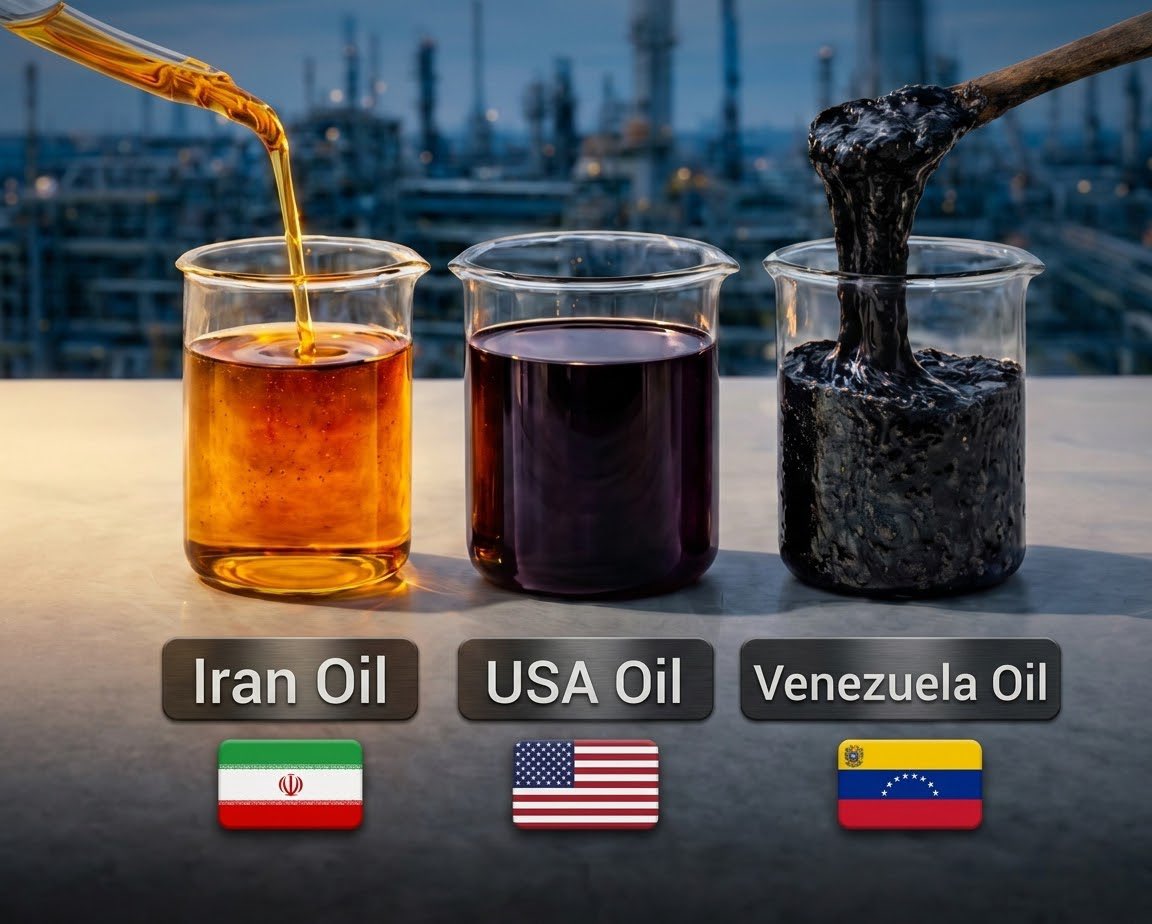
Everyone talks about Iranian oil in barrels. Nobody talks about what is inside them. That difference is why Western refineries have been running shadow networks through Dubai for twenty years to get it despite the sanctions.
Crude oil is not a uniform commodity. It is a spectrum of hydrocarbons with different molecular weights, and the composition of a given crude determines how easily it converts into the products refineries actually want to sell: gasoline, diesel, jet fuel, heating oil. The measurement that captures this is API gravity. Higher API gravity means lighter crude with shorter carbon chains, which means lower energy cost to crack, lower processing cost to refine, and higher yield of the light distillates that carry premium pricing. Lower API gravity means heavier crude requiring more energy, more processing steps, more capital equipment, and producing a higher share of lower-value residuals.
Iranian Light crude runs at 33 to 36 degrees API gravity with sulfur content between 1.36 and 1.5 percent. That is the refinery sweet spot. It is light enough to yield high fractions of gasoline and middle distillates without excessive processing costs, but heavy enough to produce the full range of products that complex refineries are designed to process. It is what petroleum engineers call an optimal blend crude.
Now compare the alternatives.
Venezuelan Merey heavy crude runs at approximately 16 degrees API gravity with sulfur between 3 and 5 percent. Refining it profitably requires a coking unit, a hydrocracker, and an extensive desulfurization train. The equipment exists. The economics work for refineries purpose-built around Venezuelan feedstock. It is not a substitute for Iranian crude. It is a different product requiring different industrial infrastructure.
US West Texas Intermediate runs at 39 to 40 degrees API with sulfur below 0.25 percent. In theory, the cleanest and easiest crude to process. In practice, it is so light that it does not yield the heavier middle distillates a complex refinery needs to run at full capacity. European and Asian refineries built around medium crudes cannot switch to WTI without blending it with heavier crudes to achieve the molecular weight distribution their process units require. WTI is not a drop-in replacement for Iranian medium.
Iranian oil fits where both US shale and Venezuelan heavy do not. It is the liquid that flows through the middle of the global refining system without requiring either the coking infrastructure for heavy crudes or the blending operations for ultra-light shale. That molecular fit is why it commands a persistent premium above comparable grades. It is why Indian refineries maintained Iranian crude purchases through every round of sanctions and negotiated the logistics to keep that flow moving. It is why the Dubai shadow banking and trading network that the UAE is now considering dismantling existed in the first place.
The Strait of Hormuz does not just carry oil. It carries the specific category of oil that the global refining system was built to process most efficiently. Closing it does not just reduce supply. It removes the grade of crude that the system runs best on and forces every refinery in the world to run less efficiently on whatever it can find as a substitute.
That is the premium embedded in the $82 oil price. Not just volume. Molecular weight.
https://t.co/ULBgEzZ3A8
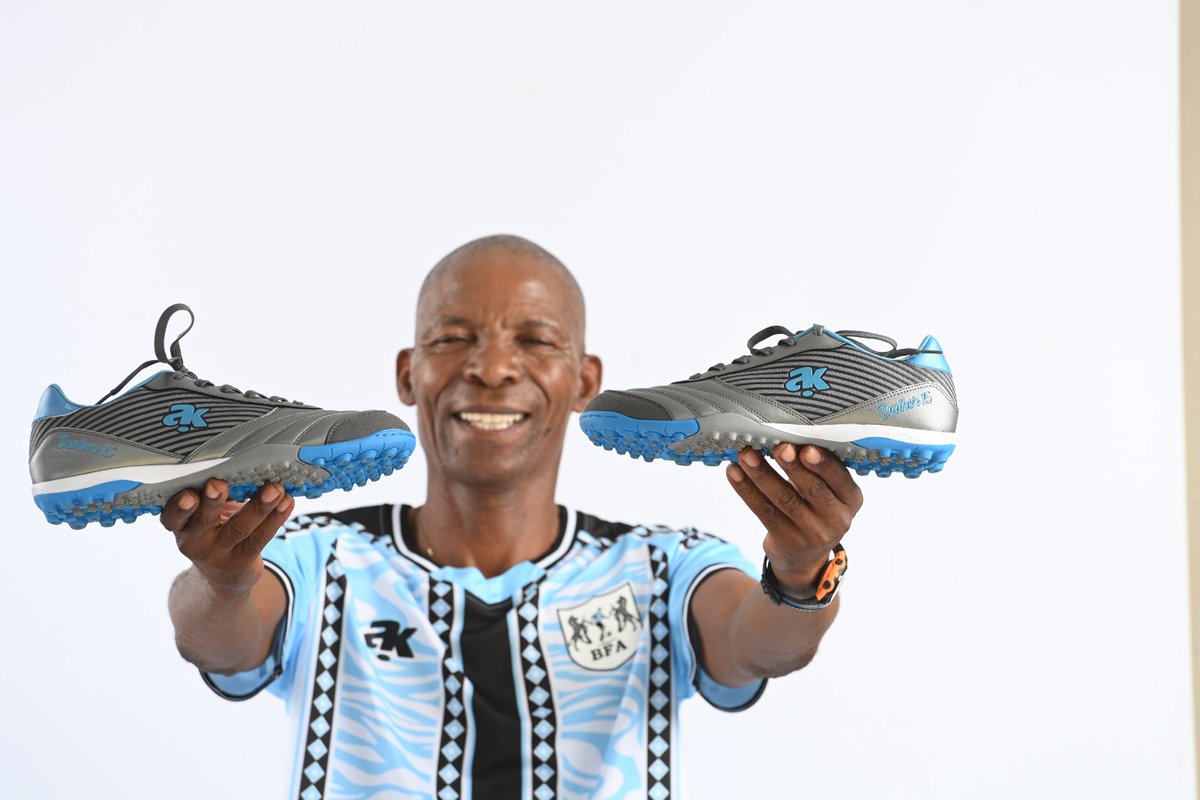
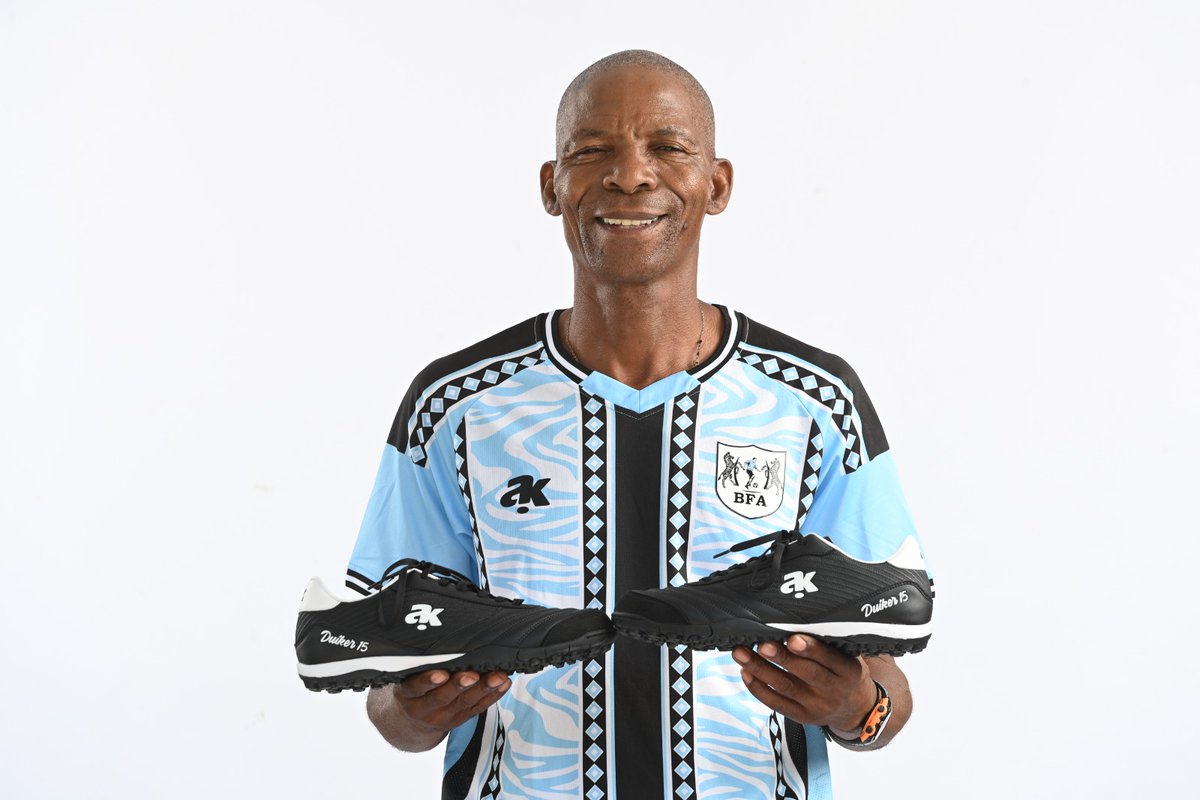
𝗧𝗛𝗘 𝗗𝗨𝗜𝗞𝗘𝗥 𝟭𝟱, 𝗔𝗟𝗟-𝗞𝗔𝗦𝗜 𝗕𝗢𝗢𝗧 𝗛𝗔𝗦 𝗢𝗙𝗙𝗜𝗖𝗜𝗔𝗟𝗟𝗬 𝗔𝗥𝗥𝗜𝗩𝗘𝗗
A bold new chapter in local football culture has begun with the official launch of the Duiker 15 All-Kasi Boot — now available for purchase.
Read More: https://t.co/YMAtDXpL2Z