Assuming this fruitless debate has finally run its course, I’ll weigh in: until the end of the 20th century, the practice of "analyzing musical compositions" via "music theory" was reserved almost exclusively for classical music or jazz. As for popular music, it was dismissed—deemed "not worth the effort" or simply something "you understand just by listening."
While I’m tempted to call this what it truly is—prejudice—it’s perhaps better understood as a manifestation of the inherent, if unfortunate, foolishness of humanity throughout history.
From the end of the 20th century, the idea began to emerge that "popular music is also worthy of analysis." In Japan, my own work has played a small part in this shift.
The question—"Shouldn't a critic be required to have a theoretical grasp of the structure of music—a dynamic, living thing—before they can speak about it?"—is both correct and incorrect; ultimately, it’s beside the point. The premise itself is flawed, though I certainly understand the sentiment behind it.
In the West, there are countless skilled analysts—one for every music school, it seems—who conduct rigorous, ambitious analyses of popular music. Yet, these individuals do not engage in "criticism" or "commentary."
They clearly view criticism and commentary as something distinct from structural analysis based on music theory—something poetic, literary, and perhaps even "anti-musician" in its stance. These analysts are too busy working alongside aspiring musicians—dissecting the specific songs or phrases right in front of them—to concern themselves with anything else.
As I see it, the most "post-tonal" elements within the structures of popular music are, on one hand, the concept of modes, and on the other, the lineage of "blue notes"—branching into the blues and, subsequently, rock 'n' roll.
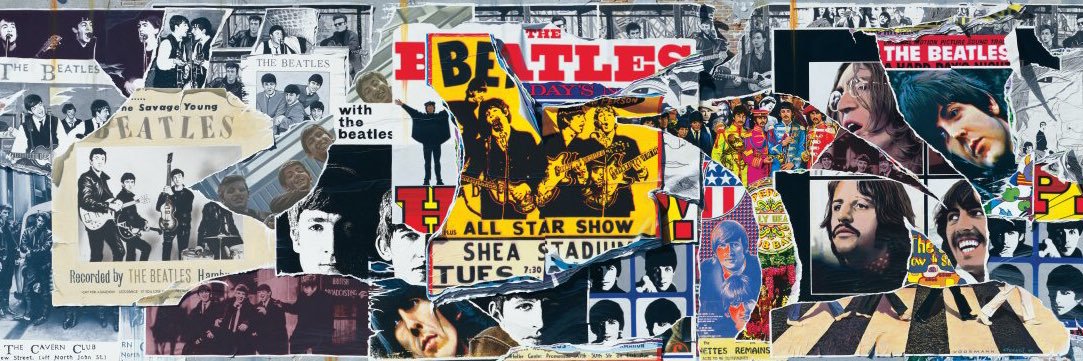
It’s not a bad idea to dive straight into works like those by Dumi & DJ Beck or the *Black Radio* project; their musical gestures are like rich, fertile veins of creative potential. However, many people fail to realize that there remains an untapped, vast—truly staggering—reserve of "rare earth" elements in the realm of "post-tonality" and "post-classical" music. That reserve is The Beatles.
The Beatles’ songs represent a fusion of rock ’n’ roll (blues)—which is inherently non-tonal—and classical music (one could explicitly point to Bach). In short, they are the ultimate chimera. Yet, to truly grasp their unique brand of polytonality—born from the interplay of contrapuntal techniques and the way "blue notes" parasitize traditional tonality—one must study the fundamentals thoroughly. I have yet to encounter a proper, rigorous analysis of The Beatles. (I’ve seen plenty of transcriptions, but those are merely raw materials.)
And yet, the brilliance of The Beatles exists quite independently of such technicalities. At the same time, it remains true that their body of work is the most thoroughly analyzed—and should serve as the cornerstone for our understanding of 21st-century music theory. Consider "I Am the Walrus," with its blues-rooted, formidable polytonality; or "Your Mother Should Know" and "Penny Lane," which are structurally flawless—reminiscent of excerpts from Bach’s *Inventions*. Then there is "Lucy in the Sky with Diamonds," built upon a compelling, nascent tonal framework—a "melodic major/minor" system. These songs are laid out like entries in a textbook. This approach was consistent from the very beginning, evident as early as "Love Me Do" and "Can’t Buy Me Love."
The idea that <the British fused rock ’n’ roll with classical music> might be dismissed with contempt—but it is, nonetheless, a fact. (Naruyoshi Kikuchi)
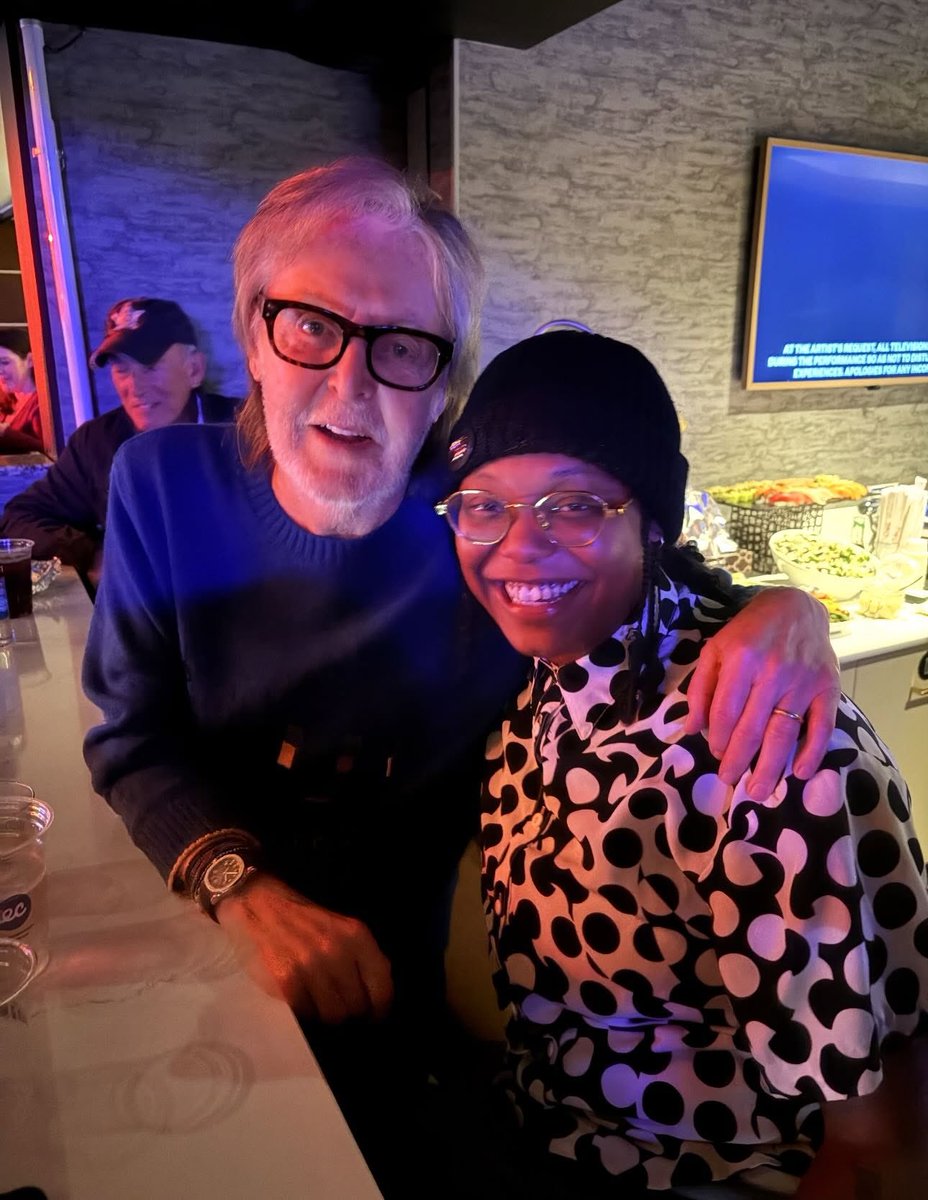
Paul McCartney last night at Stevie Wonder’s MSG show with Bruce Springsteen, Spike Lee, Anderson .Paak and Dave Chappelle (via lascribbler28 on Threads) ✨🧡
In My Life. The official music video, starring Owen Cooper. Out now
Filmed on location in Liverpool, follow the journey of a treasured instrument as it sparks a relationship, creates an enduring bond between mother and son, and inspires a love of music that passes through a family over the decades.
Directed by Jessica Swale and Irina Alexiu
Watch now on @YouTube: https://t.co/bYWypbVvEl
㊗️Paul McCartney㊗️
グラミー賞3部門ノミネート👏
✅Best Traditional Pop Vocal Album:The Boys Of Dungeon Lane
✅Best Audio Book, Narration, and Storytelling Recording:The Man On The Run
✅Best Music Film:Man On The Run
https://t.co/gpLZwqBDNI
M recuso a aceitar que ele morreu tão novo.. que tantas pessoas no público geral tem uma visão horrível quando ele, apesar dos erros, era extremamente gentil e tinha um coração enorme, tinha muito amor e sentia tudo de corpo e alma.. alguém que tinha tanto pra fazer nesse mundo