For about three thousand years, desire has been art's most constant subject, and civilization has spent most of that time finding respectable ways to name it. We are a working archive of that history, across every culture and century, one work and one story at a time.
Lovers
Schiele, Klimt, Courbet, Kirchner, de' Barbari, Böcklin, Nattier, Frith, Iványi-Grünwald, Muhammad Qasim, Kersting, Mir Kalan Khan, Boucher, Gulácsy, Ramberg, Rojka (1500 to the 1930s)
sixteen couples. the first two are both in the Belvedere in Vienna.
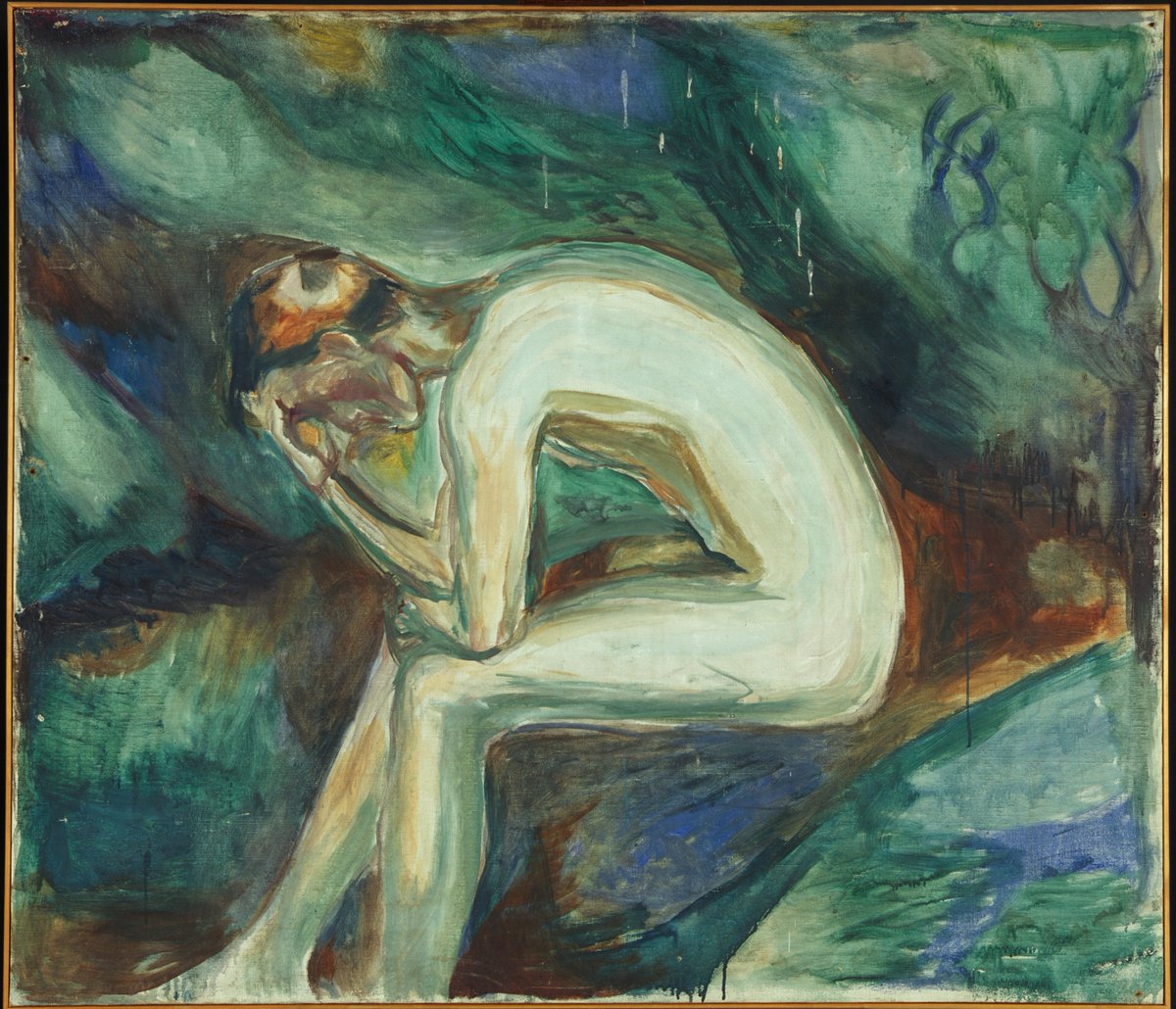
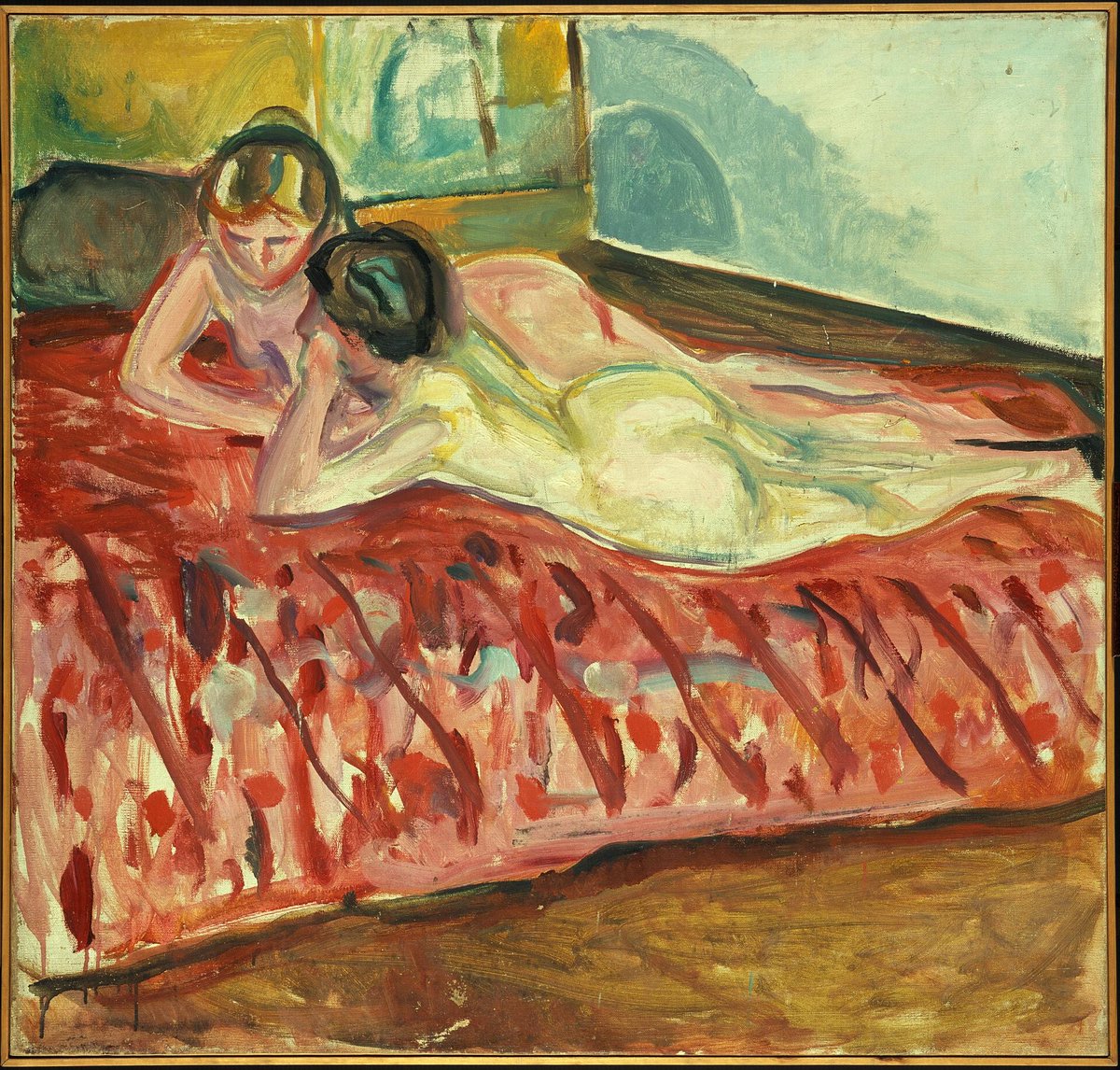
Edvard Munch, the painter of The Scream, on love and the body
nine paintings, 1895 to 1926
The Scream made his name. eight of these are in Oslo, one in Bergen.
Sam Houser is in good company. Botticelli put himself at the edge of his Adoration staring right at us, and Gozzoli wrote his own name on his cap.
Sandro Botticelli, Adoration of the Magi, c. 1475. Benozzo Gozzoli, Procession of the Magi, 1459-61.
Danaë
Titian (1560 to 1565), Gentileschi (around 1612)
Zeus comes to her as a shower of gold. Titian's maid holds out her apron, and Artemisia painted hers on a sheet of copper.
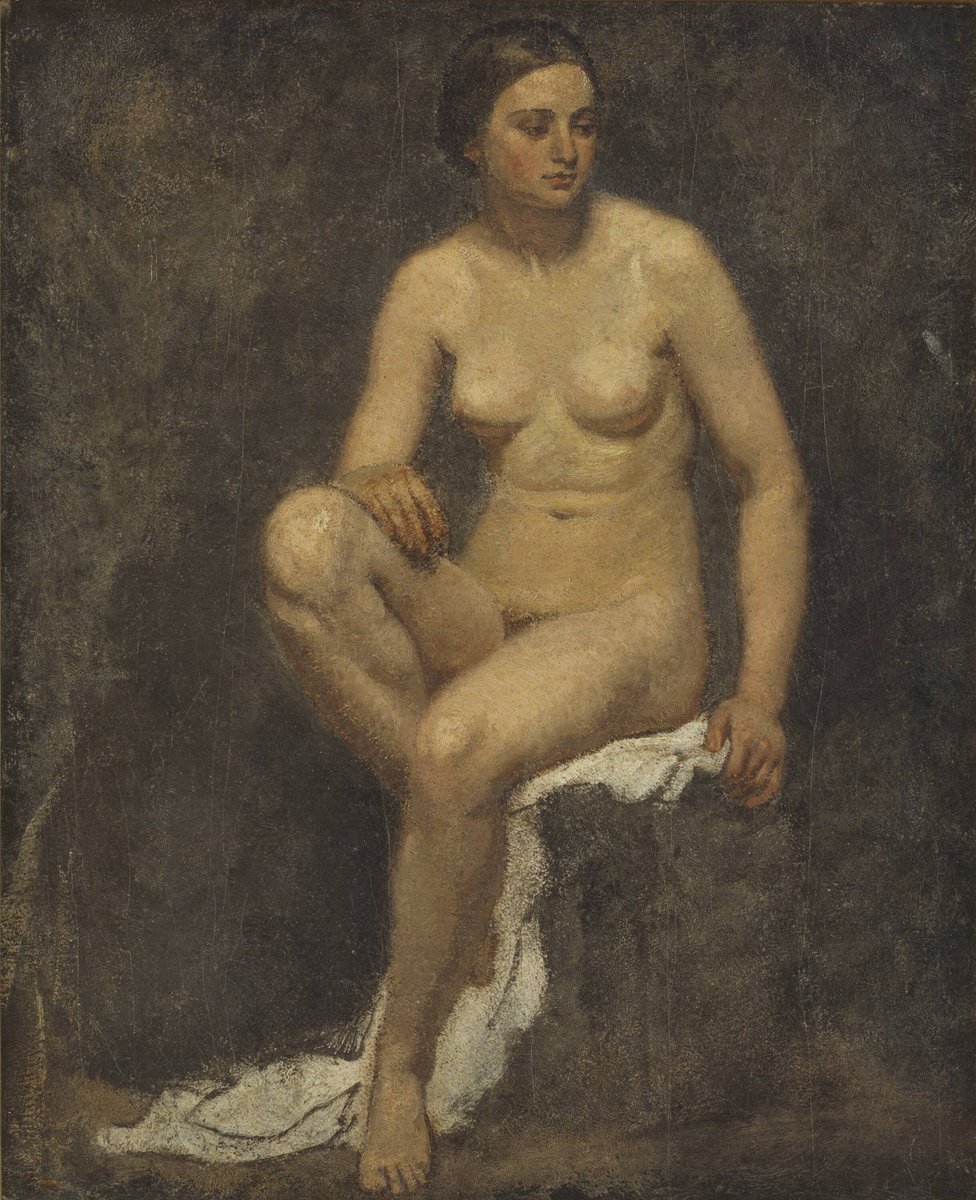
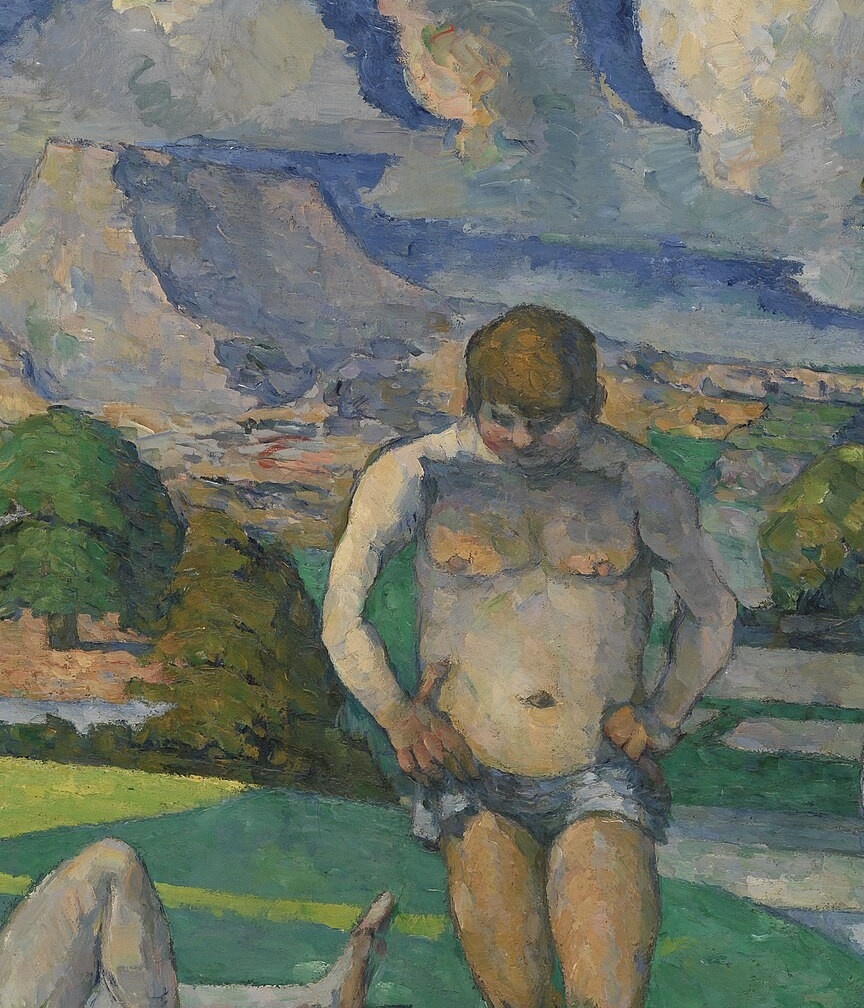
The painter and the model
Gérôme, Stevens, Baes, Chalfant, Frølich, Vallotton, Paulsen, Haudebourt-Lescot, Salokivi, Hammershøi, Krøyer, Maxence, Gallen-Kallela, Bilińska, Vois, Corinth (1660s to 1913)
the model holds still and the painter cannot.
@zarandillo legend says Simonetta Vespucci was Botticelli's Venus. the Pitti has this profile long called La Bella Simonetta, hair tucked under a white cap
@judeisjude the Atonement green has an older rival. Monet painted Camille Doncieux life size in emerald striped silk for the 1866 Salon.
Camille (The Woman in the Green Dress), Claude Monet, 1866, Kunsthalle Bremen.
@whistlingpetals second one is Elisabeth Lederer. her mom Serena sat for Klimt in 1899 in the same kind of white gown, and that one hangs at the Met now
In Tudor England that white winter coat was a royal fur, so Elizabeth I posed with a crowned ermine on her sleeve. The Ermine Portrait, attributed to William Segar, about 1585.