Lebanese President Joseph Aoun called for US and international intervention after Israeli strikes in Nabatieh killed at least seven people and wounded 20. Israel said the attacks answered a Hezbollah drone strike and alleged that a command center was hidden inside the out-of-service Ghandour Hospital.
The June framework conditions Israeli withdrawals on Beirut disarming Hezbollah—a step the Lebanese state lacks the capacity and political consensus to enforce.
Documents, videos and voice messages cited by The New York Times and The Washington Post allege that Sudan’s army developed chlorine bombs in 2024 and stockpiled nearly 300 munitions at Merowe airport. Sudan’s government denies the allegations.
US sanctions imposed in 2025 remain the only formal international consequence. The OPCW and UN Security Council have not announced an inspection, fact-finding mission or dedicated session.
Read the full analysis on The Levantine — link in the first comment.
US Energy Secretary Chris Wright traveled to Caracas as Chevron committed more than $7 billion over five years to double its Venezuelan output. A separate US-backed venture secured access to fields with an estimated 65 billion barrels of proven reserves; Washington is taking a 35% stake.
The package offers a long-term hedge against Gulf supply risks, but degraded infrastructure and the cost of processing Venezuela’s extra-heavy crude mean new output will take years.
Read the full analysis on The Levantine — link in the first comment.
Germany’s navy has successfully tested Israel’s LORA missile system as Berlin seeks long-range precision-strike capabilities amid the European security shift caused by the war in Ukraine.
The test follows Germany’s multibillion-dollar purchase of the Arrow 3 air-defense system. Despite German criticism of Israel’s conduct in Gaza, operational requirements and gaps in Europe’s defense industry continue to deepen bilateral military ties.
Read the full analysis on The Levantine — link in the first comment.
Iranian Parliament Speaker Mohammad Bagher Ghalibaf warned that further US strikes would draw a faster and more intense response. His statement followed unsuccessful Iranian fire on two US warships, a US strike that destroyed or disabled three Iranian tankers, and Iranian attacks on American-linked shipping and a naval drone.
Both sides are increasingly targeting economic infrastructure, while control of passage through Hormuz remains the unresolved core of the conflict.
Read the full analysis on The Levantine — link in the first comment.
The OPCW has verified the irreversible destruction of 42 aerial bombs declared by Syria—the first confirmed destruction of Syrian chemical munitions since 2014. Damascus has also transferred thousands of Assad-era documents and granted inspectors access to sites in Al Qutayfah and Homs.
Nineteen issues tied to Syria’s original declaration remain unresolved, including potentially significant quantities of undeclared agents and munitions.
Read the full analysis on The Levantine — link in the first comment.
Messages obtained by The Washington Post describe a Sudanese stockpile of up to 290 chlorine munitions. Sudan’s military denies the allegations; independent investigators lack site access.
Read the full analysis on The Levantine — link in the first comment.
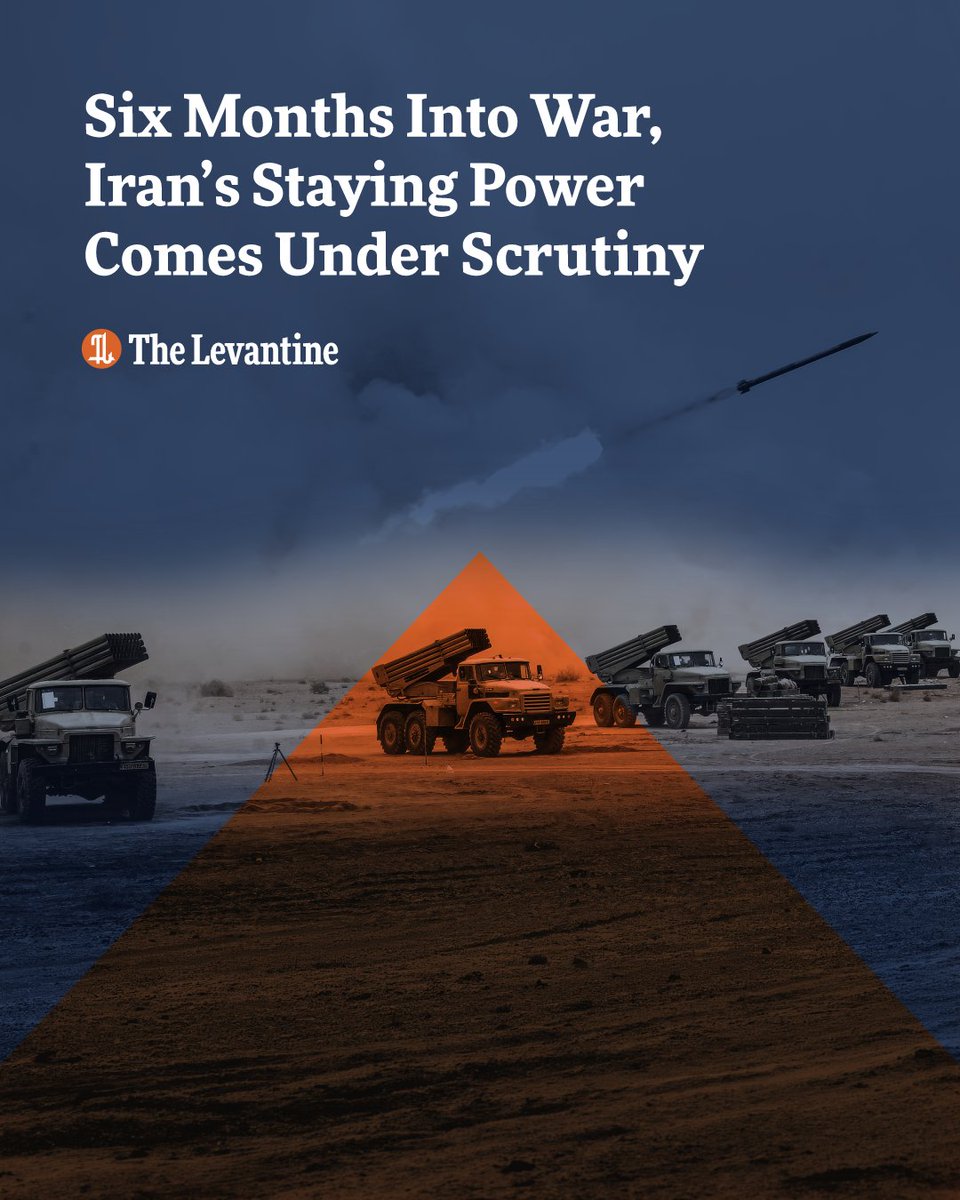
Six months into the war, Iran can still mount large missile and drone attacks despite a sharply reduced firing tempo. CENTCOM called the September 1–2 barrage the largest since April; Washington says its response destroyed rebuilt Iranian equipment near Hormuz.
Iran retains substantial underground infrastructure and uses the Strait as leverage, but its economy is absorbing severe damage. Iranian officials put losses near $270 billion, while the rial has weakened and food prices have surged. The contest is now endurance against attrition.
Read the full analysis on The Levantine.
Documented and alleged support networks connect at least 17 countries to Sudan’s warring camps. The SAF draws on partners including Egypt, Turkey, Russia and Iran; the RSF is linked to channels through the UAE and several neighboring states. Disputed Kenyan ammunition markings show how responsibility can be blurred through transit routes.
Weapons are only part of the system. Gold smuggling, arms contracts and access to ports or resources give outside actors reasons to preserve influence even when they publicly support peace.
Read the full analysis on The Levantine.
Sudan’s civil war may be creating the conditions for the country’s next conflict, as rival armed factions, Islamist brigades and foreign-backed forces prepare for a post-war struggle over power and control.
A US-brokered Israel-Lebanon framework pairs progressive Israeli redeployment with verified disarmament of non-state armed groups. At Ali al-Taher Ridge, that sequence has stalled: Israel cites an alleged Hezbollah command complex, while Lebanon says the site does not fit the pilot-withdrawal model.
The ridge offers surveillance and strike access across southern Lebanon. With Israel, Beirut and Hezbollah divided over who must move first, one contested position is becoming a test of whether the wider agreement can survive.
Read the full analysis on The Levantine.
Israeli special forces captured Moen al-Arabid, described as Hamas’s internal security chief, in a daytime Gaza City raid. The unit reportedly used civilian clothing and vehicles; his wife was killed, his son was injured, and Palestinian health officials said bystanders were among the casualties.
Israel says capturing him alive could yield intelligence on Hamas’s leadership and Israeli captives. Hamas calls the operation a ceasefire violation, raising the risk that a tactical intelligence gain could trigger wider retaliation.
Read the full analysis on The Levantine.
Yemen’s 2022 truce froze the war without resolving it. Renewed mobilization, a reported Tehran-Sanaa flight carrying IRGC personnel and equipment, Saudi strikes on airport runways, a Houthi attack on Abha airport and new fighting near Taiz and Mocha now point to open conflict returning.
For Iran, the Houthis offer leverage at Bab al-Mandeb while Tehran pressures Hormuz. But the movement’s independent calculations mean even a future US-Iran deal may not be enough to stop escalation in Yemen.
Read the full analysis on The Levantine.