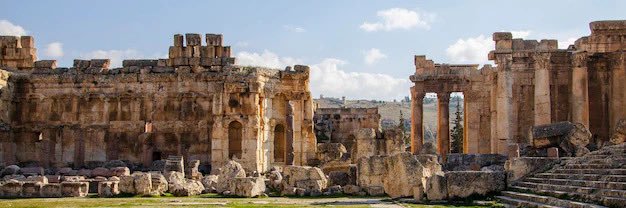
Many of you have heard about Lebanon’s golden era of the 1950s and 1960s, before the country descended into civil war.
You have also probably heard critiques of that period, namely that it was mostly a mirage in which a narrow clique of mostly Christian urban elites prospered while the rest of the country wallowed in poverty.
But what if that was not entirely true? What if this Lebanese prosperity was more widely shared than often assumed, and was, in fact, not solely a Christian story?
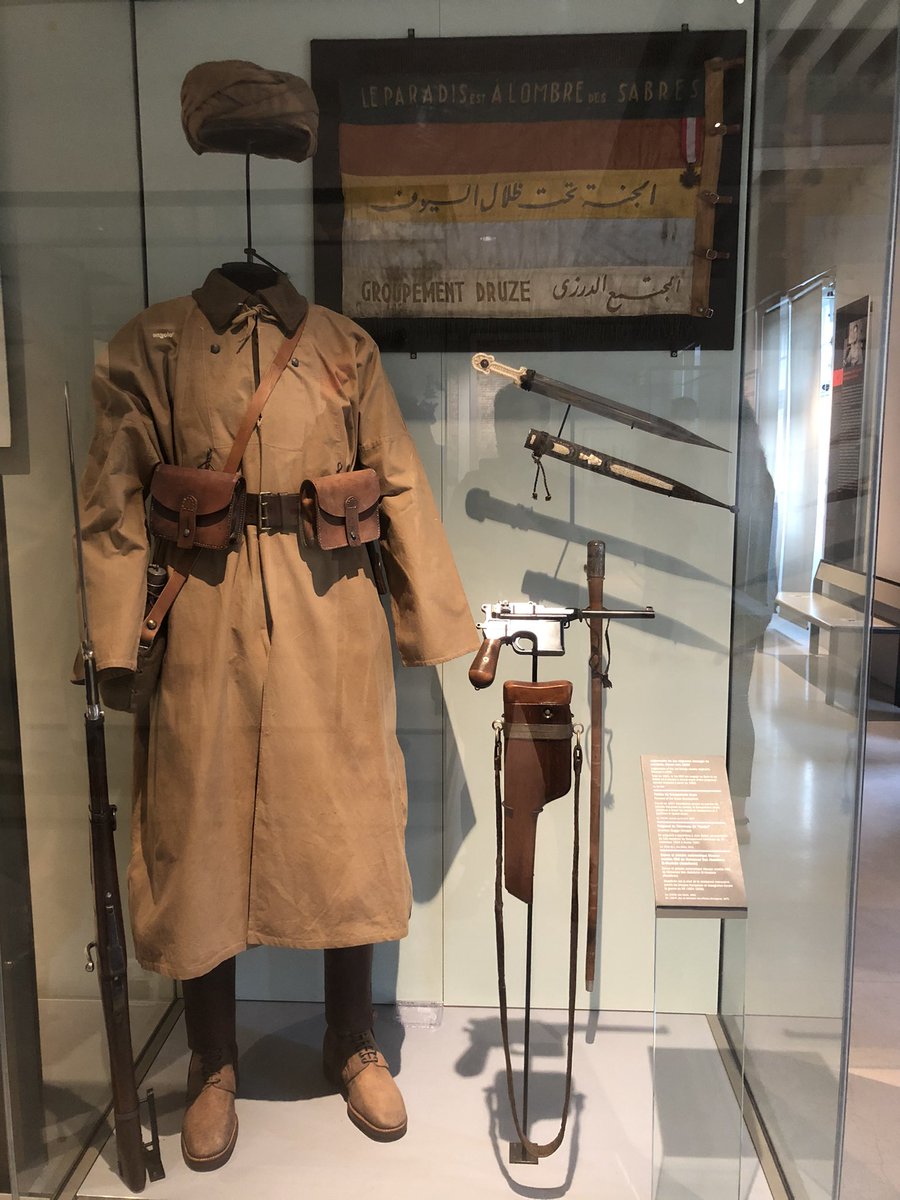
Here is a Druze perspective on pre-war Lebanon and a commemoration of some of the great - and, like much about pre-war Lebanon, often forgotten - Lebanese Druze individuals who made outsized contributions to Lebanon’s Belle Époque. (🧵)
Jordanians are slowly getting blackpilled on the new Syria, lol.
Welcome to the club! 👋
(Tbh, if Arab media hadn’t worked so hard to scrub the footage that emerged from the Suwayda and coastal massacres, every person of conscience would feel deeply uneasy about Syria.)
بعد الي شفته من اعلاميين سوريا بدأت اقتنع اكثر فاكثر ان الثورة السورية وكل ما شاهدناهُ من قبل كانت عبارة عن اكوذبة مثلما يفعلون اليوم مع الأردن
طلعت ثـ.ورة د11ـة
#سوريا_الأردن
1. You literally said “freed all the slaves” lol, not freeing a set number in one instance.
2. We don’t have to go to sources from his enemies (Byzantines and Sunnis). We even have sources from his subjects, like the Copts, who wrote their own history, happened to praise the earlier Fatimid caliphs that ruled over them (al-Muizz and al-Aziz), while viewing al-Hakim negatively because of said persecutions.
What incentive did they have to make it up, when they looked positively at the dynasty overall?
3. You can be part of a culture without embracing the religion or certain figures within it as moral exemplars. It really depends on the culture in question.
It’s very common and normal among Jews (secular, see the Torah as mythology, don’t like the morals of Joshua ben Noun, etc.), but it would be a bit odd to not view Mohammed positively as a Muslim (he is just too central as a figure), while others like Abu Bakr are clearly open to critique (welcome to Shi’ism 😅).
Al Hakim and the Fatimids are so minor in lived Druze culture, that it’s very easy to have a skeptical view and still be very much Druze. (There is no Hadith or Sira of al-Hakim on which we base our everyday lives.)
In fact, al-Hakim’s status as the “Maqam of al-Soura al-Nasoutiyah” is actually the single biggest stumbling block I’ve heard from Druze about the faith (for the ones that even know about it), while interestingly, reincarnation is the belief that is often the easiest to accept and strongest they hold onto (+ known/understood by all).
So… Rejecting someone like Sheikh Abu Hassan Aref or a belief like reincarnation would be a much more serious affront in practice. (I think my reincarnation agnosticism is much harder to reconcile, for one, tbh, and has gotten more pushback than my Al-Hakim opinions.)
This is a window into one of the most beautiful qualities in Druze culture: an almost innate, self-emptying generosity of spirit, most evident in how we receive guests and welcome them into our homes.
I grew up watching my mother, aunts, and grandmothers unfailingly, and without complaint, stay up all night preparing enough food to feed five times the number of guests expected the next day, only to then distribute the leftovers to neighbors in the building or along the street.
My grandmother’s words, which she repeated whenever I stepped out of line or misbehaved, still echo in my ears: “The traits of a Muwahhid (Druze) are three: chivalry, honor, and generosity.” (صفات الموحّد ثلاثة: الشهامة، المروءة، الكرم)
I also fondly remember the pride I felt when I once attended a lecture by a prominent American historian of modern Syria who, upon learning that I was Druze, told me that he had “learned the meaning of true generosity” when he spent time in Suwayda on a research trip for one of his books.
The subtext was not “who reached the greatest heights in terms of imperial grandeur,” which would surely have to include the Abbasids, but who was more tolerant (and to religious minorities specifically).
That’s why I highlighted the Umayyads, Ottomans at their peak, and Fatimids (excluding Al Hakim).
Some of this is true, some of it is Druze hagiography with limited to no evidence (like freeing the slaves), but either way, I don’t want to reopen a conversation about Al Hakim.
The point here simply is that, from the POV of religious minorities, his reign saw notorious persecutions, based on evidence from different sources (Muslim and Christian alike). He stood out among the Fatimids, who were otherwise tolerant, for that and is remembered rather negatively as a result.
I don’t feel the need to pick sides when it comes to the past. I try to understand and explain it the best as I can and as objectively as I can, based on the facts of the matter.
I care more about the quest for truth than narrative, myth-making, and grand ideological battles. (It’s also why I dislike the “we spoke and should revive Syriac” crowd, because it’s blatantly ahistorical).
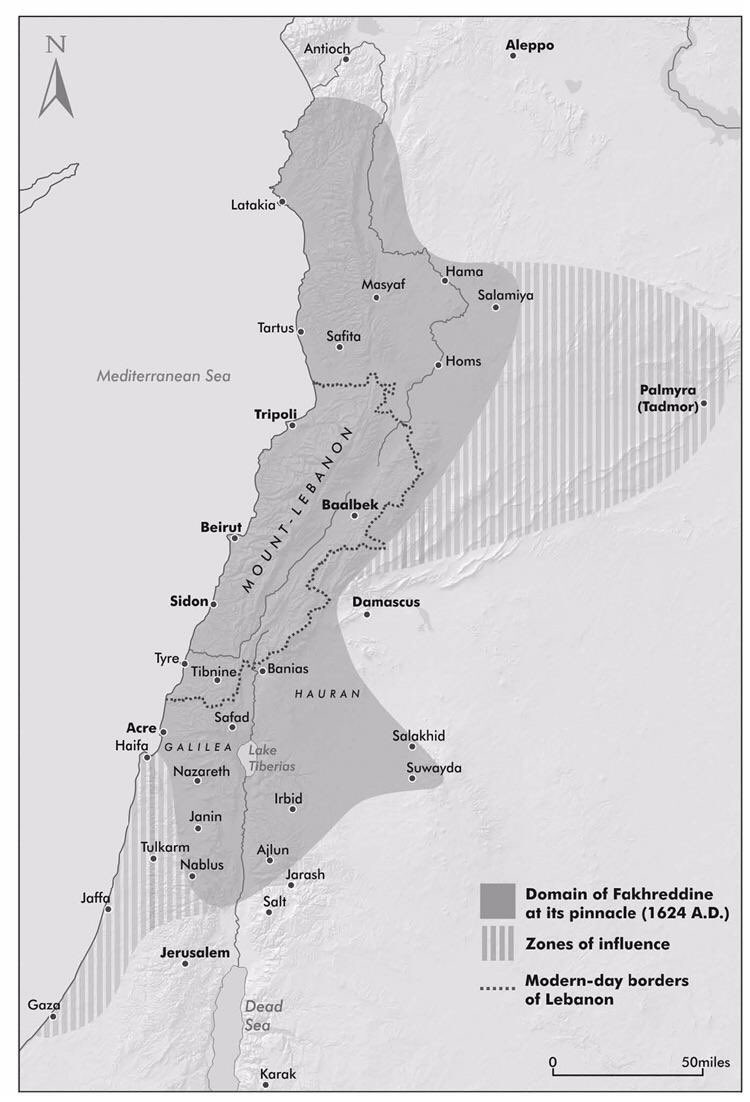
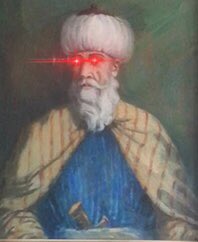
As for any Druze-related elements I put up, like the Fakhreddine pic, it’s very simple: I was born Druze and am proud of my culture and history. I gladly would put a Fakhreddine or, say, a Sultan Pasha pic accordingly. And this is obvious, since I posted many posts over the years celebrating Druze culture, heritage, and notable figures (like in my pinned thread).
Ottomans, at the peak of their rule, were some of the best imperial rulers we had in the entire Islamic era, save for perhaps the Umayyads and Fatimids (minus Al-Hakim 😅).
Provided stability, engaged in limited religiously motivated persecution for multiple centuries (after their rule was consolidated), and even oversaw the end of the rapid decline of minority populations, which began after the Crusades. In some cases, the decline even reversed. Christians only became a majority again in what is now Lebanon, for one, in the Ottoman era, having declined to a minority multiple centuries prior.
Of course, we have to discount the last few decades during the empire’s contraction and eventual collapse, often under the influence of various new proto-Islamist (Abdul Hamid) and nationalist (Young Turks) ideologies, which were objectively abhorrent for minorities. As well as the initial period when they were cementing their rule and in a fierce rivalry with the Safavids (lots of persecution of Shias and similar heterodox groups).
These talking points are not “against” him, certainly not from a Druze point of view, and not from Salibi alone.
Yes, they deem his historical role as much more muted than is often claimed in Lebanese national mythology, and center him primarily as a Druze chieftain with a large iqta’ (and indeed the greatest / most successful of all Druze chieftains), rather than a pan-Lebanese proto-nationalist state builder. (This is based mainly on the Ottoman archives and aligns with the traditional Druze view of Fakhreddine.)
Carol Hakim, in her book on Lebanese national identity, also traces the emergence of that national identity to much later, to around the 19th century and as a primarily Maronite phenomenon.
10 years ago, @FlavioBolsonaro ran for mayor of Rio de Janeiro. In the debate, he passed out & shit his pants (yes, really). One of the candidates was a doctor & tried to help. His dad, Jair, yelled "communist, get your hands off my son!" & "01, did you turn yellow? Do pushups!"
Respecting both Fakhreddine and Ataturk has long been one of my constants on here.
The only thing close to a real 180 I ever did on here was some ideological re-evaluations post-Suwayda, as many Druze did. And even then, I think I have moved far less than most on here lol.
(I don’t dislike Jumblatt nearly as much as most on here seem to do, for one, and I respect the wisdom of his unpopular stance, which bears resemblance to the unpopular stance of his grandparents.)
@Narreddine I’ve always been pro-Faccardino, lol. 😂
I’m actually a devoted servant of all the great Druze emirs. You’re the one rebelling against their heir. 👀
Yes. That was their long-standing concern. But this new blackpill has to do with the Jordanian Air Force striking multiple targets across the Daraa region, where they claim ISIS was establishing a presence, following the Karak church attack.
The strikes produced a very hostile anti-Jordan campaign on social media, led by well-known pro-Sharaa influencers, practically from the moment it became clear they struck sites in Daraa (rather than Suwayda, which was struck before and met with celebration, especially from these influencers). I guess it was seen as a kind of humiliation, since there was no apparent coordination with Damascus.
The campaign naturally intensified a lot after reports of several civilians being killed/wounded emerged, but it began even earlier. And, needless to say, these same influencers are not motivated by humanitarian concerns, since they were actively downplaying and misrepresenting the far more brutal and large-scale Druze and Alawite massacres, even to the point of sharing photos of massacred Druze civilians and claiming they were Bedouins.
All that said, respect to the Egyptians for having a strong BS meter and being skeptical from day one.
They’ve been lukewarm toward Sharaa from the outset, and I’ve noticed many Egyptian analysts (presumably state-affiliated/approved) adopting fairly hostile rhetoric toward Damascus.
I also recall reports from a few months ago about Egypt rejecting Syria’s proposed ambassador to Cairo and withholding visas for other Syrian diplomats, allegedly over their spicy past affiliations. (You can read between the lines.)
Notice how yellow the city extends inland through lines of light: These are cities that follow the roads/railroads reaching inland
And this tells you the key underrated reason why Brazil is poor:
1. It's close to the equator, so very warm, which makes it hard to inhabit
2. Southern mountains are cooler, so more livable, but also transportation is hard & expensive, making trade & wealth creation difficult
There are other reasons Brazil is not a superpower yet, linked to its geography:
https://t.co/wDzOw9gxVx
This is eye-opening. Europe’s share of global tech R&D has collapsed from 23% in 2005 to just 8% today, while the US has climbed to 62% and China has risen from near zero to 15%. South Korea now outspends Germany, France, the UK, and Italy combined in tech R&D. Yep, you read that right.
This is the predictable result of policy choices that systematically favor control and redistribution over growth. Layered regulation, data rules, AI restrictions, labor rigidities, and precautionary frameworks, raises the cost and slows the pace of turning ideas into products, forcing companies to spend scarce resources on compliance rather than experimentation. High taxation and expansive redistributive systems extract capital that would otherwise fund private R&D and risk-taking, while shrinking the after-tax reward for building something new and scaling it. The broader left-leaning mindset that prioritizes equality of outcome over dynamism treats entrepreneurial success as something to be managed, taxed, or shared rather than unleashed and rewarded.
Places that protect the returns to innovation and keep barriers low continue to pull ahead, attracting talent and capital that Europe increasingly loses. Europe’s relative decline is the cumulative outcome of treating dynamism as a problem to be regulated rather than the engine of prosperity. Without a shift toward lighter rules, lower burdens on enterprise, and greater tolerance for unequal outcomes from unequal effort, the gap will keep widening, and Europe will become an open-air museum for wealthy Americans and Asians.