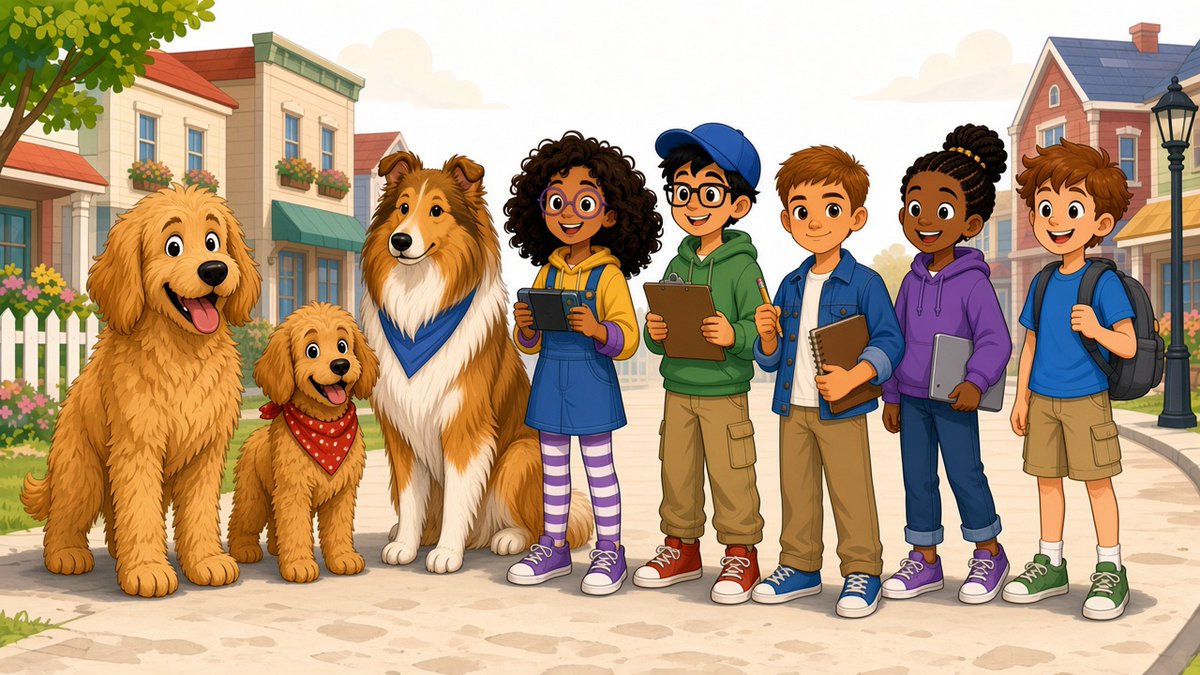
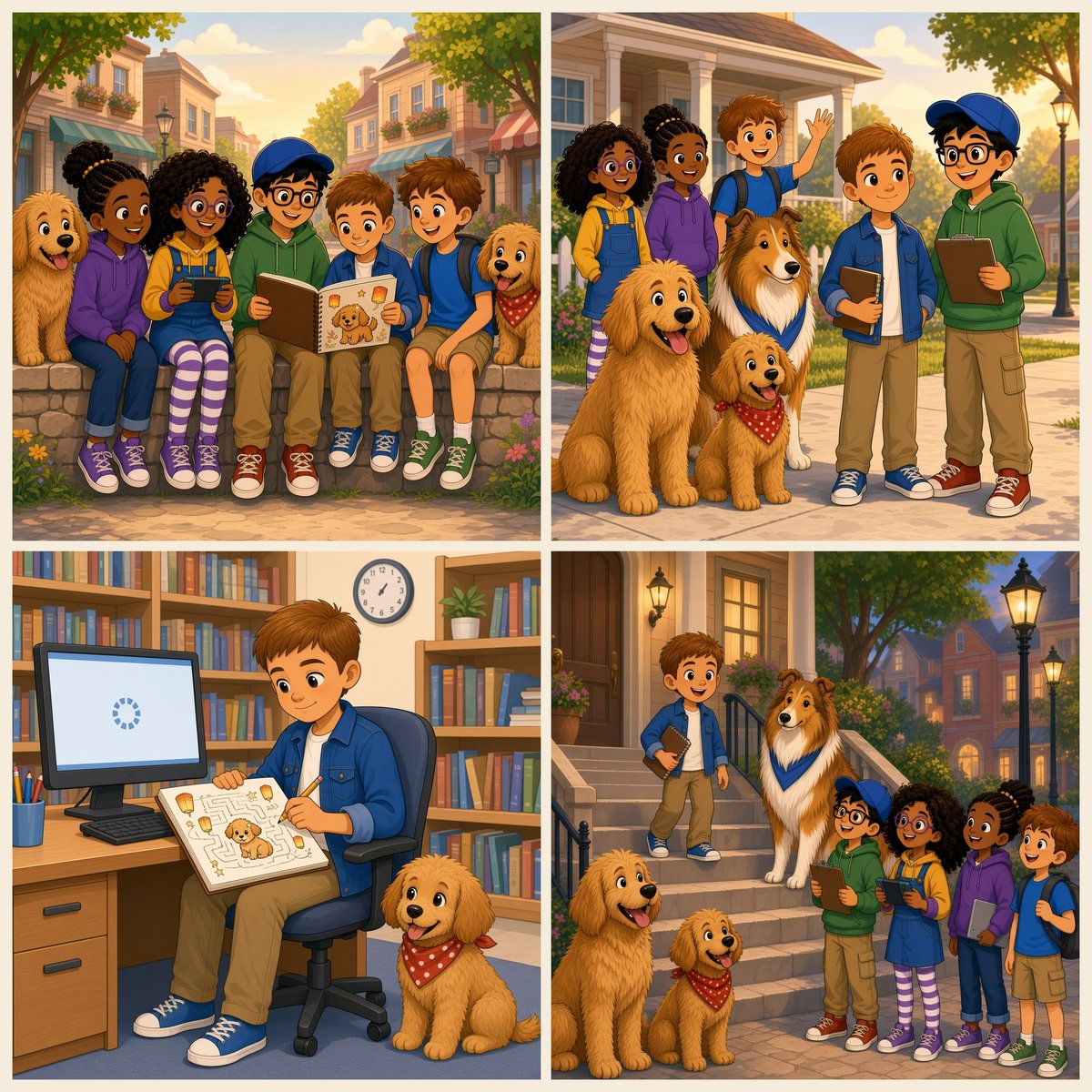
The Cedar Brook Game Club is a serial from @levelupmakers. Kids, two golden doodles, and a wise rough collie throw a game contest — and make sure every friend can join in.
The book: https://t.co/GmqxUSr1Gz
New episodes Tue and Thu mornings.
#CedarBrookGameClub#MakeCodeArcade
Homeschool mom Phylicia Masonheimer on fitting learning to each child: her mom saw she loved writing and built on it. (Clip at 2:56) If your child keeps asking to make games, that's a strength worth building on, too.
https://t.co/HYfUAOfl07 https://t.co/dBZevsAJLk
Phylicia Masonheimer was homeschooled from first grade through graduation, the oldest of six homeschooled siblings, and now homeschools her own four children with her husband—who was homeschooled as well—making her a second-generation homeschool mom.
In this interview, Masonheimer explains what drew early homeschool pioneers to step out on their own, and how the freedom to homeschool has shaped her own family, her writing, and her ministry.
She also discusses why the fight for homeschool freedom isn't over and what families can do to protect that freedom for the next generation.
Head here to see more interviews exploring the history of homeschooling in America: https://t.co/NfaewZARfE
Before opening MakeCode Arcade, have your child sketch the first level on paper: where the hero starts, one obstacle, and the goal. Five minutes with a pencil saves a lot of wandering on screen and gives them a plan to point to when they get stuck
All five Coronado Unified (CA) elementary and middle school FIRST LEGO League teams qualified for regionals after designing, building and coding robots for the BIOGLOW challenge. High school robotics students coached them. What a way to pass it on.
https://t.co/r7I1233t4z
A nice surprise in MakeCode Arcade: the blocks your child snaps together can also be viewed as JavaScript or Python. Start with blocks and a hero they drew themselves. When they get curious, one switch shows the text code behind their own game.
https://t.co/Ado3ZyeUoo
Episode 1 of The Cedar Brook Game Club.
Jordan has the best game ideas on the block. He draws them in a sketchbook. Today the neighborhood dogs notice why he always finishes his maps at the library.
More from Cedar Brook next time.
#CedarBrookGameClub#KidsWhoCode
When your child gets stuck, have them ask the AI helper for a hint, not the fix. Try: "Don't write the code. Give me one hint about why my hero walks through walls." They still solve it themselves, and the win feels like theirs
At the Young Inventor Challenge in Chicago, fifth grader William Safianoff (CT) won Most Innovative for Butterfly Rush, a monarch game, and eighth grader Julia Black (MA) won for a bird call matching game for blind and sighted players. Congratulations!
https://t.co/N4pYIpFuWj
Our free Level 1 has a Game Idea Sheet with one line we love: "The player's main action (one word!)" Jump, collect, dodge, race. One verb keeps a first game small enough to finish. "A cat collects fish before time runs out" is a perfect start.
https://t.co/aZCRKW5GJ2
Before your child asks an AI helper for game ideas, agree on one rule together: no real names, school, town or photos in the chat. Describe the game, not themselves. "My hero is a turtle who skates across clouds" gives the AI everything it needs
Aspen Middle School's Programming Princesses won both the Champion's Award and the Robot Performance Award at a Boulder FIRST LEGO League qualifier. Next up: the Colorado state championship on Dec. 5. Congratulations, team!
https://t.co/9i2neMQ6VN
A first game can be one screen, one goal and one way to win or lose. Our new guide walks through five games a child ages 9–12 can finish in a sitting or two: collect the coins, dodge, a maze, a simple platformer and a pong-style rally.
https://t.co/7SMua2JEqM
Testing a MakeCode Arcade game with a timer? Have your child change the countdown to 5 seconds while they check what happens when time runs out. No more waiting through a full round for every test. Just set it back before sharing the game with friends
Fifth graders Evelyn Anaya, Kayla Nguyen and Jason Bernal of Fontana, CA built a robot that teaches the constitutional amendments by scanning cards, with screen and audio so blind and Deaf users can learn too. Next: the World Robot Olympiad, Dec. 8–10.
https://t.co/GjMJshsHE6
A fun step in our free Level 1 lesson: the Hero Card. Your child draws an original hero, then gives it one special power and one funny weakness. Afraid of butterflies? Sneezes glitter? A weakness gives the game something to play with.
https://t.co/aZCRKW5GJ2
Scratch or MakeCode Arcade for a first game? Both are free, block-based tools. Ask what your child wants to make first. A story or animation fits Scratch. A jump-and-collect game comes easier in MakeCode, where gravity and walls are already blocks.
https://t.co/LGgf9rJLSC
Homeschooled student Muhammad Azki Arshaka Rifai won the grades 3–4 national title at Indonesia's CT CodeBattle 2026 coding contest (480 students). The top three in his division all scored 31 points. He finished in 29:52; the next fastest took 53:10.
https://t.co/Dq4X0ptLZ6
It's fine to end a coding session in the middle of an idea. Before your child closes MakeCode Arcade, have them write one sentence about what they'll try next. Next time, they read it and jump right in, instead of trying to remember where they left off
Ginny Yurich of 1000 Hours Outside on screens: give screen time a set place, like Saturday mornings, instead of a constant no. Same for coding: plan one weekend game session with your child, then head outside. (Clip at 24:04)
https://t.co/LogJhrZylo https://t.co/J7H4eykJ2d
Did phones really break our kids? Why do kids need 1,000 hours outside a year? And why are bad weather and a little discomfort good for them?
Ginny Yurich, founder of @1000HoursOutsid and author of Until the Streetlights Come On, says kids' mental health started declining in the 1960s, long before the iPhone. She talks about all of it on Two Percent.
00:00 Cold open
00:47 Where 1,000 hours comes from
05:32 Her first good day as a mom
09:25 Minutes outside, hours on screens
11:21 When both parents work
14:56 It works for adults too
17:48 Getting screen-loving kids outside
23:29 Screen time without saying no
25:56 Why play takes 45 minutes
27:52 Going outside in any weather
32:16 Waiting on phones and social media
33:54 Overscheduled, anxious kids
38:19 It started before the iPhone
41:28 Starting sports at 13
46:56 Letting kids take risks
49:43 Where to start
53:59 What 1,000 episodes taught her
56:53 Kids and AI
When AI suggests code for your child's game, don't stop at "it works." Have them change one number, say what they think will happen, then press play. That small guess turns borrowed code into code they understand, and it builds real confidence