[𝗔𝗡𝗡𝗢𝗨𝗡𝗖𝗘𝗠𝗘𝗡𝗧] 📢 Chemical Computing Group & @AmerChemSociety@ACSCOMP Division, congratulate the 𝗔𝗖𝗦 𝗦𝗽𝗿𝗶𝗻𝗴 2025 𝗖𝗖𝗚 𝗘𝘅𝗰𝗲𝗹𝗹𝗲𝗻𝗰𝗲 𝗔𝘄𝗮𝗿𝗱𝘀 𝘄𝗶𝗻𝗻𝗲𝗿𝘀! More info @ the ACS COMP Division Awards webpage https://t.co/ofpiKZnZ4M #CompChem#CADD
#retweet Join our group Fall 2025! Projects: method development for drug design, ML, and MD simulations. Candidates with a strong coding background (specially in C++) are ideal! Apply through: https://t.co/gJCX8bEgZK
Deadlines:
Preferred: December 1st
Final: December 15
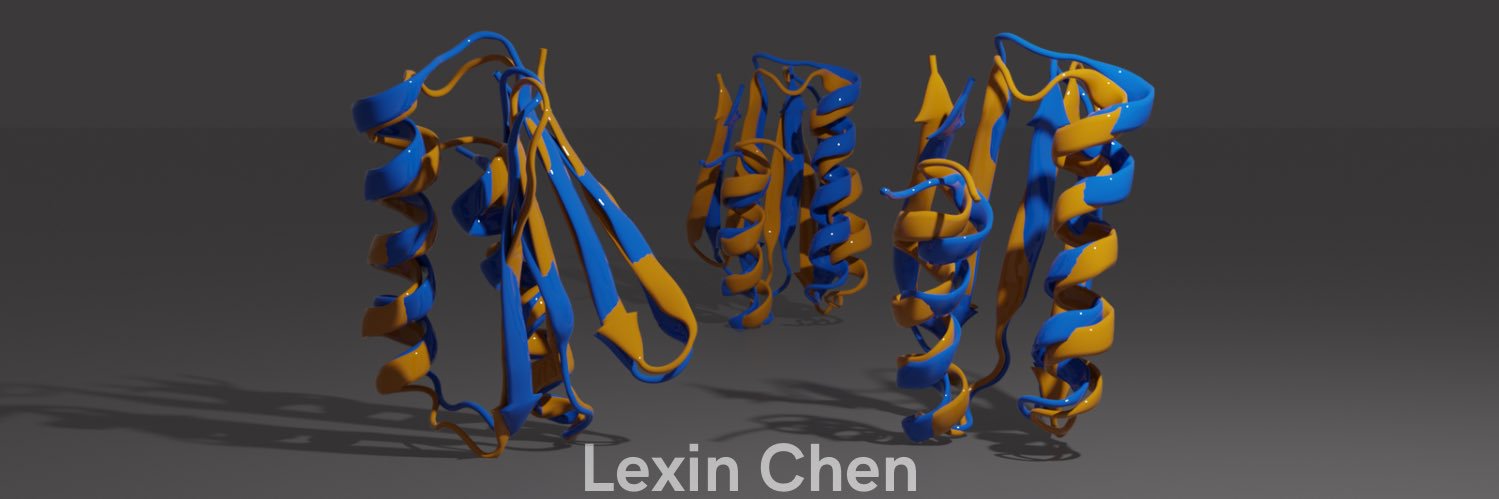
For anyone interested in protein folding & AlphaFold, checkout this Colab notebook accompanying our recent work on asking if AF can predict protein folding process 🤔. Use it to guide experiments, show students the beauty, limitations of AF and enjoy! https://t.co/7rlKbMhj4D
@Thiago_80@LatinXChem@GroupQuintana @UFChemistry But with our n-ary similarity, one does not need to do pairwise similarity but can find the similarity of the set in o(n) linear scaling. This speed up can lead to finding the mediod, (most representative object of a set) in o(n) scaling, unprecedented speed up!
@Thiago_80@LatinXChem@GroupQuintana @UFChemistry Hi @Thiago_80 The problem with tradition approaches is that to study N objects, one needs to compute the similarity between every possible pair of objects in the set, which demands O(N^2) computational effort.
@GustavMondragon@LatinXChem@GroupQuintana @UFChemistry SHINE can help identify the most important conformations in those binding pockets, including the different binding modes of the monomers. The number of atoms is not an issue, with our n-ary similarity indices, the size of the systems is not a problem.
@GustavMondragon@LatinXChem@GroupQuintana @UFChemistry Hi @GustavMondragon of course!! Definitely an active area we are working on to increase the applicability to protein with many chains, membrane protein, protein-ligand, allosteric protein, and more!
@CisnerosRes @LatinXChem@GroupQuintana @UFChemistry Hi @CisnerosRes thanks for your question. Yes, we do have default parameters for each algorithm. For the parameter that requires user intuition, we also have a pipeline to screen for the most optimal number of clusters for your system!
@StevenLopez_neu @LatinXChem@GroupQuintana @UFChemistry SHINE helps find unique paths in PESs so far, we've applied it to study conformational transitions and protein folding pathways. We have also applied SHINE to dissect exit mechanisms of ligands from different binding pockets.
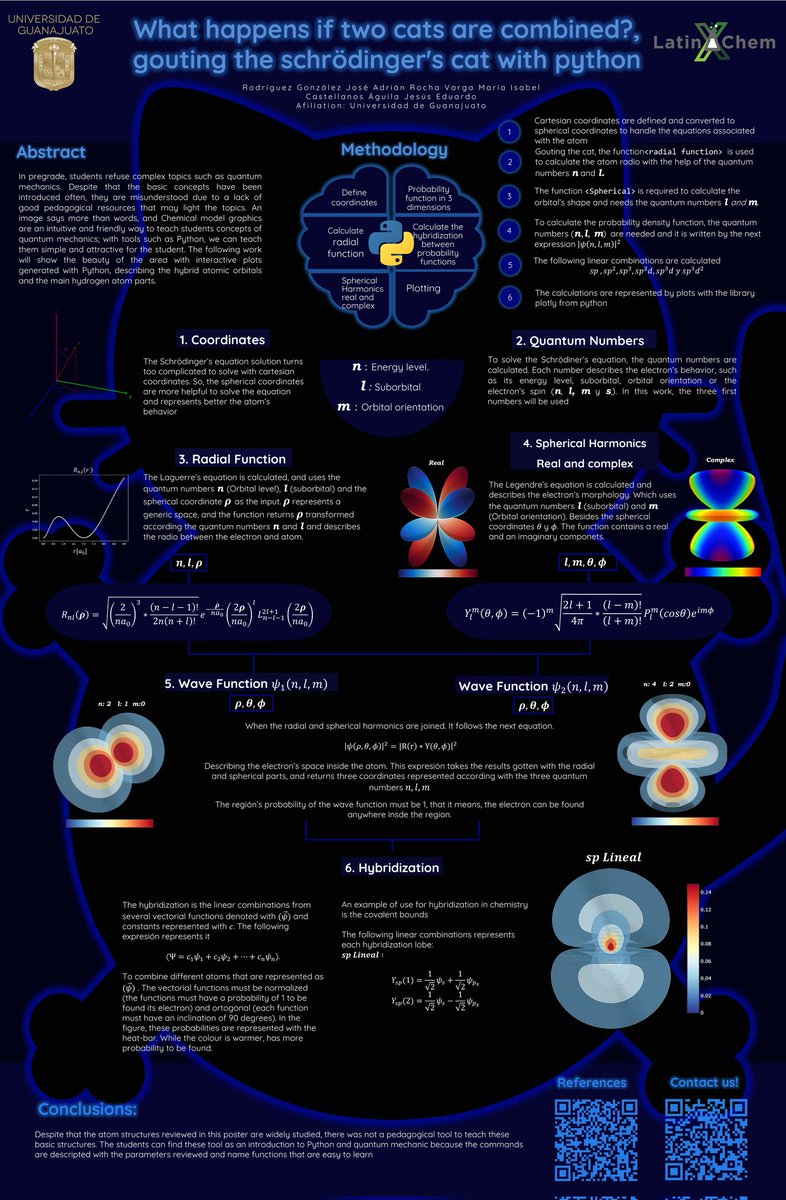
Hi! @LatinXChem ,here I will present our work about a pedagogical tool that can be used in chemistry class. "What happens if two cats are combined?,gouting the Schrödinger's cat with python"
#LatinXChem
@LatinXChem#LatinXChemComp#Comp037
"BitBIRCH: Efficient molecular clustering algorithm"
Have tried to cluster a BILLION molecules?
If you tried the common Taylor-Butina algorithm, possibly your job was killed minutes after.
That won't have with BitBIRCH.
@StevenLopez_neu @LatinXChem@GroupQuintana @UFChemistry Whenever multiple simulations are run at the same time for the same system, SHINE can dissect the fundamental mechanistic underpinnings of these processes!!
@StevenLopez_neu @LatinXChem@GroupQuintana @UFChemistry thanks @StevenLopez_neu This is a new framework to highlight intrinsic pathways in complex dynamical processes. Here we applied it to standard MD simulations, but SHINE is also applicable to enhance sampling techniques, photodynamic processes, and more.


![CCG_MOE's tweet photo. [𝗔𝗡𝗡𝗢𝗨𝗡𝗖𝗘𝗠𝗘𝗡𝗧] 📢 Chemical Computing Group & @AmerChemSociety @ACSCOMP Division, congratulate the 𝗔𝗖𝗦 𝗦𝗽𝗿𝗶𝗻𝗴 2025 𝗖𝗖𝗚 𝗘𝘅𝗰𝗲𝗹𝗹𝗲𝗻𝗰𝗲 𝗔𝘄𝗮𝗿𝗱𝘀 𝘄𝗶𝗻𝗻𝗲𝗿𝘀! More info @ the ACS COMP Division Awards webpage https://t.co/ofpiKZnZ4M #CompChem #CADD https://t.co/yML23Ba6EM](https://pbs.twimg.com/media/GnGRwMNacAA0rtf.jpg)



![CCG_MOE's tweet photo. [𝗔𝗡𝗡𝗢𝗨𝗡𝗖𝗘𝗠𝗘𝗡𝗧] 📢 Chemical Computing Group & @AmerChemSociety @ACSCOMP Division, congratulate the 𝗔𝗖𝗦 𝗦𝗽𝗿𝗶𝗻𝗴 2025 𝗖𝗖𝗚 𝗘𝘅𝗰𝗲𝗹𝗹𝗲𝗻𝗰𝗲 𝗔𝘄𝗮𝗿𝗱𝘀 𝘄𝗶𝗻𝗻𝗲𝗿𝘀! More info @ the ACS COMP Division Awards webpage https://t.co/ofpiKZnZ4M #CompChem #CADD https://t.co/yML23Ba6EM](https://pbs.twimg.com/media/GnGR7L6a4AAn8DL.jpg)