For GRC leaders and practitioners: what is the first real point of failure when AI governance meets delivery?
Vote below, then tell us what you see on the ground.
What fails first in AI governance?
@henkjan Exactly. Smart teams treat compliance as an input to delivery, not a clean-up step at the end. That shift alone can save a lot of avoidable rework.
Building an AI startup in Europe, we hit this early:
Teams spend weeks on a feature, then realize it’s not viable under the EU AI Act.
Pattern:
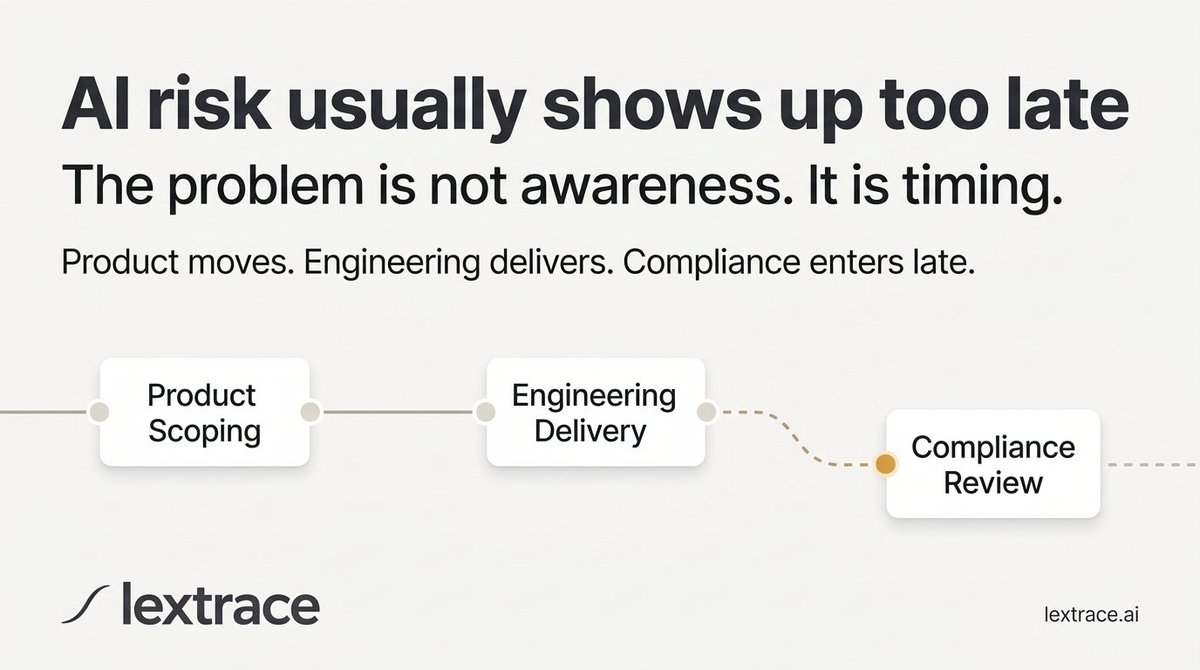
build → compliance late → high risk → rework
Insight:
Regulation is a product constraint.
We now check risk before build. #Startup
GenAI made it easy to build features.
But it also made it easier to build ones that don’t hold up in real use.
Same model
different context
very different outcome
Feels like the challenge is shifting from generation
to use case judgment
Interesting shift happening in AI:
The hard part is no longer training or deploying models.
It’s understanding the implications of using them
Same model
different use case
completely different risk profile
We’re moving from “can it work?”
to “is it acceptable?”
For GRC leaders and practitioners: what is the first real point of failure when AI governance meets delivery?
Vote below, then tell us what you see on the ground.
What fails first in AI governance?
This has come up in so many conversations lately. The issue is rarely a lack of intent. Most teams do want to do the right thing. The harder part is knowing early enough what needs deeper review and what does not.
Would love to hear how others are handling that today.
20% of EU enterprises now use AI. In our conversations with PMs, engineers, and compliance teams, one pattern keeps coming up: the problem is not awareness. It’s timing. AI risk gets surfaced too late. Where does it break first in your team? Drop a comment.