#InflaRx: Zulassung!💥
Die deutsche Biotech-Gesellschaft InflaRx kann einen wichtigen Meilenstein verbuchen. Denn die Europäische Kommission hat die Zulassung für Gohibic (Vilobelimab) zur Behandlung des SARS-CoV-2-induzierten akuten Atemnotsyndrom (ARDS) zugelassen. Es ist die erste Therapie zugelassene Therapie in dieser Indikation überhaupt. https://t.co/fAW3YNa4sH
#Gohibic#Vilo#CKD Recently, Dr. Taapken, the CFO for InflaRx, had this to say in regards to future company plans: “on the partnering side, we are now starting to discuss our programs with a variety of pharmaceutical companies because we feel in certain areas these drugs bear so much potential that in order to fully exploit it, it would be good to work with partners.” https://t.co/d2oJYRTzzB
How much potential?
Over 53M deaths globally so far this year, noting that upwards of 3 in 5 deaths are associated with chronic inflammation. https://t.co/DIsBlrZGnk
The WHO recently reported that “hypertension affects 1 in 3 adults worldwide,” nearly half of which are not aware of their condition. https://t.co/2388fr1TYM
The cost of this single inflammatory input is significant: the kidney is the most transplanted organ, at an average cost in the US of $442,500 per transplant. In 2022, “for the first year ever, more than 25,000 kidney transplants were performed in the United States.” $11 billion worth of kidney transplants per year in just the US, a population of 336 million people, 4% of the planet’s population. https://t.co/NteT2G6iHq
Second only to diabetes – itself a leading inflammatory input – hypertension is the primary cause of chronic kidney disease. This seems logical considering that our bodies are in a constant state of repair, all day every day, continually monitoring for any hint of danger. And if danger, say from high blood pressure, start the biological inflammatory process, sending white blood cells to the area of danger, with neutrophils leading the way.
In technical lingo, “under hypertensive conditions, neutrophils infiltrate the arteries, heart, and kidney, promoting the recruitment of other immune cells for tissue inflammation, through secretion of pro-oxidant, pronitrant, and pro-inflammatory molecules driving fibrosis.” https://t.co/I2kolqCQzN
There are 79 organs in the human body; 79 popular party sites for fun-loving neutrophils to find their way. https://t.co/f1FOs7B154
The skin alone, the largest human organ, provides a stark indication of the extent of organ damage that can occur: if uncontrolled inflammation can cause this kind of damage, then what of our internal organs, the damage of which often going unnoticed until death comes knocking? https://t.co/WI1JDS8g8n
For the skin alone, here is a summary of InflaRx involvement:
Currently in phase 3 study:
Reactive neutrophilic: PG – Pyoderma Gangrenosum
https://t.co/4yTJPxK0OM
Next phase studies still to be determined:
Acneiform eruptions: HS – Hidradenitis Suppurativa
https://t.co/47c0TBGdQI
Vascular-related: AAV – Granulomatosis with polyangiitis, Microscopic polyangiitis
https://t.co/8VO8XfMi1R
https://t.co/EmfUJHhZEM
Epidermal nevi, neoplasms, and cysts: cSCC – (cutaneous aka skin) Squamous Cell Carcinoma
https://t.co/gMdGaeTXyF
Some potential studies that InflaRx has mentioned:
Recalcitrant palmoplantar eruptions – Palmoplantar pustulosis
https://t.co/DzwDHeTSxb
Reactive neutrophilic – Sweet's syndrome
https://t.co/MkO5YNuVST
Chronic blistering – Bullous pemphigoid
https://t.co/LNoFZOj1Y6
This work is in addition to Gohibic EUA to treat uncontrolled inflammation leading to severe lung damage amongst IMV/ECMO covid patients.
3 in 5 deaths, of the current 53M total deaths, attributed to chronic inflammation. 79 organs potentially impacted. 100s of tissue damaging conditions of the skin alone. Billions spent in healthcare throughout the world because of the damage caused by uncontrolled inflammation.
That much potential. Vilo please.
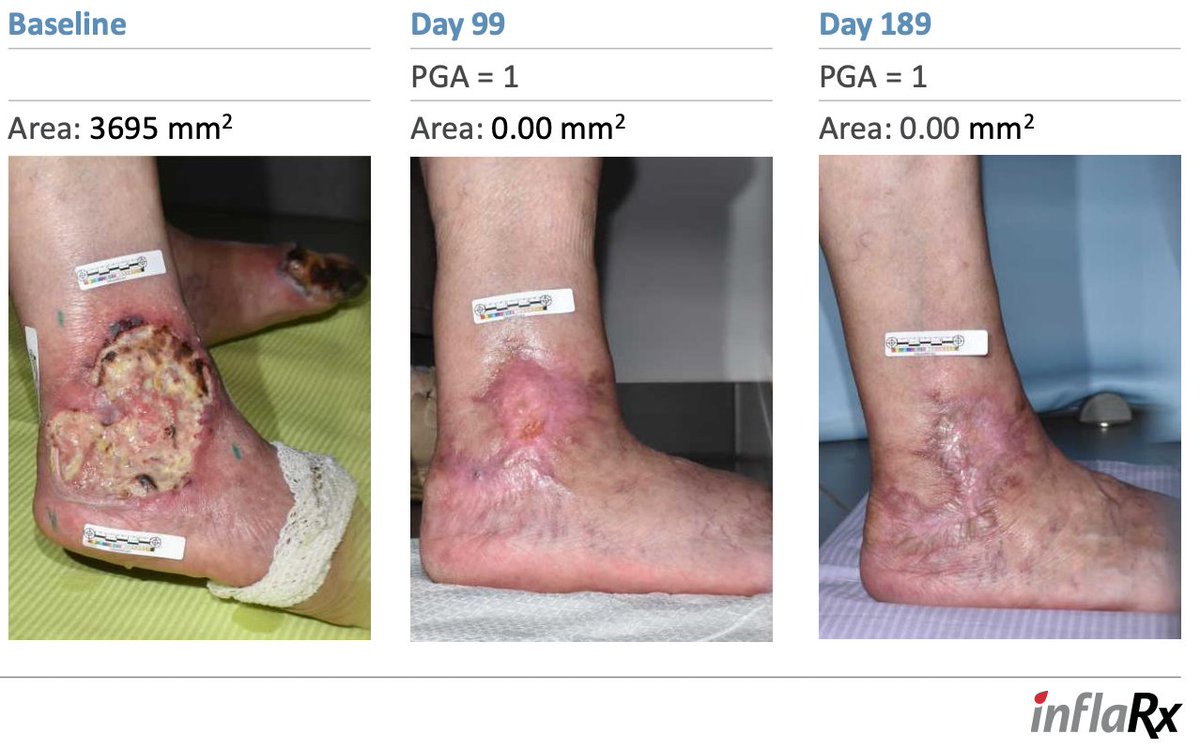
Pyoderma Gangrenosum (PG) an autoimmune condition with high unmet need. Orphan drug and fast track status granted. Awaiting feedback from FDA related to a P3 study. Imagine the pain day 1 and the improvement of life quality day 189. $IFRX
#Gohibic#InflaRx#HeartHealth “You cannot change your history of COVID-19 infections but if you’ve ignored other heart risks, like high [dietary] cholesterol or blood pressure, poorly controlled diabetes or smoking, now’s the time to change that.” https://t.co/udZw9biAZM
It’s not just about viral induced septic ARDS, not just about the lungs. 79 organs (or so), the skin being the largest human organ…and the 100s of inflammatory skin conditions that go with it. https://t.co/WI1JDS8g8n
Reposted are the details behind Vilo treatment of one such skin disease, phase 3 of the study currently underway. https://t.co/BtXnHkMm0d
If Vilo has that kind of effect on the largest human organ – in controlling inflammation – what effect could it have on the inflamed lungs of IMV/ECMO covid patients currently dying in the US at the rate of over 1000 per week?
And of the heart:
“in 2021, the average cost of a heart bypass procedure in the United States amounted to 123 thousand U.S. dollars”
“doctors perform about 370,000 coronary artery bypass graft surgeries in the U.S. every year”
A healthcare cost of $46B per year in the US alone due to poor heart health via clogged arteries, hypertension, diabetes and other pro-inflammatory inputs.
Vilo please.
#Gohibic#NIH Just two lives saved when Gohibic could have saved upwards of thousands more, from both death and further diminished quality of life due to organ damage.
A quote in regards to the National Institutes of Health (NIH):
One of the goals of the NIH is to expand the base in medical and associated sciences in order to ensure a continued high return on the public investment in research. Taxpayer dollars funding NIH are from the taxpayers, making them the primary beneficiaries of advances in research. Thus, the general public is a key stakeholder in the decisions resulting from the NIH funding policy. However, some in the general public do not feel their interests are being represented, and individuals have formed patient advocacy groups to represent their own interests.
https://t.co/sBXW491Dky
Here’s the current NIH opinion on Gohibic (Vilo) use within US ICUs:
There is insufficient evidence for the COVID-19 Treatment Guidelines Panel to recommend either for or against the use of vilobelimab for the treatment of COVID-19.
https://t.co/V8qHJ7SPjF
Let’s talk about neutrophils for a moment, mentioned in a recent post, that which makes up the majority of our white blood cells, “the first responders of the immune system, rapidly migrating into affected tissues in response to injury or infection.”
Check out their size https://t.co/CE4iiAdXEL: about half the size of a grain of salt, though a giant in relation to the size of a coronavirus. Neutrophils do all kinds of wonderful things to keep us healthy; for example they can directly attack a virus, literally grab on to it with an arm-like structure called a pseudopod extension, thereby neutralizing any further viral replication. In excess however, rapidly migrating neutrophils can cause damage to healthy tissue.
That’s where the C5a blockade effect of Vilo becomes important – in fact lifesaving in treatment of near-death patients – by reducing the number of neutrophils called into action, amongst other things as outlined at https://t.co/4gfanhDeJg.
Nothing new to the NIH. Here’s a quote from a paper published by the National Center for Biotechnology Information, associated with the NIH:
Neutrophils contribute to tissue injury by amplifying the inflammatory response and direct release of toxic effectors.
https://t.co/bGzXaJeGQQ
In fact for a deep dive into the science of it all, here’s an NIH funded presentation about the “Role of Neutrophils in Chronic Diseases.” https://t.co/8fuZzGNsYw
There’s even mention of neutrophil impact on covid severity! Indeed, nothing new to the NIH.
If tax dollars, our dollars, are funding the NIH, don’t we deserve good leadership? Perhaps if the NIH, by their very own research, were to take a leadership role in guidance towards Gohibic use – in controlling inflammation – then perhaps more lives will be saved. Vilo please.
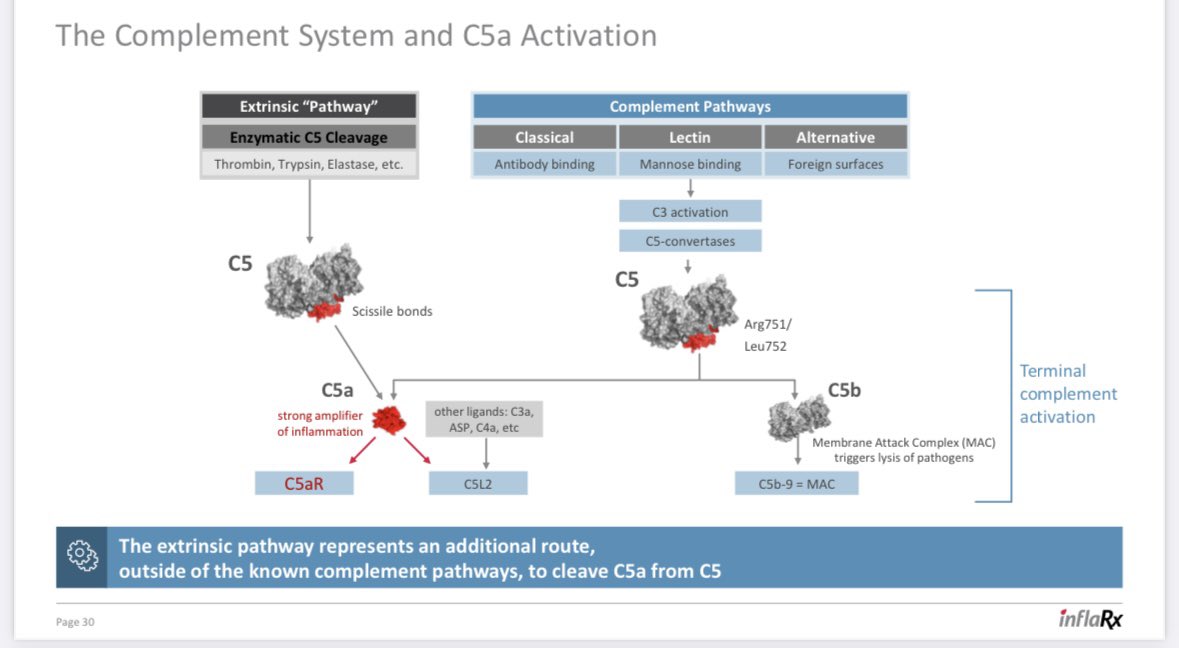
How does Gohibic (vilobelimab) control inflammation? It binds to C5a preventing connection to a receptor known as C5aR, and in so doing, amongst other things, reduces the chemotactic effect of bringing too many activated neutrophils to the site of infection. Simple, right?
No, not really. Think of it this way: a pool party that has got out of hand. A group of select friends invited to a party who in turn get on their phones and invite a bunch of other friends who also have phones, eventually causing spillover of the party into neighboring pools – fences get knocked down, broken glass, excessive noise – resulting in police officer, Captain Gohibic, called in for damage control. As each of us produces 100 billion neutrophil cells each day, the most abundant white blood cell, circulating in our blood ready for the call to action, with each neutrophil providing 200 thousand C5a receptors, that’s the makings for a lot of potential parties that can get out of hand. It is excessive active neutrophils called to the site of an infection that can cause tissue damage. This immune process is known as the C5a-C5aR signaling axis. Gohibic controls this pro-inflammatory signaling, maintaining a normal range for overall better immune function.
Gohibic prevents organ damage. Malfunctioning organs can lead to lifelong health issues if not death.
More detailed information available at https://t.co/4gfanhDeJg.
#inflammation #InflaRx
BIO-Europe 2023: Interview with Thomas Taapken of InflaRx.
About InflaRx's innovative anti-inflammatory drugs and updated on the progress of their two lead candidates vilobelimab and INF904.
https://t.co/8dekcArcp6
#inflarx#vilobelimab#gohibic#c5a
@ray4tesla The data supporting the EUA were based on the previously announced results of the multicenter Phase III PANAMO trial, which showed that vilobelimab treatment improved survival with a relative reduction in 28-day all-cause mortality of 23.9%.
Share it to the world @elonmusk
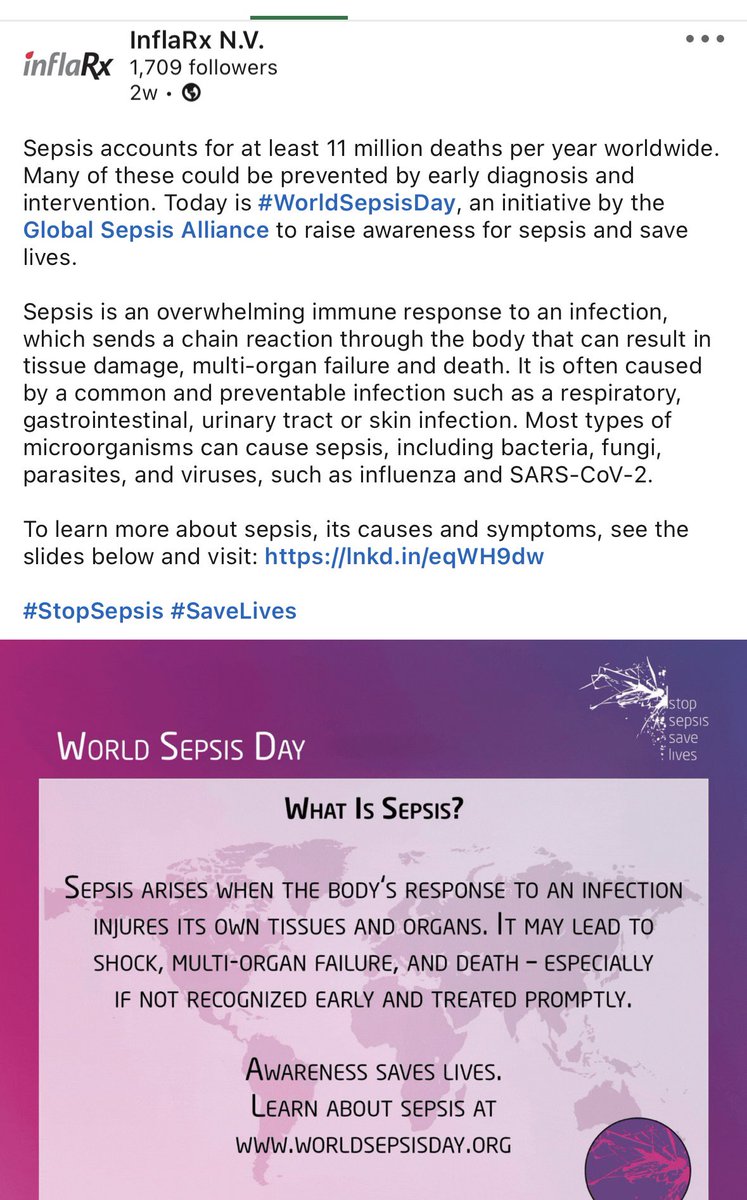
@Yash25571056 And as you can see, the inventor of Gohibic (InflaRx) is aware that COVID-19 is actually about sepsis.
https://t.co/ENeSliZayM
#gohibic#vilobelimab#sepsis
@veryvirology I must clearly disagree with you, Vilobelimab only blocks the C5a part, not the C5b part, which is an important mechanism for bacterial immune defense. Please do your homework properly.
@jensspahn: "Das reicht noch nicht".
Das stimmt! Um dringend benötigte Medikamente zur Verfügung zu stellen, müssen jetzt auch Zulassungsstudien, Produktionsaufbau und Marktvorbereitung – analog zu Impfstoffen – unterstützt werde.
@beat_cov#InflaRx@vonderleyen@EU_Commission
@Karl_Lauterbach @pharmafakten "Das Coronavirus löst bei vielen Menschen eine überschießende Reaktion des Immunsystems aus. Diese Reaktion verursacht langfristige oder sogar dauerhafte Schäden an Organen wie Lunge, Herz und Gehirn."
#InflaRx kann hier helfen.
https://t.co/BYoLl33PP5
https://t.co/AuoZ9drAnX
Das Label "priorité nationale de recherche"
Ein Priorisierungsmechanismus zur Beschleunigung der klinischen Forschung bei #COVID19
https://t.co/02FGMPZ3jQ
Liebe @AnjaKarliczek, lieber @jensspahn, Frankreich setzt IFX-1 von #InflaRx auf die Liste "Nationale Forschungspriorität". Laufen wir aufgrund fehlender Unterstützung Gefahr, dieses wichtige Medikament für schwere COVID-19 Fälle zu verlieren? @beat_cov
https://t.co/UaN3y2sWq8
Lieber @jensspahn, bitte machen Sie mit #Regeneron nicht den gleichen Fehler wie mit #Remdesivir.
Mit den mutmaßlichen ���400M für die mutmaßliche Bestellung sollte lieber @beat_cov unterstützt werden.
think globally, act locally!
#InflaRx @ImmunicInc @AtrivaTx @AiCuris
https://t.co/pPvLZnxDrz
Forscher um Professor Niels Riedemann haben am Uniklinikum einen Antikörper entwickelt, mit dem man das bei einer Sepsis überreagierende Immunsystem blockieren kann.
https://t.co/f2eFLhBOab @ntvde
1/2 "Wir haben die Rolle des Komplementfaktors C5a in dem Gebiet Sepsis und auch virale Lungenschädigung seit vielen Jahren untersucht, sodass eine Anwendung unseres C5a blockierenden Antikörpers IFX-1 eine logische Konsequenz für uns ist." Prof. Niels Riedemann CEO #InflaRx
2/2 @beat_cov fordert eine Unterstützung, um Medikamente kurzfristig Ärzten und Patienten zur Verfügung stellen zu können.
@AnjaKarliczek@jensspahn@peteraltmaier
Bitte unterstützen Sie Prof. Riedemann (InflaRx) in seiner laufenden Phase 3 Studie. https://t.co/OBSX3Vky5F