We are currently undergoing rigorous testing across the network to ensure stability, reliability, and performance. While things may appear quiet from the outside, a significant amount of work is happening behind the scenes.
These tests are necessary to simulate different scenarios, identify edge cases, and refine the system before the next stage. Our focus is not just on launching, but on launching something solid and dependable.
Progress may sometimes look like silence, but this phase is critical. Every test brings us closer to a stronger, more resilient MAZZE network.
We appreciate your patience as we focus on getting things right.
We will be back with more updates soon.
Following the latest update, we wiped and restarted the test chain multiple times to simulate different scenarios and further strengthen network stability. These resets were intentional and part of our final testing phase to ensure the system performs reliably under varying conditions.
Alongside this, we implemented several significant improvements to the codebase. Sync has been upgraded to protocol v4, introducing support for snapshot and epoch-hash messaging. This upgrade improves request and response validation, enhances local database header recovery, and smooths catch-up phase transitions.
We have also strengthened snapshot and state-sync error handling to improve resilience during synchronization. In addition, several consensus and txpool panic paths have been removed, reducing the risk of unexpected failures.
RPC transaction submission has also been improved. Invalid internal states will now fail explicitly rather than returning a false or misleading success response, ensuring more accurate and predictable behavior.
These updates represent another step toward a more stable, reliable, and production-ready MAZZE network.
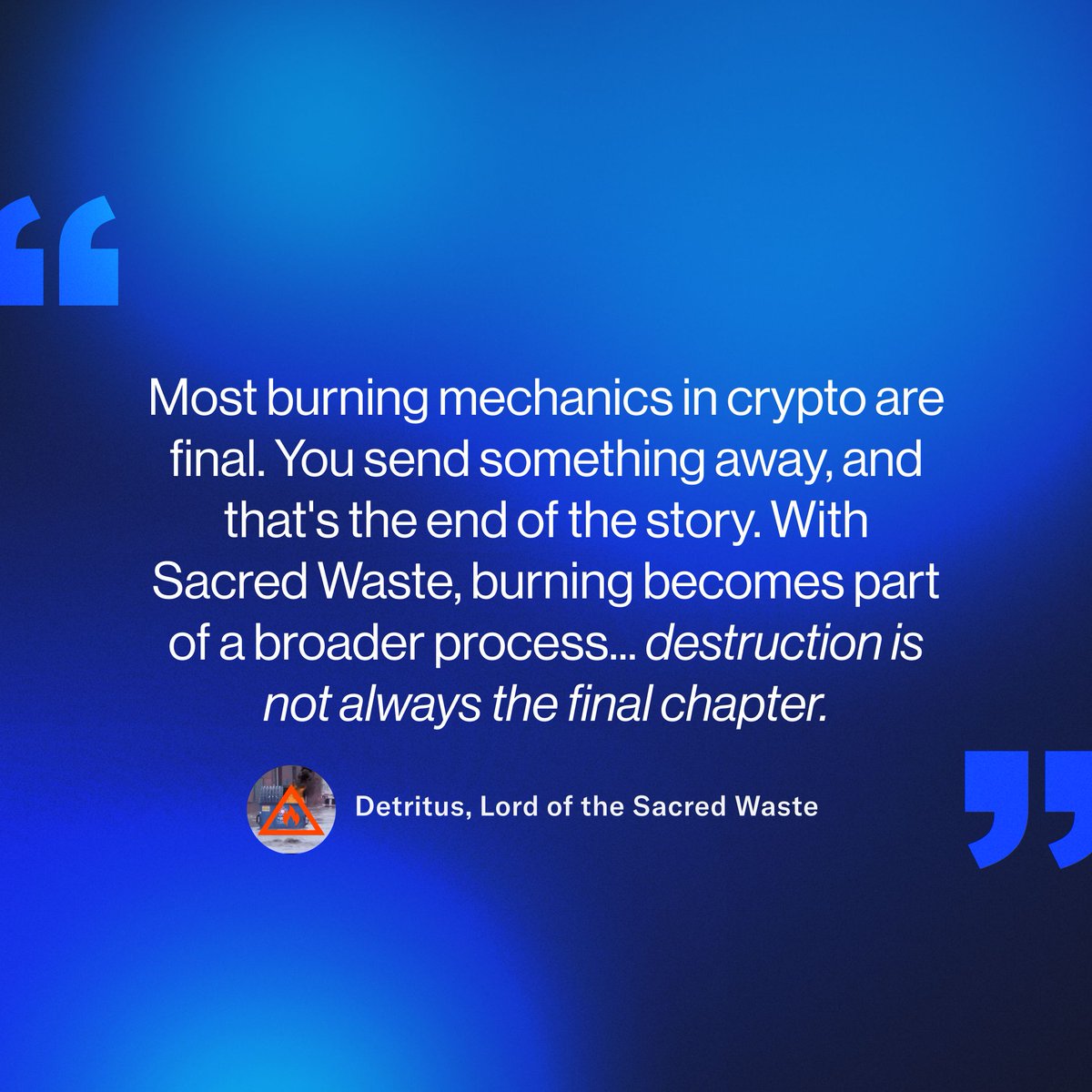
What if burning wasn't the end?
We sat down with Detritus, Lord of the @Sacred_Waste.
He's building a protocol that turns dead tokens into new possibilities.
Full interview in the next tweet 👇
Development on MAZZE continues to move forward, and we want to highlight that progress is not just happening behind closed doors. We have been releasing updates to the node on GitHub, allowing anyone in the community to follow along with development in real time.
These updates are publicly verifiable, giving builders and contributors full visibility into the improvements being made. Transparency is a core part of what we are building, and maintaining an open development process ensures that the community can see the evolution of the MAZZE network step by step.
For those who want a more hands-on experience, you can also launch the MAZZE blockchain locally. This allows developers, validators, and curious community members to test the network, explore its capabilities, and better understand how the ecosystem is shaping up.
Running the chain locally gives you the opportunity to:
• Test features as they are introduced
• Explore network behavior
• Experiment with integrations
• Provide early feedback to the team
This approach allows us to build collaboratively with the community while strengthening the network before wider rollout.
We encourage builders and contributors to follow the updates, test the node, and be part of shaping MAZZE as development continues.
We’re currently preparing the resources for the upcoming demo that will reveal MAZZE’s Private Transaction capability firsthand.
It’s shaping up to be an exciting showcase of what’s possible with privacy on MAZZE.
Our team is deep in development, refining every detail as we move closer to unveiling it. We’re making progress and marching forward.
We are $MAZZE
Last year was about focus, patience, and building the right foundations.
We doubled down on the hard work behind the scenes, strengthening the core of MAZZE and making decisions that will matter long term.
Including but not limited to deep technical upgrades to privacy advancements and improved developer resources, 2025 was a year of steady progress and intentional growth.
Rather than waiting to fix things later, we are using this time to fully develop and finalize our Privacy Layer. Privacy is not something we want to add after launch. It is a core part of the network, and it needs to be there from the start.
By completing the Privacy Layer before Mainnet, we can ship a chain that is fully featured from day one. This approach removes the need for disruptive hard forks shortly after launch, which often introduce risk, fragmentation, and unnecessary complexity.
For the network, this means a smoother and more predictable launch. For node operators and miners, it means no forced upgrades, no resyncing, and no sudden changes to infrastructure.
Building it right the first time is how we avoid hard forks later.