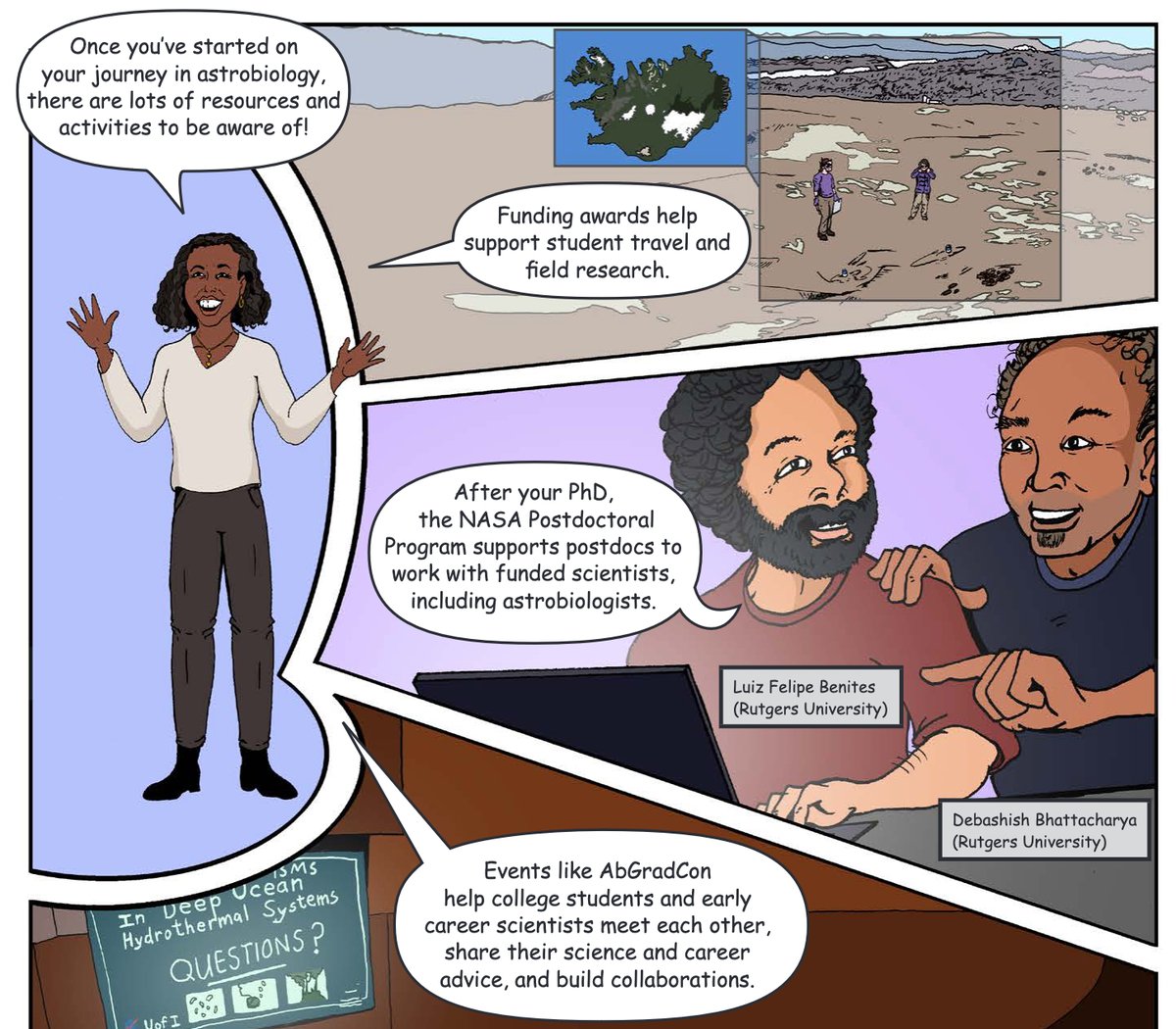
Stoked to see that @DebashB and me became comic book characters in the new issue of @NASAAstrobio graphic novel! You will see a lot more familiar faces in this inspiring story about "How to become an Astrobiologist" issue 9 here: https://t.co/KqstkqMocu
Conference season is here, and I'll be at #ASMicrobe! Come check out my latest results on the honey bee queen microbiome. I'd also love to chat about other ongoing projects on social bee multi-kingdom microbiomes, potential collabs, and opportunities to join the Caesar Lab at OU!
A newly released AI tool has generated an atlas of more than one billion predicted protein structures and billions more protein sequences.
https://t.co/nThx75YHL2
Had an amazing time speaking at #PintOfScience in Blumenau about one of humanity’s biggest questions: Are we alone in the universe?
Together with @lelef123 (Sweden) and @LFelipeB (EUA), we hosted the first hybrid edition. 2 hours, no slides, just science and great interaction!
We found that proteomes across life maintain a consistent elemental signature! Check our preprint that is already out during #AbSciCon26
https://t.co/9bcAPmZtLN
Finally this is the day! If you are at #AbSciCon26 come to our session (2PM Lecture Hall, Level 4), or check the awesome papers from our presenters:
https://t.co/2485IEdoNh
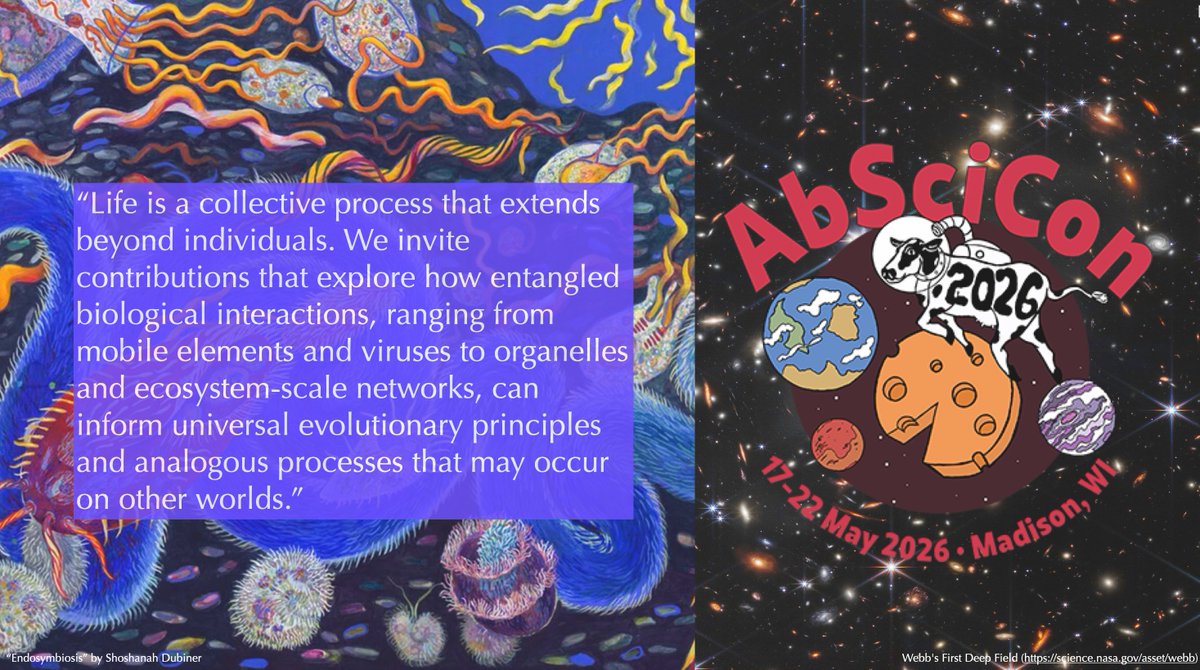
Our session on symbiosis and biointeractions for the #Astrobiology meeting #AbSciCon26 was accepted! Please share widely and submit your abstract by 14 of January 2026; Let's put more biology into Astrobiology!
https://t.co/55D36KQzoS
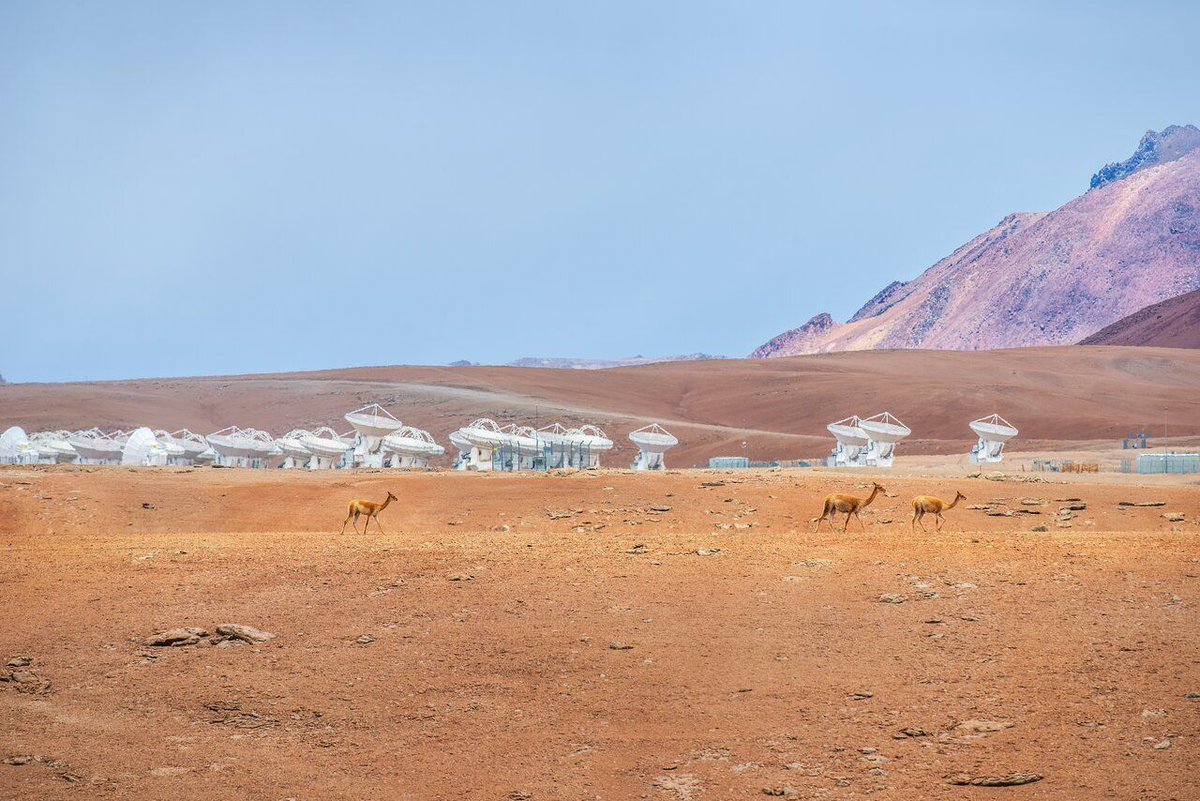
#PPOD: Adapted for Extremes 🏜️
This image features two distinct families: a collection of ALMA antennas and a trio of vicuñas, a camelid related to llamas and alpacas. Unlike in almost every other way, the subjects of this image are linked by their extremely hostile home environment, high in the Chilean Andes.
The Chajnantor plateau, site of the Atacama Large Millimetre/submillimetre Array (ALMA) shown here, is 5000 meters above sea level, making it one of the driest places on Earth. The aridity is ideal for ALMA observations, which search for cosmic signals from the cold Universe that are readily absorbed by moist air. But the low number of cloudy days, along with a thin atmosphere, produces harsh conditions, pushing the limits of both engineering and evolution.
Credit: S. Otarola / @ESO
#planetaryscience #space
(1/8) Very excited to share my first PhD preprint on phages from Hawaiian volcanic fumaroles from the East Rift Zone (ERZ) of Kīlauea!
https://t.co/Ys8XyCCnWS
Fantastic opportunity! Simons Graduate Fellowships (Ecology & Evolution) are open. Interested in joining the Caesar Lab at OU? Reach out, I’m happy to help with your application!
https://t.co/AO7l5GZc2U
🚀 New paper out!
Since my first year in Saudi Arabia (2021), I saw the huge potential of its extreme environments! This work helps put Saudi Arabia on the astrobiology map and outlines a roadmap for the future of astrobiology in the Middle East.
https://t.co/FmOkDVZG6i
Interested in joining the lab or collaborating? I’d love to hear from you! You can use my current website as a reference (https://t.co/KxUbKni3s9) - Caesar Lab version coming soon 😊
I am thrilled to share that this fall I’ll be joining the University of Oklahoma School of Biological Sciences as an Assistant Professor! The Caesar Lab will study the ecology and evolution of host-microbiome interactions in social bees (honey bees, stingless bees and more) 🦠🐝
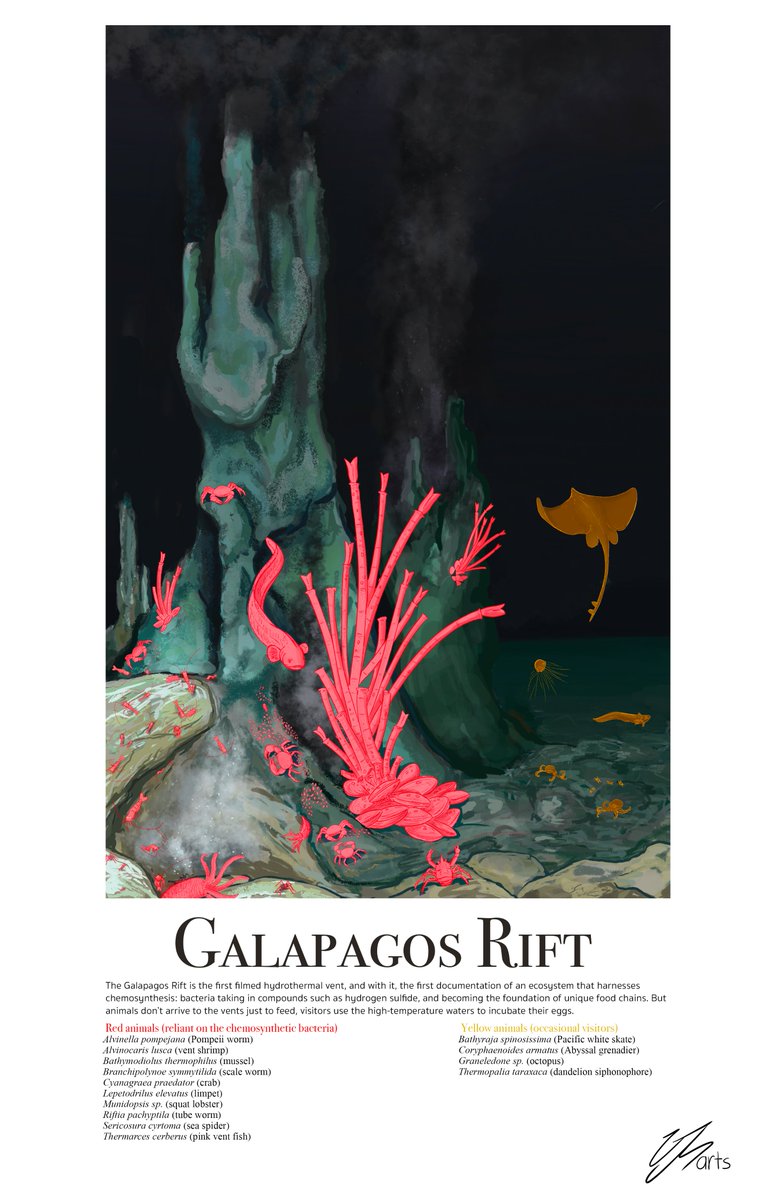
The Galapagos Rift is the first documented and recorded hydrothermal vent, home to many unique marine fauna that rely on the vents for survival by feeding on chemosynthetic bacteria or to incubate their young.