I order a lot of secondhand and vintage books online. This year the prices jumped and I chalked it up to inflation. I was wrong.
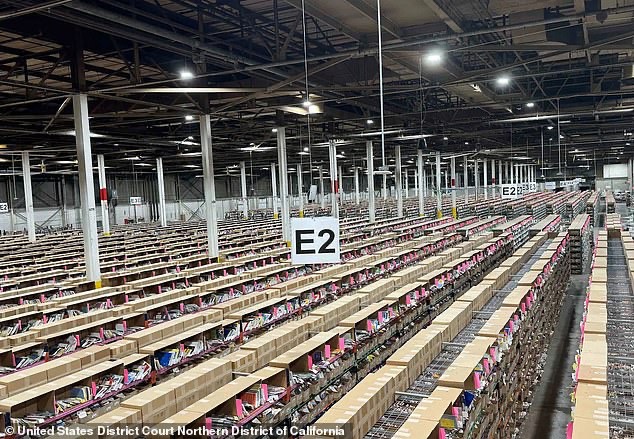
The reason behind the spike in prices is what AI companies euphemistically dub "destructive scanning." That is when they buy millions of second-hand books in bulk and send them to enormous warehouses across America. There, automated assembly lines cut the pages from the spines and then feed the pages into huge industrial scanners.
Those books are being harvested for their text to expand the database for the LLM models. The physical pages? Later discarded. Some of these are the last remaining editions of historical and collectible works — once they're cut and scanned, they're gone.
Booksellers across the UK, Germany, New Zealand, Australia and the U.S. are reporting the same thing: bulk, random, non-fiction orders. Orders have ranged from 1,000 books to as many as a million in a single purchase. Just one vendor contract called for scanning 500,000 to 2 million books.
Anthropic ran this under an internal name, Project Panama, and tried to keep it quiet. Some booksellers noticed something was odd. A Devon bookseller, for instance, got an odd order this summer for books on subjects as disparate as Cornish pioneers in South Africa, cheeses of the world, and Hong Kong jewelry — from a "shipping company" near Heathrow. Her suspicions grew fast. It turned out to an AI run office.
I should have seen this coming. I'm one of the author-plaintiffs in the Bartz et al. v. Anthropic class action — a different kind of theft. Anthropic had trained Claude on more than seven million digitized books, sourced from pirate websites, without paying a penny to authors or publishers. Mine included, seven of my thirteen. There are 120,000 individual authors and rightsholders (representing 447,576 eligible works out of 482,460 total listed books).
A federal judge approved the $1.5 billion settlement this summer. It was the court documents from that litigation that exposed Project Panama. I missed it until the story recently hit the Washington Post and Daily Mail and other outlets.
Having learned an expensive lesson from its class action payout, Anthropic is now going after physical books a different way — and legally, this time. Under the first-sale doctrine, established by the Supreme Court in 1908, once someone buys a physical book, they can do whatever they want with it, including destroying it.
So Anthropic attorneys have determined that buying and scanning a physical copy sidesteps the piracy problem. And once that book is shredded, any future Claude user can draw on its contents for free — the original gone forever.
Some call this a modern-day book burning. The Nazis destroyed books to erase what was in them — these companies destroy books to steal the information and then essentially sell it back to you. I am still angry this is somehow legal.
THE 46-CENT SIGNATURE: What we found inside Ralph Heap's petition filing 🧵👇
We read all 1,780 petition sheets behind the 15,074 signatures that put Corporation Commission candidate Ralph Heap on the ballot — every circulator affidavit, cross-checked against state registration and campaign finance records. AZPIA has filed the results with the Clean Elections Commission, which is already withholding ~$370,000 in public funding from Heap. The case, in three numbers:
𝟭. 𝟴𝟲% 𝗽𝗿𝗼𝗳𝗲𝘀𝘀𝗶𝗼𝗻𝗮𝗹. Nearly half of Heap's signatures were gathered by people state records tie directly to paid petition firms — including the OWNER of Uncle Sam Petitions himself, signing affidavits in Heap's stack, and a circulator whose listed home address IS the firm's registered address — and 86% by a crew bearing the marks of a managed paid operation. Heap, his family, and identifiable volunteers: about 14%.
𝟮. 𝟰𝟲 𝗰𝗲𝗻𝘁𝘀 𝗮 𝘀𝗶𝗴𝗻𝗮𝘁𝘂𝗿𝗲. Heap reported $6,880 for signature gathering. Six candidates who bought signatures from the same two firms this cycle reported paying $1.91 to $5.17 per signature. At those rates his drive was worth $29,000–$78,000. His campaign's entire reported spending for the whole statewide race: $9,581.50 — no consultant, no other vendor. Clean Elections candidates can't accept services someone else paid for.
𝟯. 𝗢𝗻𝗲 𝗽𝗮𝗽𝗲𝗿 𝘁𝗿𝗮𝗶𝗹. For ballot measures and recalls, Arizona makes paid circulators register and name who's paying them. For a candidate's petition, in-state circulators file nothing — the only public record of who was paid is the candidate's own report. Heap's crew holds 58 paid-circulator registrations for other petitions, several filed in the very weeks his sheets were being signed. The one place the cost had to show up is his report. It shows $6,880. (Two crew members were out-of-state — registration was mandatory for them regardless of pay. It doesn't exist. Their 1,614 signatures broke state law on residency grounds alone.)
𝗧𝗵𝗲 𝗼𝗳𝗳𝗲𝗿 𝗮 𝘀𝗶𝘁𝘁𝗶𝗻𝗴 𝗰𝗼𝗺𝗺𝗶𝘀𝘀𝗶𝗼𝗻𝗲𝗿 𝘀𝗮𝘆𝘀 𝗵𝗲 𝗿𝗲𝗳𝘂𝘀𝗲𝗱. Per KJZZ, Commissioner Nick Myers says that in his own 2022 Clean Elections campaign he was offered off-the-books financing — by the AZ Free Enterprise Club ("pay yourself back when you get your funding") and by Sen. Jake Hoffman personally: "Jake offered to buy signs and said, 'You can pay me back.'" Myers refused. Hoffman denies it.
We cannot prove anyone made Heap that offer. What records show: Hoffman recruited Heap and organized his slate; two slate-mates have paid Hoffman's firm $121k and $90k while Heap reports no consultant at all; Hoffman's own committee pays the same petition network that staffed Heap's drive; the Free Enterprise Club helped recruit Heap and spent $16,000 supporting him. Heap's reports look the way a candidate's reports would look if the scheme Myers described were operating. Whether it is — that's what we've asked the Commission to resolve, with sworn testimony and subpoenaed bank records, before the public money goes out.
𝗔𝗹𝘀𝗼 𝗶𝗻 𝘁𝗵𝗲 𝘀𝗵𝗲𝗲𝘁𝘀: the felon circulator whose signatures a judge threw out in the "sham Green Party" case — 370 more for Heap. The "sham" Green candidate himself and his wife — 560+ signatures for Heap from one household. And a Texan who swore, 38 times, that he votes in Maricopa County.
The petition sheets tell us who did the work. The campaign's fourteen-line expense report says almost nobody was paid to do it. Both cannot be true — and the Commission has the subpoena power to find out which one is false.
Full filing, sheet-level data, and sources available to any reporter who asks.
He told his students to go to the windows.
Get out. Jump if you have to.
Then Liviu Librescu walked to the classroom door and pressed his body against it.
He was 76 years old. He weighed 140 lbs
The gunman was in the hallway.
It was April 16, 2007. A Monday morning. Solid mechanics class at Virginia Tech, Room 204. Twenty-two students, most of them 19 or 20 years old.
At 9:45 AM, gunshots echoed through Norris Hall. Room by room, the shooter was working his way down the corridor.
Liviu heard it. He understood immediately.
He had survived the Holocaust. He had survived a labor camp. He had spent decades living under Communist oppression. He knew exactly what evil sounded like.
He told his students to escape through the windows. Second floor — it was a drop, but they'd survive. Then he walked to the door and held it shut with his body.
The shooter tried to force it open. It wouldn't move.
He fired through the door. Wood splintered. Bullets came through.
Liviu stayed.
Behind him, students were climbing out the windows. Dropping to the ground. Running. One by one, all twenty-two of them got out.
The shooter kept firing through the door.
Liviu held it shut until every student was safe.
Then the bullets killed him.
When police arrived, they found his body at the door.
All 22 of his students survived. Not one was injured.
Liviu Librescu was born on August 18, 1930, in Ploiești, Romania.
He was Jewish. In 1941, when he was eleven years old, Romanian authorities sent him and his family to a labor camp. His father died there. Liviu survived. When the war ended, he was fifteen.
He went back to school. Studied engineering. Earned a doctorate from the University of Bucharest.
But Communist Romania had no interest in allowing a Jewish intellectual to succeed. He was blocked from academic positions. Passed over for jobs he deserved. He applied to emigrate. The government kept refusing.
Finally, in 1978 when Liviu was 48 years old — Israeli Prime Minister Menachem Begin personally intervened. Romania let him go.
He had spent most of his adult life trapped in a country that didn't want him.
In Israel, he taught at Tel Aviv University. Published over 300 papers. Became an international expert in aeroelasticity — the science of how air flows over aircraft wings.
In 1985, Virginia Tech offered him a position. He moved to Blacksburg, Virginia. He taught there for 22 years. His students loved him — demanding but kind, high standards, genuine care.
He was still teaching full-time at 76. Still publishing research. Still showing up every Monday morning for solid mechanics.
April 16 was the first day of Passover — the Jewish holiday celebrating liberation from slavery and oppression.
Liviu Librescu died on the day his tradition sets aside to celebrate freedom.
He spent his entire life escaping death and oppression by luck, by persistence, by the intervention of others. And on his last morning, he chose to stand at a door so that twenty-two young people could have the future he had fought so hard to reach.
He could have run. He could have hidden. He could have climbed out a window with his students.
He chose to stay.
The Virginia Tech shooting killed 32 people that day — the deadliest school shooting in American history at the time.
Room 204 had zero casualties.
Because a 76-year-old Holocaust survivor held a door with his body until every student behind him was gone.
His funeral was held in Israel. Students from Virginia Tech flew across the ocean to honor him. The Israeli government awarded him the Star of David Medal posthumously. Virginia Tech named a scholarship in his memory.
His son said his father died the way he lived — protecting others.
A man who survived everything evil threw at him for 76 years.
On his last day, he made sure 22 kids survived too.
Professor Liviu Librescu. August 18, 1930 — April 16, 2007.
Holocaust survivor. Labor camp survivor.
302 published papers. 22 years at Virginia Tech.
22 students out the window.
He held the door.
NEW: Must-read research on the inequitable impacts of vouchers from the Children’s Equity Project at ASU 👏
Read through these tiles to learn about Arizona-specific impacts, or read the whole report 👉 https://t.co/RpiL8JyGGG
More in comments.
One of the strongest security features of U.S. elections is the fact that they aren't conducted at the federal level. America votes in more than 10,000 different election jurisdictions, each with different rules set by state and sometimes local governments. https://t.co/O4OsM2IhOe
If Border Patrol can stop an American born citizen riding his bike, demand his papers, and put their hands on him without stating a lawful reason… every American should be paying attention.
Luckily, this man had glasses recording the incident.
I’m so excited. My secret (not so secret) observational experiment is about to begin.
This is a once in a lifetime opportunity for wastewater surveillance.
FIFA World cup.
1/
@SecureBio
https://t.co/3Yi9LFwNz2
@jakescottMD Respectfully, there is a lot of evidence that the projectile vomiting and diarrhea of ebola can cause airborne transmission.
The coauthor here is Dr. Lisa Brosseau, an internationally respected aerosols scientist.
https://t.co/rJmqdB8H7E
When will it end? The unexplained removal of key experts (again) is incredibly concerning and risks undermining trust in evidence-based preventive medicine.
We’re officially entering the second and final weekend of REI’s A-Sale, so ICYMI, here’s why we’re calling on REI members to BOYCOTT through Monday the 25th.
Yesterday, the federal government announced they want to loosen restrictions on chemicals in our drinking water. This is outrageous.
As Governor, I fought chemical companies and made progress stopping forever chemicals like GenX. As Senator I will fight for clean water.
MIT found Alzheimer's-like amyloid plaques in the brains of people who died of COVID. https://t.co/QbSJWJQhGW
Spike proteins were clustering with amyloid.
This was not in older adults with pre-existing disease.
It was caused by COVID.
As a pancreatic cancer doc, cannot understate the gravity of this moment. I get chills at the prospect that we will imminently have something else to offer our patients with real clinical impact. @AACR#AACR26@RevMedicines