I’m “Liberalisms” on bluesky, please look for me there.
Gradually unfollowing those who have left for Bluesky & Threads -finding you over there.
Mothballing this account because it’s the only way to contact some people but no longer posting or re-posting.
I hope the 30,000 liking this post as well as the OP realise that using this App and interacting with this post is performing the opposite function of condemning Musk. I’ve come over here from Bluesky and taken my X account out of private mode specifically to say this.
Elon Musk openly called for violence on our streets yesterday.
I hope politicians from all parties come together to condemn his deeply dangerous and irresponsible rhetoric.
Britain must stand united against this clear attempt to undermine our democracy.
Richard Choi, Liberal Democrat has been elected as the new councillor for Sutton Central Ward.
See the full result on our website👇
https://t.co/t5Bcxz9K9j
it is important to be aware of the way adhd can make you a bad friend, an unreliable partner, an inefficient worker, etc etc…. and find tools that help ground you in building a life you are happy with and proud of….
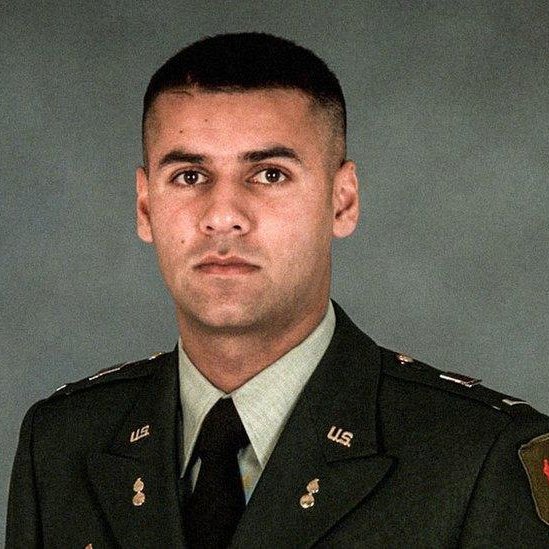
Humayun Khan was killed serving in Iraq. He was born in the UAE.
Jang Ho Kim was killed while serving in Iraq. He was born in South Korea.
Jesus Angel Gonzalez was killed in Iraq. He was born in Mexico.
Nearly 300 immigrants have died in American military service since 9/11 (in-line with their overall presence in the armed forces).
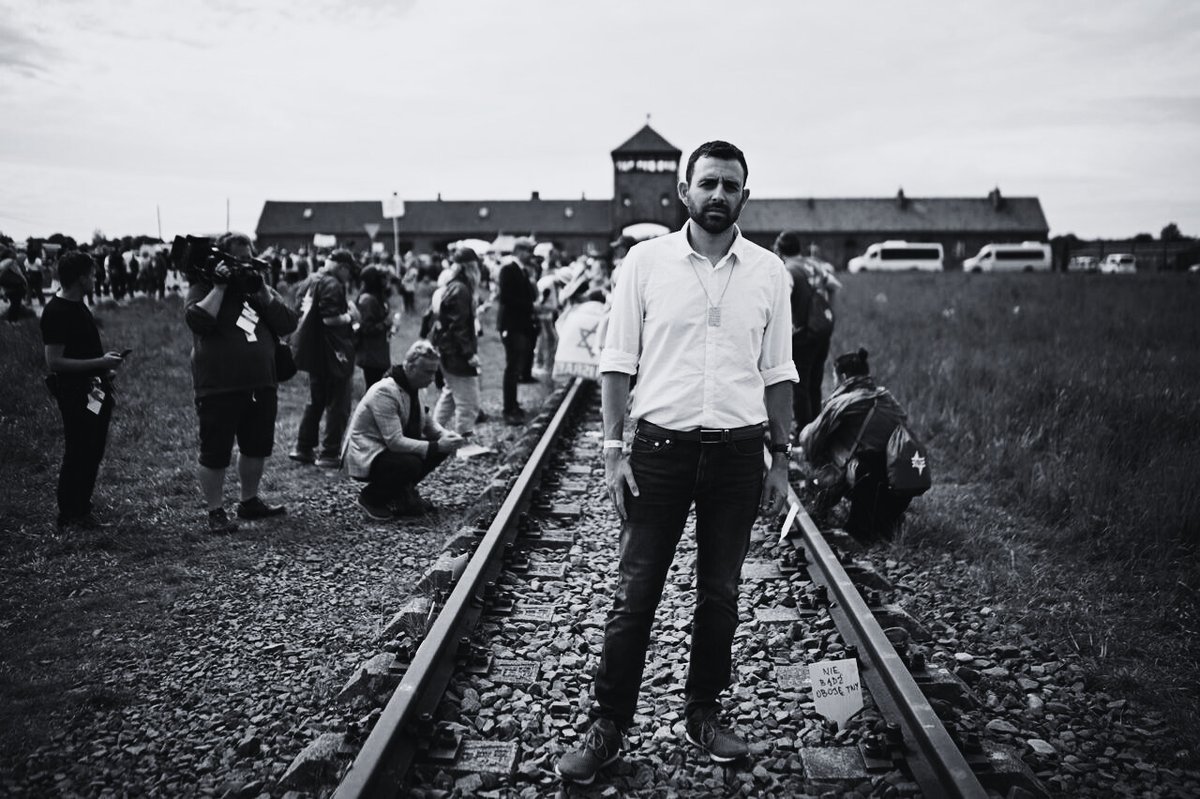
🕯️ Today is Holocaust Memorial Day.
80 years on, we remember those who lost their lives during the horrors of the holocaust, and say that it must never be forgotten.
After six million Jews were murdered in the Holocaust we promised never again.
Antisemitism has no place in any society, now or ever. On Holocaust Memorial Day we remember all those who we lost, and stand against prejudice and hatred today.
In memory of the six million Jews slaughtered in the Holocaust, wiping out 2/3 of Europe's Jews.
We pledge to bear witness: to never forget, and to never let anyone else forget.
Not least because when we say "never again," there are those who would do this again and again.
Ireland: Where Jews get kicked out of Holocaust Memorial events so the President can criticise the Jewish state without protest.
Great look, as they say, altogether.
I'll be asking about the idiotic Labour appeal re #CostaBeck today in a Lords' Lib Dem debate on the growing challenges of the effects of climate change on natural ecosystems.
And I've warned the Minister I'll be raising it so she is forewarned and can give me a proper answer.
But where we go from here remains undetermined. Indeed, we are gathering at a time when the world remains an uncertain place. What lies next for our people?
To do that, we must look at the current situation in the homeland.
For many on the island, life under the Sri Lankan military occupation remains grim. The Sri Lankan armed forces are more than 5 times larger than Canada’s and almost double the size of Britain’s. They are a suffocating presence in Tamil Eelam.
They continue to be in schools, temples, churches and community functions.
War criminals remain amongst them and so does the violence and instability they bring.
The Sri Lankan state, even this newly elected government, seems unmoved by calls for justice or demilitarisation.
There is still torture, there are still arrests. Illicit drug and alcohol use is climbing.
The iron fist of the Sri Lankan state continues to stifle local livelihoods. Our economy remains entirely at the mercy of a racist centralised government in Colombo. And there remains no justice for the decades of atrocities that have taken place.
People are still fleeing.
That brings me to my second point, the diaspora.
The diaspora is after all, a fluid body. There are people who arrived decades ago and people who arrived last month. They are also part of us.
I have already listed the many successes of our people. How we rose from the embers to rebuild ourselves.
We are resilient and strong. It is a strength that the Sri Lankan state recognised and fears.
Yet despite our successes, many within our community also continue to face a range of struggles. It is in fact precisely our success that puts us in danger of falling into the trappings of becoming a “model minority”. We must remember the challenges that we have endured.
Whether it is with the trauma of the genocide and occupation, asylum and immigration policies, racism or simply the struggle of starting new lives in a new country, the stories of those that are still rebuilding are part of ours too. Their trials and tribulations are part of ours too. We cannot leave them behind.
This is where our strength in the diaspora lies. It is in uplifting each and every part of our community, that we uplift our nation.
Today, in our new and changing world, we must remember that more than ever before.
We are living in increasingly turbulent times, with the politics of the last few decades seemingly fallen by the wayside. Our nation is now facing a unique set of circumstances.
15 years since the end of the armed movement and with an ongoing military occupation, what options lie ahead of us? On the shores of Tamil Eelam global powers such as India, are increasing their footprints. What will our relationship be with the regional power across the Palk Strait? What will our ties with Beijing, a global superpower, be? What will our relationship with the new White House look like?
Our people, ever growing in our numbers and our successes, are sometimes being drawn back into the caste, regional, religious divides of before. There have even been instances of Tamil Hindus protesting alongside Sinhala Buddhist monks against Muslims and Christians in the North-East. How do we respond?
How will we shape the values of our young men and women?
Looking further across the globe, the horrific events of Sudan and Gaza have demonstrated what the Tamil people have long known about the hypocrisies of international humanitarian law. Some lives have been deemed less worthy than others. What does our solidarity with victims around the world look like?
New economic challenges are impacting on billions worldwide, including on the island and in the diaspora. Meanwhile, the ever-worsening climate catastrophe threatens every corner of this Earth. It is a world that is seeminglyteetering on the brink. How will we respond?
The keynote speech that I delivered at the Ottawa Tamil Association Tamil Heritage Month Gala this week.
Full text below. 🧵
The Tamil nation
Past, present and future
Thank you all for inviting me to speak today. It is a privilege and great honour to be here and join you all.
I come to you from London, UK, where I was born and raised. And though an ocean divides Canada and the UK, the story that we share is not so different. In both Britain and in Canada, as well as across the US, Europe and around the world, the Tamil diaspora is a product of our history—a testament to all that we have endured.
Today, as we mark Tamil Heritage Month, a hugely momentous occasion and one that is growing in significance globally, I want to reflect on that heritage and our history: where we came from, where we are now, and where we are going.
Our story begins back on the island—Ceylon, as it was once known—a place often referred to as the Pearl of the Indian Ocean. Like so many lands across the empire, its people were subjected to divide-and-rule tactics under Portuguese, Dutch, and British colonial rule. When colonialism ended, power was concentrated in the hands of the Sinhalese.
What followed is well-documented: decades of racist laws, deadly pogroms, and systemic oppression. For us, the Tamil people, it was a gradual erasure of our rights, our freedoms, and our very humanity. These events drove many of us off the island, including many in this room today. It scattered us across the world and planted the seeds of the diaspora. Those are the fires in which we were forged.
We Tamils are often referred to as reluctant separatists. The demand for Tamil Eelam was not born out of a desire for division or an ethnically exclusive state. It was a call for liberation from oppression. For freedom and equality. After decades of repression, our people, sometimes divided by caste, regionalism and religion, were remarkably united in this call.
The stronghold that the toxic Sinhala Buddhist nationalism had on the island, meant there was a stubborn refusal of the Sri Lankan state to meet those calls for equality. Non-violent resistance was dismissed. Peaceful protests were crushed.
And so, like so many oppressed peoples throughout history, the Tamil people turned to armed resistance. It is a lesson well worth remembering today.