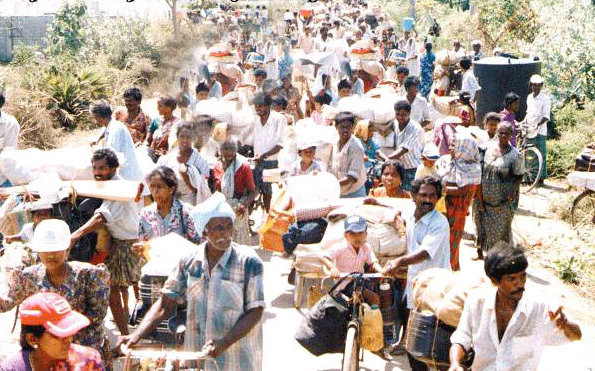
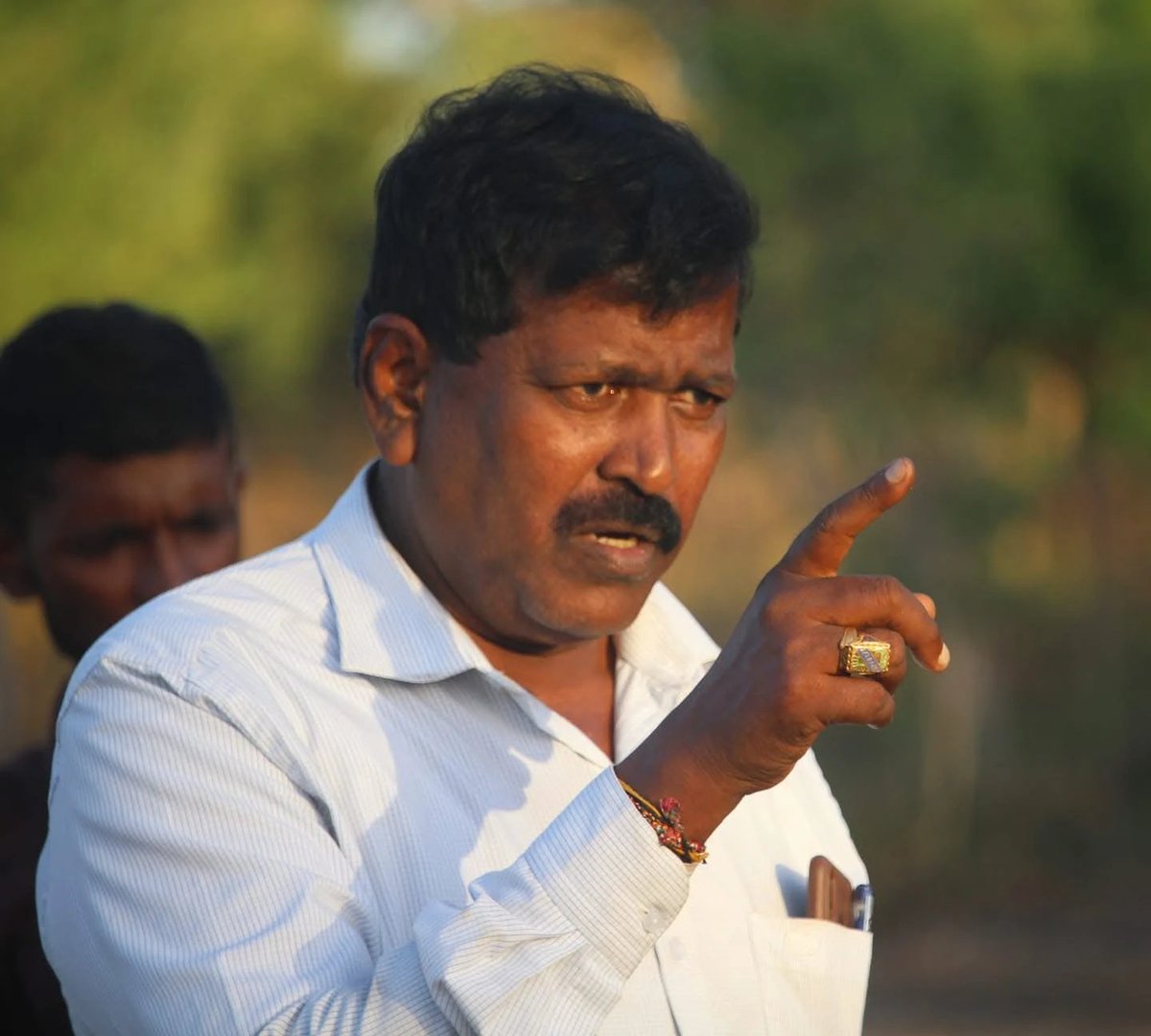
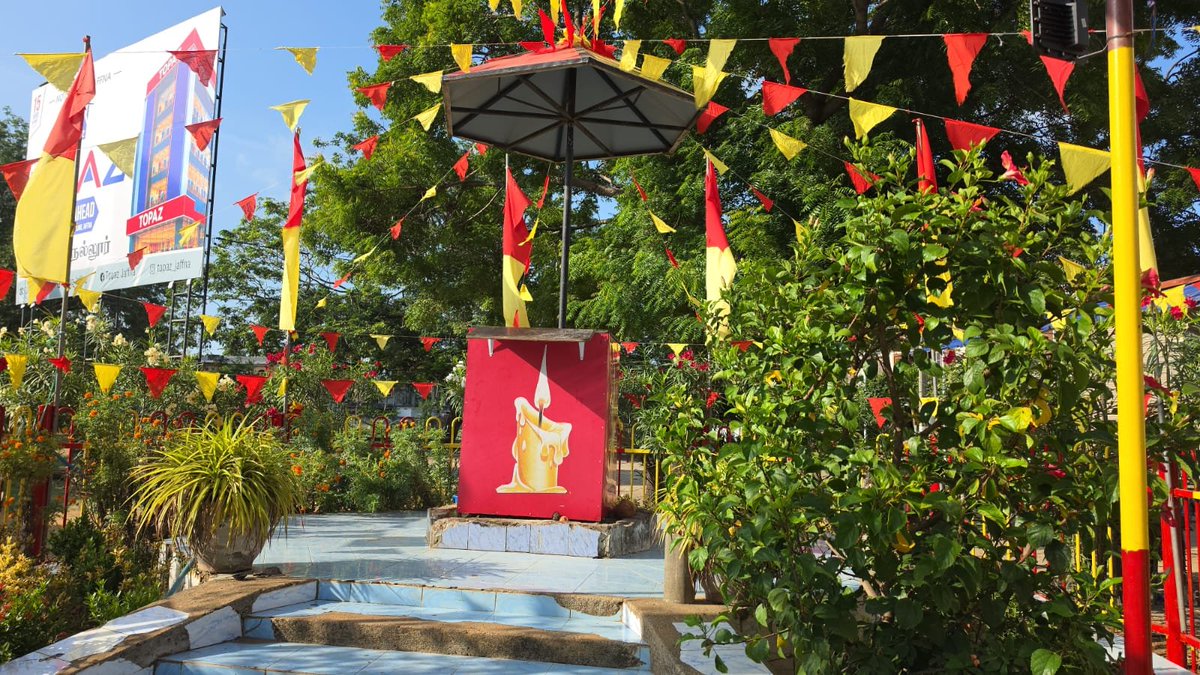
May 2009. Tamil Eelam.
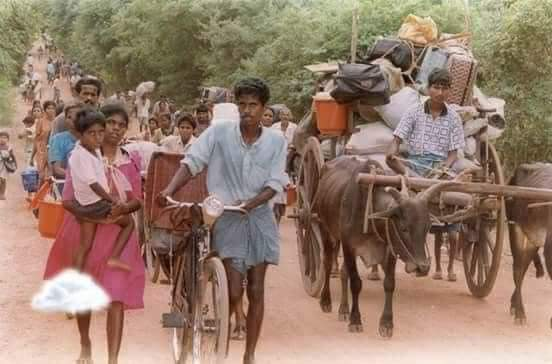
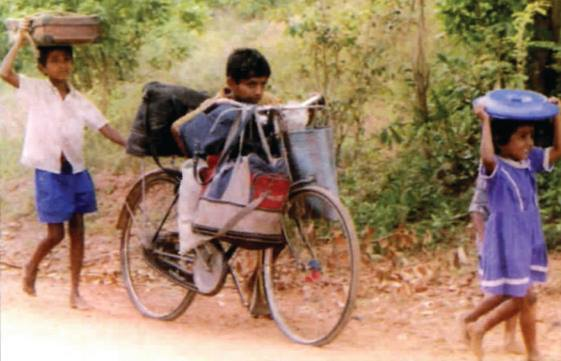
This is what the No Fire Zone looked like.
These images are seared into the psyche of the Tamil nation. The entire world watched. Some even took notes.
17 years on there has been no accountability. No justice. No answers.
We have not forgotten.
✍️ EDITORIAL - Occupation by choice
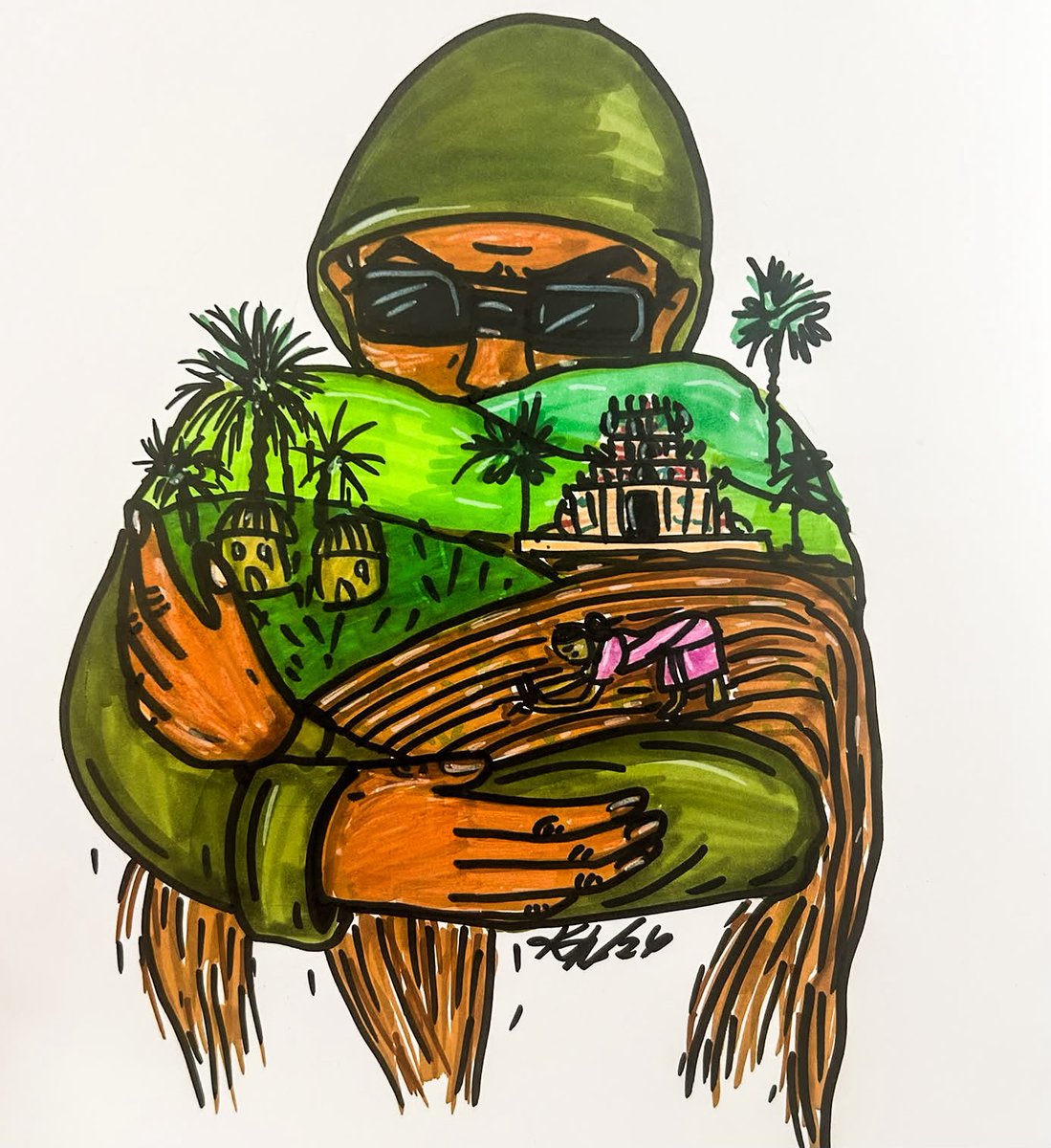
In Jaffna, displaced Tamils are protesting on three fronts. Every Friday for months, families from Valikamam North continue to gather outside the Sri Lankan military commander's bungalow that sits on their land in Myliddy. At Palaly Junction, a separate weekly protest by residents driven from their homes on 15 June 1990 has passed its twentieth week. In Thaiyiddy, Tamils assemble every full moon day outside the Tissa Vihara, a Buddhist temple illegally built on privately owned Tamil land, as busloads of Sinhala pilgrims are brought in from the south. On the other side of the homeland, hundreds of Tamil farmers rallied outside the Batticaloa District Secretariat on Monday, until a court order brought it to an end. For more than three years, these farmers have watched thousands of hectares of traditional grazing land in Mayilathamadu and Madhavanai be swallowed by Sinhala settlers, backed by the state and protected by the Sri Lankan police. Hundreds of miles apart, they are protesting the same occupation.
More than seventeen years after the end of the armed conflict, the Sri Lankan military's stranglehold on the Tamil homeland has not loosened, with tens of thousands of troops still stationed across the North-East. Alongside the network of camps, outposts and police stations, Buddhist viharas rise on sites with no Buddhist population, the Department of Archaeology claims Tamil land as Sinhala heritage, and Forest and Wildlife gazettes fence off land that Tamil villages have farmed for generations. Colonisation schemes continue to plant Sinhala settlers in the homeland, from the Mahaweli project to the Kivul Oya scheme, which one Tamil MP warned this week threatened some 13,000 acres in Vavuniya North.
The state has sought to bluster past each incident on its own, as a minor dispute that needs further mediation, or an administrative oversight that requires more bureaucracy to overcome. Taken together however, they illustrate the true extent of Sinhalisation of the Tamil homeland, carried out by the state through its military and its institutions. The aim is clear: the permanent alteration of the demography of the North-East. This is a project that has been decades in the making, and shows no signs of slowing down under the current regime.
The government's defenders will point out that this administration has released land and speaks of 'reconciliation' in a way its predecessors did not. It was the National People's Power pledge that "people's land belongs to the people" that contributed, at least in part, to its gains in the North-East. Yet, like much else this regime has promised, that pledge has rapidly fallen by the wayside.
The piecemeal releases that have occurred pale in comparison to how much the occupation still holds. In March, for example, just two acres in Vasavilan were handed back after 36 years. Yet more than 2,500 acres of private land in Valikamam North remain occupied. The Myliddy families were promised a release in April, then by the end of September. Neither date was met, and on 14 October a minister asked them for two to three more months. Even as families continued to demonstrate this week, state valuers arrived to inspect their land, which the families recognise as the first step towards acquiring it for the military, with compensation they have said they do not want.
Tamil demands for the occupation to end have not softened. Yet, the frustrating pace of release, whilst the armed forces, Sinhala settlers and Buddhist monks fortify their incursions, demonstrates how little appetite there is for change. Indeed, the small scale releases show that, if willing, the state can end the occupation and allow civilian life to gain some semblance of normality. Every acre still occupied is therefore occupied by choice.
The government's conduct elsewhere confirms the limits of its reform. On Wednesday, protesters marched towards parliament in Colombo against the proposed Protection of the State from Terrorism Act, which would replace the Prevention of Terrorism Act with a law that extends detention before a magistrate from 24 to 72 hours, permits remand of up to a year, broadens the definition of terrorism and widens state surveillance. The UN human rights office has said the bill "reproduces and expands several shortcomings" of the PTA. Eelam Tamils need no briefing on what those shortcomings mean. They have lived under the PTA since 1979, and it is the law under which they have been detained without charge, tortured and disappeared.
For years, diplomats and donors have told Tamils that this government deserves time and space. That grace period has been spent. It has bought continued land loss in the North-East and a new terror law that has been widely condemned. Nothing suggests that more patience will change the direction of travel.
The protesters in Myliddy, Palaly, Thaiyiddy and Batticaloa are not asking for patience. They want their land back. The international community must ask for nothing less.
🕯 Sri Lankan soldiers play football on graves of LTTE fighters, Ravikaran tells Parliament
ITAK Vanni MP Thurairasa Ravikaran has called on the Sri Lankan government to release the Maaveerar cemeteries, where fallen Tamil liberation fighters are buried, that are still occupied by the military. He also asked it to help rebuild those it destroyed.
“How can harmony between communities be expected when… Sri Lankan soldiers play football in their military boots on the sites where the Maaveerar are buried?” he asked.
He also accused the Forest Department of allowing forest clearance for the military while blocking projects that would benefit Tamils.
💫 It’s official - yet another Tamil woman has been elected to office!
Nithya Raman has been elected mayor of Los Angeles, becoming the first person of South Asian descent to lead the second-largest city in the United States.
Born to a Tamil family in Kerala, Raman moved to the US aged six. Before entering LA politics, she founded Transparent Chennai, mapping public toilets in the city’s poorest neighbourhoods and campaigning against slum evictions.
Speaking to the Los Angeles Times last month, Raman said she still speaks Tamil with her parents, and her 10-year-old twins “can kind of follow along”. Her husband, television writer Vali Chandrasekharan, is the son of Tamil-speaking immigrants from India.
Explaining why she has been learning Spanish, she said:
“To try and communicate to people in the language that they speak doesn’t feel like pandering. It feels like what the city should do.”
“If there was a lot of Tamil speakers here, I would appreciate that for me and for my family and for my grandparents.”
Raman takes office on 8 December.
🎥 via @nithyavraman
Sri Lanka’s pro-Palestine protesters are very quiet.
Their government is spending Rs 4.26bn on Israeli drones, after IAI upgraded the Kfir jets that bombed Tamils.
No marches. No protests against genocide.
Is the outrage about the weapons, or just who they’re pointed at?
🚨 Sri Lanka to spend Rs 4.26 billion on Israeli military drones as defence ties deepen
Sri Lanka’s parliament has approved Rs 4.26 billion for four drones from Israeli manufacturer BlueBird Aero Systems, part-owned by Israel Aerospace Industries, under a government-to-government deal due to be signed in December.
The purchase follows an IAI upgrade of the air force’s Kfir jets, which were used in bombing raids that killed thousands of Tamils across the North-East.
🚨 Sri Lanka sees Tamil nationhood as a threat to Buddhism, Gajendrakumar tells Delhi conference
Tamil National People’s Front (@TnpfOrg ) leader @GGPonnambalam told a conference in New Delhi that the Sinhala majority sees Tamils in the North-East as a threat to Buddhism. He said this drives a state campaign to deny the Tamil people’s recognition as a nation.
Across the North-East, the archaeology department, military and police have been used to seize Tamil Hindu sites, from Kurunthurmalai to Kantharodai.
🚨 Sinhala-only police order demands demolition of Thileepan memorial
Jaffna’s Sri Lankan police deputy inspector general has ordered Jaffna Municipal Council to demolish what he called unauthorised structures at the Thileepan memorial in Nallur. The letter, written only in Sinhala, said they could “evoke memories” of the war.
Police removed Thileepan’s statue in September and have questioned 14 people over it.
On this day, 19 years ago, S. P. Thamilselvan was assassinated by Sri Lankan soldiers, flying Israeli jets.
Thamilselvan was the head of the political wing of the Liberation Tigers of Tamil Eelam (LTTE). He would become the LTTE’s Chief Negotiator in peace talks.
On November 2, 2007, Sri Lanka’s military killed Thamilselvan - even before it officially withdrew from the Cease Fire Agreement (CFA) in 2008.
Colombo murdered him and five others in an airstrike.
Some 25,000 people attended his funeral in Kilinochchi.
In the south, the killing was celebrated with firecrackers. Then defence secretary Gotabaya Rajapaksa, who oversaw the genocide, warned that it was just the beginning.
வீரவணக்கம்.
Many of you will have seen this film.
Mani Ratnam’s Kannathil Muthamittal, like most Kollywood treatments of the Tamil Eelam struggle, has its flaws. But this one scene has always stayed with me.
Hundreds, then thousands of people, wading across water and pushing through jungle, driven from their homes by the violence of the occupation.
None of it is invented. Thirty-one years ago today, Jaffna emptied. Families walked miles with what they could carry, taking boats across the lagoon towards the Vanni. 500,00 people displaced.
It has always been difficult to watch.
Heartbreaking.
This is not a movie.
Footage from Jaffna, 31 years ago.
October 30, 1995, saw one of the largest human displacements in the entire world at the time. More than 500,000 men women and children were displaced from their homes as the Sri Lankan army launched an offensive to capture the peninsula.
People walked for miles, carrying whatever they could, fleeing Jaffna to the Vanni.
It was an unprecedented, colossal human tragedy.
Read more at the @tamilguardian
Chemmani is inextricably linked to the Jaffna exodus.
Those who fled in 1995 returned to a peninsula under Sri Lankan army control. Hundreds were disappeared.
We are still digging them out of the ground at Chemmani.
🕯 Remembering the Jaffna exodus – 500,000 displaced
On 30 October 1995, more than half a million Tamils fled Jaffna as the Sri Lankan military, under the then Sri Lankan president Chandrika Kumaratunga, launched its offensive to capture the peninsula.
Carrying what they could, they crossed the Navatkuli bridge and made the dangerous boat journey to the Vanni.
“The greatest humanitarian crisis of the war is in the making,” The Times reported.
🕯 ‘The greatest humanitarian crisis of the war’ – Press coverage of the Jaffna exodus
Despite Sri Lanka’s wartime censorship, foreign journalists and aid workers reported on the half a million Tamils fleeing Jaffna in 1995. They wrote of refugees sleeping outdoors in monsoon rains, shortages of food and medicine, and the military blocking relief.
Sri Lanka barred international agencies from operating independently, and its foreign minister accused the UN Secretary-General of exaggerating the crisis.
In Eelam Tamil Activism After Gaza, Madura Rasaratnam describes how dominant western liberal frameworks weaponise narratives of pathology to legitimise state-sanctioned annihilatory violence.
✍️ EDITORIAL - The power of the clergy
Sri Lanka's Sinhala Buddhist clergy have once again shown that they can summon the island's political leadership to the table. What began a fortnight ago as a complaint about the prison clothing of a convicted monk has become a six-day march from Kandy, an overnight occupation outside the Presidential Secretariat, a ten-day sit-in at Viharamahadevi Park held in defiance of a court order, and an ultimatum to the Sri Lankan president that he pardon the monk or resign. The sit-in was suspended at the weekend, not because the state enforced its own court’s order, but because the chief prelates of the three chapters wrote to the organisers to say they were negotiating his release with the government themselves.
Let us be clear about the man these protests are defending. Galagoda Aththe Gnanasara, a Buddhist monk, is an extremist and a racist. As leader of the Bodu Bala Sena he has spent more than a decade spouting vile remarks that have had deadly consequences. His organisation stands accused of inciting the anti-Muslim riots at Aluthgama in 2014, and he has warned of a "river of blood" should Tamils pursue self-determination. He has been convicted of hate speech, and of contempt for a court that was trying to establish what happened to a disappeared journalist. That senior monks, opposition politicians and the remnants of the Rajapaksa machine have marched to Colombo in his name illustrates the values that command loyalty in the south.
The protests, however, were about more than one man. The anger they produced reflects a conviction among the clergy that what is under attack is less Gnanasara than their own place in the political order of the island. For decades the Sangha has wielded significant power and influence. It is no coincidence that the first journey of every newly elected Sri Lankan president is to the Temple of the Sacred Tooth Relic in Kandy, the seat of Buddhist authority on the island. The chapters at Malwathu, Asgiri and Kotte exercise an effective veto over southern politics, the military and much of public life. It was their representations that secured Gnanasara's pardon in 2019 under then-president Maithripala Sirisena. Gotabaya Rajapaksa then appointed him to head a presidential task force on "One Country, One Law". Across successive administrations, of every party and every promised new beginning, the clergy have been consulted, accommodated and obeyed.
Anura Kumara Dissanayake and his party understood this long before they took office. The JVP spent decades courting the clergy and deferring to its demands. Even during Dissanayake's own presidential campaign, he addressed more than 1,500 monks at Maharagama to assure them that Article 9 of the constitution, which gives Buddhism the foremost place and makes it the duty of the state to protect and foster the Buddha Sasana, would not be touched, and that it enjoyed "divine protection". So when the Supreme Court struck down the pardon, in a challenge filed in 2019, years before this government existed, the clergy read it as something larger than a legal ruling. It was a breach of the unwritten pledge of deference that the Sri Lankan state has always made to them.
Dissanayake's response has been the most revealing part of the episode. He deserves credit for respecting the court and for refusing, so far, to issue another pardon. But what the clergy did receive is instructive. Within hours of their complaint, Dissanayake invited several senior monks to a personal, face-to-face meeting at the Presidential Secretariat and ordered a committee to draft new prison rules for Buddhist clergy, to be delivered within a fortnight, under which convicted monks would be allowed to wear their robes when taken outside prison. The marchers were received at the Secretariat by the president's own officials and told a decision would come within the month. When the Chief Magistrate ordered the monks out of Viharamahadevi Park, they stayed. When the court refused to lift the order, they stayed again, and the same court declined to issue warrants for their arrest. The order was never enforced. The sit-in ended only when the chief prelates intervened, and the terms on which it ended were not the state’s but theirs: a written assurance that the release of a convicted racist is now the subject of discussions between the Sangha and the government.
That is the pattern. The president may not be willing to break the law for the clergy, but he will rewrite it to accommodate them, meet them at the first sign of displeasure, and leave a court order against them unenforced until the senior monks decide the streets may be cleared. A government that promised to be different has, in its first real confrontation with the Sangha, found a way to resist the headline demand while conceding everything around it. So far, the monks have won a demonstration that every Sri Lankan government, including this one, still pays them deference.
Tamils will recognise the shape of this. In the North-East, the same government that speaks of law and constitution has presided over settler violence, the construction of viharas on Tamil land and a military occupation that its own pledges of land release were meant to end. Those pledges have been broken repeatedly, and the reason is the one on display in Colombo this month. A state whose leaders begin their terms at the Sri Dalada Maligawa, who rewrite prison rules for Buddhist monks, and who leave their own courts' orders unenforced against a sit-in demanding freedom for a racist convicted of threatening a campaigner for the disappeared, is not a state that will dismantle Sinhala Buddhist primacy in the Tamil homeland.
The clergy have tested this government and found it where they expected. So have the Tamil people.
🕯 Chemmani demands international attention, justice and accountability
Canada’s public safety minister Gary Anandasangaree (@gary_srp) opened the Parliament Hill event on the Chemmani mass grave. He said Sri Lanka has evaded accountability for decades for war crimes, crimes against humanity and genocide.
“This is an issue that demands international attention, demands international justice, and certainly demands accountability,” he said, adding that Canada’s sanctions so far are “not enough”.
🚨 ITJP report points to massacre of more than 300 wounded LTTE fighters at Ananthapuram
More than 300 severely wounded Tamil fighters were left behind in a single building when the Sri Lankan Army overran Ananthapuram in April 2009. They couldn’t walk and had no weapons. None of them were seen again.
Drawing on seven survivors speaking publicly for the first time, the @itjpsl concludes that the Army’s own body count can only be reconciled with a massacre of the wounded.
“The injured were alive when I left. They had no rifles or explosives or cyanide,” one survivor said.
Nothing 'complex' about it.
When Jaffna library burned in 1981, Premadasa blamed him.
Weeks after Black July, he warned "in 14 minutes, the blood of every Tamil in the country can be sacrificed to the land by us".
Tamils don't need to wonder what might have been. He told us.
32 years since Gamini Dissanayake was assassinated by the LTTE.
A towering figure in Sri Lankan politics whose life and legacy remain part of our complex history. One cannot help but wonder what might have been🙏🏾
@NavinDissa#lka
🕯 Tamils commemorate 68 killed in 1987 Jaffna Hospital massacre by Indian troops
Tamils gathered at Jaffna Teaching Hospital to remember the 68 doctors, nurses, staff and patients killed when Indian Peace Keeping Force (IPKF) troops stormed the hospital on 21 and 22 October 1987. The commemoration fell on the same day India marks its Police Commemoration Day.
No Indian soldier has been prosecuted, and India has never acknowledged or apologised for the massacre.