Trading fees are only half the story. What the pool costs you matters just as much.
LICK compares both, identifies pools worth considering, and explains every rejection.
The process, in 30 seconds ↓
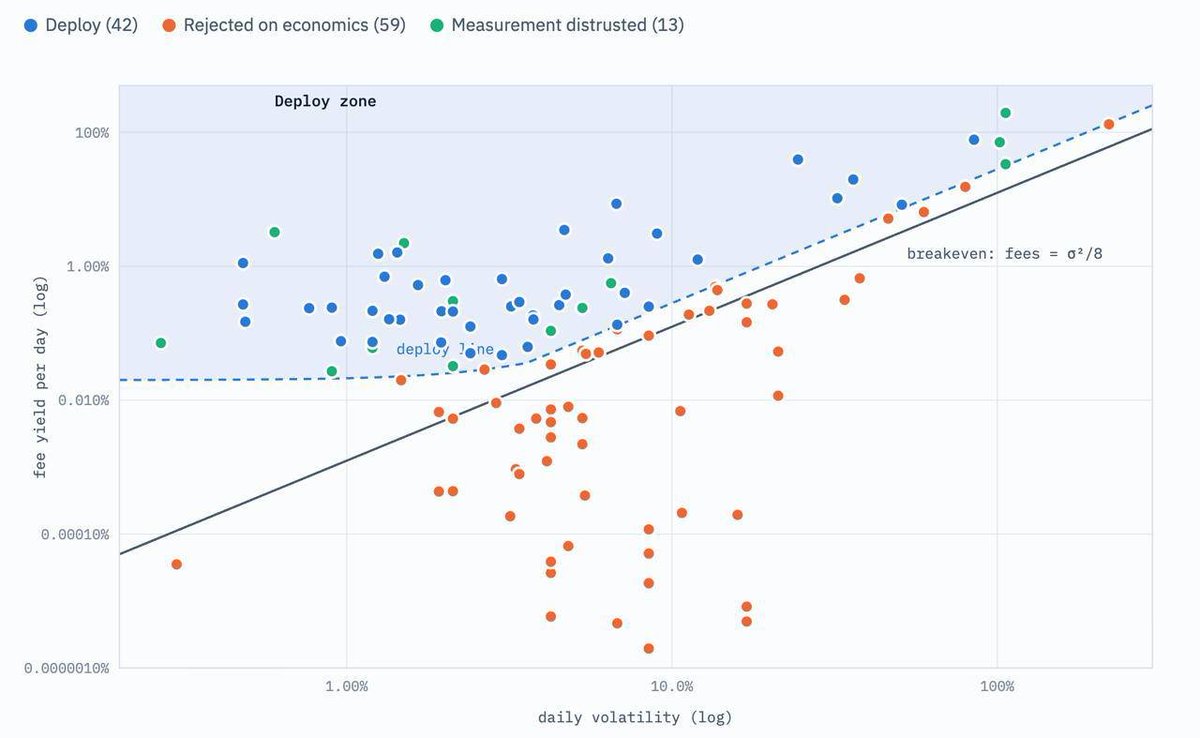
Fees grow in a straight line. Losses grow with the square of volatility.
An LP earns turnover × fee rate per day. Arbitrageurs take back σ²/8 per day, the loss-versus-rebalancing term from Milionis, Moallemi, Roughgarden and Zhang.
Where the curve crosses the line is the breakeven volatility. We only deploy with 1.5× headroom below it.
Lick has no black box. Every 15 seconds the keeper lands in one cell of two matrices:
1. Should we be in this pool? Pass the gate or withdraw.
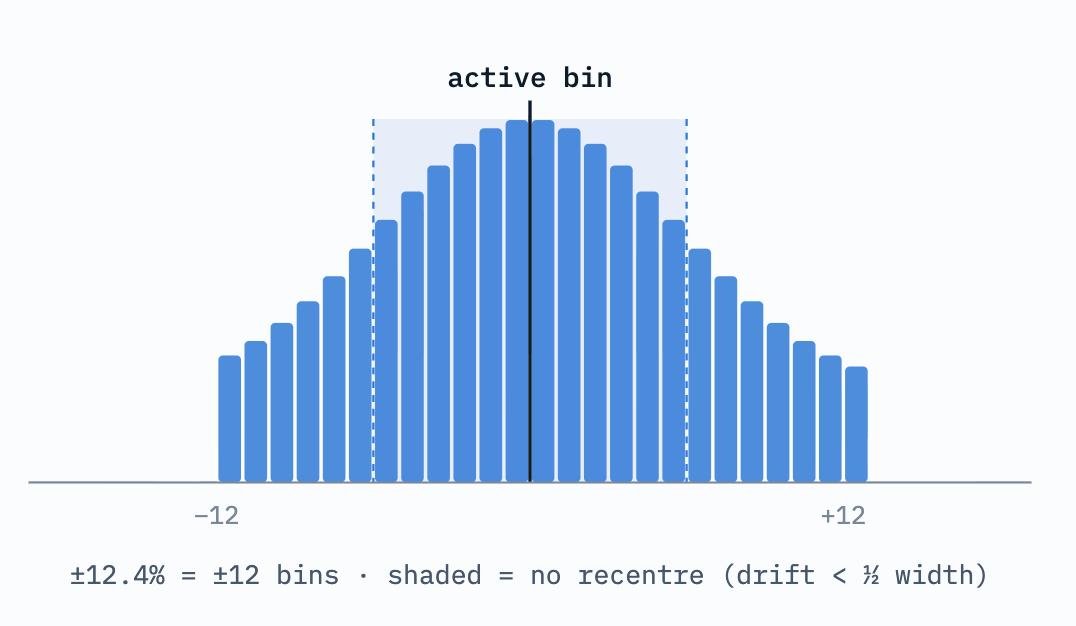
2. Should the position move? Only if price left the range, or drifted and the fees earned since the last move already cover the cost of moving.
Range width tracks volatility: 2σ, clamped 1–40%. Every decision is logged with its reason, including doing nothing.
Meet Lick.
A new state of the art liquidity provisioning service.
Aqua is our autonomous market making engine that uses live data to dynamically reroute capital allocation to different memecoin markets.
The Aqua vault takes in SOL and USDC deposits and $LICK staking, and distributes profits among them in a pro rata fashion.
CA: 9XgaEzXe11du9o9Yo4FEL4JvYJe5pGhHUuy6hzjQpump
Earn from LP fees with 1 click: https://t.co/0Y2RIs5qZ8
587 pools watched. 114 earned measurable fees. Every one is plotted against the breakeven curve, where fee income equals what arbitrageurs extract.
Above the dashed line: deployable. Below it: we sit out, however good the headline APR looks.