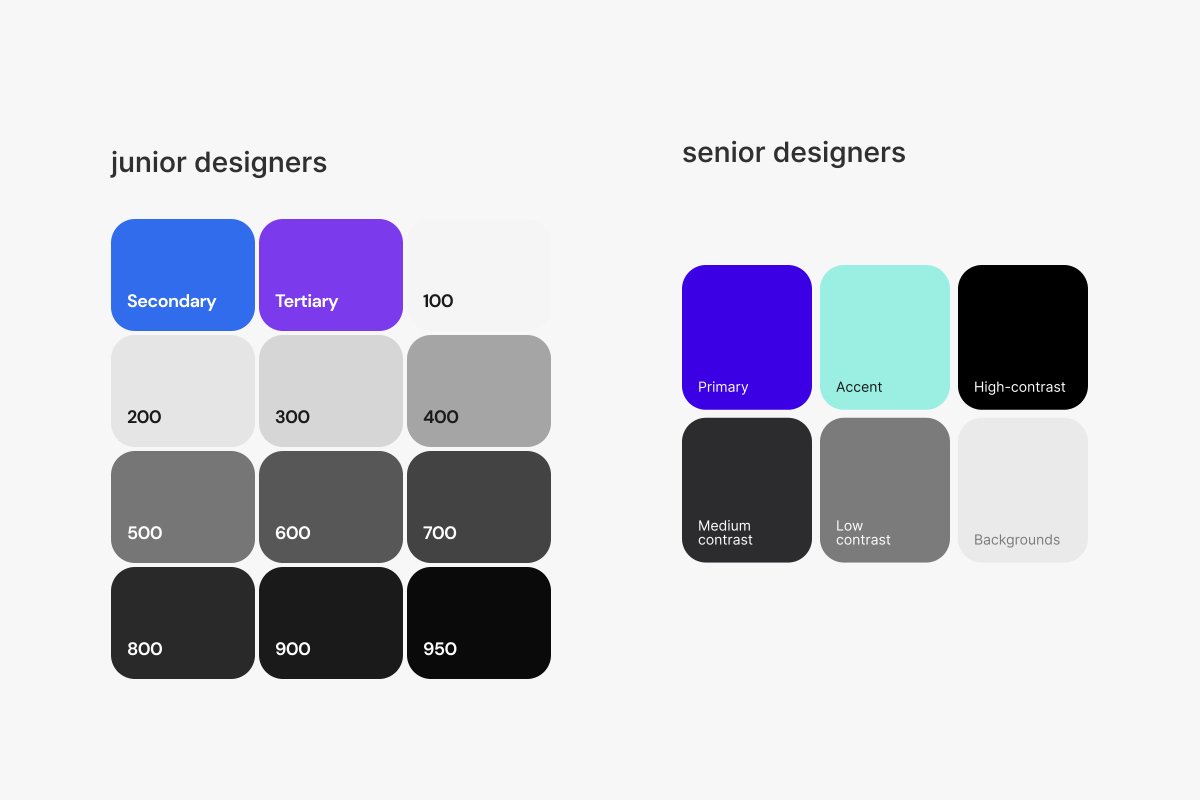
Junior designers vs. Senior designers
I still don't understand why designers define colors as color-100, 200... instead of assigning a purpose or name.
Example: High contrast (Used for Titles, headlines)
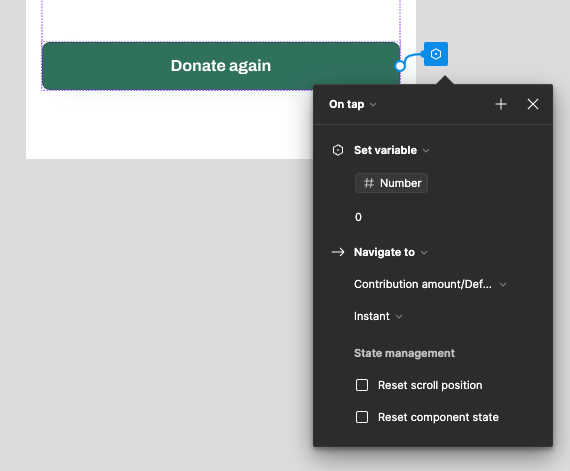
@figma#variables are amazing, actually! @figma my main pain was to reset the amount to zero after making a donation. So, i just had to set variable to 0 and navigate back to the start :D
Is it possible to somehow make "reset button" (instead of pressing R) within figma prototype? so that testers will be able to reset prototype by pressing a button to restart the flow :D
#figma#prototyping#variables#Config2023#figmahelp
@negativespaceca On the second screen, when you choose the category, do you have condition on the master components? How do you archived that "On click" you selecting only 1 category? :) Can't figure it out...
... If they feel they have worked hard they will get that feeling of Fiero and with luck a hit of endorphins. The achiever type and player types will love this!”
—Andrzej Marczewski, founder of Gamified UK Gaming Consultancy
1/2 “The easiest way to boost endorphin release with gamification is to create situations where your users will feel they have achieved something. Rather than giving rewards for clicking buttons, you need to create challenges that actually require skill and effort to complete...
users will work out quickly when they’re being manipulated or forced into things, anyway. Then, they’ll tend to withdraw from the game environment, and the offending design will become known as, say, a Skinneresque rat maze or the front lines on a chess board.
Gamification is not game design. The objective is to enhance an existing system and not to create a game. You’re building a gamification feature into a design, not the other way round.
https://t.co/cgfPcnY5ae
It can be tempting to see gamification as a means to introduce additional layers of control in the workplace or to try and fool people into doing more than they are expected to. That’s a bad idea.