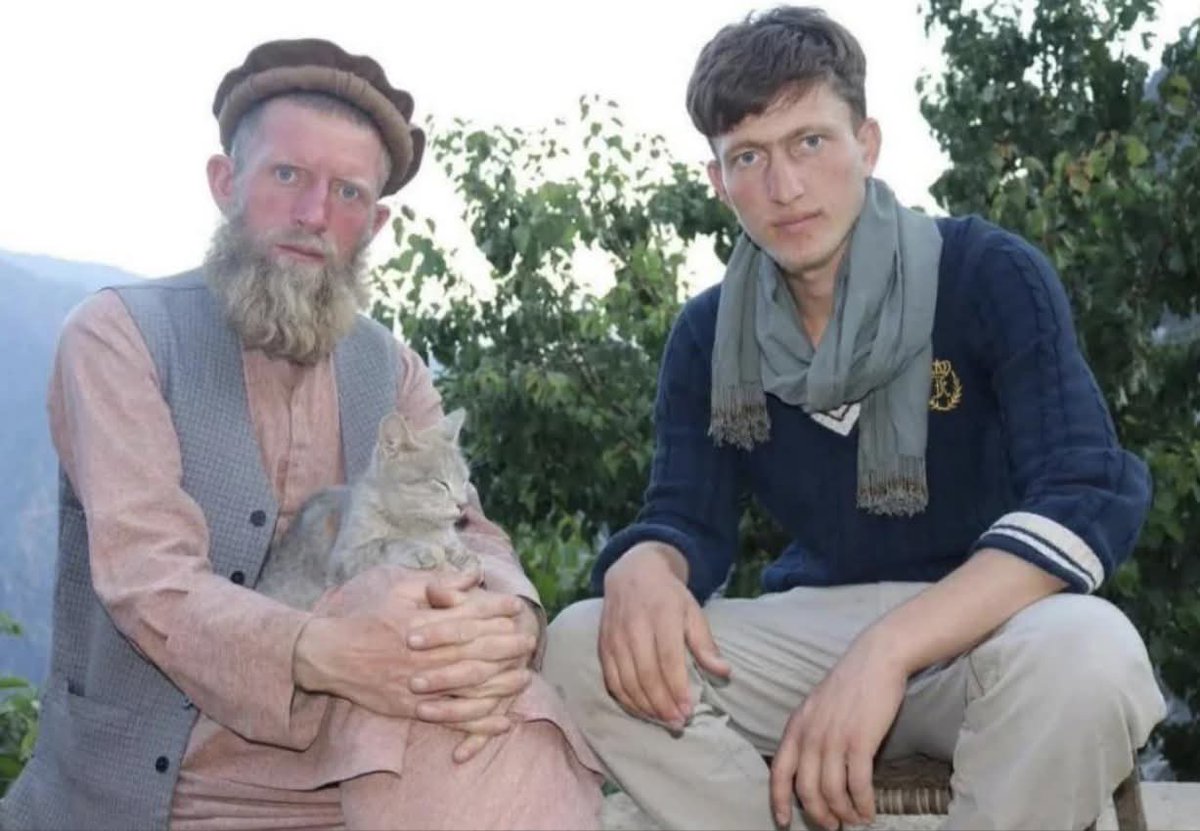
An ethnic nuristani man and his son in rural eastern Afghanistan...
The Nuristani people are one of Afghanistan’s most culturally distinct and historically fascinating ethnic groups, living primarily in the rugged, mountainous region of eastern Afghanistan near the Pakistan border. For centuries, their remote valleys helped preserve unique traditions, languages, and physical features that set them apart from neighboring groups.
Until the late 19th century, the region was known as Kafiristan, meaning “Land of the Unbelievers,” because the Nuristanis practiced an ancient polytheistic religion unlike the surrounding Muslim populations. In 1896, Afghan ruler Abdur Rahman Khan conquered the region, leading to its conversion to Islam and renaming it Nuristan, meaning “Land of Light.”
Nuristani communities remain deeply tied to agriculture, livestock, and strong clan and family structures. Many still wear traditional clothing, with men often wearing distinctive caps and layered garments suited for the harsh mountain climate. Their languages belong to a rare Indo-Iranian branch spoken by relatively small populations, making them linguistically significant to historians and anthropologists.
Nuristan is one of the most linguistically diverse regions in Afghanistan, with at least six distinct Nuristani languages, many of which are not mutually understood even between neighboring valleys.
#archaeohistories