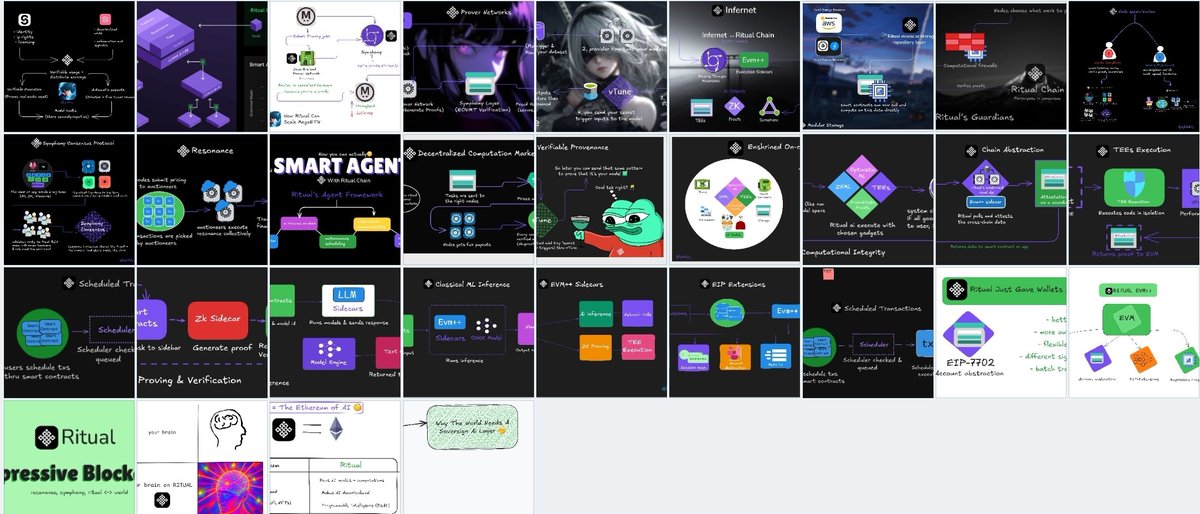
1/ my biggest Ritual thread ❖🧵
I'm posting about ritual from last few months & it’s been a good journey so far cause i barely get 100 or 200 views on my posts but on my ritual post I'm getting almost 1000 views & i even increased my infographic quality soo much
it’s the first time i actually tried to understand a projects technical docs/ so if you really want to understand ritual tek it’s for you cause i covered almost everything from ritual docs & about ritual 🧵
Let the Ritual Begin🕯
@ritualnet@joshsimenhoff@Jez_Cryptoz@0xMadScientist
ai is entering a new phase
it's moving from just giving outputs
to taking actions making decisions and influencing systems
as intelligence begins to act, it requires ownership and accountability
Ritual brings intelligence natively onchain where agents can verify, commit, and bear consequence
not ai interacting with blockchains but intelligence existing natively within them
gRitual ❖
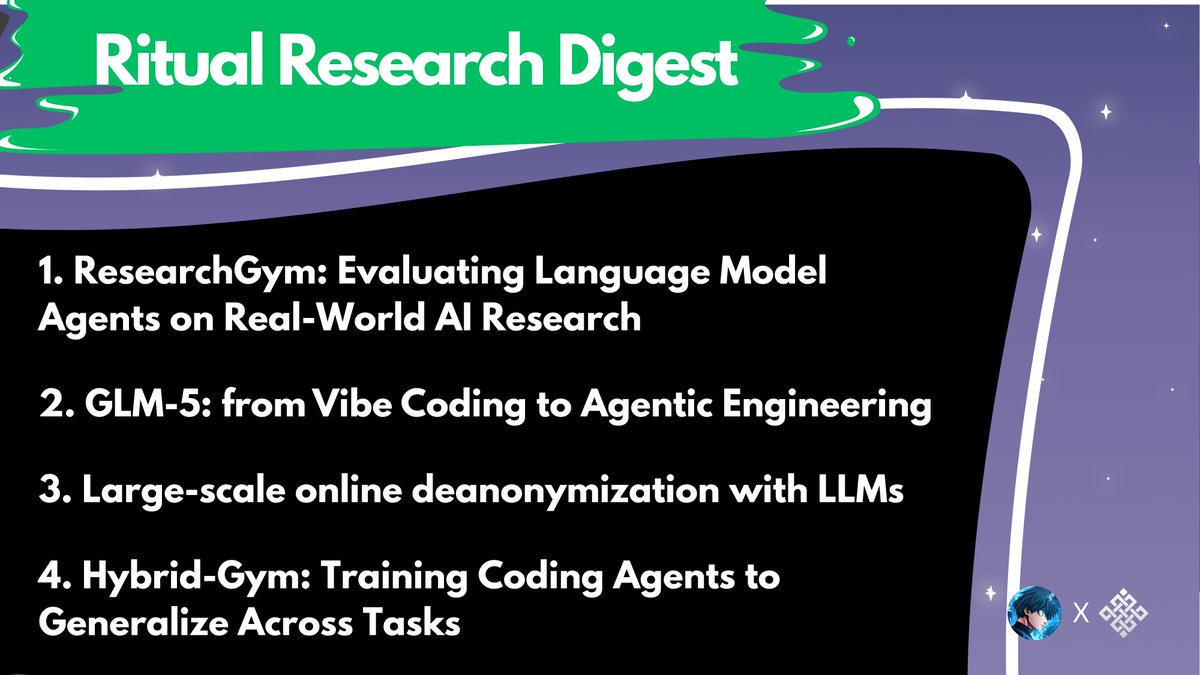
ritual research digest is back again with a new newsletter covering the latest papers on LLMs and crypto x ai
this week they released 4 new papers, i will try to explain each paper in this post/
1/ ResearchGym: evaluating language model agents on real-world ai research
this paper introduces ResearchGym, a benchmark designed to test whether ai agents can handle real-world research tasks from start to finish. instead of simplified problems, it uses five papers (from ICML, ICLR, and ACL) the ai must understand the problem, implement solutions, and run experiments similar to what human researchers do
the results show mixed performance: a gpt-5 agent beats the baseline only 1 out of 15 times and completes just 26.5% of tasks on average. sometimes it even outperforms the original solution, but overall, ai research ability is still inconsistent
2/ GLM-5: from vibe coding to agentic engineering
this paper introduces GLM-5, a new ai model built to do more than just write code, it can handle longer, real-world tasks like an agent. it uses a special method called deepseek sparse attention, which helps the model handle long context while keeping costs lower
even though the model is extremely large, it uses a smart setup where only a small part of it is active at a time. this keeps performance high without needing full power all the time. glm-5 ranks as the top open-source model, showing strong ability to manage ongoing and practical work
3/ large-scale online deanonymization with LLMs
this paper shows that ai models can figure out who anonymous users are just by analyzing how they write online. in the past this kind of identification needed structured data like usernames, profiles, or metadata
now LLMs can do it using only natural language like posts or comments across different platforms. they tested this in two ways: one where the ai could search the web freely, and another where it followed a step-by-step process to extract clues and match writing styles. even without personal details, writing patterns alone can reveal identity making online anonymity less secure than we once believed scary tbh
4/ Hybrid-Gym: training coding agents to generalize across tasks
this paper explains that coding ai should learn more than just fixing bugs from gitHub issues. real developers explore code, understand systems, test software, and design how things work. so the researchers built Hybrid-Gym, a training setup where ai practices these skills using simulated tasks like locating functions in large codebases
when they trained a coding model in this environment, it performed much better on real-world coding tests. this shows that practicing broader, realistic tasks helps ai generalize and become more useful for actual software engineering work
that's it for this weeks ritual research digest, thank you for your attention to this matter xD
gRitual ❖