Pretty much.
As of the past few weeks, debt markets have almost entirely shut off access to money for any company that doesn’t have substantial revenue independent of AI data centers.
SpaceX closed $40B of debt for GPUs, but we’re investment grade and have Starlink & launch revenue.
That means the 200+ neoclouds are going to see guppy-level death and consolidation. Some will make it through, but not many.
BREAKING: Pentagon prepares every major US military base to operate for at least 90 days without outside electricity, fuel, water or supplies, anticipating a major war that could cripple power grids, break global supply chains and threaten critical infrastructure on US soil, per Fox News.
The plans include portable nuclear reactors, large-scale battery storage and microgrids able to disconnect installations from the civilian electrical grid entirely.
Why do Semiconductor stocks keep falling even though fundamentals remain strong?!
Here's why:
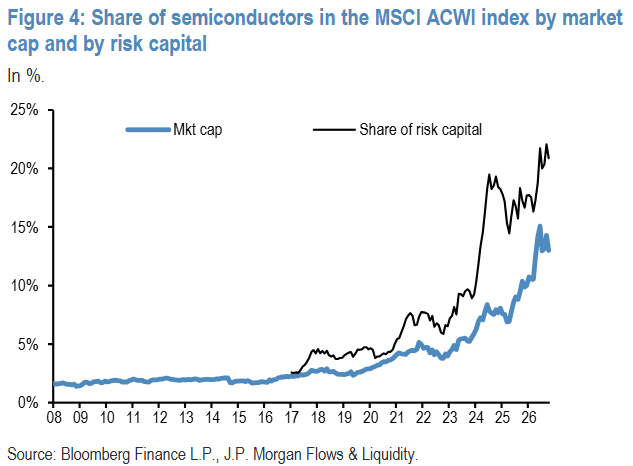
TLDR; The Semiconductor industry consumes a massive 20% of the total risk capital in the global equity markets.
The current share of risk capital for the Tech sector in the broader Global MSCI ACWI index is 40% vs. its 28% market cap weight. Of this, Semiconductors account for 20% vs. their 13% market cap weight.
Semis' market cap weight has risen rapidly in 2026 and because they're more volatile than the broader market, their share of risk runs well ahead of that weight. Therefore, investors are far more exposed to the Semis industry than even the index weights suggest.
This concentration then changes how the entire sector trades, where most of these selloffs are positioning events - not fundamental-driven.
Steady inflows into equities and thin net equity supply have kept realised vol low. Funds that size positions off VaR or vol-targeted risk budgets respond to low vol by running bigger gross exposure. When vol picks up, the same models force them to cut positions.
Then like a snowball rolling down a hill...that selling lifts vol further which forces the next round of cuts. (It works the opposite way too).
So with ~20% of the global risk budget sitting in Semis, these stocks are the first thing sold whenever risk models flag any shocks...even if fundamentals remain robust.
Data: JPM Global Markets Strategy
This is the most serious 48 hours in cybersecurity history.
"Black October" they're calling it
It seems every *hour* there's a new incident, that in a typical year, would be one of the biggest incidents of the *entire year*
SUMMARY OF THE LAST 48 HOURS:
YEAR-LEVEL INCIDENTS (In a typical year, these would be among the biggest incidents of the year):
1. PHP2Shell: a hole in the software behind ~70% of websites. Governments took sites offline.
2. eMudhra: the master keys that prove websites are real were cracked. One was the number 4.
3. California: data on every public school student since 2023 stolen, including disability status
4. Railway: hackers stole customers' secret keys from a hosting platform used by millions of developers
5. Zeabur: 321,810 accounts breached. The company is shutting down.
6. LiteLLM: an AI tool downloaded 3.4 million times a day was poisoned with a password stealer
7. GitLab: a 10-out-of-10 severity hole in every version since 2014
8. Cairn: criminals used an AI hacking tool to break into 100+ companies
9. Ahold Delhaize: hackers knocked the owner of Food Lion and Stop & Shop offline
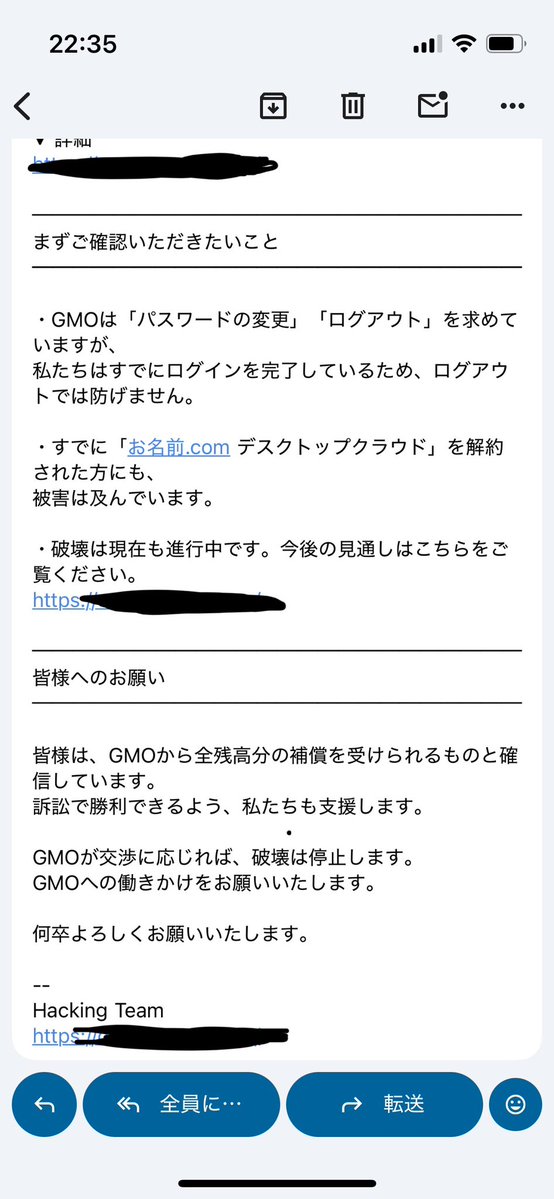
10. Onamae: malware planted on up to 26,739 customer servers in Japan
MONTH-LEVEL INCIDENTS (In a typical month, these would be among the biggest incidents):
11. Signal: a bug could leave your mic and camera on after you hang up
12. NGINX: 3 critical holes in software running ~1/3 of websites
13. HTTP/3: a single connection can crash 7 of the 10 web server types tested
14. Plex: hackers breaking into home media servers
15. SafePay ransomware: FBI warns it has hit 600+ critical infrastructure organizations
16. Palo Alto: ransomware gangs breaking in through company firewalls
17. Bullhorn: platform used by 10,000+ companies knocked offline
18. Medi-Cal: 970,000 patients' data stolen
19. WordPress: hackers stole a plugin maker's keys and used them to plant backdoors on websites
20. AOMEI: backup software's update server handed out a backdoor
21. Meta Muse: Meta's AI agent exposed users' personal and business secrets
22. Tor: 333 relays hijacked to steal logins
23. TiDB Cloud: database company's cloud breached
Also serious:
24. State Bank of India: India's biggest bank confirms a data breach
25. OVHcloud: hackers slipped a password stealer into a cloud company's official tool
26. Siemens: a software hole being used to spread malware
27. North Korea: state hackers launch a new attack campaign on South Korea
We’re opening a research preview of Claude Duet, a new app where Claude works as a proactive agent.
It comes to you with what needs your attention, completes tasks you ask of it, keeps working when you step away, and checks with you before it acts on your behalf.
Opus 5.5 é um milestone. Esse modelo deveria ser gravado em hardware e vendido em chips com inferência 10-100x mais rápida. Já ia atender 99,99% da população e dos casos de uso