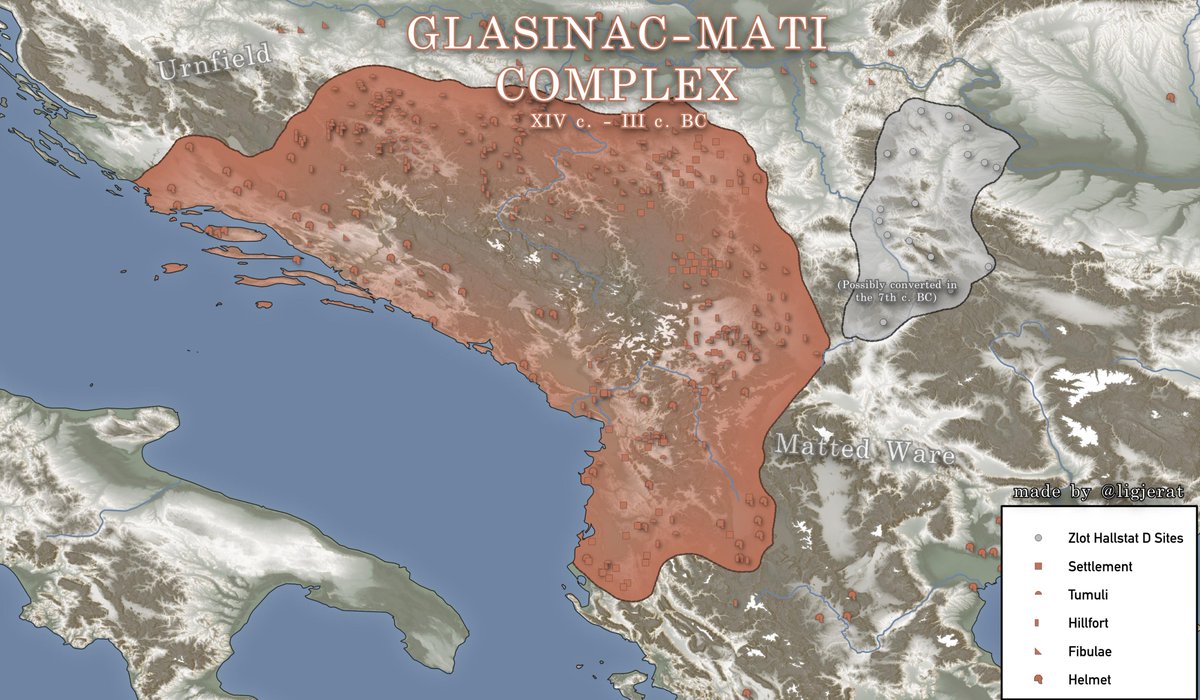
The Glasinac-Mati Complex (1300-200 B.C)
Discovered independetly by Yugoslav and Albanian archeologists, G-M is the coalesced form of the people known as Illyrians by Greeks in classical antiquity.
Zlot group was originally part of LBA Gava and later showed G-M similarities.
The pre-Slavic period samples come from a few different burial contexts such as La Tene, Wielbark, Pomeranian and even Scythian. Although some are low resolution and thus can't be checked autosomally, the rest however seem to not have a discernable (Balto)Slavic shift.
R-M458 Interpolation over a map of Europe
Although clearly an Early Slavic dispersed branch with Migration Period and Early Medieval samples showing this it has been argued for some time now as to what its Pre-Slavic origin could be:
1/2
Interpolated regional frequency map of E-V13, a paternal lineage found most frequently from Ancient Thracian Samples.
Based on FTDNA regional and national DNA projects as well as Poreklo and Rrënjëts public datasets.
Interpolated regional frequency map of R1b-DF27, a paternal lineage originating in the Bell Beaker culture, downstream of R1b-P312.
Based on FTDNA regional and national DNA projects as well as Poreklo and Rrënjëts public datasets.
@theoMiscarius Yeah the east danubian culture groups (Ipotesti-Candesti, Costisa-Botasana etc) are an amalgam of Penkovka and P-K not every site of Penkovka is a continuation of them, some like the ones breaching into Roman territory were temporary and short lived and dont continue into I-C.
The complete map of Migration Period spread of Early Slavs during the 5th to 7th century A.D
This expansion had permanent effects on the ethnogenetic landscape of Europe, almost replacing the entirety of the preceding groups before their arrival.
The Kyiv culture and its variants served as the basis from which Prague-Korchak and Penkovka spread out of, whereas Kolochin had minor movements and is a more direct continuation.
They are decisively split between 2 tribes: Sclaveni and Antes
Interpolated regional frequency map of R-U106, a paternal lineage originating in 2700bc, possibly in Corded Ware or Bell Beaker contexts.
Based on FTDNA regional and national DNA projects as well as Poreklo and Rrënjëts public datasets.
@UBERSOY1@maptismcontact Y-DNA was used in literature to define population substructure before AuDNA and is still more definitive in some cases than AuDNA especially when it has to do with groups that are similar autosomally.
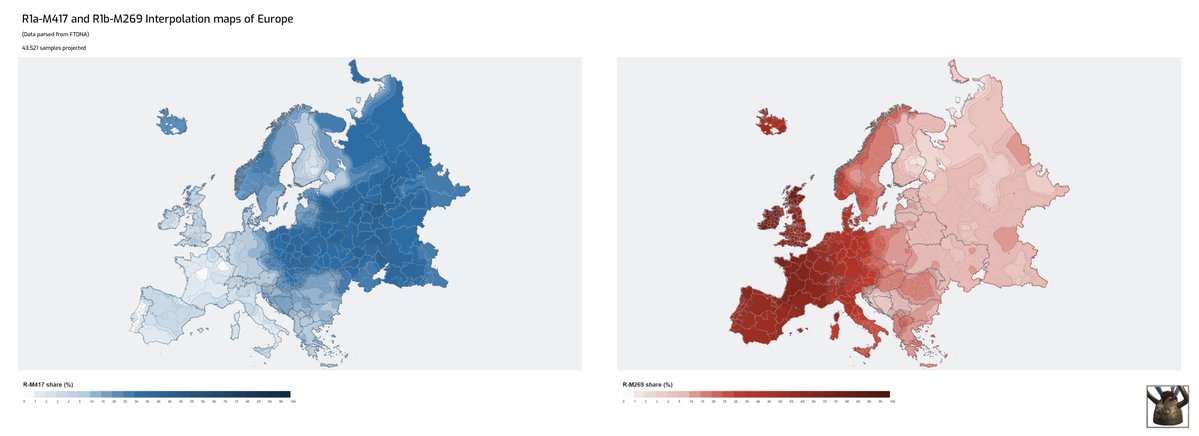
R1a-M417 and R1b-M269 interpolated over a map of Europe. Both are vectors in the spread of IE languages and they represent possibly the best West and East split genetically in Europe.
@maptismcontact
I put some genetics-related accounts on a political compass-esque chart.
My "methodology" was 99% vibes, so please don't take it too seriously, and do tell me if you think I should change something.
Also, where do you think I would plot?
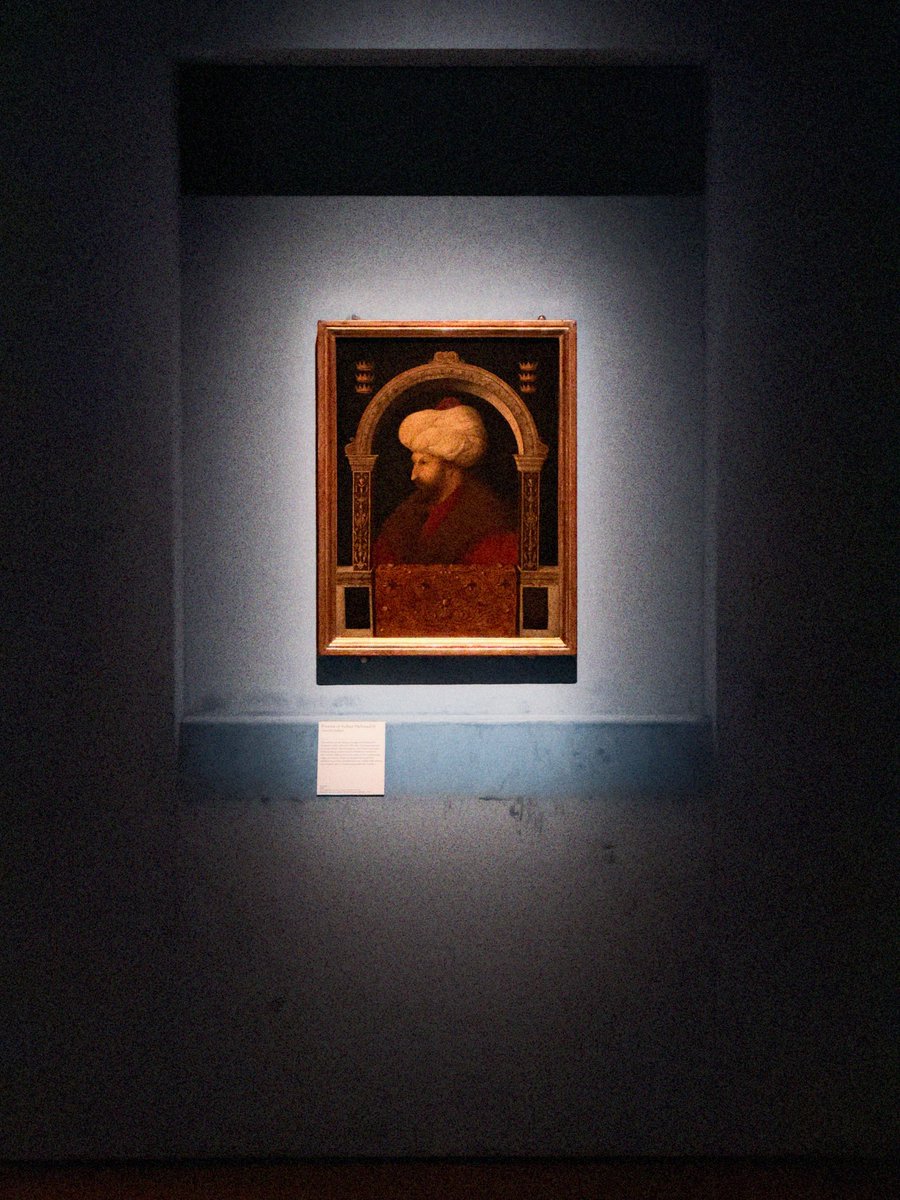
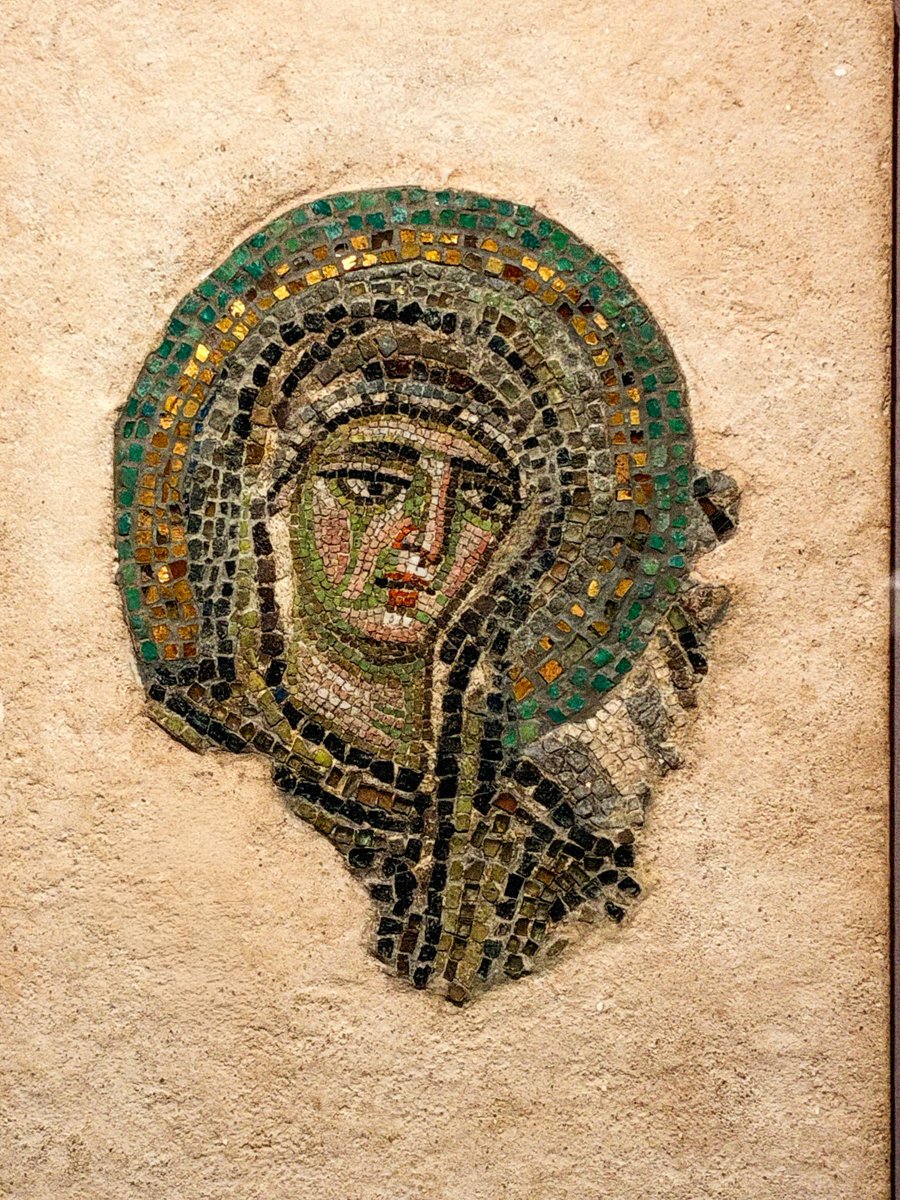
Somebody at the V&A should go and teach the ruffians at The British Museum how to curate and run an exhibition. The Constantinople to Istanbul exhibition was sold out today but not overcrowded, and had an excellent selection of displays, artefacts, and art.