The Hair-Trigger Metal
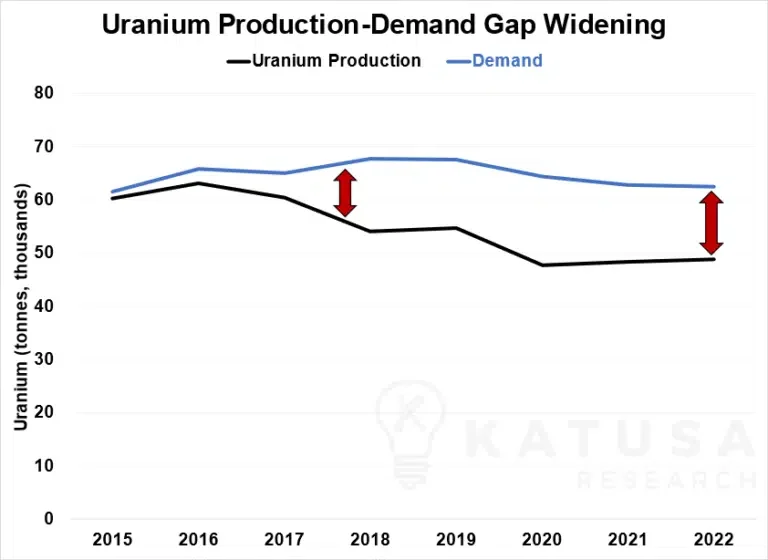
The gap between the amount of uranium miners produce and what reactors need continues to widen rapidly.
In 2022, coverage hit another record low. Only 74% of uranium demand was actually produced.
The cumulative uranium supply/demand gap from the last decade just hit 100,000 tonnes (220 million pounds).
That’s 150% of yearly demand, and it’s growing larger faster every year.
And now SPUT (and other investors) will be taking uranium off the market, making it unavailable for use.
For years, “secondary supply” has been used as a stopgap measure.
The secondary supply is miscellaneous uranium inventory held by utilities, fuel cycle companies, and governments.
But as the gap has widened, secondary supply has dropped precipitously.
It’s down to 10,000 tonnes a year—enough to cover about 60% of the current gap.
Thirty countries are considering starting a new nuclear energy program.
Consequently, a nuclear renaissance is unfolding globally:
Canada is set to construct the world’s largest nuclear plant.
Sweden aims for 100% nuclear energy with 10 new reactors.
Japan is reviving its nuclear program post-Fukushima.
Other nations, including India, France, the UK, and Russia, have ambitious nuclear expansion plans.
India is planning 9 new reactors, France up to 14, the UK 24, and Russia 29.
The list goes on.
Today, more nuclear reactors are being built than any year since 1992.
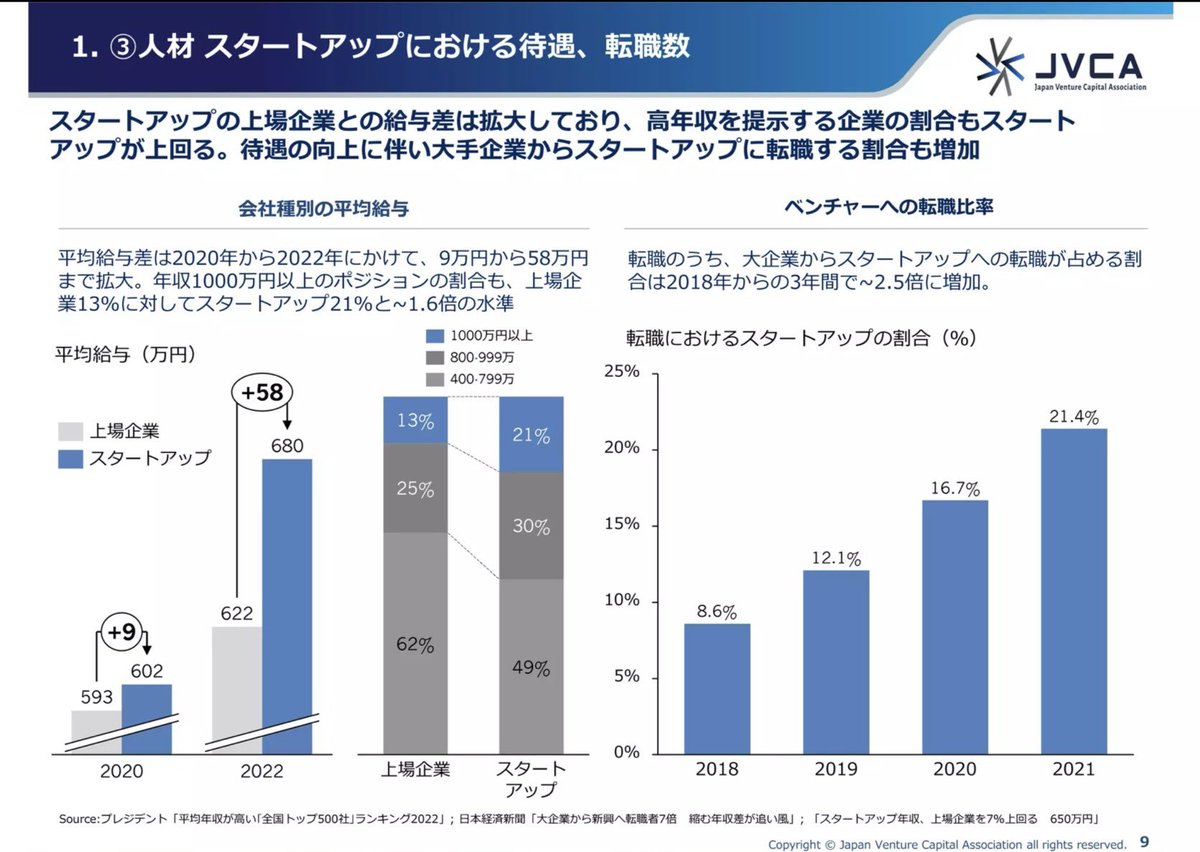
The % of individuals who both switched jobs AND joined a startup from a large 🇯🇵 corporate increased ~2.5x between 2018 & 2021, going from 8.6% to 21.4%
21% of startup jobs offered a salary >¥10M vs. 13% at large corporates
"Risk" & career opportunities being redefined in 🇯🇵!
詳細はこちら
🔗- HustleGPT: Generative AI will boost income and help millions of workers take on second and third jobs, Morgan Stanley predicts.
https://t.co/gaXQFG1Wq1