Hi! 👋 Linguistic Discovery teaches you all about the science and diversity of language—a field known as linguistics.
I (Danny Hieber, Ph.D.) post daily about how language works and the incredible diversity of the world’s languages.
Today is World Hello Day! Here’s the history of this surprisingly young word in English:
https://t.co/0ZRICKvVmB
If you want more of the latest news, research, and interesting articles in language and linguistics, check out my free weekly digest at the link in bio! ⬆️
In the early ‘00s linguists found out that a new sign language had emerged among an isolated Bedouin community in Israel that happened to have a high rate of deafness. Even though these children hadn’t been exposed to sign language, their individual home signs gradually coalesced into a brand new sign language shared by the community.
This was BIG news to linguists because it was basically a new language being born, and naturally it sparked all sorts of questions about the origin of language.
This book documents the emergence of this Al-Sayyid Bedouin Sign Language (ABSL), and what it tells us about language and the human mind:
Amazon: https://t.co/PQXlSR4g5A
Bookshop: https://t.co/Cef8LDvXpx
Can AI help us decipher ancient languages?
“With a large enough corpus, an AI model could hypothetically get fluent enough to converse with a Minoan or Etruscan speaker on the model’s own statistical terms. But the AI system still wouldn’t be able to hand a human a translation, because fluency and meaning aren’t the same thing here. The model can learn which signs follow which, and which words cluster together, without ever knowing what any of them actually refer to.”
https://t.co/NUgs5l5am7
If you want more of the latest news, research, and interesting articles in language and linguistics, check out my free weekly digest at the link in bio! ⬆️
🧬 Ancient DNA rewrites the story of how Germanic and Celtic languages spread across Europe
🔊 Rediscovered 1935 recordings reveal earliest audio of Louisiana Creole
🤩 Collins chooses “mogging” as Word of the Year
🔢 The almost-forgotten Cherokee numerals invented by Sequoyah
🗞️ Here’s what happened this week in language and linguistics!
https://t.co/WZGRKVlEt3
Love the word “cunt”? You might be an Australian.
Hate it? You might be an American.
Academics and lexicographers are exploring how swearing is tied to national cultural identities —and how the internet may cause new, creative cursing to flourish
https://t.co/Gzsjox9dju
If you want more of the latest news, research, and interesting articles in language and linguistics, check out my free weekly digest at the link in bio! ⬆️
“pwn”, “skibidi”, “girlboss” and more added to the 2026 Scrabble dictionary
https://t.co/cbKkmw9dXG
If you want more of the latest news, research, and interesting articles in language and linguistics, check out my free weekly digest at the link in bio! ⬆️
@CollinsDict chooses “mogging” as the 2026 word of the year
“‘Mogging’ is a tongue-in-cheek term jovially used by members of Gen-Z and Gen Alpha to suggest an outperforming or outshining of someone or something.”
It has its origins in the incel (involuntarily celibate) internet community:
“Believed to be born from the acronym ‘AMOG’, or ‘alpha male of the group’, it was previously used as a noun in bodybuilding culture to describe the strongest, most physically dominant man in a gym, the blog says. Later, it was transformed into a verb and briefly adopted by the manosphere.”
In turn, Gen Z began to use the term to make fun of this part of the manosphere, and that humorous use gained traction until it reached wide acceptance.
https://t.co/3uyf8YQbFm
If you want more of the latest news, research, and interesting articles in language and linguistics, check out my free weekly digest at the link in bio! ⬆️
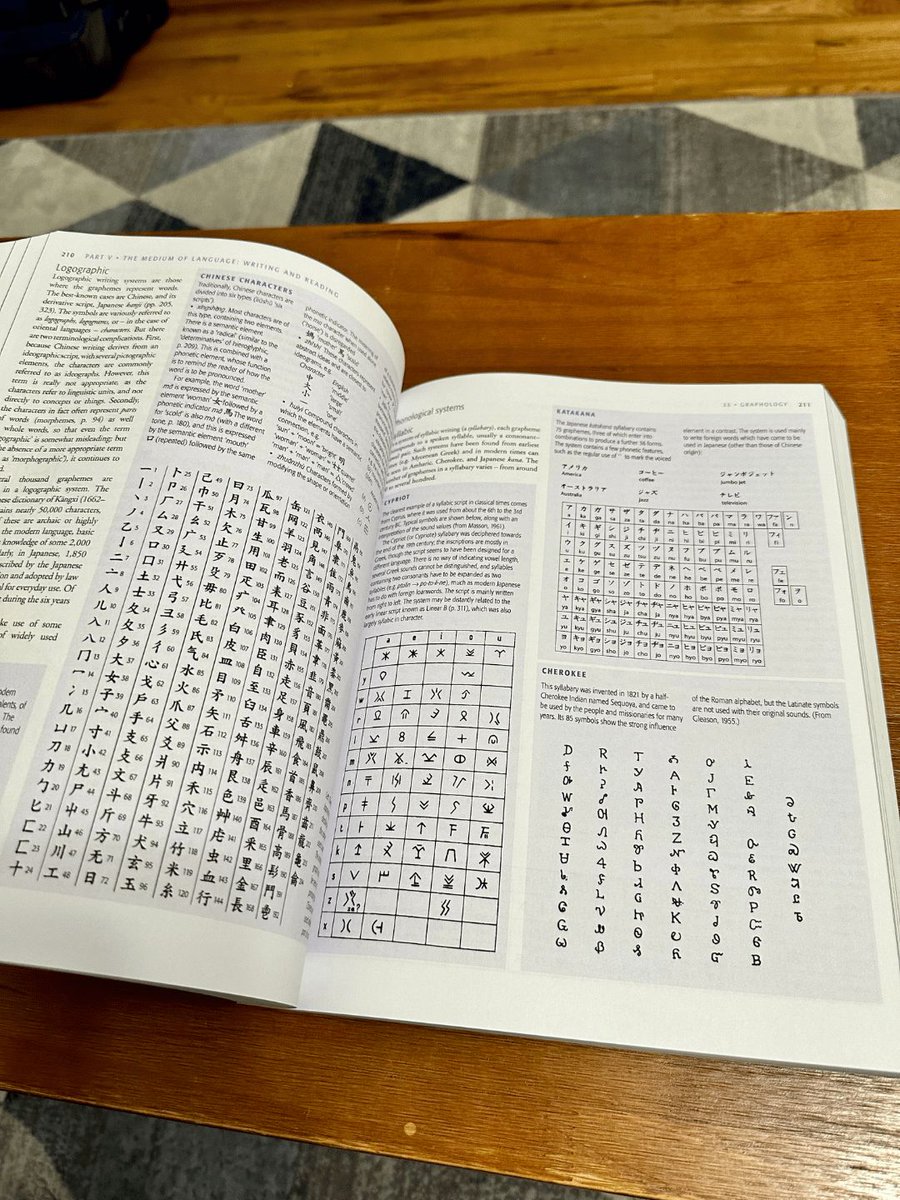
It's got entries on every subfield of linguistics, 65 "chapters" in all. Major sections include:
Popular ideas about language
Language and identity
The structure of language
The medium of language: Speaking and listening
The medium of language: Writing and reading
The medium of language: Signing and seeing
Child language aquisition
Language, brain, and disability
The languages of the world
Language in the world
Language and communication
Did you know there are dictionaries that are organized by how frequently each word is used?
SUPER useful if you're learning the language.
Routledge has a whole collection of them for various languages:
https://t.co/TgWJnglAaF
English “pencil” comes from:
⬆️
Old French “pincel” ‘artist’s paintbrush’, which comes from:
⬆️
Latin “penicillus” ‘painter’s brush’, literally ‘little hair’ because the brush was made of hair. This is a diminutive form of:
⬆️
Latin “peniculus” ‘brush’, which is itself a diminutive form of:
⬆️
Latin “penis” ‘tail’, which of course also gave us:
⬇️
English “penis”
📜 AI is helping scholars understand ancient tablets, documents, and inscriptions
🔠 Definition of dyslexia updated for the first time in 20 years
🐕 Dogs listen for consonants in speech, just like human infants
👀 Bionic (bolded) reading doesn’t speed up skilled readers
🗞️ Here’s what happened this week in language and linguistics!
https://t.co/sQSS6iLve4
All words have multiple pronunciations.
Pronunciations vary by dialect and even individual speaker. So *every* will always have multiple pronunciations.
Are some ways of pronouncing words more common? Sure. More prestigious? Definitely. Unconventional? You bet. But *other pronunciations aren’t legitimate just because you don’t like them*.
People’s judgements about pronunciation are arbitrary. People think that whatever dialect they grew up speaking is “correct”, or that the only correct way to speak is how socially prestigious people speak.
“the” pronunciation of a word doesn’t exist. The “correct” pronunciation of a word is a myth.
So when you’re thinking about pronunciation, always think in the plural: What are the pronunciation*s* (plural) of this word? And which people use which ones? Which pronunciation is used by people who are the most demographically similar to me? (And if you really appreciate the beauty of language: How cool is it that there’s such diversity in language and yet we still understand each other?)
A new atlas of language and writing is coming out by Gaston Dorren, author of the acclaimed pop linguistics books Babel: Around the World in Twenty Languages and Lingo: Around Europe in Sixty Languages. Each of the over 100 maps and diagrams were created by data journalist Marco Giannini @Dataspoiler
Madonna’s voice defies her age, according to linguists
A recent study found that Madonna’s voice is phonetically younger than her actual age
https://t.co/ZZ8eJ08CI5
If you want more of the latest news, research, and interesting articles in language and linguistics, check out my free weekly digest at the link in bio! ⬆️
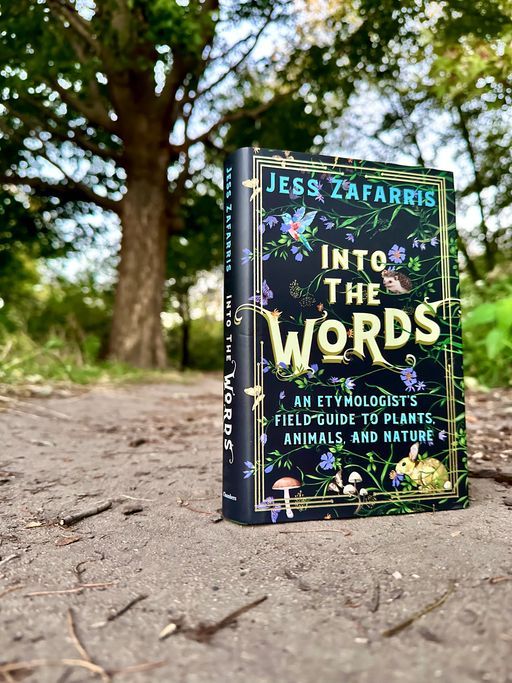
Here's the publisher's blurb:
Which animal holds the record for having the most common names?
When and why did we stop calling giraffes "camel-leopards"?
Do mushrooms have anything to do with mush or rooms?
Why are dandelions named after lions' teeth?
How should you really pluralize "octopus"?
Find out how and why raccoons are named after their hands, squirrels after their tails and olives after their oil. Discover why "dog" is an etymological mystery and "bear" contains a hair-raising horror story.
Follow trails word history in the etymological excursion that is Into the Words. This book puts the fun in fungi, leaves language lovers contemplating forest for its trees, and reveals the wonderful stories hiding in our words for birds, beasts, insects, flowers, soil and everything in between.
Featuring both the origins of the names of different organisms, this book will captivate anyone who revels in both the glorious chaos and logic of the English language and the beauty and majesty of everything that lives on the planet Earth.
“Into the words: An etymologist’s field guide to plants, animals, and nature”—the latest book from Jess Zafarris! Comes out November 3, published by @ChambersWords . Get your copy at the links!
Amazon: https://t.co/ZLtZ3DTpzn
Bookshop: https://t.co/zWI4dszkxl